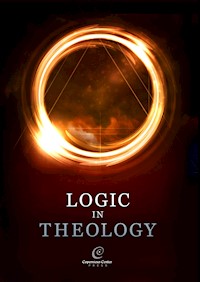
Logic in Theology ebook
99,90 zł
Dowiedz się więcej.
- Wydawca: Copernicus Center Press
- Kategoria: Religia i duchowość•Religie
- Język: angielski
A collection of essays devoted to the peculiarities of theological language and logic. The issues covered include such topics as the logic of miracles, the problem of God’s omniscience, the application of non-classical logics to theology and the relationships between science and theology, viewed from the perspective of logic.
Ebooka przeczytasz w aplikacjach Legimi lub dowolnej aplikacji obsługującej format:
Liczba stron: 489
Podobne



















The reflection over the role of logic in theology has a long and rich tradition. Medieval thinkers investigated complex theological problems, utilizing the best logical tools at their disposal and often inventing new ones. The evidence is to be found in the writings of almost all major medieval thinkers, from St. Anselm to John Buridan, dealing with various theological issues, such as existence of God, His omniscience or the mystery of the Holy Trinity. In the 20th century, two different approaches were developed to applying logical tools to theological problems. The first may be called ‘incidental’, and includes numerous attempts to logically analyze some particular theological ideas, such as the ontological argument or the properties of God. This trend includes works by famous logicians and philosophers such as Kurt Gödel or Alvin Plantinga. The second strategy is ‘systematic’; it is an attempt to reconstruct the entirety of theological discourse with the use of modern logical techniques. It was the goal of the Kraków Circle, a group of theologians, philosophers and logicians (including Jan Salamucha, Józef Bocheński, Jan Drewnowski and Bolesław Sobociński), which was formed in the 1930s. After World War II, the programme of the Circle was kept alive by J. Bocheński, and culminated with his The Logic of Religion.
Following in the footsteps of the Kraków Circle, we believe that there are a number of intriguing theological problems which may be analyzed, and illuminated, from the logical perspective. On a minimal reading, theology is any theory which embraces the thesis that God (or the sphere of the divine) exists and provides us with some description of God (or the sphere of the divine) and the relationship between God (the sphere of the divine) and human beings. In some theologies, e.g. in Catholicism, things are more complicated, as they include the content of the revelation – a body of knowledge which has a special epistemic status – as well as all the theories that serve to explain and develop it in more detail. Crucially, the assumption here is that both revelation and theological theories are expressed in human language and, as such, may be subject to formal scrutiny. As in the case of any set of sentences, one can investigate logically a number of theological issues, including – but not being limited to – syntactic (the structure of theological sentences and theological theories), semantic (truth, evidence in theology), pragmatic (analysis of the propositional attitudes in theology), conceptual (definitions of and interrelations between theological concepts) and methodological (types of arguments and criteria of justification in theology) ones. Thus, we understand logic broadly to include not only semantics, syntax and pragmatics, but also the study of the theological conceptual scheme, as well as its methodological aspects. Importantly, in all these dimensions one can analyze not only theological discourse per se, but also its relations with other discourses, such as scientific, philosophical, etc. Our second assumption concerns logic: we believe that a fruitful formal study of theological discourse cannot be limited to the application of classical logic. Rather, any logical tool may prove useful, and examples include many-valued logics, modal logics, non-monotonic logics, and other formal mechanisms such as belief revision or the theory of circular definitions.
Given this broad scope of the theological problems accessible with logical tools, and the number of logical techniques one can utilize while analyzing theological discourse, we prefer to speak of logic in theology rather than logic of theology. The latter expression seems to suggest that there is one and only logical system suitable for theological reflection or that the logical aspect of theological thinking is somehow external to the content of theology. In our eyes, both these statements are false. On the one hand, there is no reason to believe that the different theological problems can be handled with one formal recipe; on the other, many theological questions are so intertwined with the underlying logical problems that they cannot be properly comprehended without some logical analysis. Thus, we believe that speaking of logic in theology is more appropriate. This small change of prepositions means an important change of approach: one is not limited to the question of what is the ‘proper’ logic of theology, but is free to investigate any theological problem which gives rise to logical analysis, or to consider loci theologici which may inspire the development of new logical instrumentarium.
Thus, the present volume is intended as an exercise in logic in theology. It puts together contributions pertaining to various aspects of the relationship between logic and theology, from historical essays, through the formal reconstruction of theological concepts and the structure of theological discourse, to more methodologically oriented papers, examining the criteria of theological justification and the interplay between theology and other disciplines. The papers collected here have been written within the research project entitled The Limits of Scientific Explanation, carried out at the Copernicus Center for Interdisciplinary Studies in Kraków, and sponsored by the John Templeton Foundation.
Bartosz Brożek
Adam Olszewski
Mateusz Hohol