Uzyskaj dostęp do tej i ponad 240000 książek od 14,99 zł miesięcznie
- Wydawca: Anna Dubik
- Kategoria: Literatura obyczajowa i piękna•Proza obyczajowa
- Język: angielski
Ebooka przeczytasz w aplikacjach Legimi na:
Liczba stron: 363
Rok wydania: 2026
Odsłuch ebooka (TTS) dostepny w abonamencie „ebooki+audiobooki bez limitu” w aplikacjach Legimi na:
Podobne


















Anna Dubik
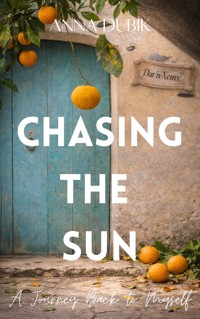
Chasing the Sun
A Journey Back to Myself
Copyright © 2026 by Anna Dubik
All rights reserved. No part of this publication may be reproduced, stored, or transmitted in any form or by any means, electronic, mechanical, photocopying, recording, scanning, or otherwise without written permission from the publisher. It is illegal to copy this book, post it to a website, or distribute it by any other means without permission.
First edition
This book was professionally typeset on Reedsy Find out more at reedsy.com
Contents
Chapter 1
Chapter 1
Chapter 2
Chapter 3
Chapter 4
Chapter 5
Chapter 6
Chapter 7
Chapter 8
CHAPTER 9
Chapter 10
Chapter 11
Chapter 12
Chapter 13
Chapter 14
Chapter 15
Chapter 16
Chapter 17
Chapter 18
Chapter 19
Chapter 20
Chapter 21
Chapter 22
Chapter 23
Chapter 24
Chapter 25
Chapter 26
Chapter 27
Chapter 28
Chapter 29
Chapter 30
Chapter 31
EPILOGUE: AN ORDINARY EXTRAORDINARY SUNDAY
Notes
Chapter 1
chapter-seperatorChasing the Sun
A Journey Back to Myself
Anna Dubik
English Version Title:
Chasing the Sun: A Journey Back to Myself
Cover Design
Anna Dubik, Zuzanna Galicka
Cover Photography
Anna Dubik
Editorial Supervision
Beata Lachowska
Translator
Mark Causon
Printing and Binding
Franklyn Cauchi InPrint Malta
ISBN: 978-9918-0-1511-5
Copyright © 2026 by Anna Dubik. All rights reserved. This book or any portion thereof may not be reprinted, copied, or reproduced in any form without the written permission of the author.
This book contains the author’s personal opinions and experiences. The information contained herein is for informational purposes only and should not be treated as professional health, medical, psychological, or therapeutic advice. The author is not a doctor or qualified therapist. Before making any decisions regarding physical or mental health, please consult with an appropriate specialist. The author bears no responsibility for any consequences resulting from the direct or indirect application of information contained in this publication.
DEDICATION
I dedicate this book to Zuzia, Zosia, and Mark.
Zuzanna, you once told me that if there’s no book I want to read, then I should write it. Well, I did. Thank you to my daughters and my Mark. Without you, I would have given up after the first chapter.
I hope that through this book you’ll get to know my story better. I love you most in the world.
ACKNOWLEDGMENTS
To my daughters - you are the sun in my “Journey to the Sun.” Everything I did, every difficult choice, every risk I took, every new beginning - it was all for you and with you in my heart. Thank you for your patience, your resilience, and your courage as we built this new life together. You taught me that the greatest love is not about being perfect, but about showing up every day and trying again. I am so proud of the young woman you are becoming.
To Mark - for being patient while I found myself, for understanding that a woman becoming whole is not a woman moving away, but a woman finally arriving. Thank you for choosing us every day, for braiding hair and painting nails, for becoming a father when you didn’t think you could. You showed me that love doesn’t have to hurt, that partnership can be gentle, and that home is wherever we are together.
To Osanna, Mark’s stepmother - you welcomed me into your family as if I had always belonged there. Your open heart taught me that family is not only about blood, but about love and acceptance. Thank you for embracing not only me but also my daughters with such genuine warmth. The trust you placed in me - a stranger from a distant land - is one of the most precious gifts I’ve ever received. Your love showed me that home can be found in unexpected places, in the kindness of people who choose to see us as we are.
To the community of Għarb - you welcomed us with open arms when we arrived as strangers to your beautiful village. In your narrow streets, sun-drenched squares, and warm greetings, we found more than a place to live - we found a place to belong. Thank you for showing us that community transcends language and borders.
To Father Trevor, Archpriest of Għarb, and Father Samuel - in your kind eyes I found something I had been searching for without knowing: God’s presence not as judgment, but as love. Your warmth and genuine welcome showed me the true meaning of faith - not rules and obligations, but compassion and human connection. Thank you for making us feel at home in this village, and for reminding me that spirituality lives in how we treat each other.
To my wonderful editor Beatka - thank you not only for the hours spent correcting my quotation marks and conjunctions, but also for finding me on Gozo. Please don’t get lost. Your skill brought clarity to my words, but your friendship brought joy to the process.
To Franklyn Cauchi and the InPrint Malta -thank you for your patience and your professionalism throughout this process. I know that “one last correction” turned into many, and yet you never once made me feel like a burden. You treated my book - and my endless edits -with care and kindness.
Thank you for your patience, your professionalism, and your good humour throughout this process. I know that “one last correction” turned into many, and yet you never once made me feel like a burden. You treated my book - and my endless edits - with care and kindness.
To my Polish family in Għarb - Agnieszka and Gosia - for always being there for each other. You prove that we can create a family wherever we go.
Thank you to my family - and those who have become family - for being with me despite the passage of time and despite everything.
Mum - for all the shades of our relationship, which is supposedly the most difficult for a woman, throughout these 47 years. We made it.
Mrs Józia, Mr Staś - for your presence with the girls and me when things were at their worst. You were our lighthouse in the storm.
Thank you to all the people whose lives have intertwined with mine - in difficult but also beautiful moments - in Nawodna, Chojna, Gryfino, Pyrzyce, in Germany, and on Gozo. Remember, by touching someone’s life, we leave a mark that goes on to touch others. We influence not only that person but also, indirectly, everyone they meet.
From the bottom of my heart, thank you to every woman who commented or wrote to me in response to book excerpts published on Facebook and Instagram. You are the reason and motivation for this book. Your stories and how you found yourselves in my experiences and emotions gave me the greatest lesson about the female soul: how, despite our diversity, we are similar to each other and how much we need each other.
This book is for you, and because of you.
With love and gratitude,
Anna
AUTHOR’S NOTE
About Poland and My Experience
This memoir describes my personal journey from a small village in post-communist Poland to a new life in Malta. In telling my story, I share experiences that shaped me - including the cultural context of the time and place where I grew up.
I want to be clear: these are my experiences, not universal truths about Poland.
When I write about “Polish mentality” or “Polish village life,” I’m describing my specific village in rural Poland during the 1980s-2000s - my family’s beliefs, the post-communist transition period, the working-class culture, and the specific community where I lived.
Poland is vast and diverse. What was true in my small village was not necessarily true in Warsaw, Kraków, or Gdańsk. What was common in the 1990s is not the reality of Poland today. What I experienced in my family may have been very different from what others experienced in theirs.
I don’t claim to speak for all Poles, all Polish women, or all Polish mothers. I speak only for myself - one woman, from one village, in one moment in time.
If you’re Polish and your experience was different from mine, that doesn’t invalidate either of our truths. Poland, like any country, contains multitudes.
I share my story with love for the country that made me, even as I honestly describe the struggles I faced there. My leaving Poland wasn’t a rejection of my homeland - it was a search for a different life I couldn’t find in the circumstances I was in.
To my Polish readers: this is one Polish woman’s story, not the story of Polish women. I hope you’ll recognise some truths in it, even if not all of them match your experience.
To my international readers: please don’t let my story become your only impression of Poland. This beautiful, complex, rapidly changing country deserves to be known through many voices, not just mine.
About My Daughters
My daughters are part of this story because they were part of my transformation. But this is my perspective, not theirs. As they grow older, they may remember these times differently. They may wish I had told certain parts differently, or not at all. That is their right.
I’ve tried to be thoughtful about what I share, focusing on my journey as a mother rather than presuming to describe their inner experiences as children. I’ve changed some details to protect their privacy. Their story is theirs to tell, should they ever wish to share it.
To my daughters: if someday you wish to tell your version, I will support you completely. Your truth is as valid as mine. If you feel I’ve shared something you’d prefer remained private, let’s talk. Our relationship is more important to me than any book.
You are my heroes in this story. Everything I did - every difficult choice, every risk, every new beginning - was ultimately for you and with you in my heart. I love you more than words can express.
About Memory and Truth
Memory is subjective. I’ve done my best to tell my story truthfully, but I recognise that others who were there - my ex-husband, my parents, my friends - might remember these events differently.
This is my truth. Not the only truth, but mine.
Conversations reflect the essence of what was said as I remember it, though I cannot claim verbatim accuracy years later. Some names and identifying details have been changed to protect privacy.
If you’re reading this and you were part of my story, and your memory differs from mine, that’s okay. We each carry our own truth.
About Seeking Professional Help
While I share tools and practices that helped me through difficult times, I want to be clear: I am not a psychologist or therapist. I am a woman who walked through darkness and found light, offering hope and companionship to others on similar journeys.
But I am not a substitute for professional mental health care. If you’re struggling with depression, trauma, suicidal thoughts, or other serious challenges, please seek help from a qualified therapist or counsellor. The tools I describe can be complementary practices but should not replace professional care when needed.
There is no shame in asking for help. Seeking professional support was part of my own healing journey, and I’m grateful I did.
With love and respect for all who walk their own path,
Anna
“Maybe you have to know the darkness before you can appreciate the light.”
– Madeline L’Engle
TABLE OF CONTENTS
Introduction
Chapter 1. Life Behind Dirty Windows
Chapter 2. Briefly About Me, Hamsters and Butterflies
Chapter 3. Childhood in Post-Communist Poland
Chapter 4. Youth, Rebellion, Nosowska and High Sensitivity
Chapter 5. Marriage Without a Happy Ending
Chapter 6. Miscarriage
Chapter 7. Meanwhile, In My Head
Chapter 8. How Rough Is a Calf’s Tongue
Chapter 9. Anxiety – Faithful Companion or Burden
Chapter 10. Rubble and Foundations
Chapter 11. M for Mark
Chapter 12. Mediterranean Romance or Epic Failure
Chapter 13. Being Cinderella
Chapter 14. Divorce (or A Women’s Day Gift)
Chapter 15. Voucher for Unlimited Flights
Chapter 16. Four Circles and a Monkey, or How We Became a Family
Chapter 17. Not All Work Is Equal
Chapter 18. The Pandemic as the Cure for All Troubles
Chapter 19. Scenes from the Pandemic
Chapter 20. Taming
Chapter 21. The Decision
Chapter 22. The Process of Change
Chapter 23. New Beginnings
Chapter 24. The First Six Months
Chapter 25. When God Pulls the Emergency Brake
Chapter 26. Life’s Lessons
Chapter 27. And Suddenly the World Stopped
Chapter 28. Soul (or about the Mystery of Life and Death)
Chapter 29. Bongu Betty (Reflections from Gozo)
Chapter 30. Sand in the Palm
Chapter 31. Returns to Home
Epilogue. An Ordinary Extraordinary Sunday
INTRODUCTION
Hi!
If you’re reaching for this book, e-book, or whatever you choose to call my story and reflections, you’re probably also a woman on a journey to yourself.
Nice to meet you! I’m glad you stopped by. Perhaps you’ll join me for a short walk to discover yourself and explore new paths to fulfilment?
I’m not a psychologist, therapist, or any other kind of counsellor. I’m simply a woman, just like you. A woman finding fulfilment in:
being a mother,work,a relationship,self-care,spiritual and mental growth.These areas are listed in random order because, depending on the moment in life, psychological-emotional state, or even mood, they shift their place and priority, sometimes jumping as quickly as images in a slot machine.
I’m curious - where are you in your life right now?
Writing this book has been maturing within me for a long time. Since childhood, I’ve loved pouring my thoughts and feelings onto paper - first in the form of a diary, then in stories or poems. My head and heart rarely knew peace, and the overflow of emotions spilt out in a stream of words. The daily obligations of adulthood tried to silence them, but only succeeded for a moment, because suppressed thoughts and emotions returned at the most unexpected moments. Until finally, their time came.
I had planned to wait until retirement, but my appearance on the Polish TV show “I Found Love Abroad” made me want to share my story with other women - my entire story, whose climax could be watched on television. I didn’t want people to judge me only through the prism of a house with a pool on an island in a warm country. Though I know many did exactly that.
I thought: Since everyone saw me that evening and decided ‘this one made it,’ now I’ll show them how it really was.
I was terrified to reveal all of this - especially to family and friends. I feared their judgment and that I would reveal cards that shouldn’t be touched. But the hardest part was opening up deeply enough to reach the darkest corners of my soul.
You might ask: why do this if I shouldn’t touch them?
I’m doing this for those women who, like me, were once at a turning point in life, had had enough of everything, and sometimes even just wanted to disappear. If even one of them decides to try again, piece their life back together, and catch their breath in it, I’ll consider my purpose fulfilled.
If you’d like to share your story, hear a kind word, or ask a question, write to me: [email protected]
Chapter 1
chapter-seperatorLIFE BEHIND DIRTY WINDOWS
The Shed with Dirty Windows
Our lives are sometimes like a shed with dirty windows, behind which stretches the most beautiful garden. Flowers bloom in every possible colour, their fragrance floats in the air… but you don’t smell it. In your nostrils, there’s only dust and the scent of mould that’s been growing for years. With each day you neglected those windows, you lost sight of the glow and light that could have brightened your life.
That mould – it’s all the unfulfilled promises. Unspoken words. Fears and disappointments that settled layer upon layer until they began to weigh you down. Every day you looked at the garden but didn’t have the strength to open the window and let in fresh air, only deepened that thick darkness inside.
And yet the garden behind the glass is still there. Waiting patiently for you to decide to wipe away the grime, let in a ray of sunshine, and feel the scent of life anew.
You can keep sitting on that wobbly stool with broken legs, telling yourself it’s enough – convincing yourself you don’t need comfort to be happy.
You can settle into that shed. Sit on a dirty stool with a cracked leg, pretending you’re comfortable. You can wipe the table with your sleeve, eat any old meal on a piece of countertop sticky with grime collected over the years. You can make peace with it. Tell yourself: “Well, that’s my life.” But will you really be comfortable there?
You’re Not Alone
Each of us has such “sheds” hidden inside our bodies at different stages of life. I had mine too –more than once. At times, I didn’t even want to scratch a clean speck on the window with my finger to look outside. Not to mention the mirror, where I could no longer even see my own reflection.
The mirror. One day, it awakened in me the fear that I might have disappeared completely. Another day, I felt relief because I wanted to disappear. To lie down on the dirty floor in my “shed,” cover myself with an old throw smelling of the mustiness of sad moments and bad experiences.
Have you been there too? Or maybe you’re there right now? Or maybe you’re going in and out, not knowing where your place really is?
Stay there if you must. Just remember – you’re not alone. We’re in this together. Some of us have already left and know they never want to return. Others will arrive there later, mourning difficult moments in their lives. Still others are sitting in their “sheds” right now, trying to gather strength for the first step.
The Line of Women
Wipe the mirror and see the faces in it. They’re our mothers, grandmothers, great-grandmothers. An entire line of generations of women who are always with you, who know perfectly well what you feel, felt, or will feel. If you can’t yet find strength within yourself, look for it in them. In your past, in the past of the women before you.
You were part of your mother even when she was inside hers. Your daughter was part of you even when you were inside your mother. Tangled with ribbons of genes, connected by the heritage of cells – we are never alone. We will never be alone.
Even if you’re at a moment when you don’t see a glimmer of light, you’re not alone. Even if the silence in your “shed” is so thick you can barely hear your own breath. Even then.
The First Step
Let’s lie on that dirty floor for a while. Let’s disappear under the blanket of bad memories. Let’s give ourselves the right to rest, to grief, to pain. And then let’s gather strength from all those before us and all those who will come after us.
Maybe you’ll start by wiping the mirror? To see the supportive smile of your ancestors, to feel their pat on the back. Even if you don’t feel their care, you received the greatest possible gift from them. Life.
Wake up. Shake off the sadness, stress, regret, and pain. You don’t have to get rid of them all at once – it’s enough to shed just one layer.
Open the window a crack. Feel the scent of fresh air on your face. Hear the birds singing, the rustle of leaves, the distant voices of life continuing there, beyond the glass.
Open the door and stand in the doorway. Don’t go out yet. Just stand here. Close your eyes. Feel the world. Hear the wind. Feel the warmth of the sun on your skin.
The Voice of Intuition
And then seek out your soul and hear the voice of your intuition. That whisper that was always there, even when you drowned it out. Let it guide you. Trust that inner compass that knows where you need to go.
And then take a step. Fall into the arms of Mother Nature, God, the Universe – whoever you choose to believe in. Feel that you’re part of something greater.
And go. Go into the world, for peace, for relief, for happiness, for love, for laughter. Go for your life that’s waiting there, in that garden beyond the window. A garden that is also within you.
Trust yourself. Trust us – those who have already left and those who will leave after you. And go. Run. Jump. Dance. Live.
See you on the road.
My journey
And now I want to share my story with you. Not because it’s exceptional – quite the opposite. It’s ordinary, full of mistakes, stumbles, and moments when I judged myself most harshly.
But that’s exactly where its power lies. Because if I could walk through my own mess and find my way to the light, you can too.
Before you read my story, I want you to do something for me – or rather, for yourself.
Stop for a moment.
You don’t need to know anything. You don’t need to understand anything. You don’t need to be ready.
If you want, leave here a few words that you’re carrying inside you right now.
…………………………………………………………………………………………………..
…………………………………………………………………………………………………..
…………………………………………………………………………………………………..
…………………………………………………………………………………………………..
…………………………………………………………………………………………………..
…………………………………………………………………………………………………..
…………………………………………………………………………………………………..
…………………………………………………………………………………………………..
…………………………………………………………………………………………………..
…………………………………………………………………………………………………..
…………………………………………………………………………………………………..
…………………………………………………………………………………………………..
…………………………………………………………………………………………………..
…………………………………………………………………………………………………..
…………………………………………………………………………………………………..
…………………………………………………………………………………………………..
…………………………………………………………………………………………………..
…………………………………………………………………………………………………..
…………………………………………………………………………………………………..
…………………………………………………………………………………………………..
………………………………………………………………………………………………….And then just read. As you are today. With what you have inside you.
Because this story is a bit yours, too.
Chapter 2
chapter-seperatorBRIEFLY ABOUT ME, HAMSTERS AND BUTTERFLIES
The Hamster That Fell Off the Wheel
45, almost 46 years of life.
Over 20 years running. University, work, family, miscarriage, divorce, single motherhood. Getting up for work at 4, 5, or 6 in the morning. A boiling stove from which you must pull out the fire, so it doesn’t explode. A septic tank flooding the bathroom. Two wonderful, smart, and beautiful daughters. A man more caring than a guardian angel. A house with a pool on a tiny island in a warm country under a palm tree.
That’s the balance sheet.
And I forgot one thing.
2 epileptic seizures.
God’s handbrake.
It’s not easy to slow down after such a sprint.
A Linguistic Investment (or How Dad Didn’t Expect to Be a Long-Distance Grandfather)
I was never good at physics. Or math, for that matter. What I excelled at was underlining topics with a coloured pen, which my high school math teacher expected. Fortunately, Mom is a chemist, so tutoring in science subjects was free and regular.
But I was great at languages. I took my high school exams in Polish, German, and English, though I only learned the latter in extracurricular classes. Apparently, I once told my dad, who complained about spending so much money on my language education, that it was an investment in my future.
I wonder if he still considers it a good investment, since for the past several dozen months, he’s mostly met his granddaughters on a computer or phone screen.
Thank you, Mark Zuckerberg, for Facebook and Messenger. You’ve made thousands of kilometres disappear in a second, and people too comfortable to cross a few metres and have a face-to-face conversation. Why open your mouth when you can express your feelings without words with a click?
Plans, Plans, Plans (or How God Laughed)
As I tell my story, I’ll try to maintain some sense of chronology. Though knowing myself, I know it might be difficult.
Following Maria Dąbrowska’s1 words,
today is the day to be happy!
Yesterday has already passed. Tomorrow is yet to come, so I try not to dwell on the past or worry about the future.
This is a completely new approach for me, and I’m still practising it, because until recently, I had to have not only plan A up my sleeve, plan B just in case, and plan C for good measure. Everything in my life had to be precisely planned and predictable. School, university, work, car, family, house with a garden, all the way to… lived happily ever after, pursuing passions and interests.
But plans are plans, and life is life. As the old Jewish proverb says: Man plans, and God laughs, or in other versions: Man plans, and God crosses out/strikes through.
Each successive surprise on my life’s path – and sometimes extremely improbable situations – made me rub my eyes in amazement and cross off more items from my list of goals, because it turned out I was already heading in a completely different direction.
Perfectionism (or How to Create the Illusion of a Perfect Life)
My innate perfectionism – don’t ask if it’s inherited, but I find its traces in my daughter with horror – didn’t make things easier. Everything had to be perfect. I had to be perfect: the perfect student, the perfect teacher, the perfect wife, the perfect mother, the perfect children, the perfect husband, the perfect life in a perfect home.
Oh, I forgot about the perfect pets.
Impossible?
Nah, you can always strive for perfectionism. Even if you can’t get there, you can create the illusion that you are. Today’s social media world is perfectly suited to this. You can erase stretch marks, wrinkles, enhance your husband, add charm to children, colourise your dog, and even use AI to turn it into a purebred cat.
Work? Half of humanity these days changes theirs to the ideal one where you can not only travel and see the world but also earn a fortune.
Home? Just take a photo from the right angle, and no one will notice the dust on the cabinets, the unmade bed, or the trash swept under the rug.
Sweeping Under the Rug (and Other Olympic Disciplines)
And we sweep more and more. The more we sweep, the less we admit to others – and ultimately to ourselves – that we have the right to mistakes, to failures, to feeling not only rainbow joy and glittery happiness, but also grey-brown sadness, ordinary human pain, and totally un-Instagrammable anger.
Because what will people think when they get to know the real us? The imperfect ones, sometimes uncombed, without makeup, with a stain on our shirt, and stretch marks on our butt. Because if everyone else is so perfect, how can I allow myself an imperfect life, an imperfect tear, an imperfect me?
For years, I strived for this ideal, even if it was just for show. Until the day came when I let this makeshift perfection – like a magical glass ball – fall from my hands and shatter into millions of imperfect, tiny, multi-coloured moments, from which I’m still carefully glueing together my new imperfect, but very real and bone-deep MY life.
Journey to the Past (or Meeting Myself from Years Ago)
Writing these words, I try to go back in time with my memory. With surprise, I realise how long a journey I’ve already travelled and wonder what still lies ahead.
Reflecting on the past is not just about awakening memories. It’s a journey into yourself, a walk along long-travelled paths, meeting yourself from bygone times. It’s embracing and caring for that little girl from the past, assuring her that the future – despite everything, or despite everything – will be good too.
By remembering, we can look at ourselves from a different perspective, understand who we were and how we became who we are now. It’s time for forgiveness – of us and others – and for making peace with what has passed.
In this journey through the past and my memories, I discover that every experience, even the most difficult, has its place in my story. It’s precisely these that shaped my identity, created the person I am now, and designed my future.
What Was Wrong with Me? (or Insatiability)
Looking back, I see that for more than half my life, I wondered if something was wrong with me. Or more precisely: what was wrong?
Why was I always running somewhere? Constantly searching for something and striving for something? Always having to prove something to myself, test myself, and overcome new challenges. Why couldn’t I just sit down and tell myself: “Phew, it’s good.” Just let go and be.
INSATIABILITY – or emotional dissatisfaction syndrome.
One of these terms certainly captures my feelings. The life plan was slowly being realised. Husband, child, car, house, stable job, vacation once a year… but they didn’t give me the permanent happiness I so desperately desired.
Long ago, I came across a quote that accompanied me for a long time:
Happiness is a butterfly: try to catch it, and it flies away. Sit quietly, and it will rest on your shoulder. (Anthony de Mello, “Awakening”2)
And you, how do you understand this quote?
The Mummified Butterfly (or How I Tried to Hold onto Happiness)
Today I fully understand this quote, but for many years I focused only on its first part: happiness is like a butterfly. It seemed to me that happiness is fleeting and hard to grasp, like a butterfly. Even when I managed to catch it, I couldn’t hold onto it for long.
Unlike happiness, is it possible to catch and keep a beautiful butterfly? Have you ever visited a butterfly exhibition?
Preparing butterflies for display is a delicate process requiring care to preserve their shape and colour. First, they are caught in entomological nets, then swiftly killed with ether or acetone. Before drying, they are softened by placing them in sealed containers with damp paper, so their wings and bodies remain flexible. Then the butterflies are arranged on special boards, their wings spread and pinned with entomological pins. Drying occurs in a warm, dry place and can take several days to several weeks. After drying, butterflies are mounted on pins in display positions and placed in cases protecting them from dust, moisture, and light. Each specimen is labelled with information about the species, place and date of collection, and the person who caught it.
I thought that, like a butterfly, happiness also had to be chased, caught, and then held tightly in your hand so it wouldn’t accidentally fly away.
Unlike butterflies, which, after drying, can retain their beauty for many years, happiness isn’t always able to maintain its form. Is it possible that mummified happiness is still real? Or is happiness just a fleeting glow, a breathtaking moment?
The Fleetingness of Emotions (or The Melody That Won’t Leave Your Head)
They say every feeling passes with time.
From the perspective of time, I see how few emotions can last in me longer. Do you know that feeling when a melody heard on the radio gets tangled in your thoughts, refusing to leave? Sooner or later, we replace it with another or simply forget it.
We all have memories of moments full of intense emotion that can still tighten our stomachs or bring a gentle smile to our faces. Remember moments when you achieved a goal you strived for with all your might. Maybe it was a job change, buying dream shoes, losing a few kilograms – anything that still awakens butterflies in your stomach.
I remember my heartbeat faster then, and excitement almost burst me from the inside. For the next few days or weeks, I floated on an adrenaline high, and the memory of that moment filled me with joy for a long time. However, as the following months and years passed, my thoughts began to focus on new goals, and the happiness from the past flew away like a butterfly escaping from a hand trying to catch it.
Or maybe every moment of happiness is like a butterfly – fleeting, delicate, too brief to last forever, yet leaving a deep mark within us?
If you want, leave here a few words that you’re carrying inside you right now.
…………………………………………………………………………………………………..
…………………………………………………………………………………………………..
…………………………………………………………………………………………………..
…………………………………………………………………………………………………..
…………………………………………………………………………………………………..
…………………………………………………………………………………………………..
…………………………………………………………………………………………………..
…………………………………………………………………………………………………..
…………………………………………………………………………………………………..
…………………………………………………………………………………………………..
…………………………………………………………………………………………………..
…………………………………………………………………………………………………..
…………………………………………………………………………………………………..
…………………………………………………………………………………………………..
…………………………………………………………………………………………………..
…………………………………………………………………………………………………..
…………………………………………………………………………………………………..
…………………………………………………………………………………………………..
…………………………………………………………………………………………………..
…………………………………………………………………………………………………..
…………………………………………………………………………………………………..
………………………………………………………………………………………………….
…………………………………………………………………………………………………..
…………………………………………………………………………………………………..
…………………………………………………………………………………………………..
…………………………………………………………………………………………………..
………………………………………………………………………………………………….
…………………………………………………………………………………………………..
………………………………………………………………………………………………….
Chapter 3
chapter-seperatorCHILDHOOD IN POST-COMMUNIST POLAND
The Weight of Past Generations (or What We Carry in Our DNA)
We, children of the 70s, 80s, and 90s, carry the weight of past generations within us. We are the grandchildren and great-grandchildren of those who survived the nightmare of war, uprisings, deportations, and camps, those who experienced unimaginable trials and suffering.
In the hearts of our parents and grandparents, stories of wars, camps, and ghettos still live. I remember how, as a little girl, I listened to my grandmother’s stories as she recalled with a trembling voice the brutality that she and her teenage friends experienced at the hands of soldiers passing through their village. Stories of burned houses, raped women, and killed men seemed so unreal and distant to me then, like fairy tales or nightmares – something that existed only in imagination and had absolutely no connection to reality.
How wrong I was.
Clouds Over Our Ancestors’ Lives
Survivors often carried the burden of trauma, pain, and fears that affected their daily lives, relationships, and health. Memories from the past, like dark clouds, hung over the lives of our great-grandparents, grandparents, and parents, shaping their attitudes and beliefs, and, involuntarily, weaving themselves into the DNA of our identity.
Unprocessed trauma from family history passes to subsequent generations, merging with our emotions, reactions, and choices in a way that feels completely natural to us. We assume that all these experiences originate in ourselves. Not seeing their true source, we often cannot distinguish what belongs to us from what does not. – Mark Wolynn3
Have you ever thought about this?
Instead of Blaming Mom…
Nowadays, we often look for the causes of our failures and fears in childhood, treating them as the source of our problems. But perhaps it’s worth reaching even deeper?
Instead of blaming your mother for not providing you with an ideal childhood, it’s worth looking at her own experiences. Understanding her past, the challenges and difficulties she struggled with, can help you better understand her decisions and the way she raised you.
Research shows different approaches to parenting in survivor families:
Emotionally cold families – dominated by coldness and passivity, leading to neglect and lack of closeness in raising children.
Fear-filled families – burdened with anxieties and feelings of helplessness, they passed these feelings to their children, teaching them how to cope in an uncertain world.
Fighting families – with determination, they strove for success, trying to escape the shadow of the past.
Success families – promoted values of education and ambition, often at the cost of neglecting ancestors’ pain.
Putting Together the Puzzle
Looking back, I try to piece together the puzzle of my life. Perhaps it’s in the past that we should seek understanding of our own stories, to open the door to new possibilities for future generations. Perhaps by understanding how ancestral trauma affects our lives, we can break this cycle and build a future full of light and hope.
I’m curious what you think about this?
Eggs and Sausage on the Train (or How My Ancestors’ Hunger Lives in Me)
I discovered a deep conviction within myself about how important it is to provide food for my family. From a small snack and bottle of water for a short trip, through a full freezer and supplies of flour, pasta, and water for at least two weeks, to an abundantly set table during every guest visit.
Is this Polish hospitality? Maybe so.
When Mark jokes that Poles don’t travel without food, I respond sarcastically that my ancestors experienced hunger and poverty, so I must always have something to feed my children if needed.
Do you remember this? I remember scenes from both my childhood and numerous Polish films depicting life under communism: on train journeys, we’d pull out eggs and sausage. Even before the train started, my brother and I would ask for sandwiches. I don’t think we were really hungry. It was rather a ritual I remember with nostalgia today.
Winter of the Century – Welcome to the World, Ania
I was born on December 1, 1978, in the winter of the century. Extremely low temperatures, heavy snowfall, communication paralysis, and an energy crisis were the realities of the time.
This is the year when Cardinal Karol Wojtyła from Kraków was elected Pope, taking the name John Paul II. As the first Pole in history, he became the head of the Catholic Church. His election aroused enormous emotions and planted a seed of hope in tired Polish hearts. John Paul II became a symbol of faith, peace, and openness, and his pontificate began a new era in the history of the Church and Poland.
This is the year when Edward Gierek, First Secretary of the Polish United Workers’ Party (PZPR), continued his rule. Although power remained in his hands, social and economic tensions began to pulse like an approaching storm. Growing discontent, born of economic difficulties and shortages of goods, like dark clouds, cast a shadow over Poles’ daily lives. It was in this atmosphere that a sense of anxiety and desire for change grew, preparing the ground for future events – martial law and the activities of Lech Wałęsa and the emerging “Solidarity.”
My childhood was a time of dynamic political and economic change in Poland. The harshness of the winter in which I was born became for many a metaphor for the difficulties the country faced. It was a time when people had to face the challenges of everyday life, seeking hope and strength amid the frosty winds of change.
A Store with Vinegar and Empty Shelves
Memories from my childhood form a picture full of understatements: empty store shelves. Well, almost completely empty – after all, vinegar was always present.
I also remember food ration cards, like symbolic tickets to the world of basic goods – bread, flour, meat, milk, eggs, sugar, oil, coffee, tea, canned goods, salt, groats, rice, as well as clothing and footwear. It was a time when everyday shopping was a challenge, and even simple things took on special significance amid shortages that affected most Polish homes.
By the way, can you imagine today a store where you can only buy vinegar? Today’s generation probably can’t, even in their worst nightmares.
Before Google (or A World Today’s Youth Won’t Understand)
I wonder to what extent my daughters will be able to imagine my childhood.
Just today, my younger daughter announced, to my great surprise, that I was born before Google. In her surprise, I heard the question: how is it even possible that anything existed before the Google era? Perhaps for future generations, Google and artificial intelligence will be treated as creators of everything, like some modern deity?
I feel lucky to still remember that previous “non-technological” world.
BEFORE: children hanging from the carpet beating rack.
DURING: children sitting under the carpet beating rack, each with their phone in hand. If they’re outside at all.
Let’s hope there won’t be an AFTER.
Although seeing how scenes that we, children of the systemic transformation period in Poland, only saw in science fiction films, are beginning to become reality, I’m slightly terrified.
Many of those visions didn’t have happy endings.
A World of Paper Memories
It was a completely different reality. A reality where every moment was a precious treasure, captured on photographic film.
I remember how reverently I watched the photographer’s fingers precisely loading and removing film from the camera. One careless move could expose the film, which we absolutely didn’t want, because each photo had enormous value. Often blurry, taken against the light or in a too-dark room, but always unique and unrepeatable.
We waited several days for the photographer to develop the film, then excitedly viewed the prints as soon as we left the studio. Each one was unique and unrepeatable. Every moment frozen on black-and-white film, without the possibility of retouching or filters.
No modern conveniences – automatic image sharpening, hundreds of shots to choose the best one, video recording, or boomerang options. Back and forth, back and forth. A photo in motion. A few seconds. On the run, in a hurry. The essence of today’s world.
That world was different. It was a world of paper memories, pasted into large cardboard albums. A world of movies on video cassettes that had to be rewound before returning to the rental store to avoid a penalty.
Corded Phones and TVs Without Remotes
A world of phones attached to the wall, with a handset on a cord and a rotary dial. Dialling a number itself was a lesson in mindfulness. Especially when dialling 9 or 0, you had to wait for the dial to return to its place before you could dial the next digit. Who today would have the patience and time to dial a number for several minutes? And what if the line was busy?
A world of televisions with large CRTs that had no remote control, so parents used children to change channels, adjust volume, or fine-tune the picture.
My older daughter once asked if the picture on the TV was black and white. Does that mean the world was, too? With a smile, I answered: no, the world wasn’t black-and-white, though it was certainly much less complicated.
Every day at 7:00 PM, my brother and I would sit in front of the TV to watch Bedtime Story. Reksio, Bolek and Lolek, Teddy Bear Floppy Ear – our favourite rituals. On Friday afternoons, “Friday with Pankracy” aired, and on Saturday mornings, “5-10-15” aired.
This was sacred time. In those days, moments were like treasures, and TV programs – like rituals that connected us to everyday life. Time flowed more slowly, and every moment in front of the screen, though brief, had its value. Or maybe precisely because they were so rare and unrepeatable, we appreciated them even more.
The Playground and Key Around the Neck
Besides that, there was the playground and a key around the neck.
Life in apartment blocks was a challenge and a school of life. Few were lucky enough to live in cities anywhere other than on a block and avoid wearing a key around their neck. So, you had to find your place in a micro-community where everyone knew everyone, and children formed “playground gangs.” This is where first friendships and relationships were born.
My daughters, surprised, ask how I communicated with peers in such a case. Well… Even if you were lucky enough to have a landline phone, call charges were so high that parents didn’t allow for excessive conversation time.
So how did I communicate?
Like every child in those times, I stood under the building and shouted. I lived on the 4th floor, so I also called up to mom to throw me a sandwich, and mom would call down from above for me to come for lunch or dinner.
Orangeade from the Diffuser (or Adventure in Szczecin)
And as a special treat, we’d go to Szczecin, where an orangeade seller from a diffuser stood in the square. This is one of the most beautiful childhood memories.