
The Price of Your Closeness - She Came to Shut Down His Factory. She Never Expected Who She Would Trust. ebook
Laura Bellini
Uzyskaj dostęp do tej i ponad 240000 książek od 14,99 zł miesięcznie
- Wydawca: ALL-IN Rafał Płonkowski
- Kategoria: Romanse i erotyka•Romanse
- Język: angielski
Natalia Radecka has built her career on difficult decisions. She enters companies when the numbers no longer work, separates emotion from evidence, and does what others would rather avoid. When she arrives at Wierzbicki Automatyka, her assignment seems brutally simple: verify the final figures, prepare the shutdown, and help bring more than a hundred jobs to an end.
Then she meets Tomasz Wierzbicki.
The thirty-eight-year-old engineer and owner of the factory refuses to accept that his company is beyond saving. He has spent years rebuilding a family business that nearly collapsed before, and he knows every production line, every weakness, and many of the people who depend on the plant. Natalia expects resistance. What she does not expect is evidence that the reports behind the liquidation decision may not reflect reality.
A customer supposedly lost is still under contract. Inventory appears undervalued. Production capacity has been presented in a way that makes one of the strongest lines look weak. A financial report carries Tomasz’s signature even though he insists he never approved it. And the deeper Natalia looks, the harder it becomes to dismiss the discrepancies as simple mistakes.
Someone had access to the numbers. Someone benefited from making the factory look worse than it was. And someone seems increasingly determined to make Natalia stop asking questions.
Forced to work together, Natalia and Tomasz discover that professional distrust is easier to manage than the attraction growing between them. He is stubborn, controlling, and far too accustomed to carrying every decision alone. She protects herself with procedures, evidence, and boundaries precise enough to survive any crisis. Yet the more they uncover, the more those defenses begin to reveal what they were built to protect.
Their growing closeness creates a new risk. Natalia’s independence can be questioned. Tomasz’s judgment can no longer be separated cleanly from what he feels for her. And when trust is broken, neither desire nor an apology will be enough to repair it.
The Price of Your Closeness is a contemporary adult romance about attraction under pressure, the cost of truth, professional loyalty, and two people learning that trust is not blind faith. It is something built through choices, boundaries, consequences, and the willingness to give up control when holding on too tightly could destroy what matters most.
This publication was prepared using tools that support the creative process, including artificial intelligence solutions. The final concept, structure and editing are the responsibility of the author.
Ebooka przeczytasz w aplikacjach Legimi na:
Liczba stron: 257
Rok wydania: 2026
Odsłuch ebooka (TTS) dostepny w abonamencie „ebooki+audiobooki bez limitu” w aplikacjach Legimi na:
Podobne




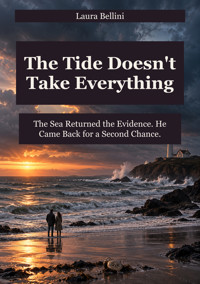















Cover
The Price of Your Closeness
She Came to Shut Down His Factory. She Never Expected Who She Would Trust.
Laura Bellini
ROMANS
Table of contents
Title page
INTRO
Chapter 1 - Numbers That Don't Add Up
Chapter 2 - Traces of Other People’s Decisions
Chapter 3 - December
Chapter 4 - Things That Never Make It into the Report
Chapter 5 - The Price of a Signature
Chapter 6 - Seven Days
Chapter 7 - New Oversight
Chapter 8 - The Boundary You Choose for Yourself
Chapter 9 - Version of Events
Chapter 10 - The Question Procedure Can’t Answer
Chapter 11 - What Can’t Be Undone
Chapter 12 - The Man Who Knew Too Much
Chapter 13 - The Ground Beneath Your Feet
Chapter 14 - The Terms of Staying
Chapter 15 - The Things Konrad Didn’t Say
Chapter 16 - The Price of Leverage
Chapter 17 - When the Truth Stops Being Anonymous
Chapter 18 - What You Give Up Willingly
Chapter 19 - Without Leverage
Chapter 20 - What Remains
Landmarks
Cover
Title page
Table of contents
Start of content
INTRO
The first thing I noticed when I walked into the plant was that nobody stopped working.
I had expected silence. People standing against the walls with their arms folded across their chests, maybe a few angry looks, maybe one person bold enough to ask whether I slept well at night, making a living out of other people losing their jobs. I knew the routine. Eight years in restructuring had taught me not to take it personally.
But here, the machines kept running.
The metallic pounding of the presses blended with the steady hum of the ventilation system. Somewhere to my left, a pallet truck squealed, and from the open doors of the assembly hall came the short hiss of compressed air. Dozens of people carried on with their work as though they had no idea that the black folder tucked beneath my arm contained the timetable for winding down the plant.
Or maybe they knew and had simply decided not to give me the satisfaction.
I took off my glasses, which had immediately acquired a thin film of moisture. Outside, the March rain had turned the parking lot into a gray mirror. Inside, it was warm and smelled of machine oil, metal, and something faintly like freshly cut wood, even though the documents said this place had produced nothing but components for industrial equipment for the past thirty-seven years.
“Ms. Natalia Radecka?”
I turned.
The man standing a few yards away did not look like someone who was about to lose his company.
He wasn’t wearing a suit. The sleeves of his dark shirt were rolled up to his elbows, and I could see a thin scratch on his forearm and a streak of black grease. He was tall, but that wasn’t what caught my attention. He looked at me without haste, with the irritating calm of a man who had already decided exactly what kind of person I was and saw no reason to offer me the chance to appeal.
“Yes.”
He came closer and held out his hand.
“Tomasz Wierzbicki.”
I knew.
I had read his name at least a hundred times over the past three weeks. President of the company, majority shareholder, thirty-eight years old. Automation engineer. Nine years ago, he had returned from Germany, taken over his uncle’s debt-ridden plant, and increased revenue for the next six years. Then came two weaker contracts, rising energy costs, the loss of their biggest customer, and an investment loan the bank was no longer willing to renegotiate.
According to my employer’s report, the company no longer had an economic reason to exist.
According to Tomasz Wierzbicki’s hand, which I was shaking now, the report was not yet a verdict.
“I thought you were coming tomorrow,” he said.
“My schedule says today.”
“The schedule I received says tomorrow.”
He let go of my hand. A fraction later than politeness required, but too soon for me to make anything more of it.
Which was exactly why I remembered the moment.
I opened my folder.
“The updated schedule was emailed on Monday.”
“I didn’t receive an update.”
“I can resend it.”
“Please do.”
He did not try to prove that I was lying. That would have been easier. Instead, he stepped aside and gestured toward the doors leading onto the production floor.
“Since you’re already here, I’ll show you the plant.”
“I’d like to discuss the financial documents first.”
“I know.”
“Then?”
He looked past me at the rows of machines and the people working at their stations.
“If you’re going to decide how much of this place gets sold for scrap, you should at least see what it is you’re shutting down.”
There was no theatrics in the way he said it. No accusation.
Just a fact.
It irritated me more than it should have.
“The decision to close the plant was made before I arrived.”
For the first time, something changed in his face. Not much. His jaw tightened.
“By people who have never been here.”
“By the holder of the majority of the company’s debt.”
“That isn’t an answer.”
“It’s the answer that matters legally.”
For a moment, we stood looking at each other over the noise of the machines.
I was used to men trying to undermine my competence. They had different methods. They asked my age, addressed the junior analyst instead of me, explained their own balance sheets to me, or offered me coffee in a tone that suggested I ought to be the one bringing it.
Tomasz Wierzbicki did none of those things.
It was inconvenient.
“All right,” he said at last. “Then I’ll show you something that matters financially.”
He headed toward the production hall. I hesitated for only a second before following him.
At the first production line, he stopped beside a woman in a navy work coat. She looked to be around fifty and was checking small metal components with a caliper.
“Mrs. Ewa has worked here for twenty-six years,” Tomasz said.
The woman looked up.
“Twenty-seven in June.”
“If we make it that far,” he replied.
She didn’t smile.
Neither did I.
“You don’t have to do this,” I said more quietly once we had walked away.
“Do what?”
“Introduce me to every employee so I’ll remember their faces later.”
He stopped so abruptly that I almost walked into him.
“Ms. Radecka, if you can genuinely lay off one hundred and fourteen people and forget every one of their faces the next day, there’s nothing I can do to make this harder for you.”
I should have answered immediately.
I didn’t.
One hundred and fourteen.
The report said one hundred and seven.
“How many employees do you have?” I asked.
“One hundred and fourteen.”
“The documentation says one hundred and seven.”
This time, his gaze sharpened.
“Documentation from when?”
I took out my phone and opened the latest operational report. It was dated nine days earlier.
“According to this, one hundred and seven full-time positions.”
Tomasz stared at the screen for several seconds without touching it.
“That isn’t our report.”
“The data was provided by management.”
“I am management.”
The noise of the production floor suddenly began to bother me.
I scrolled down. Employee headcount was only one of dozens of fields. Inventory. Liabilities. Work in progress. Unused capacity. Tables that had formed the basis of the recommendation to shut the plant down.
“Who else has access to this data?” I asked.
Tomasz did not answer right away.
He walked over to a metal cabinet against the wall, unlocked it, and took out a slim binder. He placed it on the inspection table between us.
“Find the month when your report says we lost our biggest customer.”
I turned several pages.
Found it.
Then read it again.
The contract that, according to the documentation, had been terminated in November had an amendment signed in December. The customer had not only continued the relationship but extended it for another eighteen months.
Despite the heat of the hall, I felt cold.
“Is this the original?”
“Yes.”
“Why isn’t it in the documentation?”
“I’ve been trying to find that out for three weeks.”
I looked at him.
For the first time, I no longer saw the owner of the company I had come here to shut down.
I saw a man standing on the other side of a problem I might not understand at all yet.
“Ms. Radecka,” he said calmly. “Before you start selling my machines and handing out termination notices, answer one question for yourself.”
“What question?”
He pushed the binder toward me.
“Who wants you to believe so badly that there is nothing left here worth saving?”
Chapter 1 - Numbers That Don't Add Up
The binder lay between us on the metal table, and for several seconds I stared at the signed amendment as though I could force the paper to admit which version of reality was true. The first page carried the name of the customer whose loss had supposedly been one of the main arguments for shutting the plant down. On the last were signatures, stamps, and a date more than a month after the cooperation had allegedly ended. It was not a letter of intent, a purchase order, or a promise.
It was a binding contract.
“I need a copy,” I said.
“You’ll have one.”
Tomasz did not look like a man who had just won the first round. There was no satisfaction in him. He stood on the other side of the table with both hands resting against its edge, watching me so closely that it was beginning to irritate me.
“And the complete documentation for this customer. Invoices, orders, correspondence, delivery confirmations.”
“You’ll have those too.”
“And an up-to-date employee list.”
“Of course.”
I closed the binder.
“Is there anything else?”
“A lot more.”
“I’m asking whether you have another document that contradicts the material supplied to my firm this clearly.”
Tomasz raised his eyebrows slightly.
“And if I do?”
“Then it would probably be better to stop turning this into a surprise presentation and put everything on the table.”
For a moment, I thought he would answer with something equally sharp. Instead, he straightened and looked toward the production floor.
“Let’s go to my office.”
I disliked people taking control of meetings I was formally supposed to be running.
I disliked it even more when they had a good reason.
I put my phone into my bag, picked up my folder, and followed him.
His office was on a mezzanine overlooking part of the production area. One wall was glass, giving him a view of almost the entire first line from his desk. Nothing inside matched the image of a company owner preparing to sell off assets. No family photographs, awards, leather chairs, or decorative executive toys. Two monitors, stacks of technical documentation, a mug of cold coffee, and a metal model of a gear assembly beside the keyboard.
“Sit down,” he said.
“I’d rather work at the table.”
I pointed to the rectangular conference table by the window.
“As you wish.”
He brought over three binders, then another two. When he set them in front of me, I noticed an old white scar on his right hand, close to the base of his thumb. It did not suit a company president.
It suited a man who knew how to take a machine apart himself.
That should not have interested me.
I opened my laptop.
“Let’s start with November.”
Tomasz sat opposite me.
For the next hour, we stopped fighting because the numbers turned out to be demanding enough on their own. I compared the reports in our system with the plant’s accounting records. Tomasz opened folders, printed documents, explained the difference between contracted production and production actually released to the floor, and patiently answered questions neither of us could avoid.
The first discrepancy concerned headcount.
Not seven employees, as I had initially thought.
Nine.
Two people were on fixed-term contracts and, for reasons no one could explain, had dropped out of the summary. The other seven appeared in the HR system but not in the report sent to the creditor.
The second discrepancy concerned inventory value. In the documents my firm had received, the component stock was valued almost 1.8 million zlotys lower than in the plant’s own system.
“In theory, that could be an updated impairment,” I said.
“There was no impairment.”
“I’ll have to verify that.”
“Please do.”
He did not raise his voice.
Not once.
I was beginning to understand why that, specifically, was getting on my nerves. People in Tomasz’s position usually tried desperately to convince me. He behaved as though he did not need me to believe him.
He only needed me to keep looking long enough.
“Who prepared the monthly reports for the fund?” I asked.
“Adam Kulesza. Finance director.”
“Where is he?”
“On sick leave since Monday.”
I looked up.
“Coincidence?”
“I don’t know.”
“I have two emails from him in the documentation from last week.”
“He was still at work on Friday.”
“Have you been in touch with him?”
“He isn’t answering his phone.”
“Have you tried?”
Tomasz looked at me in a way that made me hear how absurd the question sounded.
“A dozen times.”
“He could genuinely be sick.”
“He could.”
I went back to the spreadsheet.
The fact that the finance director had gone on sick leave immediately before my arrival was not proof of anything. It could be exactly what it looked like.
A coincidence.
The problem was that ever since I had walked into the plant, the coincidences had begun arranging themselves into a pattern that was far too regular.
My boss’s name appeared on my phone.
Konrad Mejer.
“I have to take this.”
Tomasz stood.
“I’ll leave you alone.”
“You don’t have to.”
“I assume it’ll be easier for you to say unpleasant things about me if I’m not here to hear them.”
I almost smiled.
Almost.
“I have no problem saying unpleasant things to people in their presence.”
“I noticed.”
He left.
I answered the call.
“Natalia, are you there?”
“For an hour now.”
“And?”
I looked at the five binders spread across the table.
“We have a documentation problem.”
A short silence followed.
“What kind of problem?”
“The data we received doesn’t match the source records.”
“In what areas?”
“Headcount, inventory value, part of the revenue, and at least one major contract.”
Konrad sighed.
“They’ll show you anything if it delays the process.”
“The contract amendment has the customer’s signature.”
“A document can be signed and terminated later.”
“I don’t see a termination.”
“Then check.”
I knew that tone. Konrad used it when he considered a matter closed.
“I intend to.”
“Natalia, you’re not there to conduct a forensic audit. We have a committee resolution. The wind-down starts Monday.”
I looked through the glass at the production floor. Tomasz was talking to an operator at one of the machines. He was not standing beside him with folded arms. He had leaned over the control panel and was pointing at something.
“If the recommendation was based on incorrect data, we have to report it.”
“If the data is incorrect.”
“I just told you it is.”
“You told me you’re seeing discrepancies.”
I pressed my lips together.
Konrad was good.
That was why I had worked with him for six years.
He could separate fact from interpretation faster than most people managed to confuse the two.
“I need two days,” I said.
“You have a schedule.”
“I need two days to verify the sources.”
“You’re supposed to inventory the assets today and start preparing the redundancy plan tomorrow.”
“And what if tomorrow it turns out we’re shutting down a profitable company?”
This time, the silence lasted longer.
“That’s a very large if.”
“Large enough.”
I heard papers shifting on his end.
“Until five tomorrow. Not an hour longer. I’m not suspending the process, but you send no employee notices without my approval.”
“Fine.”
“And Natalia?”
“Yes?”
“Don’t get pulled into their narrative. Company owners always have a story about why the numbers are unfair to them.”
He hung up before I could answer.
I was left alone with the unpleasant feeling that a conversation that should have reassured me had done exactly the opposite.
Tomasz returned a few minutes later carrying two bottles of water.
He set one in front of me.
“How much time do I have?”
I looked at him.
“You heard?”
“A glass wall doesn’t mean glass doors. I didn’t hear anything. But I assume he wasn’t calling to ask whether you were enjoying yourself.”
“Until five tomorrow.”
“For what?”
“To check the documents.”
He sat down.
“And after that?”
“After that I’ll know more.”
“That wasn’t an answer.”
“It’s the only one you’re getting from me right now.”
For a moment, he turned the bottle between his hands.
“Your boss knows about the amendment?”
“Yes.”
“And he still wants to shut the plant down?”
“He wants me to confirm whether the document changes the assessment.”
“Interesting phrasing.”
“Normal phrasing.”
“For you.”
I put down my pen.
“Mr. Wierzbicki, if we’re going to spend the next several hours going through data, I suggest we establish one thing. I am neither your opponent nor your ally.”
“I know.”
“You don’t look like you know.”
“I look like a man whose plant is about to be shut down by the firm you work for.”
“I’m not the one who bought your debt.”
“But you’re the one who came here to close the doors.”
I did not answer.
Not because I lacked an argument. I had several. All of them were true, and all of them now sounded like ways of moving responsibility away from myself.
Tomasz looked away first.
“I’ll show you the warehouse,” he said. “If the inventory value is understated, that’s the easiest place to verify it.”
We went downstairs.
At the warehouse entrance, he handed me a reflective vest and safety glasses.
“You’re not going in without these.”
“Formally, I have full access.”
“Formally, I’m responsible for safety on this site.”
I took the glasses.
“Do you always need the last word?”
“I like people leaving this place with the same number of eyes they had when they came in.”
This time I smiled before I could stop myself.
He noticed.
Of course he noticed.
He did not comment, which was worse than if he had.
The warehouse turned out to be much larger than the photographic documentation I had received before coming here suggested. The racks reached almost to the ceiling, and neatly labeled containers sat in rows on pallets. Tomasz called over the warehouse manager, Paweł Rosiński, and asked him to generate the current inventory balance.
“How long will that take?” I asked.
“Two minutes,” Paweł replied.
I looked at Tomasz.
“My materials say the inventory count requires at least two days.”
“A complete physical count does. You can have the system balance immediately.”
“Who gave them two days?”
“Kulesza.”
Another name written in invisible ink onto my growing list of questions.
Paweł returned with a printout. The figure at the bottom was even higher than the one I had seen earlier.
“What accounts for the difference?” I asked.
“We received a component delivery for Line C this morning.”
“For which order?”
Paweł pointed to a code.
I wrote it down.
“Can I see the customer’s order?”
“Sure.”
Tomasz stepped closer.
“That’s for the contract we supposedly don’t have.”
I looked at him.
He was close enough that I could smell his shirt, clean and cool, oddly distinct amid the oil and metal. I took half a step back, more from a need to reclaim my space than because he had done anything wrong.
His gaze moved across my face, but he did not follow me.
I appreciated that more than I wanted to.
“I didn’t say you didn’t have it,” I replied.
“The fund did.”
“The fund received documents.”
“The fund received some documents.”
“That’s exactly what I’m trying to establish.”
“And I’m trying to tell you that someone has spent months constructing a picture of a company that doesn’t exist.”
“That is a serious accusation.”
“I know.”
“Do you have proof?”
“I have a plant that doesn’t operate according to the paperwork, and employees who don’t exist according to the paperwork.”
I had no good answer to that.
We returned to his office after three. I was getting hungry, but I had no intention of taking a break. I had less than a day to review material that would normally be analyzed by an entire team.
Tomasz took a paper-wrapped sandwich from a drawer.
“No.”
“I haven’t said anything yet.”
“You were going to offer me food.”
“I was going to eat my own lunch.”
Heat rose into my face.
Tomasz unwrapped the sandwich.
“But since you’ve raised the subject, there’s a vending machine downstairs.”
“I know.”
“The coffee is terrible.”
“I’ll survive.”
“That must be the professional motto of restructuring consultants.”
I looked at him.
“Are you always this courteous to people trying to save your company?”
He stopped eating.
“I thought you weren’t my ally.”
He had me.
I didn’t like it.
I turned my laptop toward him.
“Look.”
On the screen was a copy of the monthly report stored in our repository. His name appeared at the bottom.
Tomasz leaned over the table.
“What is this?”
“The January report.”
“I can see that.”
“It has your signature.”
He studied the document for longer.
“No.”
“No what?”
“I didn’t sign this.”
I enlarged the section.
“It looks like your signature.”
“Because it is my signature.”
“You just said—”
“I said I didn’t put it on this document.”
He pulled the laptop closer. His arm came near mine, but this time I did not move away. We both stared at the screen.
“Where could it have come from?” I asked.
“Dozens of other documents. Resolutions. Contracts. Powers of attorney.”
“Do you use scanned signatures?”
“For some internal documents. Not reports sent outside the company.”
“This one was submitted as a PDF.”
“By me?”
I opened the file properties.
Author: AW_Finance.
“No,” I said. “Through the finance department account.”
Tomasz straightened.
“Kulesza.”
“Or someone with access to the account.”
“Adam has access.”
“Who else?”
He did not answer.
I looked at him.
“Mr. Wierzbicki?”
“Me.”
For the first time all day, I saw something in him that was neither calm nor anger.
Caution.
“Do you have the password?”
“No. I have administrator privileges.”
“Who knows that?”
“Several people.”
“So this document does not prove Kulesza did it.”
“No.”
“Nor does it prove you did.”
“No.”
I closed the file.
“But it does prove that someone sent a report bearing your signature which, according to you, you never approved.”
Tomasz sat opposite me.
“Are you starting to understand now?”
I did not answer immediately.
I looked at the man I had been supposed to treat, only that morning, as the owner of a company unable to meet its obligations. Now he sat across from me with documents between us suggesting that someone might have spent months deliberately making his company look worse than it was.
Might.
That word was everything.
I had no proof of fraud. I had discrepancies. Suspicious reports. An absent finance director. A signature that might have been copied. And a man who had just as much reason to convince me he had been deceived as someone else might have had to close his plant.
“I’m starting to understand that I don’t know who to trust,” I said.
Tomasz looked directly into my eyes.
“That, at least, is sensible.”
Chapter 2 - Traces of Other People’s Decisions
At five thirty, the plant began to empty out, but I was still sitting in Tomasz’s office.
The afternoon shift was scheduled until ten, so the production hall did not fall silent completely. There were simply fewer people, and the rhythm of the machines became less intense. Beyond the glass wall, the world looked different from the way it had a few hours earlier.
Not like a company on the edge.
Like a company at work.
Eleven printouts, two binders, my laptop, and a notebook lay across the table. With every page I filled, the notebook looked less like preparation for a liquidation and more like a list of questions for an investigation no one had asked me to conduct.
Tomasz came back from the floor and set another folder beside me.
“Deliveries for the last three months.”
“All of them?”
“Everything we have in the system.”
“That is not an answer that reassures me.”
“It doesn’t reassure me either.”
He sat across the table.
He had changed his shirt. Only then did I realize how quickly I had become accustomed to rolled-up sleeves and traces of grease on his hands. Now he wore a dark sweater that softened some of his severity without making him any easier to read.
“Kulesza still isn’t answering?” I asked.
“No.”
“Does he have family?”
“A wife.”
“Have you spoken to her?”
“I’m not going to chase a sick employee through his family.”
“Even if he may have falsified reports?”
Tomasz leaned back in his chair.
“You just said we don’t know that yet.”
“I’m checking whether you remember your own arguments.”
“I remember all of them.”
I already knew there would be no safely superficial conversation with him.
I opened the new folder.
For the next forty minutes, we compared deliveries with the reports. The longer I looked, the more the pattern irritated me.
In December, the actual order level was eleven percent higher than what had been reported to the creditor.
In January, thirteen percent.
In February, almost fifteen.
That did not mean the company was healthy. Energy costs were still high. The debt was real. Two production lines were operating below profitable utilization. The plant needed capital and time it might not get.
But the difference between a company in difficulty and a company with no future was enormous.
And someone had been moving Wierzbicki Automatyka toward the second category with remarkable consistency.
“Why didn’t you notice earlier?” I asked.
Tomasz did not answer right away.
It was the first question all day that truly closed him off.
“I noticed something was wrong.”
“When?”
“In January.”
“And what did you do?”
“I asked Adam for an explanation.”
“What explanation did he give you?”
“Timing differences in how contracts were booked.”
“You believed him?”
“Yes.”
“Why?”
He ran his tongue along the inside of his cheek.
“Because he’s worked with me for seven years.”
“That isn’t a reason.”
“It was for me then.”
There was no defensiveness in his voice.
If anything, the anger seemed directed at himself.
“When did it stop being enough?”
“When the fund terminated the restructuring agreement.”
I put down my pen.
“For breaching the covenants?”
“Among other things.”
“The reports show you exceeded the permitted net debt-to-EBITDA ratio.”
“According to our data, we didn’t.”
“By how much?”
“We were just under the limit.”
That changed more than anything else I had seen.
“Do you have the calculation?”
“Yes.”
“Why wasn’t it sent to the fund?”
Tomasz looked at me for several seconds.
“It was.”
I felt that familiar pressure beneath my ribs.
Not fear.
Something much more dangerous in my profession.
Interest.
“When?”
“February twelfth.”
“To whom?”
“Directly to the analyst responsible for our portfolio, with Mr. Mejer copied.”
I went still.
“Konrad Mejer?”
“I assume you don’t know another Mejer working on this matter?”
I ignored his tone.
“Do you have that email?”
Tomasz stood, went to his desk, and searched the computer for a moment.
“I have it in Sent.”
He turned the screen toward me.
The email existed.
Konrad’s address was in the CC field.
That did not mean he had read it. He received hundreds of messages. It did not even mean the attachment contained the correct calculations.
But I could no longer treat the entire situation as one finance director’s mistake.
“Will you forward this to me?”
“If you give me an address no one else can access.”
He looked up.
“Work or personal?”
“Work.”
“You just said you wanted an address only you could access.”
“I’m the only person with access to my account.”
“Your administrator does too.”
“We’re not running a company in one of your spy movies.”
“This morning, we weren’t running one where someone signs reports in my name either.”
I felt a flare of irritation because he was right to a degree I did not want to acknowledge.
“Send it to my work address. I’ll secure the message.”
Tomasz did it while I watched.
When my computer gave a quiet chime, I opened the attachment.
The spreadsheet was detailed. Formulas. Assumptions. Actual EBITDA. Repayment schedule. Sales forecast.
At first glance, it all made sense.
“I need to verify the sources,” I said.
“I knew you were going to say that.”
“Because it’s the correct answer.”
“I’m not criticizing it.”
“It sounded like criticism.”
“Do you often hear criticism before anyone says it?”
I looked at him.
He wasn’t smiling.
He had hit the mark for the second time that day.
“Do you often analyze people instead of answering questions?”
“Only when those people are analyzing my company.”
“That must be exhausting.”
“Today it is.”
I did not know whether he meant me, the situation, or both.
My phone vibrated on the table.
A message from Konrad.
“Status?”
I typed: “Verifying source data. Some key reports may be inconsistent with the operational system. I’ll update you in the morning.”
His reply came immediately.
“Do not expand scope.”
I stared at those three words longer than necessary.
“Something wrong?” Tomasz asked.
I turned the screen away.
“None of your business.”
He did not push.
The fact that he respected the boundary without so much as half a comment impressed me more than it should have.
I closed the laptop.
“That’s enough for today.”
Tomasz looked at his watch.
“It’s six twenty.”
“I have a hotel.”
“Where?”
“In the center.”
“Which one?”
“That is still none of your business.”
Something that might have been a smile touched the corner of his mouth.
“I’m asking because the road over the viaduct closes after five. If you’re staying at one of the hotels by the market square, your navigation may send you down the truck detour.”
“Why does everything in this company sound like a test?”
“Not everything.”
“What doesn’t?”
“Fires.”
I slid the documents into my folder.
“What about fires?”
“We don’t test anything during fires. We run immediately.”
I laughed briefly before I could stop myself.
Tomasz looked at me with unmistakable surprise.
“So you can.”
“Can what?”
“Nothing.”
“Finish the sentence.”
“I was going to say you can laugh.”
“Very perceptive.”
“After today, I was beginning to have doubts.”
I stood.
“Tomorrow at eight.”
“I’ll be here.”