All the Nights Apart - Twenty Years Later, Their Shared Dream Opens Its Doors Again. ebook
Laura Bellini
Uzyskaj dostęp do tej i ponad 240000 książek od 14,99 zł miesięcznie
- Wydawca: ALL-IN Rafał Płonkowski
- Kategoria: Romanse i erotyka•Romanse
- Język: angielski
Twenty years ago, Anna Radecka and Michał Wolski spent their nights inside the Meteor cinema, imagining what the forgotten building could become. A cinema that stayed alive after the final credits. A café, a small stage, late screenings, concerts and conversations that lasted until morning. They were young, ambitious, dangerously close to becoming more than friends - and convinced they still had time to decide what they meant to each other.
Then Michał left for Berlin.
Their project disappeared.
So did whatever might have happened between them.
Now Anna is forty-five, an accomplished architect with her own practice and a life built carefully on decisions she made without him. When she takes responsibility for bringing the long-closed Meteor back to life, she expects difficult budgets, old installations and impossible deadlines.
She does not expect Michał to walk back through the same doors.
And she certainly does not expect the cinema to begin returning pieces of their past.
An old recording. A letter Anna never received. Documents suggesting their original project was withdrawn under circumstances neither of them understood. A concept that later appeared somewhere else. Messages from someone who knows exactly what they are searching for - and wants either to stop them or push them toward the truth.
The closer Anna and Michał get to understanding what happened twenty years earlier, the harder it becomes to separate professional history from personal memory. The attraction between them is still there, but attraction is the easy part. Trust is harder - especially when Anna discovers that Michał has also kept something from her.
If they want another chance, neither of them can simply recover the people they used to be. They have to decide whether the adults they became can choose each other now.
And while the Meteor moves closer to reopening, the truth threatens everything Anna has worked to build: the project, her faith in a former mentor, and the fragile relationship growing between two people who already lost twenty years once.
All the Nights Apart is a contemporary second-chance romance about unfinished dreams, authorship, trust, mature desire and the difference between returning to the past and choosing a future.
This publication was prepared using tools that support the creative process, including artificial intelligence solutions. The final concept, structure and editing are the responsibility of the author.
Ebooka przeczytasz w aplikacjach Legimi na:
Liczba stron: 283
Rok wydania: 2026
Odsłuch ebooka (TTS) dostepny w abonamencie „ebooki+audiobooki bez limitu” w aplikacjach Legimi na:
Podobne



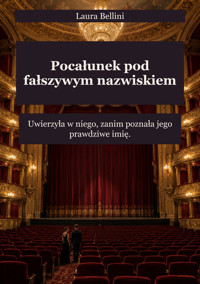




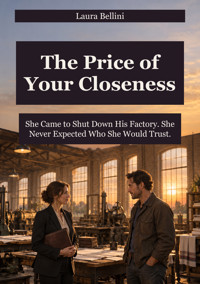







Cover
All the Nights Apart
Twenty Years Later, Their Shared Dream Opens Its Doors Again.
Laura Bellini
ROMANS
Table of contents
Title page
INTRO
Chapter 1 - The Second Set of Keys
Chapter 2 - Conditions for Opening
Chapter 3 - The Letter That Never Arrived
Chapter 4 - The Room Behind the Wall
Chapter 5 - One Hundred and Sixty Seats
Chapter 6 - Between the Plan and the Memory
Chapter 7 - Locker Two Hundred Nineteen
Chapter 8 - Night Forty-Seven
Chapter 9 - The Access Card
Chapter 10 - The Voice from a Disconnected Number
Chapter 11 - The Power of Attorney
Chapter 12 - Everything We Never Said
Chapter 13 - The Price of Silence
Chapter 14 - The Slide That Wasn’t Supposed to Be There
Chapter 15 - The Message I Never Sent
Chapter 16 - The Condition I Won’t Sign
Chapter 17 - The Recording That Was Supposed to Explain Everything
Chapter 18 - The Second Set of Keys
Chapter 19 - Names in Their Rightful Place
Chapter 20 - The First Night That Stayed
Landmarks
Cover
Title page
Table of contents
Start of content
INTRO
The first key didn’t fit.
For several seconds, I stood outside the side door of the Meteor cinema with wet hair plastered to my cheek, trying to convince myself that was a perfectly reasonable excuse to go back to the car. It was almost eleven at night, October rain streamed down the windows of the shuttered shops along Wschodnia Street, and I was forty-five years old, with enough experience to know that important decisions should not be made after ten hours of work and one sandwich eaten over the design for a hotel lobby.
The problem was, I had made the decision three weeks earlier.
Now I was holding the consequences on a metal key ring.
I chose the second key.
The lock gave way with a heavy clunk.
“Of course,” I muttered. “You just had to make it dramatic.”
I wasn’t sure whether I was talking to the lock, the building, or myself.
The door opened perhaps a foot and stopped against something soft. I pushed with my shoulder. A pile of old advertising flyers scraped across the floor, apparently swept there during the last cleanup. “French Night. Three Films. One Ticket.” The date on the faded paper was twenty-two years old.
I picked one up.
For a moment, I was twenty-four again.
Back then, I worked weekends at the Meteor, even though technically I was studying architecture and should have been spending every free hour on my projects. I sold tickets, made coffee on a machine older than I was, and helped close the auditorium after the final screening. Sometimes I stayed until two or three in the morning.
Not alone.
I crushed the flyer a little harder than I meant to, then smoothed it out with my thumb and left it on the windowsill.
I had come here to inspect the building.
That was all.
The official preparatory period started on Monday. I had six months to present the final modernization concept, secure heritage approvals, and prove to the fund covering part of the investment that I had not lost my mind when I submitted an offer for a ten-year lease on a cinema that had been closed for seven years.
My partners at the firm believed I had.
I said we were diversifying.
It sounded much better than: when I found out the Meteor might be turned into a discount store, I couldn’t bring myself to let it disappear.
I switched on the flashlight on my phone.
The lobby looked worse than it had during the inspection with the city official. In daylight, dust was only dust, cracked plaster needed repairs, and peeling veneer was simply a line item in a budget. At night, every object recovered its history. The shuttered ticket booth. The brass railing. The poster cases with nothing left inside but yellowed rectangles where adhesive tape had once been.
I walked toward the doors to the main auditorium.
A small dent was still visible in the wood at hip height.
I smiled before I could stop myself.
“This will be the entrance to the café,” Michał had once said, leaning a roll of plans against those doors.
“This is the entrance to the auditorium.”
“For now. You think too short-term.”
“I’m twenty-four. I’m allowed.”
“Then think long-term for five minutes.”
After that, he took my pencil and I tried to grab it back. He pulled his hand away. I shoved him. His hip hit the door handle.
We laughed so loudly that the cinema manager came out of his office and threatened to throw us both out.
Twenty years.
I ran my finger over the dent.
I didn’t know why that one small mark was harder to bear than all the photographs I had deleted years ago.
I opened the doors.
The smell was exactly what I expected: dust, damp, old upholstery, and the wood of the stage. The auditorium sloped gently toward the screen. Two hundred and seventy-eight seats, one hundred and nine of which needed restoration, thirty-four likely needed replacing, and the rest required professional cleaning. I knew because I had spent the last two weeks analyzing every meter of the building the way I analyzed every investment.
Numbers were safe.
Numbers didn’t remember that we had once sat in the last row after a late screening and designed a future we had no money to afford.
A cinema. A café. A small stage. Films shown late into the night. Meetings, concerts, exhibitions. A place that would stay alive while the rest of the city went to sleep.
Our place.
The most absurd thing was that, twenty years later, my current design was not all that different from the sketches we had drawn in Michał’s notebook.
Only he was no longer in it.
A light flickered.
I froze.
It wasn’t the light from my phone.
One of the emergency lights above the side aisle came on.
Then another.
“Great.”
The electrical installation was supposed to be disconnected except for the technical circuit. That was what the administrator had assured me.
I started toward the exit when a soft mechanical click came from the back of the auditorium.
Once.
Twice.
Three times.
I knew that sound.
I turned toward the projection booth.
“Impossible.”
The clicking accelerated.
A white rectangle appeared on the screen.
Light cut through the darkness above my head, revealing particles of dust spinning in the beam. For several seconds, the image trembled, then steadied.
I saw the Meteor ticket booth.
The old one. Before the 2004 renovation.
The footage was grainy, recorded on an amateur camera. Someone panned across the empty lobby until a girl in a red sweater stepped into frame.
Me.
Twenty years younger.
Laughing.
I held a sheet of paper up to the camera.
At the top, handwritten in large letters, were the words: METEOR 2.0.
Below them were our sketches.
A chill went through me that had nothing to do with the temperature.
I had never seen this recording before.
On the screen, my younger self turned and began saying something to the person holding the camera. The film had no sound, but I remembered the way I used to shape my mouth when I spoke, even remembered that sweater. The camera shook, then the image moved toward the mirror hanging opposite the ticket booth.
In the reflection, I saw a man.
Tall, slim, holding the camera to his face.
Michał.
I stepped back.
The projector stopped.
The image vanished.
The auditorium went dark again.
I heard the projection booth door open.
I didn’t move.
The footsteps on the metal stairs were slow and familiar in a way I could not explain rationally. I had not seen him in twenty years. A person should not remember the way someone else came down a flight of stairs for half an adult lifetime.
And yet I did.
First I saw his silhouette.
Then his face.
He was older. Of course he was. His hair was shorter, gray at the temples, and the lines beside his mouth made him look more severe than the boy I had carried for years in the most unnecessary corner of my memory.
But it was him.
Michał stopped a few yards away from me.
For a moment, he looked at me as though every word he had prepared in advance had suddenly become useless.
“Anka.”
No one had called me that in years.
My fingers tightened around the keys.
“What are you doing here?”
He looked at the screen, then back at me.
“The same thing you are.”
“Impossible.”
“Why?”
“Because I have the keys.”
He took one hand out of his coat pocket.
A second metal key ring lay in his palm.
With an identical set.
I didn’t yet know which was worse: that someone had given Michał keys to my cinema, that he had a recording from our last autumn together, or that after twenty years the first thing I noticed was the way he said my name.
“Looks like,” he said quietly, “this time we’re going to have to open it together.”
Chapter 1 - The Second Set of Keys
For several seconds, I stared at the keys resting in Michał’s palm and wondered whether there was any reasonable explanation for a situation in which a man I had not seen in two decades appeared in the middle of the night inside a building I had just committed a significant portion of my savings to renovating, started an old projector showing footage of our youth, and then announced that we were going to have to do something together.
I couldn’t find one.
“No,” I said.
Michał raised an eyebrow.
“That was quick.”
“What was?”
“Making a decision before you know what we’re talking about.”
“I’ve developed a few new skills over the past twenty years.”
“I remember you were pretty good at saying no back then too.”
“And I remember you were pretty good at disappearing.”
The words came out sharper than I intended. That irritated me more than his presence did. I had come here with a folder of measurements, a cost calculator, and a six-month plan. From now on, everything concerning the Meteor was supposed to be measurable. Square meters, deadlines, structural loads, number of seats, the cost of restoring a chair, replacing the wiring, revenue from the café. And yet all Michał Wolski had to do was say my name and a room opened inside me that I had spent years believing was permanently bricked up.
I looked toward the projection booth.
“Did you start that film?”
“I started the projector. I didn’t know what was on the reel.”
“You seriously expect me to believe you found a random reel, randomly threaded it, and it randomly happened to contain our youth?”
“If I’d wanted to stage a dramatic entrance, I probably would’ve chosen footage where I had better hair.”
I almost smiled.
Almost.
“Michał.”
He sobered.
“I’ve been here since nine. Kaczmarek asked me to do a preliminary review of what was left in the booth. Equipment, reels, documentation, anything that can’t be thrown away before the inventory. I found several reels in the metal cabinet. This one was already sitting on the editing table.”
“Kaczmarek gave you keys?”
“Yes.”
Halina Kaczmarek managed several municipal properties and was someone I had exchanged so many messages with over the past month that I knew how she used commas. She had not mentioned Michał once.
I took out my phone.
“It’s eleven at night.”
“I noticed.”
“I’m going to call her.”
“I assumed you would.”
I looked at him.
“Were you always this irritatingly calm?”
“Not around you.”
This time, I was the one who looked away first.
I went out into the lobby, where the signal was slightly better, and called Kaczmarek. She answered after five rings in the voice of someone who had fallen asleep in front of the television and was not pleased to discover the world still existed.
“Anna?”
“Sorry it’s so late. I’m at the Meteor.”
A brief silence.
“Now?”
“Yes. And Michał Wolski is here.”
The silence lasted longer.
“Ah.”
I hated that kind of “ah.” It usually came right before information that should have been shared earlier.
“Halina.”
“We were going to talk about this tomorrow morning.”
“About what exactly?”
I heard rustling, as if she were sitting up in bed.
“The city needs to close several formal issues connected with the grant. Wolski is conducting an inventory of the historic equipment and archival materials for us. It doesn’t change your agreement.”
I looked through the doorway at Michał. He was standing by the first row of seats, looking at something on his phone, granting me the appearance of privacy.
“If it doesn’t change anything, why don’t I know about it?”
“Because we only signed the agreement with him today.”
“With him?”
“With the foundation he works with.”
“What foundation?”
“Second Projection. Details tomorrow. Nine-thirty, city hall, room one eighteen.”
I closed my eyes.
“I have a meeting with the electrical contractor tomorrow at nine-thirty.”
“Move it.”
“I can’t move everything because someone remembered, after I signed the letter of intent, that there’s one more participant in this project.”
“Anna, he is not a participant in the project. Not yet.”
From behind the doors, I heard Michał’s voice.
“That sentence isn’t going to age well.”
I pulled the phone away from my ear.
“Are you listening?”
“You speak very clearly.”
I went back to the call.
“Halina, does he have any right to influence the scope of the renovation?”
Kaczmarek sighed.
“Come in tomorrow morning.”
That was answer enough.
I ended the call.
Michał looked at me and slipped his phone into his pocket.
“She should have told you sooner.”
“You knew?”
“Since four.”
“And it didn’t occur to you that maybe you should call?”
“I don’t have your number.”
“You could find it in thirty seconds.”
“I know.”
“So?”
He hesitated. Visibly. For the first time since I had seen him.
“I wasn’t sure I should.”
It was so characteristic of him it hurt. Michał had always been perfectly capable of taking risks when the stakes involved things. He climbed onto locked roofs, negotiated with people twice his age, drove a borrowed car with a broken taillight because he wanted to set up an outdoor screening on an abandoned playing field. But when something involved us, he could think for so long that time eventually made the decision for him.
“You weren’t sure twenty years ago either?”
Something almost imperceptible changed in his face.
“Anka...”
“No. We are not doing this.”
“You started it.”
“And now I’m ending it.”
I walked past him and climbed the steps to the projection booth.
The room was smaller than I remembered. When I was in my twenties, it had seemed like the center of the universe. This was where the beam left for the auditorium, where the film prints were stored, where you could watch the audience through a small rectangular window. Now the walls were coated in dust, some of the shelves stood empty, and boxes were stacked on the floor with labels written in marker: POSTERS, DOCUMENTATION, TECHNICAL, TO CHECK.
The old projector was still idling.
I switched it off.
“You shouldn’t have turned that on without an electrician.”
“The booth circuit was inspected last week.”
“How do you know?”
“I was here for the inspection.”
I turned around.
“You’ve been here before?”
“Twice.”
“Before the agreement was signed today?”
“Halina asked me a month ago for an opinion on whether the equipment had any archival value.”
“A month ago.”
“Yes.”
“When I was negotiating the lease.”
“Apparently.”
“And of course you didn’t know who was negotiating it.”
He didn’t answer immediately.
That was enough.
“You knew.”
“I saw the name of your firm in the materials.”
“When?”
“During my second visit.”
“Two weeks ago?”
“About that.”
I gave a short laugh with no amusement in it.
“Unbelievable.”
“What?”
“How consistently you can be present without letting anyone know you’re there.”
“Do you want to talk about what happened before, or about the cinema?”
“The cinema.”
“Good.”
His tone changed immediately. I remembered that too. Give Michał a concrete problem and he could set emotion aside and direct all his attention toward the task. I had once loved that about him.
Later, I had hated it for a very long time.
He walked over to the editing table and pointed to a metal film can.
“This reel was here.”
Someone had written on the lid in black marker: M2 / NIGHT 47.
“M2,” I said.
“Meteor 2.0.”
“I know.”
“Do you remember Night 47?”
I shook my head.
“Did we number the late screenings?”
“No. I numbered the nights we stayed after closing.”
I looked at him.
“You numbered them?”
“In a notebook.”
“Why?”
He shrugged.
“I was twenty-five. I did a lot of things without sensible justification.”
“Like disappearing.”
“You promised we were done with that.”
“You’re right.”
I leaned over the reel. The film had been wound neatly, much more carefully than the other materials. In addition to the writing, the can had a small round sticker marked 218.
“What does that mean?”
“I don’t know.”
“The others don’t have it?”
Michał pulled two more cans from a shelf. One had a similar sticker marked 216, the other 220.
“They do.”
“Archive order?”
“Maybe.”
“Who did the inventory?”
“The last full one was seventeen years ago. Signed by Stefan Lis.”
I knew the name.
“The projectionist.”
“Yes.”
Stefan had been one of those people who seemed to belong to the building itself. Broad hands, fingers permanently stained with grease, and a way of talking about films as though he personally knew every director. When we worked at the Meteor, he was already in his sixties. I had assumed he was long dead.
“He’s still alive?”
“Eighty-three. Lives in Konstantynów. Halina has his number.”
“You spoke to him?”
“I haven’t had time.”
I took out my phone and photographed the film can.
“I’ll talk to him.”
“We’ll talk to him.”
“There is no we.”
“You can tell me that tomorrow in front of the city official who signed the contract with the foundation.”
“With pleasure.”
I walked over to the shelves of documentation. There were a dozen or so binders, most of them cracked, labeled with years and invoice numbers. I pulled out one of the oldest. Inside were electricity bills, inspection cards, film lists.
Nothing about us.
Michał sat on the edge of the table.
“You still do the same thing.”
“What?”
“When you’re angry, you start organizing things.”
“It’s one of the traits that pays my bills.”
“I know.”
I looked at him.
“You know?”
“I’ve followed your work.”
That stopped my fingers on the plastic sleeve inside the binder.
“Why?”
“Because it was good.”
“I didn’t ask for a review.”
“I know.”
“So why?”
Michał lowered his gaze to the floor.
“Sometimes I wanted to know where you were.”
The answer was simpler than I expected, and that made it harder to dismiss. I would have preferred a joke. Or an evasive line. Something I could immediately classify as irritating.
“You could have asked.”
“You?”
“For example.”
“There was a period when my attempts to contact you ended pretty unambiguously.”
My jaw tightened.
“You sent two emails.”
“More.”
“I received two.”
Michał looked up.
The room suddenly became very quiet.
“How many?”
“Two. One from Berlin. Another maybe six months later.”
“I sent seven.”
I stared at him.
“No.”
“Yes.”
“I didn’t get seven.”
“That doesn’t mean I didn’t send them.”
“Michał, that was twenty years ago. Email servers already worked back then.”
“Not every message was an email.”
Something in his voice made me put the binder down.
“What else did you send?”
“Not now.”
I laughed in disbelief.
“Seriously?”
“Seriously.”
“You drop something like that into the conversation and then say ‘not now’?”
“Because I don’t want to have this conversation at midnight while we’re standing over a box of utility bills.”
“You started it.”
“No. You said I could have asked. I answered.”
“Then finish answering.”
For a moment he looked at me in a way I remembered far too well. He didn’t avoid eye contact. He never had. That was precisely why his silence could be so infuriating. You always had the feeling Michał heard everything, weighed every word, and deliberately decided which part of the answer he was not going to give you.
“I sent a letter,” he said at last. “I also left an envelope here with Stefan. It was supposed to reach you if you didn’t come before I left.”
A chill moved through me.
“Left for where?”
Now he looked surprised.
“Berlin.”
“I knew you were going to Berlin.”
“You were supposed to come to the Meteor the night before.”
“No, I wasn’t.”
“We arranged it.”
“No.”
“Anka.”
“I did not have plans to meet you.”
We stared at each other in silence.
Beneath the anger, something much less comfortable began to appear.
Uncertainty.
Michał looked away first.
“All right,” he said. “That is one of the things we are not going to settle tonight.”
“Why?”
“Because each of us is convinced we remember something different.”
“I remember very clearly.”
“So do I.”
“The next day Paweł told me you’d left.”
“The next day I was sitting at the airport convinced you hadn’t come because you’d seen the documents.”
I froze.
“What documents?”
He didn’t answer.
I stepped closer.
“Michał. What documents?”
“The ones connected to the project.”
“What project?”
He looked at the box with the reel.
“Meteor 2.0.”
For a moment, all I could hear was the steady rain beating against the small booth window.
“I don’t understand.”
“I know.”
“Then explain.”
“I don’t have anything complete enough to explain yet. I have fragments. That’s why I’m here.”
“I thought you were here because of the foundation contract.”
“That too.”
I hated the word too.
It meant another layer.
Another motive.
Another truth I did not yet know.
“What did you find?”
Michał went to one of the boxes and pulled out a thin gray folder. He didn’t hand it to me immediately.
“It isn’t complete. Several attachments are missing.”
“Michał.”
I held out my hand.
He gave me the folder.
The first page bore the Meteor stamp and a date from years ago. Below it read: “Modernization and Night Program Project - Working Materials.”
Under that were two names.
ANNA RADECKA
MICHAŁ WOLSKI
Pressure tightened beneath my breastbone.
“We never submitted this.”
“I thought the same.”
I turned the page.
Our ground-floor plan.
Not an exact copy, but unquestionably ours. The same café on the left. The same stage in front of the screen. The same proposal to move the ticket booth. In the margin was a handwritten note in a script I didn’t recognize:
concept suitable for submission to municipal program
“Where did you get this?”
“It was in the documentation transferred from city storage.”
“Why would the city have our project?”
“That’s exactly what I’d like to know.”
I turned the pages faster and faster. There were eleven in total. The last three were forms I had never seen before.
One contained an amount.
Twenty-five thousand złoty.
“What’s that?”
“Preliminary grant amount.”
“We never received any grant.”
“I know.”
“We never even applied.”
Michał said nothing.
I turned over the final page.
The field marked “project authors” contained our names.
Below it was the status field.
WITHDRAWN.
“By whom?” I asked.
“That’s exactly what isn’t there.”
“Reason?”
“Attachment number four.”
I looked at the document list.
Attachment four was missing.
I closed the folder.
“Who found it?”
“I did.”
“When?”
“During my second visit.”
“So two weeks ago.”
“Yes.”
“And that’s why you took this job.”
He didn’t deny it.
“Among other reasons.”
“That isn’t an answer.”
“It is.”
“No. It’s part of an answer.”
“For now, parts are all I have.”
I put my hands on the table. I needed the cool surface beneath my fingers.
For twenty years, I had been certain of one thing: Meteor had been a dream that never left a sketchbook. The idea of two people who were too young and believed that if they drew something precisely enough, the world would let them build it. Then Michał left. I finished university. Meteor kept operating for years, getting worse and worse, until eventually it closed.
A simple story.
Once painful.
Later merely old.
The folder lying in front of me changed one basic fact.
Someone had taken our dream seriously.
Someone had sent it somewhere.
And then someone had withdrawn it.
“Could Stefan know?” I asked.
“Maybe.”
“We’ll call him in the morning.”
Michał nodded.
“Together?”
“Don’t get used to it.”
The faintest smile appeared on his face.
“I’ll try.”
I picked up the folder.
“This stays with me.”
“No.”
I looked at him.
“Excuse me?”
“The documents are under inventory. We can’t remove them.”
“We?”
“Both of us.”
“I’m the leaseholder.”
“Not yet. You’ve signed a letter of intent and have a conditional decision.”
He hit exactly where he shouldn’t have.
“You read my documents?”
“They’re part of the proceedings.”
“You read them.”
“Yes.”
“Wonderful.”
I put the folder back down.
“I’m taking photographs.”
“You can.”
“Thanks for the permission.”
“I wasn’t giving you permission.”
“I know. That’s why it was funny.”
I photographed every page. By the time I finished, it was almost midnight.
Michał locked the metal cabinet and I switched off the light in the booth. We walked down toward the lobby in silence.
At the side door, he stopped me.
“Anka.”
I turned.
He was standing one step above me, which meant I had to tilt my head up. At close range I could see the gray threads at his temples and a small scar above his left eyebrow that hadn’t been there before. I also noticed something I didn’t want to notice: he could still look at me with complete attention, as though nothing outside the conversation mattered.
“What?”
“I didn’t know you were the one taking on the Meteor when I came here the first time.”
“But by the second visit you knew.”
“Yes.”
“And you stayed.”
“Yes.”
“Why?”
He didn’t answer immediately.
This time it didn’t irritate me.
Maybe because I could see the answer before he said it.
“Because for the first time in a very long while, I saw that something I had thought was over might not have to be.”
I looked at him for a moment.
“Are you talking about the cinema?”
Michał ran his tongue across his lower lip as if stopping himself from giving the first answer that came to mind.
“Tonight? Yes.”
I opened the door.
The rain was falling even harder.
“Tomorrow at nine-thirty.”
“I’ll be there.”
“And then we talk only about the Meteor.”
“Of course.”
“You don’t sound convincing.”
“Neither do you.”
I stepped out onto the street.
Only when I reached my car did I realize I was still holding the old late-night marathon flyer I had picked up when I entered the building.
Something had been written on the back in blue ink.
I turned the paper under the streetlamp.
Two words.
NIGHT 47.
Chapter 2 - Conditions for Opening
I slept for three hours.
Not because I was thinking about Michał.
At least that was the official version I gave myself before seven in the morning, standing in my kitchen with a mug of coffee and my laptop open in front of me. In reality, I had several parallel problems running through my head, and Michał was only one of them. The others included an unfamiliar grant application, a missing attachment, the Night 47 film, a second set of keys, and the possibility that the city renovation project carried more conditions than I had been told during negotiations.
At seven fifteen, Marta called.
“Tell me you’re not writing an email to city hall.”
I looked at the screen.
“How do you know?”
“Because I’ve known you for eleven years, and every time you don’t sleep you write emails someone has to stop you from sending in the morning.”
“It is morning.”
“Barely, for normal people.”
Marta Zielińska was my business partner and the only person who could say something like that to me without risking bodily harm. We had met during a competition for a cultural center in Poznań, spent three years competing against each other, and eventually concluded it would be easier to make money together than keep trying to undermine one another.
“The city brought in an additional consultant without telling us,” I said.
“That still isn’t a reason to burn down city hall.”
“It’s Michał Wolski.”
Silence.
Marta knew the name. She did not know the entire story, because I had never told her the entire story. A few sentences dropped over wine had been enough for her to understand that Michał belonged to the category of people one did not ask about twice.
“That Michał?”
“How many Michał Wolskis do you think I have in my personal history marked with a red warning light?”
“You could have surprised me.”
“He’s consulting for the foundation that just got a city contract to inventory the Meteor.”
“And how did you find that out?”
“I ran into him at the cinema.”
“At what time?”
“Eleven.”
“At night?”
“No, Marta. In the morning. I make a habit of sleeping in the middle of the night.”
“We have just established that you didn’t sleep.”
I pushed the laptop away.
“There was a film.”
“What kind of film?”
“Of us. From years ago.”
Silence again.
“Anna.”
“I know.”
“No, I don’t think you do, because you just said that in the tone you’d use if you’d found an old invoice.”
“What do you want me to do? Start screaming?”
“I’d prefer it. It would probably be healthier.”
I told her about the folder. About our project. About the application we had never submitted.
I did not mention the letters.
That still felt too personal, even for Marta.
“Go to the meeting,” she said when I finished. “Don’t sign anything. And don’t murder your former boyfriend inside a municipal building.”
“He wasn’t my boyfriend.”
“Sorry. The man you were designing a shared life in a cinema with and whose surname can still destroy your syntax twenty years later.”
“See you at the office.”
“I’ll come to city hall.”
“You don’t need to.”
“I know. That’s why I’m coming.”
She hung up.
At nine twenty-five, we were standing outside room 118.
Michał was already there.
He wore dark trousers, a navy shirt, and a gray coat draped over one arm. He looked completely different from the night before in the dusty projection booth. More like someone you would expect to see across a negotiating table.
That should have helped.
It did not.
“Good morning,” he said.
Marta looked at him first, then at me.
“Marta Zielińska. Anna’s business partner.”
“Michał Wolski.”
“I know.”
Michał smiled faintly.
“That sounds ominous.”
“I haven’t decided yet.”
I nudged Marta with my elbow.
“We’re in a meeting.”
“I’m being professional.”
“I can see that.”
The door opened. Joanna Sadowska from the Department of Culture invited us inside. She was in her fifties and I had met her twice during the lease negotiations. Halina Kaczmarek was already at the table, along with a man introduced as Piotr Olszewski, a specialist in the preservation of municipal historic properties.
After the formalities, Sadowska got straight to the point.
“I’d like to begin by clearing up yesterday’s situation. You should have been informed earlier about the agreement with the foundation, Ms. Radecka.”
“I should have.”
“That was our mistake.”
I waited for the but.
I didn’t have to wait long.
“But it does not alter the basic terms of the investment.”
“That depends on the terms of the foundation’s contract.”
Sadowska opened a binder.
“Second Projection is conducting an inventory of the collections and will prepare a recommendation concerning the preservation of the cinema function. This is required by the program we intend to use to cover part of the renovation costs.”
“How much?”
“Up to thirty-five percent of eligible costs.”
Marta looked at me.
That was not a small amount of money.
“And if I disagree with the recommendation?” I asked.
Olszewski leaned forward.
“The recommendation is not an administrative decision.”
“So I can ignore it.”
“You can.”
Sadowska cut in.
“But then some of the expenses may be considered ineligible.”
Of course.
Not a prohibition.
A financial condition.
Far more effective.
“So I can ignore Mr. Wolski’s opinion as long as I’m prepared to put in several hundred thousand złoty more myself.”
“My opinion won’t be issued by me alone,” Michał said.
I turned toward him.
“That is enormously reassuring.”
“Anna,” Marta said.
I knew that tone.
It meant: stop fighting the man and start fighting the problem.
I took a breath.
“All right. Which parts of my concept are at risk?”
Olszewski unfolded the floor plan I had sent to the city a week earlier.
“Primarily the seating capacity.”
“I’m reducing it to one hundred and forty-two.”
“The program guidelines recommend preserving at least one hundred and sixty.”
“Recommend.”
“Yes.”
“So it isn’t a requirement.”
“No.”
Sadowska added:
“But the fund takes it into account.”
I ran a finger over the plan.
“One hundred and forty-two seats let me widen the aisles, bring the auditorium up to current standards, provide wheelchair spaces, and create room for a small stage. If we keep one hundred and sixty, we lose flexibility.”
“Not necessarily,” Michał said.
“You’ve looked at the project for five minutes.”
“I’ve seen it before.”
I looked at Sadowska.
“Does everyone here read my documents before I do?”
Marta put her hand flat on the table.
“Show us what you mean.”
Michał pulled the plan toward himself.