
Uzyskaj dostęp do tej i ponad 240000 książek od 14,99 zł miesięcznie
- Wydawca: Mariusz Trynka
- Kategoria: Fantastyka•Sci-fi
- Język: angielski
Two peoples. One world that belongs to neither of them. And a peace that could shatter at any moment.
After betrayal, mutiny and a broken alliance, the survivors face a new beginning — far from their dying homeland, on a world that was never meant for them. Yet even light-years away, the past refuses to loosen its grip.
Two peoples are meant to build a shared future here. But coexistence is no gift — it is a struggle. Mistrust smoulders, old wounds stay open, new structures of power take shape. And as hidden forces work to unbalance a fragile equilibrium, one question hangs in the air: was the price both paid the dawn of a better world — or merely the prelude to a greater conflict?
What if peace is more dangerous than war?
———
INTERITUS 2 – Chronicles of Divided Worlds continues the epic science-fiction saga — larger, more political, more emotional. Political intrigue, technological breakthroughs and a secret buried deep in the past of both peoples drive the story forward with relentless tension. Book 2 of 3; the trilogy concludes in INTERITUS 3 – Chronicles of Reunification.
For readers of Kim Stanley Robinson (Mars Trilogy), Becky Chambers (Wayfarers) and Adrian Tchaikovsky (Children of Time).
Includes: fragile coexistence, political intrigue, terraforming, interstellar colonisation, power struggles, ethical dilemmas, trust and betrayal, space opera, philosophical science fiction, multi-perspective storytelling.
Ebooka przeczytasz w aplikacjach Legimi na:
Liczba stron: 650
Rok wydania: 2026
Odsłuch ebooka (TTS) dostępny w abonamencie „ebooki+audiobooki bez limitu” w aplikacjach Legimi na:
Podobne


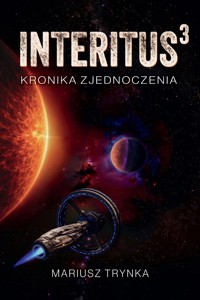
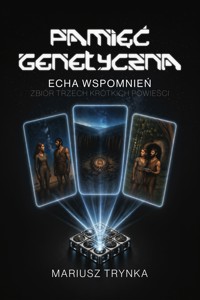
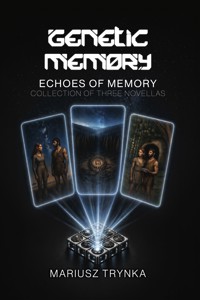

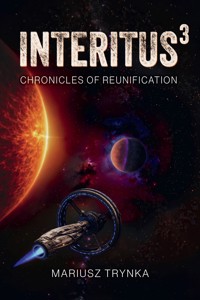






MARIUSZ TRYNKA
CRACOW 2026
Table of Contents
The Story So Far
Prologue
Chapter 1
Chapter 2
Chapter 3
Chapter 4
Chapter 5
Chapter 6
Chapter 7
Chapter 8
Chapter 9
Chapter 10
Chapter 11
Chapter 12
Chapter 13
Chapter 14
Chapter 15
Chapter 16
Chapter 17
Chapter 18
Chapter 19
Chapter 20
Chapter 21
Chapter 22
Chapter 23
Chapter 24
Chapter 25
Chapter 26
Chapter 27
Chapter 28
Chapter 29
Epilogue
Appendix 1
Appendix 2
Afterword
A Word to the Readers
Acknowledgments
About the Author
Other Books by the Author
Copyright ©️ Mariusz Trynka, 2026
All rights reserved
No part of this publication may be copied, stored in information retrieval systems, or transmitted in any form or by any means—electronic, mechanical, photocopying, sound recording, microfilming, digitization, storage on electronic data carriers, or by any other technology—with the exception of short quotations in reviews, critical articles, or scientific papers in accordance with applicable law.
First English edition, Cracow 2026
Self-published by the author
Cover concept: Mariusz Trynka
Cover project: Łukasz Dziedzic
Original title: “INTERITUS 2 — Chroniken gespaltener Welten”
Beta-Reader: Danilo Nenadović, Tadeusz Dyduch, Joanna Trynka
Developmental editing: Ef-Ef
Layout and design: Mariusz Trynka
ISBN: 978-83-68784-22-0
You can find more books by this author at: www.mariusztrynka.com
For Tadeusz —
if an author were allowed to wish for an “ideal reader,”
that reader would probably look suspiciously like you.
Thank you for your patience, your sharp eye, and your remarkable stamina in working through chapters not just once, but with striking dedication, again and again.
This book bears your mark as well—quiet, but unmistakable.
The Story So Far…
It began with a warning no one wanted to hear.
Tamira Sorellin, a young heliophysicist on planet P3, was the first to recognize the lethal threat: her world’s sun—destabilized a millennium ago by a planetary collision—was on the verge of a catastrophic eruption. Where her mentor Ardon Veyran saw exaggeration, she saw mathematical certainty, and by the time the science council finally listened, only days remained.
What followed was the greatest exodus in Thal-Venai history.
Twenty massive Generation Ships of the New Hope Fleet—originally designed to colonize distant worlds—became the last refuge for two hundred thousand chosen survivors. For the remaining hundred million, only underground bunkers with minimal odds of survival. The lottery of life had begun, and Tamira found herself among the saved—a newly appointed mentor, a scientist, one of those who decided who would live and who would die.
Then the fleet launched.
A three-hundred-year journey across eighty light-years to planet A3X, which the Thal-Venai would soon call New Home. Across generations, the Keepers—those crew members who stayed awake while others slept in stasis—kept watch. Tamira found love in Zephir, a love that threatened to break under the weight of the Codex and their childlessness. She found a quiet ally in INTEGRA, the fleet’s artificial intelligence, and in the long years of drift, she found a new purpose.
But New Home was not empty. It was Earth.
What the Thal-Venai had assumed was a primitive, pre-industrial species had developed rapidly during the fleet’s three-hundred-year voyage. Twenty-first-century humanity greeted the alien fleet with a mix of fascination, distrust, and hostility. The encounter meant as a bridge between two civilizations became a minefield of mutual projections. While Tamira worked as an envoy to build trust, fear grew on Earth—and impatience in the fleet.
Then came the discovery that changed everything: an interstellar asteroid was on a collision course with Earth. The Thal-Venai offered their help and launched a joint evacuation mission to bring over four hundred thousand humans aboard the fleet. But the aliens’ generosity bred suspicion. Secret stasis chambers for animals—meant to preserve biodiversity for New Home—were taken as proof of hidden agendas.
The Humans First movement under General James Vega struck. In a coordinated mutiny, human rebels seized eighteen of the nineteen remaining ships. They wanted control over their own fate, wanted to save more people, refused to remain grateful recipients of alien mercy. But they had underestimated INTEGRA. On the Thal-Venai Council’s order, the AI activated the mutiny protocol—and cut oxygen to the rebel sectors, killing General Vega himself among them.
When silence settled over the fleet, the bridge between worlds lay shattered.
On Mars, Governor Maya Rodriguez watched the nineteen ships fire their engines and vanish without farewell into the darkness. On the dying Earth, one last, secret ship of the elites rose into the sky—the Phoenix, bound for an unknown destination. And the Thal-Venai fleet pressed on, scarred by a conflict that never should have been.
Left behind were the Martians—alone under a red sky.
And ahead lay Gliese 1002, the system they would truly call New Home. But what world awaited them there? And could the wounds they carried ever heal?
The journey to this moment had been long—but was far from over.
PROLOGUE
Gliese Colony
94 Years after Arrival
The light was warm. As always on this world. Tamira blinked against the red glow falling through the tall windows.
Twenty-five children. They squirmed in their seats, whispered, looked at her.
Their eyes rested on her.
She felt the pain. Joints. Hips. The throbbing behind her temples. A hundred and fifteen biological years. Every morning reminded her.
The hover chair hummed—the same hum as when she woke from stasis. Almost a hundred years ago. Sometimes it felt like yesterday.
“Children,” the teacher said. Her smile wavered at the edges—nervous, Tamira thought. Young. Human. Dark curls. Angela Brasco, she had introduced herself.
“Children, as you know, we have a very special guest today. Someone who knows the era we’ve been studying not from books, but…” She faltered. “From firsthand experience.”
Experienced. Such a small word for what I’ve been through, Tamira thought.
“This is Council Advisor Tamira Sorellin,” Angela continued. “Or former Council Chair, I should say. She was there when the fleet arrived. She was there when the first settlements were founded. She was…” Another hesitation. “She was there. For all of it.”
Tamira raised her hand. With effort. It would have been easier once.
“Thank you, Ms. Brasco.” Her words sounded rough, but they reached the last row. She could still manage that.
“And thank you for having me today.”
Her gaze swept over the children. Thal-Venai and humans, mixed. The way it should be. She had hoped for this back when everything was still uncertain.
A girl in the front row. Thal-Venai features, but the eyes—unmistakably human. That existed now. Tamira had to smile.
Something has gone right. At least that.
“Now,” she said, folding her hands in her lap. “Your teacher tells me you covered Earth in your last class. The arrival. The years of cooperation. The asteroid.” She paused. “And the mutiny.”
Some children nodded. Others looked at the floor. Even after all these years.
“Then I’ll pick up where your lessons left off,” Tamira said. “With what came next—the arrival here.”
She closed her eyes. The images came at once. Sharper than yesterday. Sharper than this morning, even.
“Many years ago—” Her voice grew softer, more like a storyteller’s. She noticed it herself. “When I was far younger—so young I couldn’t have imagined ever being as old as I am now—I woke in a capsule. Alone. In the dark. Not knowing whether eighty years had passed or eighty seconds…”
Chapter 1
Stasis Chamber 7, Ship One
20 Days before Arrival
Darkness.
Nothing. No word for it. No thought. Only—
This darkness was absolute. A void without depth, without time, without memory of what had been—or any sense of what was to come.
Then—a hum. Somewhere. She felt it before she heard it. A vibrato. It burrowed into her. Deeper than skin.
Tingling. Fingertips—mine?—then arms. Chest. It seized her whole.
It was electric. Foreign. As if someone were activating nerves she had forgotten she possessed.
The metallic taste on her tongue. Copper. Ozone. Where—
What is this?—But the answer never came. The thought dissolved again.
She tried to breathe, but her body had forgotten how.
Panic.
Lungs burned. Refused to obey. She was going to die. Now. After everything—
Then she finally drew air. A rasp first. A gurgle. Something wet escaping her throat. And then at last: a breath. Cold. So cold it hurt.
A hiss. Shrill. Pain in her ears.
Light flooded in—dim, reddish, but after the absolute darkness unbearably bright. She squeezed her eyes shut, though even that barely helped.
Everything blurred. Shapes without edges. Colors she had no words for.
Where am I?
The question formed slowly in her mind.
She tried to sit up. Muscles—nothing. No sensation.
She fell back into the capsule, and the dull thud of her skull against the padding was the first thing that felt real.
A voice cut through the static.
“Welcome back, Council Chair Sorellin.”
The words took a moment. They came as if through cotton.
She means me.
“The fleet has reached the Gliese 1002 system. Twenty days to orbit.”
She couldn’t absorb more. Not now.
INTEGRA. The name was there before she knew where it came from. The fleet’s voice. Cold. Steady. And yet familiar.
Eighty years. The number pressed into her thoughts, but it fit nowhere.
She tried to speak. A croak. Not her voice. Whose?
The cough that followed shook her entire body, and for a moment she was nothing but pain and reflexes.
She tried again.
“Zephir?”
Barely more than a whisper, but INTEGRA understood.
“Zephir is located in Stasis Chamber 7, Capsule 34. His revival is scheduled for Sequence 3, in approximately two hours.”
Two hours. After eighty years. Unbearable.
He’s alive. Something grew warm inside her. Somewhere.
He’s alive. He’s here.
Then figures appeared at the edge of her vision. White suits. Hands reaching toward her. A voice—real and warm this time—said something she didn’t quite understand. Something about holding still. About help.
Hands. She was lifted. Her legs—nothing.
And then she was sitting. Something hovered. Chair. Hover chair.
Corridors. They glided past her. Or she past them. Foreign and not foreign at once.
Somewhere—left? right?—capsules opened. Voices. Someone called for water. Someone else for a name she couldn’t make out. Faces appeared and vanished again. Some she recognized. Council members. Scientists. Unchanged, like her own face probably was.
Time. Frozen. Again.
Her gaze fell on a viewscreen.
She held her breath—or what was left of it.
Out there—a star. Red. Smaller than expected. Unlike anything she knew.
Reddish-orange. Muted. A fire that never goes out.
And around it—two points. Tiny from this distance, but there.
Planets.
Twenty days still. Close enough to see. Tiny points against the red.
New Home. Maybe.
She closed her eyes. Thareena’s face. Her parents. The images came instantly. Uninvited. She lifted her lids.
Eighty years, frozen in a moment between two heartbeats.
Now her heart beat again, but not quite in the same rhythm as before.
* * *
Observation Deck, Ship One
8 Hours after Tamira’s Awakening
Glass. Glass everywhere. Tamira’s legs trembled, but she stood. That mattered. She had refused the hover chair. Not for this moment.
She looked around. Ship One’s Observation Lounge. The familiar half-round room whose curved outer wall was a single panoramic window. Twenty meters of transparent specialty crystal, she thought, stronger than any metal humanity ever forged. It was only one of many things they had brought along on their flight between the stars.
Zephir beside her. Awoken a few hours ago. Pale. Paler than she felt. His eyes dull, shadows beneath them. She knew them differently, but he was here.
His hand in hers. Cold. Hers probably too. Eighty years side by side without touching each other. Now this.
Before them the Gliese 1002 system—she had forgotten to breathe.
The star. Red from this close. Not orange, not yellow. Red. She had never seen a red star. Not like this.
The light had the color of embers.
The shadows it cast were long and soft, lacking the sharp edges Tamira knew from her homeworld or Earth.
Two planets were visible in the magnified view. The inner one, 1002b, a small gray sphere—their original destination.
The outer one, 1002c, larger. Brown, gray, and a violet stripe through the middle. Something glittered. Water perhaps. Or ice.
“INTEGRA.” Zephir’s voice, still rough, broke her train of thought. “Show us the scans of 1002c.”
The display flickered to life. Numbers. Curves. Colors. Too much at once. Data flowed across the holoscreen: atmospheric composition, temperature maps, water deposits.
“The long-term projections were based on data four hundred and eight years old.”
Zephir’s hand tensed.
“Gliese 1002c possesses larger water reserves than originally assumed.”
Water.
The word hung in the air.
“However, the increased gravity of 1.12 g remains a factor.”
A factor.
She looked at Zephir. He said nothing. He didn’t need to.
“We spent eighty years—” She faltered. Started over. “Eighty years. Working toward one planet. And now you’re saying the other one is better?”
“Correct. The final decision rests with the Council.”
Zephir laughed quietly. She knew he had seen too much to still be surprised.
“Another choice between two worlds.” He shook his head. “Always two worlds.”
Tamira said nothing. Earth was suddenly there. The blue. Then—she pushed it away.
Eighty years. On Mars, generations have grown up. What has become of them? What do they think of the fleet that vanished without a word?
Her stomach tightened. The silence. Back then, before departure.
“When is the first Council session?” she asked at last.
“In eight hours. Seren will be revived by then as well.”
Seren. The name stirred—many things. Memories of the flight. Of Geneva. Of the humans. Decisions they had made together. And then Seren’s resignation, Tamira’s nomination, the unanimous vote.
“You know what I just had to think of?” Zephir asked suddenly.
Tamira waited.
“The first time I saw Earth,” he continued. “That blue. Those clouds. I thought: this is it. And then—”
“And then it wasn’t,” Tamira finished his sentence.
He wasn’t looking at the planet but at the star—that alien light.
“This omnipresent red…” Zephir gestured at the panorama before them. “It’s different. More alien. But maybe alien is exactly what we need right now. No memories. No baggage.”
She squeezed his hand. “You always carry baggage.”
Zephir didn’t answer, but he didn’t let go of her hand.
* * *
Medical Station, Ship One
12 Hours after Tamira’s Awakening
White light. Tamira blinked. Ship One’s medical station was far too bright after the red of the Observation Deck. Somewhere, something hummed. Somewhere else, something beeped. Her eyes needed a moment.
Seren lay on a hover stretcher. Her eyes followed Tamira across the room—that gaze that never missed a thing. But something was new. A heaviness in her lids. A slowness Tamira didn’t recognize.
“Tamira.” Seren sounded hoarse but warm. “You look like you’ve had a long journey.”
Tamira laughed. It came on its own.
Seren laughed with her. Dry. Brief.
“Three hundred years from P3. Eighty years from Earth. Yes, I’d say the journey was long enough.”
Seren pointed to a chair. Tamira sat. Her legs thanked her for it.
The gravity here was simulated—1 g, as always on the ships. On 1002c it would be more. Tamira already felt exhaustion in every muscle just thinking about it.
“INTEGRA briefed me,” Seren said. “About the planets. About the decision ahead of us.”
“What do you think?”
Seren was quiet. Her fingers played with the blanket’s edge. Tamira studied her hands—thin, bony. When did they get like this?
“I think I’m old, Tamira. Old enough to know my time as a decision-maker is over.”
Something tightened in her chest.
Seren, she thought. The woman who led the Council through the flight from P3, through the arrival at Earth, through the mutiny—speaking of herself in the past tense.
“You’re the Council Chair now,” Seren continued. “You led the fleet after the mutiny. You made the decision to bring the humans in stasis despite everything. This decision—which planet is right—is yours.”
Tamira shook her head.
“I need your counsel, Seren. I need—”
“What you need,” Seren interrupted gently, “is trust in yourself, my dear. I had it when I appointed you as diplomatic mentor. I had it when you took over the Council chair. And I have it now.”
A pause. The machines hummed. Somewhere in the station someone else was being revived, coughing and asking for water.
“But if you want my opinion,” Seren said more quietly, her voice barely above a whisper. “Water is life. More water means more possibilities. We can overcome the gravity. Not the thirst.”
Tamira nodded. Pragmatic as ever. Eyes on the long-term consequences. But for her it was more than that.
“You know what I regret most?” Seren asked.
Tamira looked at her expectantly and waited.
“Not the big decisions. I regret the small moments I missed. Don’t make the same mistake, Tamira. Lead, but live your life too.”
“How am I supposed to live when 600,000 beings are waiting on my decisions?”
Seren smiled.
“By recognizing you’re not alone. You have Zephir. You have the Council. You have INTEGRA. And you have me—for as long as I’m still here.”
She wanted to object but held back.
Seren was old. Tamira saw it now. The stasis had preserved her body but hadn’t turned back time. The hollow cheeks. The skin that seemed too thin. How old is Seren now? Tamira did the math—a hundred and twenty biological years?
She took Seren’s hand. Bony. Cool. But it squeezed back.
“Thank you. For everything.”
Seren tilted her head and closed her eyes.
* * *
Council Chamber, Ship One
16 Hours after Tamira’s Awakening
The Council Chamber. Tamira knew every corner of this room in the ship’s bow.
She scanned the Inner Council’s twelve seats, its last elections held before departure from Sol. The holodisplay in the center. She sat in the Chair’s seat. Seren’s seat, once. It still felt foreign.
Tamira let her gaze wander. Seren at the side—no longer in the circle, but present. Her gaze rested on Tamira. Zephir beside her, eyes on the display. He glanced up and nodded almost imperceptibly.
Novaren across from her. Motionless as always—in all those years she had never learned to read his face. Beside him Kaelan, who smiled at her. One of her supporters for as long as she could remember.
The others. Elyar Nethys, the ethicist, paging through his notes. Liraya Vorthak beside him, fingers already hovering over her datapad—societal resilience, her specialty. Tamira would need them both today. Elai Vessar sat leaning back, arms folded. The chief engineer. He looked as though he already knew how the vote would go. And Tinomero. Her gaze lingered on him a moment longer. Chief geologist. Old friend. His nomination to the Council had tipped the balance to leave Mars behind. She wondered whether he had ever regretted it.
The remaining seats—new faces. She knew their names. Not their minds.
The holodisplay showed both planets side by side. On the left 1002b—gray, small, familiar. Their original destination. On the right 1002c—larger, colorful, that violet stripe. Data streamed around the projections. Tamira read along: Temperatures. Atmospheric composition. Gravity.
She leaned forward. The water readings on 1002c—
Elai spoke first. “The ships are suited for both planets. Landing on 1002c requires minor adjustments for the higher gravity, but nothing we can’t handle. Technically, the decision is neutral.”
Zephir stood.
“Scientifically, it’s not. 1002b is closer to the star. Radiation exposure is higher—not dangerous, but higher. Long-term, that could affect agriculture and genetics.” He stepped to the display and pointed at 1002c. “This one is farther out. Cooler. But look at the water readings.” His hand traced a circle around the blue markers. “Without water, no ecosystems. Without ecosystems, no sustainable food production. And without that—” He left the sentence unfinished. He didn’t need to say it.
Tinomero nodded thoughtfully. “The geology supports it. 1002c shows tectonic stability in the Terminator Zone and mineral resources essential for building a permanent settlement. 1002b is—” He shrugged. “Functional, but barren.”
Liraya Vorthak raised her hand.
“I’d like to address a different aspect. We’ll feel the increased gravity on 1002c. 1.12 g doesn’t sound like much, but for the elderly down the line, the sick, the children—it’s a burden. On 1002b the gravity would be nearly identical to Earth’s and only slightly higher than on P3 and our ships. Humans in particular are more sensitive to this. It could become socially significant.”
“The humans aren’t our only priority,” one of the new Council members said—cool, almost cold.
Silence.
There it was again. The tension. Us versus them. She felt it at the back of her neck. The scars that never fully healed. For those who had been in stasis, the mutiny was yesterday.
Elyar Nethys cleared his throat. “With all due respect—the humans are part of our priority. This isn’t a sentimental position but a practical one. We brought them along. We integrated their capabilities into our planning. A colony built on division from the start won’t survive. Not long-term.”
Kaelan Drys nodded. “The bioinformatics models are clear. Genetic diversity, combined knowledge systems, different problem-solving approaches—we need both species. Not out of necessity. Out of wisdom. We—”
Tamira raised her hand. The discussion around her fell silent instantly.
“The humans—” She paused. Started over. “They’re part of our community. We decided that when we brought them along. Their needs count—but they’re not the only criterion. What counts is everyone’s survival. And for that we need, above all, water.”
She stood and stepped to the holodisplay. With a gesture she enlarged 1002c—the brown-gray sphere now filled half the room. She could make out cloud spirals and the glitter of water in soft detail. And there she saw it, the thin violet line along the terminator—this world’s day-night boundary. That’s where we’ll live.
“Twice in my life I’ve stood before a choice between two worlds,” she said.
“The first time between P3 and the ships. The second between Earth and Gliese. Both times I chose survival—not comfort or familiarity. This time is no different.”
She turned. Eyes met hers.
“I recommend Gliese 1002c. The gravity is a challenge, but one we can master. The water gives us a future.”
Seren lowered her head in agreement first—though she no longer had a vote, Tamira knew how much her gesture weighed.
Then Zephir. Tino. Kaelan. Elyar. Novaren. One by one they signaled their approval.
Liraya waited. Tamira held her gaze. Finally she too inclined her head—reluctantly, lips pressed together.
“I agree,” she said. “But the humans must be informed. Transparency. No secrets.”
“Of course.”
INTEGRA confirmed:
“The decision has been recorded. Gliese 1002c is designated as the primary settlement target. Preparations for orbital entry will be adjusted accordingly.”
The holograms went dark. The Council members rose. Voices overlapped—plans, tasks, the usual hum after a decision. Tamira remained seated while the machinery of colonization set itself in motion.
Elai stayed a moment longer, watching her. She could see the gears turning behind his brow.
“Every decision has a price, Council Chair.” He paused. “The question is only what we’re buying.”
“And what are we buying?”
“Water.” A twitch at the corners of his mouth. “You can’t create that.”
Then he too left. Tamira stayed.
Through the small window at the room’s side she studied the red star illuminating their new home. In a few days the ships would enter orbit. In a few weeks the first settlements. And then—she didn’t know. No one did.
But first the next decision. And the next. That was what leadership meant. No end. Only ever new beginnings.
She breathed in deeply and left the room.
Chapter 2
Launch Deck, Ship One
12 Days before Arrival
Tamira studied the probes. Small things—barely larger than an adult Thal-Venai. Cylindrical, with folded sensor arrays and heat shields that gleamed dully in the work lights. Strange that so much should depend on so little.
She stood behind the safety barrier and watched the technicians. Beside her Zephir, the datapad with the telemetry readings so close to his face she doubted he was still blinking.
“Ready in three minutes,” the launch director’s voice reported over the comm system. “Probes One and Two in final sequence.”
“How long until entry?” Tamira asked.
“At the current trajectory, about eighteen hours to the atmosphere.” Zephir still hadn’t looked away. “Probe One will decelerate in the upper atmosphere. Controlled descent through all layers. Temperature, pressure, chemical composition, wind speeds, radiation.” He paused. “Four hours of data. Then the pressure crushes it.”
Four hours. The thought came and went. Four hundred years of hope compressed into four hours, and then—she forced herself not to think further.
“And the second?”
“The surface probe.” Zephir pointed with the pad at the slightly larger cylinder. “It has a reinforced heat shield and braking rockets for a hard landing. Target area is the Terminator Zone—specifically the edge of the forest belt we identified on the long-range scans.”
Tamira nodded. She remembered the images—blurred still, taken from a great distance, but clear enough to show something grew down there. Something dark, wrapping around the planet like a band.
“What are we hoping for?”
“Everything.” Zephir finally looked at her—and there it was again, that look. She had known it for decades. The look that said: I don’t know yet what we’ll find, but I can hardly wait.
“Soil samples, atmospheric analyses, radiation readings, temperature profiles. The probe has a microscope on board—if there are useful microorganisms down there or more than just flora, we might detect them. And a camera.” Zephir smiled, and for a moment she saw the young researcher he had been decades ago. Before the cryosleep cycles dried out his skin, before responsibility’s weight pulled his shoulders down. “Real images, Tamira. Finally.”
“Probes One and Two ready for launch,” the launch director reported a few minutes later. “On your command, Council Chair.”
Tamira stepped to the console. A simple touch. Some moments deserved more than a voice command. She placed her finger over the control panel.
“After four hundred years.” Barely more than a whisper. “Finally a look at our new home.”
She pressed it.
The Launch Deck vibrated beneath her feet as the electromagnetic catapults accelerated the probes. Through the observation window Tamira saw two silver points detach from the ship and shoot into the darkness—toward the planet hanging at the edge of the viewport.
“Telemetry stable,” a technician reported. “Both probes on course. Estimated arrival: eighteen hours, fourteen minutes.”
“Now we wait,” Zephir said.
Tamira stayed where she was. Her shoulder leaned against the window frame. The probes shrank—two pinheads, then nothing.
In less than a day, she thought. Then we’ll know.
For the second time in centuries she felt the future within reach.
* * *
Eighteen Hours later
The night had been a mistake. Tamira had lain down, closed her eyes, waited for sleep like a train that never came. At some point she had stopped waiting and simply stayed there, the blanket pulled to her chin, while the hours stretched and her thoughts ran in circles. Zephir, she knew, hadn’t even tried.
Now she stood beside him in the science lab. Her eyes burned. The tea in her hand had gone cold without her taking a single sip.
“Atmospheric entry of Probe—” Pireth Vidolin interrupted himself, leaning deeper over his console. “Confirmed. Yes. Confirmed. Heat shield holding. Sensors active.”
The first readings appeared on the main screen.
“Exterior temperature in the upper atmosphere: minus eighty degrees,” Vidolin read off. “Pressure: 0.001 bar. Composition…” He frowned. “Nitrogen: 78.8 percent. Oxygen: 18.9 percent. Argon: 1.2 percent. Carbon dioxide: 0.9 percent. The rest trace gases.”
“The oxygen content is lower than on Earth,” Tamira said. “Or on P3.”
“Yes, but—” Zephir raised his hand, eyes on the numbers. “Not critical. Eighteen to nineteen percent. Breathable.” He rubbed his chin. “Strenuous maybe, like high altitude. We’ll have to—”
“Adapt,” Vidolin finished without looking up.
“That’s what I was saying.”
“I know. I agree.”
The probe sank deeper. Tamira watched the numbers climb on the screen—temperature, pressure, wind speed. Each new number a puzzle piece.
“Cloud layer at twenty kilometers altitude,” Vidolin reported. “Water vapor, some organic compounds. No detectable toxins.”
“Organic compounds?” Tamira leaned forward. “In the clouds?”
“Traces only. But it means the biological cycle extends into the atmosphere. Whatever lives down there, it breathes, and it… well, it produces waste.”
The probe pierced the cloud layer. And suddenly—images.
Blurred at first, then sharper as the camera focused. A landscape beneath dense clouds, in a light Tamira had never seen on any planet. Reddish-orange. Not day, not night. Something in between.
And there, on the horizon—a dark mass. The forest.
Tamira heard herself breathing. Beside her someone said something—she barely registered it.
The trees were enormous. Tamira involuntarily stepped half a pace back, as though the image might reach her. Even from this altitude, even through the distorted optics of the descending probe—those pillars of living material soaring into the sky, their canopies forming an almost closed roof of violet. Her stomach tightened. Not from fear, not quite. Something older. Something she had no words for.
“Altitude readings,” Zephir said. “Give me altitude readings.”
Vidolin tapped his console. Numbers appeared beside the tree structures.
Tamira read them. Read them again.
That can’t be right.
“The dense atmosphere at ground level,” Zephir said, as if reading her thoughts. “And the thinner air higher up. The plants can grow taller because there’s less pressure above them, while the air pressure below supports their structures.”
The probe sank further. Sixty kilometers. Fifty. Forty.
“Wind speeds rising,” Vidolin reported. “We’re in the active circulation zone. Twenty-five meters per second… thirty… thirty-five.”
“That’s outside the forest’s shelter,” Zephir said. “Inside it should be calmer.”
“Confirmed.” Pireth pointed at the data. “The probe is drifting toward the forest’s edge. Wind speed already falling—thirty… twenty-five… twenty.”
The camera images showed details now.
“What’s that?” Tamira asked, pointing at reddish patches on the forest floor.
“Lichen, most likely,” the atmospheric researcher said. “Or something analogous. Organisms surviving on the residual light at ground level.”
The probe reached five thousand meters. Then three thousand. Then—
“Contact lost with Probe One,” a technician reported. “Pressure compressed the hull. All systems down.”
Silence. Then: “How much data do we have?”
“Three and a half hours of telemetry. Complete atmospheric analysis from the upper boundary to two thousand meters altitude. Over four hundred images.”
Tamira exhaled. “Enough to form a first impression.”
“And Probe Two?” Zephir asked.
“Entering the atmosphere now,” Pireth answered. “Heat shield active. Target area: the clearing at the forest’s edge we defined from the scans.”
They waited. The minutes stretched.
“Braking rockets fired. Probe Two in controlled descent.”
The telemetry showed the plunge—brutal, fast, velocity dropping from kilometers per second to meters per second.
Tamira studied the graphic readout. The heat shield was jettisoned. The landing legs deployed.
“Five hundred meters… two hundred… one hundred…”
A jolt in the data. Then silence.
“Ground contact. Pro—” Vidolin’s voice cracked with excitement. He cleared his throat and tried again: “Probe Two has landed.”
The camera activated. And for the first time they saw their new home’s surface up close.
The ground was dark. In the background the giant trees’ trunks rose—so broad humans could vanish inside them, so tall their tops didn’t fit in the frame.
And everywhere—on the ground, on the trunks, on the rocks jutting from the sand—the red and violet of lichen and moss covering every available centimeter.
“It’s alive,” Tamira said. “It’s really alive.”
Zephir stood beside her. She saw his watery eyes, his trembling hands, and something inside her tightened—joy or fear, she couldn’t have said which.
“In a few days,” he said quietly, “I’ll stand there. We’ll stand there.”
The probe began its soil analysis. New windows opened on the screen—composition, moisture, microorganisms. Tamira tried to take in everything at once. Her gaze jumped from number to number, image to image. Too much. It was too much. And yet—
She gave up. Let the data be data and simply looked.
Tamira watched as the images changed. The camera panned. New details. Always new details. She didn’t know how long she stood there, watching this alien world waiting to be discovered at last.
We’re almost there, she thought. We’re almost there.
Her hand rested on the screen’s edge. She didn’t remember putting it there. The glass was cool beneath her fingers, and beyond it—unreachable, still—the soil of a world waiting for them.
* * *
Observation Lounge, Ship One
8 Days before Arrival
Zephir stood before the holodisplay and waited.
The Observation Lounge was filling—Council members in the front rows, behind them the technical officers from all eighteen ships. Engineers, geologists, atmospheric specialists. Some had woken from stasis only hours ago. He could tell by the pale faces, the stiff movements, but they had come.
Good. They should be here. All of them.
At the room’s edge, near the door, Tamira stood. Her gaze moved over the assembly, lingering here and there. When her eyes met his, she nodded almost imperceptibly.
Begin.
On the panoramic screen hung Gliese 1002c. Larger than two days ago. Close enough to see the cloud bands with the naked eye. Zephir had stared at the planet for weeks—he saw it in his sleep. Now he would show this world to the others.
He cleared his throat. His mouth was dry. When did I last have something to drink?
“Four days ago,” he began, “we sent two probes to the surface. An atmospheric probe—three and a half hours of data before the pressure destroyed it. And a surface probe that has been transmitting continuously since.”
He tapped into the holographic projection. The planet appeared at triple magnification.
“What you’re seeing now are neither models nor simulations. These are real data. Real images.”
Silence. He sensed it more than heard it—how the room contracted.
“The first thing you’ll notice—” He faltered. Cleared his throat. Go on. “This planet doesn’t rotate. Not the way you’re used to.”
He let the projection speak. The planet hung in the display as if frozen. No rotation.
“Gliese 1002c is tidally locked. It always shows the same face to its star—like Earth’s moon to Earth.” He tapped the projection again, and a diagram appeared. “One side in eternal day. The other in eternal night. Between them lies the Terminator Zone—a narrow strip, perhaps three hundred to four hundred kilometers wide, where something like permanent twilight exists.”
“How wide exactly?”
Zephir turned toward the voice. Elai, in the back rows. Of course Elai.
“The habitable zone varies. The core zone with stable temperatures is about two hundred kilometers wide. With appropriate infrastructure we might use three hundred.” He paused. “Anything beyond that becomes… difficult.”
He heard the murmurs. Saw the exchanged glances. They were calculating—he could tell. Three hundred kilometers for nearly 600,000 beings. He knew the math. He had done it often enough himself.
“Are there seasonal fluctuations?” Tino asked. “How stable are these conditions?”
Finally.
“The orbit is nearly circular. Nearly.” He stressed the word, watched some lean forward. “There’s a minimal eccentricity—about 0.05 percent deviation from a perfect circle. It sounds like nothing, but it has consequences.”
He switched the display. An elliptical orbit appeared beside a dotted circle, so subtly distorted one had to look carefully to see any deviation, even though the visualization was already scaled.
“The planet orbits its star in twenty days. At perihelion, temperatures in the day zone climb to about thirty to thirty-five degrees. At aphelion, they drop to twenty-five to twenty-eight.”
“Ten degrees’ difference,” someone said. “That’s not much at all.”
“Not for us,” Zephir said. “For the atmosphere it is.”
He activated the wind simulation. Blue and red arrows appeared, flowing between the zones, reminiscent of a weather report.
“The temperature differential between the hot Day Side and the cold Night Side generates a constant airflow. Normally moderate winds—fifteen to twenty-five meters per second. Unpleasant, but manageable.”
He paused. Let the information settle.
“But twice per cycle—when the temperature gradients shift fastest—those winds intensify. Drastically.”
The simulation showed it. The arrows grew thicker, faster, more chaotic. Zephir watched the faces. In the second row someone frowned. Beside them a deliberate nod. And there—the engineer from the third row whose name he had forgotten, leaning forward, lips moving as if calculating.
“On those two storm days, winds outside sheltered areas reach speeds of up to sixty meters per second.”
Silence.
“That’s over two hundred kilometers per hour,” one of the human engineers said. “Hurricane force.”
“Correct.”
Zephir watched the technicians’ expressions shift. The quick glances at one another. They were already calculating—he hoped. Material strengths, anchorage, protective structures.
“Is there shelter?” Novaren asked. “Natural shelter, I mean.”
His mouth twitched.
“I was hoping someone would ask that.”
He switched the display. The surface appeared—and the dark stripe he had studied for weeks. This time in higher resolution. This time with details.
“This,” he said, “is a forest. But not a forest as we know it.”
He magnified the view. And magnified further. And further.
Someone inhaled sharply. Another leaned forward as if that might bring them closer. In the third row a woman stared open-mouthed at the projection. Zephir registered it at the edge of his awareness. He was too busy looking himself—reliving the moment he had first experienced days ago.
Structures rose from the ground. Not trees as anyone knew them. Massive pillars of living material reaching for the sky. The sensor data showed altitude readings.
A hundred and fifty meters. Two hundred. Some even taller.
“You’ll notice the color,” Zephir said. He sounded calmer now. More assured. He was in his element. “This forest isn’t green.”
The close-up showed it. Dark violet canopies. Like a bruise, he thought. The word had come to him days ago, and he hadn’t been able to shake it.
“Why?” someone asked. “Why that color?”
“Evolution.” Zephir pointed at the star’s projection. “On Earth and on P3, plants are green because chlorophyll absorbs red and blue light and reflects green. But here most of the available light is red and infrared. A red dwarf emits almost no blue or green light.”
He brought up the spectral graph.
“Whatever fills chlorophyll’s role on this planet—let’s call it rhodophyll for now—it absorbs the entire visible spectrum. These plants use every photon they can get.”
“That’s why they appear so dark,” Kaelan said. “They reflect almost nothing.”
“Exactly.” Zephir nodded. He liked it when they reached the conclusions themselves. “The violet is a minimal residue—or a protective function against UV radiation.”
He switched to the wider view.
“The giant forest extends in a band roughly one hundred and eighty to two hundred kilometers wide around the planet. It grows where conditions are optimal—enough light, but not so much the heat scorches everything.”
“What’s outside the forest?” Tino asked.
“Life exists there too. Lichen and moss that survive with less light.” He showed the images—flat, crust-like organisms in shades of dark red to gray. “These organisms grow slowly, using every available resource. We’ll find them everywhere.”
“Are they dangerous?”
“The analyses show no toxins. But we’ll be careful.”
Zephir returned to the forest view.
“The trees must have deep root systems reaching into the subterranean aquifers. Their trunks are wide and flexible enough to withstand the storms. And their canopies—” He pointed at the simulation. “Their canopies form an almost closed roof. Inside the forest we estimate wind speeds even on storm days at ten to fifteen meters per second at most.”
He let the words settle. Are the engineers relaxing? Hard to say, but something in their shoulders seemed to ease.
“You’re proposing we settle in the forest.”
Tamira’s voice. Not a question.
Zephir turned to her. She still stood at the room’s edge, but her bearing had changed. Shoulders back, chin slightly raised. He knew that posture.
“I’m proposing we take a look first,” he said. “Before we bring 600,000 humans and Thal-Venai to the surface, we should know what we’re getting into. A scouting mission. A small team. A few days on the surface.”
The murmuring grew louder.
“Who?” Novaren asked.
“Me. As science advisor.” Zephir counted off. “Plus Tinomero Virgo for geology, his wife Shevi as hydrobiologist, Dr. Helena Frost for geophysics, and Elai Vessar for technical evaluation.”
“A small team,” Novaren said. “And if something goes wrong?”
“Then it’s five lives, not 600,000.”
The words came out harder than he had intended, but he meant them.
Novaren yielded surprisingly fast. Reluctantly, lips pressed together—but he yielded.
“Then it’s decided,” Tamira said.
Zephir exhaled. It was—
“And I’m coming with you.”
His stomach did something strange.
Silence in the room. Absolute silence.
“Council Chair—” Novaren began again.
“No.” Her words cut through the room. “I led this fleet here. I made the decision for this planet. If anyone should be down there first, it’s me.”
Zephir stared at her. Too dangerous. We need you here. What if— the thoughts raced, overlapping, but he said nothing. He knew that expression. He had seen it often enough in the decades they had spent together.
She had made up her mind.
“With all due respect,” Elai said, “you’re the Council Chair. The fleet needs you. If something happens—”
“If something happens, there are enough capable people who can take my place.”
Zephir saw Tamira’s gaze drift to Seren—the old advisor sitting silently at the edge. Has she said anything during the session? He couldn’t remember.
“Tamira.” He spoke softly, just for her. “Are you sure?”
She looked at him. That look—he had known it for more years than he cared to count.
“I’ve never been more sure.” She held his gaze. “I need to stand down there. I need to know what we went through all this for.”
He wanted to object. Wanted to tell her it was madness, that she was too important, that he couldn’t imagine—what? Finishing the thought.
But he said nothing. Because he understood.
“Then we’re six,” he said.
The next hour passed in a blur. Zephir presented the preliminary settlement concepts—the division into residential and work zones, the artificial day-night rhythm the geography allowed. Darker on the shadow side, brighter on the sun side. He explained the gravity, the water supply, the long-term adaptations their bodies would undergo.
The questions came in waves. Equipment. Communication protocols. Emergency plans. And again and again: the oxygen and the air pressure. Lower than on Earth, lower than on P3. Breathing masks for extended stays.
He watched the faces. Furrowed brows, skeptical looks. Nobody liked the masks—that much was clear.
But that was fine. They didn’t have to like it. They only had to understand it.
When the session ended, Zephir stayed at the display. The planet still glowed in the hologram—this alien, beautiful, and simultaneously terrifying place that would be their future.
Tamira stepped beside him.
“You convinced them,” she said.
“We convinced them.” He looked at her. “You could have told me beforehand you wanted to come along.”
“Could I have?”
He was quiet. Then it came—a sound that wanted to be a laugh but didn’t quite get there. “No. Probably not.”
In a few days, Zephir thought. In a few days I’ll stand there. We’ll stand there.
The fear was still there. But there was also—he didn’t know what to call it—something that felt like hunger or longing.
* * *
Gliese Time
Day 1, Cycle 1, Year 1
Shuttle Hangar, Ship One
The shuttle—Zephir had christened it Explorer for this mission—was small. Tamira eyed it. Barely twenty meters long, room for about a hundred and fifty passengers. Normally.
Today it was packed with measuring instruments, sample containers, makeshift sleeping berths. Six people, a few days in this thing. Zero privacy.
Tamira stood before the open cargo hatch and studied the vehicle that would carry them to the surface. Beside her the other five—Zephir, Tino, Shevi, Helena, and Elai.
Six who were about to make history.
“Systems are checked.” Elai looked as though he had worked through the night. He probably had. “The shuttle is ready.”
“Medical equipment is complete.” Shevi’s fingers trembled as she checked her bag. Tamira could practically see she was uncomfortable in the role of emergency medic—a biologist with only basic medical training. “Emergency drugs, diagnostic devices, trauma kit. In case someone—” Shevi faltered. “In case something happens.”
“Geological instruments are stowed,” Tino said. “Soil samples, water analysis, seismic sensors. If this planet has secrets, we’ll find them.”
Zephir said nothing. He simply stood there, slightly apart, gaze fixed on the hangar’s portal. Behind the transparent force field hung Gliese 1002c—so close now Tamira felt she could reach out and touch it.
She stepped beside him.
“What are you thinking about?”
“P3,” he said quietly. “The day we left. I stood in a hangar like this one and watched our homeworld wait for its end. And now…” He turned to her. “Now I’m standing here watching a new home wait for its beginning.”
“Afraid?”
“A little.” One corner of his mouth lifted. “You?”
“More than a little.” She took his hand. “But when has that ever stopped us?”
“Council Chair.” Novaren’s voice came over the comm system. “The optimal launch window opens in five minutes.”
Tamira nodded, even though Novaren couldn’t see her.
“Understood. Then we should go.”
She and the other five boarded the shuttle. Helena and Tino took the rear seats and strapped in. Elai slid to the control console, his fingers already on the touchscreen. Tamira could tell he could hardly wait to put his experience to the test.
Tamira sat beside Zephir up front, side by side, the way they had so often sat together—in Council Chambers, in command centers, in the quarters they shared. But this was different. Planetary exploration was new territory for her.
“Launch sequence initiated,” Elai said. “Engines on standby. Life support stable. We’re ready.”
The cargo hatch sealed with a hiss. Through the portal Tamira saw the force field flicker—and beyond it the black of space, laced with the star’s reddish glow.
“Ship One to Explorer,” Novaren’s voice came. “Clearance granted. Good flight. And… come back in one piece.”
“That’s the plan,” Tamira said.
The shuttle lifted off the hangar floor. For a moment they hovered, then Elai pushed the throttle forward and they glided out—out of the ship that had been their home, into the void.
Gliese 1002c filled the viewport. Larger than Tamira had ever seen it.
“Flight time to atmospheric entry: six minutes,” Elai said. “Landing in approximately fifteen.”
Fifteen minutes, Tamira thought. After four hundred years of flight, stasis, and orbit around Earth, after everything we have been through—fifteen minutes.
Tamira leaned back and watched the planet draw closer.
* * *
Shuttle Explorer, Above the Terminator Zone
6 Minutes after Launch
Gliese 1002c’s atmosphere greeted them with force. The shuttle shuddered despite its onboard artificial gravity—a rattling that ran through the entire hull, through the seats, through Tamira’s body. She pressed herself into her seat, fingers clawing the armrests. Breathe. Breathe easy.
“Heat shielding at eighty-seven percent.” Elai sounded as if he were reading a passenger manifest rather than reporting an atmospheric entry. “Turbulence within expected range. Structural integrity also nominal.”
Through the front window nothing was visible but the friction heat slamming against the outer hull—orange and red.
Fitting, Tamira thought. This whole world is like a sunset that never ends.
“Upper atmosphere cleared,” Elai said. “Entering middle layer. Turbulence should now—”
The shaking eased. Not completely, but noticeably. The fire outside the window faded, thinned, and then—
Helena inhaled sharply.
Tamira followed her gaze and understood.
The world lay below them.
She could—no, she couldn’t see everything. Too much at once. The Day Side somewhere to the left, blazing. The Night Side to the right, black. And between them, like a belt around the planet—
The Terminator Zone and the forest. Darker than expected. That violet was almost black. As if someone had drawn a stripe of night across the planet.
“The clearing,” Zephir said. He pointed to a spot on the horizon. “There.”
Tamira saw it—a bright patch amid the darkness. A few square kilometers of open ground, surrounded by the forest’s giants.
“Target coordinates confirmed,” Elai said. “Landing approach initiated. Estimated time to ground contact: four minutes.”
The shuttle banked. Tamira’s stomach protested—the inertial dampeners were good but not perfect. During fast maneuvers they always needed a moment to catch up.
But she couldn’t look away. The giant trees drew closer. Individual canopies now—enormous dark violet parasols reaching for the sky. Some large enough for a ship. Others larger still.
“Two hundred and twenty meters.” Tino beside her, eyes on his datapad. “The tallest so far. That’s—” He broke off. “That’s nearly double Earth’s tallest tree.”
“Or P3’s,” Zephir said. “No intelligent species here. The forest had time.”
Shevi leaned forward. “The oxygen production—does it all come from this strip?”
“Not entirely.” Zephir shook his head. “The atmosphere is oxygen-rich only here. Toward the poles it thins. The wind and the pressure equalization between zones are what keep the atmosphere in check in this region.”
“So the winds do some good,” Shevi said.
Zephir nodded. “Absolutely. And since we’re on the topic of oxygen production, the forest belt around the entire planet may look thin, but its total area exceeds eight million square kilometers. That’s larger than Australia.” He paused briefly to let the information sink in. “Plus the several million square kilometers of moss and lichen making their small contribution as well.”
The shuttle descended further. The clearing drew closer—a rift in the canopy, a place where the star’s light reached the ground. Tamira could see the surface now, brown and gray, partly covered in what looked like lichen. Elai steered the shuttle to the clearing’s edge, close to the tree line.
“Three hundred meters,” Elai said. “Two hundred. One hundred. Landing repulsors engaged.”
The rattling stopped. The shuttle hovered—and sank. Meter by meter.
“Fifty meters. Thirty. Twenty.”
Tamira realized she was holding her breath.
A gentle jolt. A groan from the landing struts.
“Ground contact.”
Silence.
She stared out the window. Brown. Gray. The dark pillars of the giants.
I’m here.
The words felt like—she didn’t know what. Unreal. Or too real.
“So,” she heard Elai ask after a long moment. “Who goes out first?”
Tamira unclasped her harness. The breathing mask was already in her hand.
“I do.”
Chapter 3
Clearing A-1, Terminator Zone North
5 Minutes after Landing
The hatch opened with a hiss.
Tamira stood at the threshold, one hand on the frame, and looked out. The air streaming in was warmer than expected, carrying a scent she couldn’t place. Foreign. Mineral. Alive.
She stepped over the threshold onto the ramp. The first step out of the shuttle’s artificial gravity field.
The planet’s pull hit her like a blow. She had known it would be 1.12 g—twelve percent more than on Earth—or eighteen percent more than on their ships. But knowing it and feeling it were two different things. Her knees buckled, just for a moment, and she had to grip the hatch frame.
“Tamira?” Zephir’s voice, concerned.
“I’m fine.” She breathed in deeply, forced her legs to carry her. “I’m fine. It’s just… somehow more than I expected. More than it sounds.”
She took a second step down the ramp. A third. And several more.
Then she stood on the surface of Gliese 1002c. She turned to Zephir.
“For everyone who isn’t here anymore,” she said. “And for everyone still to come.”
Zephir couldn’t suppress a grin. “Did you think those words up beforehand, or were they spontaneous?”
She threw him only a smile through the mask, leaving the question unanswered—knowing the entire fleet was watching and listening to this mission.
The ground beneath her feet was hard—compacted earth, partly covered by a thin layer of what looked like half-dried lichen. It crunched under her weight and gave slightly.
To her left the giant trees rose. Up close they were even more overwhelming than from above. The trunks—if you could call them that—were so broad twenty people couldn’t have linked arms around them, and they resembled the foundations of mighty towers more than anything nature made.
Their surface was dark violet to brownish, with a texture like folded leather. Patterns ran across the bark—geometric shapes almost too regular to be natural.
She tilted her head back. From down here the canopies far above formed a dense roof filtering most of the light. What came through was muted and soft. As if she stood beneath a vault of living material.
“Tamira.” Zephir stepped beside her. He too moved slowly, cautiously, fighting the gravity. “How do you feel?”
She searched for words. What should I say? Like someone making history?
“I don’t know,” she said at last. “Ask me tomorrow.”
He laughed—short, surprised. Tamira felt something loosen in her chest. A familiar sound in an alien world.
The others followed. Tino dropped to his knees immediately, instruments in hand. Shevi moved more slowly—Tamira saw her study each of them before taking a step herself. Elai swayed briefly, caught himself, then started pacing out the surroundings.
“The atmosphere is breathable,” Helena reported after checking her diagnostic device. “Oxygen at 18.9 percent. Nitrogen dominant at 78.8 percent. No detectable toxins.” She frowned. “But the total pressure is only 78 kilopascals. That’s well below what we’re used to.”
“What does that mean in practice?” Tamira asked.
“The oxygen that’s here isn’t enough.” Helena turned the diagnostic device so Tamira could see the readings. “It’s not about the percentage—that’s almost like Earth. It’s about the absolute partial pressure. At 78 kilopascals and nineteen percent, we get just under fifteen kilopascals of oxygen partial pressure.”
“Comparable to a mountain at thirty-five hundred meters altitude,” Zephir said. “Breathable—but barely.”
Helena nodded. “Without masks the first headaches would set in after one to two hours. Dizziness. Loss of focus. Faster under physical exertion.”
Thirty-five hundred meters, Tamira thought. On a world we’ll never leave.
“And long-term?” she asked.
Helena looked at her. “Long-term, we can’t live like this. Not without masks. Not permanently.”
Elai had moved closer. He had been listening, arms folded, eyes on Helena’s diagnostic device.
“Two paths,” he said. “We change the atmosphere or we change ourselves.” He spoke matter-of-factly, as if discussing a technical problem. “If we raise the oxygen content by one to two percent—through targeted planting, biological catalysts, maybe industrial processes—we bring the partial pressure to a level where the masks become unnecessary. Sixteen, seventeen kilopascals. That would suffice.”
“Timeframe?” Tamira asked.
“Decades. Maybe centuries. Depends on how aggressively we proceed and how much we’re willing to disturb the ecosystem already in place.”
“And the other path?” Zephir asked.
Elai looked at him. “Genetic adaptation. Higher oxygen binding in the blood. More efficient lungs. We have the tools. It would be faster—a few generations.”
“But it changes what we are,” Zephir said.
“We don’t have to decide this now,” Tamira said. She looked at her hands, the mask on her face. “For now, we breathe. The masks stay on.”
She walked deeper into the clearing, away from the shuttle, into this alien world. The lichen underfoot grew softer, springier the closer she came to the trees, in shades from dark red to gray. Here and there lower plants grew—not grasses, more like moss, but with the same dark violet hue as the giant trees’ canopies.
She knelt—a movement that cost more effort than on Earth—and studied the ground. The lichen was damp. Not wet, but damp, as though it had stored water. Life. There was life everywhere.
“The trees,” Zephir said behind her. She straightened and looked over at him.
He stood before one of the giants, head tilted back, gaze directed upward. The tree’s canopy vanished somewhere in the heights.
“The pigmentation matches our predictions,” he said. “Rhodophyll or something similar. They absorb nearly the entire visible spectrum—that’s why they appear so dark.”
“They’re beautiful,” Tamira said.
Zephir looked at her. His eyebrows rose—only slightly, but she saw it.
“Alien,” he corrected. “Different. Unknown.”
“Yes.” She stepped beside him, placed a hand on the trunk. The bark was cool beneath her fingers, smooth and rough at once. “And beautiful all the same.”
“Tamira—”
“We’ve been through so much,” she said without looking at him. “Our sun died. Then Earth. And now…” She met his eyes. “Now we’re standing here.”
She faltered.
“And?” Zephir asked softly.
“It was worth it.” The last words came barely audible. She didn’t know if she believed it, but she wanted to.
Zephir took her hand. Together they stood for a while before the giant tree, beneath the alien sky, on the soil of a new world.
“Tamira! Zephir!”
Tino’s voice, excited.
The geologist knelt a few dozen meters away, at the clearing’s edge. He waved—frantically, as if he had forgotten how.
“You need to see this!”
They walked to him—slowly, still fighting the gravity. When they reached him, Tamira saw what had excited him.
Water.
A small stream, barely half a meter wide, wound its way between the roots. The water was clear, with a faint bluish shimmer, and it flowed—actually flowed, gurgling over stones, pooling in small basins.
“The aquifers,” Tino said. “They’re real. And they’re close to the surface. Much closer than we thought.”
Tamira knelt. She reached out—hesitated a moment, thought of the protocols, of the caution they had meant to exercise—and dipped her fingers in the water.
It was cold. Clear. And it felt like… water.
“We’ll need to analyze it,” Helena said. “For microorganisms, chemical composition, for—”
“I know.” Tamira watched the drops falling from her fingers. “But right now… it’s just water.”
“The soil.” Tino spoke faster, higher than usual. Tamira looked up.
He still knelt at the clearing’s edge, eyes on his analyzer. His hands trembled slightly.
“What did you find?”
“Everything.” He laughed—disbelieving, breathless. “Iron, silicon, copper—that was expected. But here…” He turned the display toward her. Numbers she didn’t immediately understand. “Gold. Nickel. Tin. Rare earths. Even neodymium and lanthanum.”
“Sounds like you’ve dug up a treasure,” Zephir said, stepping closer.
“I have.” Tino looked up. His eyes gleamed—whether wet or just reflecting the display, Tamira couldn’t tell. “Tamira, this soil… we can build everything here. Everything.”
“And lithium? Cobalt?”
“Desert regions.” He wiped his brow, leaving a streak of dirt. “Or 1002b.”
“How can you be so sure?”
“Protoplanetary geology—1002c and 1002b formed from the same dust disk. What we find here, we’ll find there too. Two planets, one resource depot.”
“So we have a spare planet,” Zephir said dryly.
“We have options.” Tino grinned. “When did we last have those?”
Tamira looked back at the ground beneath her feet. A moment ago, foreign. Now—
She didn’t know what, but something had changed.
She stood. The clearing, the trees, the stream, the sky. She turned a full circle.
“We should set up camp.” She looked to the others. “Time to begin.”
* * *
Council Chamber, Ship One
1 Day after Return from the Exploration Flight
The storm raged below them. The shuttle Explorer had returned safely after three days, all its occupants unharmed.
Tamira stood at the Council Chamber’s window and studied the planet filling half the viewport. Even from orbit she could see the change—the cloud bands moving faster than usual, the vortices forming and dissolving over the Terminator Zone. Somewhere down there, near the area they had left yesterday, winds of over two hundred kilometers per hour lashed through the canopy.
She thought of the forest. It had survived millions of such storms. It would survive this one too.
“The sensor data are conclusive.”
Zephir’s voice pulled her from her thoughts. She turned.
The Council Chamber was full. Helena and Shevi sat at the edge—the scouting mission’s medical data lay before several Council members. Tamira saw some had already taken notes.