Uzyskaj dostęp do tej i ponad 240000 książek od 14,99 zł miesięcznie
- Wydawca: Mariusz Trynka
- Kategoria: Fantastyka•Sci-fi
- Język: angielski
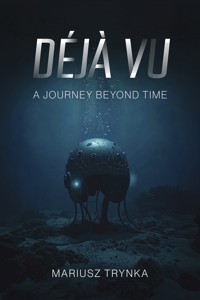
Everyone knows that fleeting shiver — the sense of living through a moment you could not possibly have experienced before. A déjà vu.
For neuroscientist Elias Soler of Barcelona, it is no accident. It is the greatest discovery of his life. Perhaps the most dangerous.
He studies those instants when we seem to remember something that has not yet happened. When the enigmatic Lena crosses his path and the physicist Jonas Marquardt proposes an impossible hypothesis, a door swings open that can never be closed again.
Because what Elias took for a trick of the mind is far more than that: a fracture in time itself. Déjà vu is no game of memory — it is the first step toward real travel through time. And the discovery awakens SYNEXION, a technology corporation ready to give everything. And to take everything.
How do you live in the present when the future is already reaching out for you?
———
A Journey Beyond Time fuses the tension of a techno-thriller with the depth of philosophical science fiction. From the laboratories of Barcelona to the low glass building of a tech corporation on the shore of Lake Zurich, and on to the ancient secrets of South America, this is a story that weaves neuroscience, time travel, and artificial intelligence into a breathless page-turner.
Between the lines waits a question that touches us all: how much control do we truly have over our own perception — and what happens when someone else takes it?
A complete, standalone novel. No prior reading required, no cliffhanger — a story with an ending that lingers long after the final page.
For readers of Blake Crouch (Dark Matter), Michael Crichton (Timeline), and Ted Chiang (Stories of Your Life and Others).
Also includes: time travel, neuroscience, temporal anomalies, artificial intelligence, South America, conspiracy, consciousness research, technology ethics.
Ebooka przeczytasz w aplikacjach Legimi na:
Liczba stron: 474
Rok wydania: 2025
Audiobooka posłuchasz w abonamencie „ebooki+audiobooki bez limitu” w aplikacjach Legimi na:
Podobne











MARIUSZ TRYNKA
DÉJÀ VU
A JOURNEY BEYOND TIME
Table of Contents
Prologue
Chapter 1
Other books by the author
Copyright ©️ Mariusz Trynka, 2025
All rights reserved.
No part of this publication may be copied, stored in information retrieval systems, or transmitted in any form or by any means—electronic, mechanical, photocopying, sound recording, microfilming, digitization, storage on electronic data carriers, or by any other technology—with the exception of short quotations in reviews, critical articles, or scientific papers in accordance with applicable law.
Second edition, Krakow 2026
Self-published by the author
Cover design: Łukasz Dziedzic / Studio Karmi Szara
Original title: “DÉJÀ VU – Eine Reise jenseits der Zeit”
Editing & proofreading: Gareth Clegg / Blacksails Publishing
Layout and design: Mariusz Trynka
ISBN: 978-83-975812-5-8
You can find more books by this author at www.mariusztrynka.com.
For Joanna –
for your patience, your care, and your strength,
For all the hours you have given to my words,
even though they could have been ours.
Prologue
The conference room reminded him of a courtroom. One in which the verdict had already been handed down. He pressed his palms against the cool tabletop and looked up at the wooden panels, which faded under the cold neon light—light that shone from the ceiling like in an interrogation room. They sat opposite him—two figures whose faces stubbornly eluded his gaze. Where eyes should have been, there were only shadows cast by the cold light. Where mouths should have spoken, the contours blurred into indistinct outlines. It was as if he were looking through a veil—as if his mind refused to recognize their features. One figure radiated a coldness that filled the entire room. A man, as far as he could tell from his immaculate suit. He wore his authority like armor. Next to him was a second figure—definitely female, elegant, perfectly arranged, with a fake smile he felt more than saw.
Elías had deliberately dressed simply. Now he felt naked under their invisible gaze. Like a schoolboy who hadn’t done his homework.
“Five days of radio silence,” began the first figure without preamble, his voice sharp and cutting. “After an experiment that was supposed to justify our entire investment.”
The words hit him like physical blows. Elías tried to respond, but his voice sounded weak and uncertain as he justified himself.
“The experiment was a success—but also a shock...”
“A shock?” The second figure joined in, and although he couldn’t see her face, he could sense the cold precision of her attention. The pen in her hand looked like a scalpel to him. “What kind of data did you collect?”
He stammered something about visions and insights. But with every word, he felt the atmosphere in the room grow colder, their patience waning.
“Visions?” The female figure leaned back, and although Elías couldn’t see her eyes, he felt them narrow into slits and scrutinize him.
“We haven’t invested millions to talk about figments of imagination.”
The air in the room grew thinner. Elías felt sweat forming on his forehead. The faceless figures in front of him seemed even more threatening. Perhaps it was because he couldn’t read their reactions. Every answer he gave seemed to fall on deaf ears and be judged by invisible judges.
“You speak in riddles,” continued the first figure, his voice becoming sharper and more cutting. “This is not the transparency we agreed upon.”
Elías tried to explain, to appease them, but they interrupted him, cutting his words like knives. The second figure noted every misstep, every vagueness in his answers, even though he couldn’t see what she was writing. It seemed to him that her distorted mouth was grinning mockingly.
“You act like a man who knows more than he admits,” said the second figure. Although he couldn’t see her eyes, he felt her scrutinizing gaze once again. Like the face of a predator assessing its prey. “That makes me... uneasy.”
The threat was subtle, but unmistakable. Elías felt a net closing in around him. The walls of the room seemed to be getting closer with every passing second. The faceless figures appeared to grow taller and their shadows longer. He wanted to flee, to jump up and leave the room, but his legs wouldn’t obey him. Every movement felt as if he were immersed in jelly.
“The market won’t wait,” said the first figure coldly. “The competition never sleeps. I expect a detailed report within two weeks. With concrete applications. With results that justify our investment.”
The words fell on him like stones. Two weeks. Results. Justification. He had nothing to give them. He didn’t even know what they were talking about.
“I get the impression,” the figure continued, and Elías sensed the icy calculation in his demeanor, “you have an agenda that goes beyond our agreement. That makes me very nervous.”
The figure leaned forward, and suddenly its invisible presence filled the entire room—threatening, omnipresent, and merciless.
“Remember: we decide what happens. Not you.”
Elías wanted to scream, wanted to protest, but his voice failed him. The faceless figures rose, their shadows looming over him like sinister angels. He was trapped in this sterile room, surrounded by faceless people who bought and sold him like a commodity.
They left the room, but their presence remained. Their invisible eyes still burned in his consciousness. In the sudden silence, he heard only his own heart racing, felt only the cold certainty that he had started a fight he could not win.
He had to get out of here. He had to escape. He had to...
His racing heartbeat pulled him out of the nightmare like a lifeline. He sat up, breathing quickly, almost frantically. Cold sweat clung to his skin.
But something wasn’t right. His bedroom—the room that had been so familiar to him for years—seemed strange. The shadows from the furniture looked wrong, shifted, as if they didn’t belong there. The familiar moonlight that normally fell through the curtains seemed to be coming from a different direction today.
Then he saw them. Two shadows on the wall opposite his bed—one of a man and one of a woman. But that was impossible, because there was no light source that could have cast such shadows. Nevertheless, they grew, becoming larger and larger, stretching up the wall to the ceiling and beyond, as if they wanted to engulf the entire room.
“We decide what happens. Not you.”
The voice came from everywhere and nowhere. From the walls, from the air, from his own head. The shadows pulsed in time with his racing heartbeat.
The shrill alarm tone shattered the illusion like a veil. Elías jumped up again, this time fully awake. The shadows had disappeared, and his bedroom looked normal again. He fumbled for the alarm clock. The display showed 7:68 a.m. Startled, he rubbed his eyes and looked again: 7:28 a.m. His nerves were on edge, but his adrenaline level was already dropping.
Outside his window, Barcelona was coming to life, and the first rays of sunshine were creeping over the rooftops. He took a deep breath and rubbed his eyes. It was just a dream. But it had been so vivid that he could still feel the coldness of the faceless people who had condemned him.
“We decide what happens. Not you.”
The words echoed in his mind as he stepped into the shower and hurriedly got dressed. It was a strange dream for someone who wanted to enjoy a day off. Someone who wanted to go diving on the Costa Blanca. Faceless people deciding his fate. He packed his diving gear, pushing the last images of the nightmare out of his mind. Today he would enjoy the quiet beauty of the underwater world, far away from sterile conference rooms and people who thought they could buy others. But as he left his apartment, a feeling remained—a warning, perhaps, or a premonition. Some dreams, he thought as he ran down the stairs, just felt too real.
Chapter 1
The water surrounded him like a second consciousness.
Elías glided through the turquoise depths of the Mediterranean Sea off the coast of Altea. His movements were precise and effortless, his focus outward. Down here, between the rock walls and swaying fields of seaweed, everything else dissolved. The emails, the diagrams, and the endless discussions in the lab did not exist here. Only the moment existed underwater. The rhythmic sound of his breathing pulsing through the regulator, the gentle resistance against his fins, and the subdued play of light formed an abstract world of weightlessness. He had gotten into the habit of coming here once a month—not as a tourist, not as an athlete, but as a seeker. He couldn’t say exactly what he was searching for—perhaps silence or clear thoughts. Possibly an order that couldn’t be captured in theories or formulas.
The Mediterranean current gently pushed him forward. He adjusted his buoyancy compensator to hover above a dense field of Posidonia. The long seagrasses swayed in sync with the rhythm of the water, like neurons responding to a simultaneous stimulus. Yes, like neurons, he thought. That was Elías’s area of expertise. One region among many in the three-dimensional network of the brain he had been mapping for years. And yet he kept coming across anomalous patterns—especially in the spontaneous déjà vu experiences of his volunteer test subjects.
He navigated carefully around a small rocky outcrop. Beneath it, a natural cave opened up, little more than a bulge in the rock. The slanting sunlight refracted into wave-like patterns on the sandy floor, as if someone pulled invisible threads through the water. Elías paused and checked his depth gauge. Eighteen meters. The pressure was pleasant, almost soothing in its own way. The sea exerted an even force on every square inch of his body. It was a continuous contact that others might have described as a firm embrace, but Elías didn’t think in such terms. For him, it was biology, physics, mathematics, and precisely calculable ratios. Even down here, his mind remained analytical, albeit somewhat calmer than on land.
A swarm of silvery fish shot past him, changing formation like a single organism. Elías watched the flowing geometry of their movement as they split, came together, and flowed apart again. A collective intelligence without a central nervous system. It reminded him of the oscillation patterns in the prefrontal cortex he had been studying for months. Neural networks that organized themselves without discernible instruction. He followed the swarm at a distance and dove deeper into the cave. The rock overhang above filtered the light into a diffuse glow. Small plankton particles danced in the water like dust motes in a sunbeam. Their random movements formed temporary patterns that immediately dissolved again. It was chaos and order in constant flux.
The light suddenly changed as a cloud passed over the water’s surface. The fluctuation in brightness caused the outlines of the underwater landscape to shimmer. Elías remained motionless in the water, his fins barely noticeable as they balanced his body.
Something wasn’t right. Or rather, something was too right.
A strange shimmering sensation enveloped his senses. The rock formation in front of him, the special light, the slope of the ground. Everything suddenly seemed familiar. Not in the sense of recognition, because he had never been to this dive site before. It was something else. As if he had experienced this exact moment before, in precisely this configuration.
Déjà vu underwater? The thought flashed through his mind as he tried to analyze the phenomenon. In his research, he’d documented hundreds of such episodes and measured the electrical signals that accompanied them. But to experience one himself, here in the depths of the Mediterranean, far away from all his laboratory instruments—that was different. No longer a theoretical construct, but something immediately tangible. For a moment, his hands seemed not to belong to him, while time seemed to stutter, then flow again like a film with missing frames. His pulse quickened. The pressure in his middle ear felt strange, as if it were rising and falling at the same time. Data. He needed data to understand this state, he thought. But all he had was his own perception—probably the least reliable instrument there was.
He breathed slowly and deliberately, controlling his buoyancy. The sensation faded as quickly as it had come—a flicker at the edge of his perception, then it was gone. All that remained was a slight disorientation, like after a sudden change in altitude that disrupted his sense of balance. Elías looked at his hand against the blue background. It was real and present. The membrane between past and present was intact again. Science offered a simple explanation: it was a temporary delay between perception and consciousness, perhaps triggered by the pressure difference or unfamiliar environment. His brain had briefly decoupled two parallel processing pathways. Nothing mysterious. And yet...
He broke away from the rock and continued on his way, deeper into the sea’s endless silence. The underwater light painted shifting patterns on his wetsuit as he dived through a tunnel of bubbles left behind by his breathing apparatus. Each one was a perfect sphere until it deformed and merged with others. The current grew stronger and carried him gently forward, as if time were moving him and not the other way around. The jagged edges of the rock face to his left had been smoothed over thousands of years, as if they existed outside of time. Elías followed their course with his left hand, letting his fingertips glide over the cool surface.
He never had another déjà vu, but the memory of the feeling remained, like an afterimage on the retina after a bright flash. In his Barcelona laboratory, he had developed a theory that such phenomena were not misfires, but indications of a more fundamental structure of time perception. Most of his colleagues considered this speculation, some even complete nonsense. For them, déjà vu was merely a neuronal glitch—incorrect signals sent by the brain. It was interesting, but otherwise without any deeper meaning.
The dive computer on his wrist beeped softly. It was time to ascend. The physical limits of the human body caught up with him. He checked his air supply, then slowly began to rise. Meter by meter, he drifted upward, with the patience required to equalize the pressure. Above him, the surface of the water was already visible, a shimmering mirror between two worlds. Elías dove through it as if through a membrane, back into the other reality. And then he noticed her out of the corner of his eye. A figure broke through the surface of the water, just a few meters to his right, almost simultaneously.
Elías felt the warm wooden planks beneath his feet as he climbed out of the water onto the diving platform in Altea. The midday sun beat down on his shoulders as the cold salt water ran off his black wetsuit and collected in small puddles on the wooden planks.
He released the clasp on his mask and slipped it off. The world above the waterline suddenly seemed too bright, too loud, and too full of unnecessary details. With practiced movements, he removed his breathing apparatus and compressed air tank, placing the equipment methodically on the designated bench. The other divers in the group had already returned—they had opted for the shallower route, while he had explored the deeper one alone, which he preferred—without the flashing cameras, excited gestures, and exaggerated descriptions of fish probably half the size they claimed to be.
He pulled the wetsuit’s zipper halfway down and let the warm Mediterranean air dry his skin. The light breeze felt pleasant on his damp chest. He closed his eyes briefly, trying to hold on to the feeling of weightlessness for a moment longer. But it was already fading, displaced by gravity, which strained his muscles again, and by the thoughts that were returning at the same time—thoughts of experiments, data, and deadlines. And of the lecture in Leipzig.
When he opened his eyes again, he noticed her. A slender woman in a dark blue wetsuit kneeled about three meters away on the jetty’s wooden planks. She was rinsing her fins, water dripping from her fingers back into the sea. Her wet hair glistened in the sunlight, brown with a hint of chestnut. She must have been about his age, maybe in her early forties, with prominent cheekbones and a straight, almost classic nose. Her skin had a relatively pale tone, which was unusual in the Mediterranean region. Something about her features—the shape of her eyes, perhaps—suggested she was from somewhere between Central and Eastern Europe. A tourist, possibly, like many in the group.
She looked up as if she sensed his gaze, and for a brief moment their eyes met. Dark brown, almost black in the bright sunlight, with a directness that surprised him. No embarrassed averting of the gaze, no social smile. Just calm, curious attention.
Elías nodded briefly, a polite gesture among divers. He had no intention of striking up a conversation with her. The woman returned the nod with a slight smile that reached her eyes, before turning her attention back to her fins.
“Have you been to the cave?” she asked suddenly, without looking up. Her voice had a slight accent that he couldn’t quite place, possibly Eastern European, perhaps Slovakian or Polish. Elías briefly hesitated. Small talk wasn’t his strong suit, especially after the quiet intimacy of the dive. He preferred the clarity of scientific concepts to the vagueness of human interactions. But the question was precise, related to the dive, and therefore acceptable to him.
“Yes,” he finally replied. “The current was stronger than expected there.”
“The water quality wasn’t ideal either,” she said as she methodically organized her equipment. “Too much suspended matter on the northeast wall.” Her movements were efficient and precise, without haste, but also without unnecessary gestures—much like his own manner.
“Did you see the school of barracudas?” She looked up again, her dark eyes fixed on him.
“No. Just small schools of fish near the overhang.”
“You missed something.” She smiled again, this time more broadly. “They came from the east, maybe twenty fish in formation, like a giant silver arrow through the blue water.”
Elías just nodded, because he couldn’t think of a similar description. He had perceived the schools of fish less as a natural spectacle and more as patterns, as living geometry.
She stood up and stepped closer, her posture relaxed but not intrusive. “I’m Lena,” she said simply, without extending her hand—a gesture that would have been inappropriate in any case, given that they were both still in dripping wetsuits.
“Elías,” he replied.
“Is this your first time in Altea?”
“For diving, yes. But otherwise I know the Costa Blanca quite well.”
She nodded as if she had expected this answer. “I come here about once a month. It’s kind of calming,” she said. “This place. The regularity. It’s like a ritual.”
He found it strange how accurately this statement reflected his own feelings. For him, diving was not a sporting challenge or an adventure in the usual sense. It was a kind of calibration, a reset of the prefrontal cortex.
“Are you here for business or pleasure?” he asked, although he didn’t really care what had brought the woman to Altea.
“Both,” Lena replied. “I work in real estate. Mainly in Valencia and the surrounding area, but also here on the coast.” She chose her words as carefully as she had chosen her gear, without unnecessary details.
Elías sensed she was waiting for a response to her answer, and out of reflex he said, “I’m a neuroscientist at the University of Barcelona.”
Her expression changed, becoming more focused, as if she had suddenly become deeply interested. “Really? Which area?”
“Temporal cognition. Time perception, in simple terms.”
Lena smiled as if she were thinking about something beyond this conversation. “Time feels different underwater, don’t you think? Not slower or faster—just...different.”
The remark surprised him. It wasn’t just a platitude, but an observation that stemmed from genuine interest. “Yes,” he said, realizing he wanted to say more. “The change in sensory input alters the brain’s perception of time. Without the usual anchor points—sounds, movements, social cues—consciousness creates a different temporal map.”
He paused. Suddenly, he realized he had slipped into lecturer mode. But Lena showed no signs of boredom or polite patience. Her gaze remained attentive and interested.
“A temporal map,” she repeated slowly. “That’s a beautiful image.”
Elías cleared his throat slightly. “Just a simplified analogy.”
Lena dried her hands on a small towel hanging from her belt. “I’ve got an hour before I have to return to Valencia,” she said casually. “There’s a café halfway to the harbor. Good coffee, even better view. If you’re up for it.”
The invitation was so direct and to the point that Elías didn’t know how to respond for a moment. Her gaze was neither demanding nor expectant—just open and present. He realized that something inside him actually wanted to accept. But that was a part of him that rarely got a chance to speak.
“Thanks, but I have to get back to Barcelona,” he heard himself say. “I’m preparing a presentation for a symposium in Leipzig.”
“Leipzig,” she repeated with a slight nod. “Beautiful city. Good acoustics in the opera house.”
He had expected her expression to show a hint of disappointment, or at least the polite mask that people put on when they are rejected. But there was nothing of the sort. Her face remained open and interested—as if she had merely taken his answer as information, not as a rejection.
“Good luck with your presentation,” she said simply. Then she packed her things methodically and without rushing. Before she left, she turned around once more. “Maybe we’ll dive together again sometime—no one talks down there anyway.”
With these words, this verbal jab, and a final smile that seemed to say she knew something he didn’t, she turned away and walked along the jetty toward the shore, carrying her diving gear effortlessly over her shoulder. Elías watched her go, longer than necessary. Something about this encounter lingered in his mind, like a mental echo. He forced himself to stop thinking about it and concentrated again on methodically stowing away his diving equipment. Only when he was finished and left the jetty himself did he realize he didn’t even know her last name—and part of him regretted it. The part that rarely had a say.
Barcelona welcomed Elías with its familiar mix of air that smelled of the Mediterranean and the urban rhythm of a large Spanish city. Dusk was already falling over the Eixample district when he unlocked his apartment door. Diffused light bathed the room beyond the threshold. The sun’s last rays fell through the tall windows on the west side, casting elongated rectangles on the polished parquet floor. The apartment was a place of clear lines. Modern Scandinavian-style furniture made of light wood, minimalist interior design, and functional arrangements—all without decorative or sentimental objects. The few pictures on the walls were not personal mementos, but abstract compositions. They looked like studies in geometry and proportion. An apartment that felt more like a laboratory than a home.
Elías put down his bag and went to the window. Barcelona spread out below him, its grid of streets with their characteristic sloping corners. It was Cerdà’s vision of a city of reason and geometry. Ildefons Cerdà had conceived this urban expansion in the mid-nineteenth century. Rationality that became poetry—still considered a masterpiece today when viewed from a sufficient distance.
He detached himself from the window and moved across the room with clockwork precision. He flicked the switch on the minimalist floor lamp in the corner, went to the refrigerator, took out a bottle of water, and then continued on to the study.
Here, in his inner sanctuary, the apartment’s clean lines gave way to controlled chaos. It was immediately apparent that this room was off limits to his cleaning efforts. Books and journals were stacked on the desk. Papers with handwritten notes covered a corkboard wall. EEG curves ran in an endless loop on several screens, colored lines that looked like abstract mountain landscapes. He had outlined a particularly striking group in red:
“Irregular oscillations in the frontal cortex, recorded during spontaneous déjà vu episodes in test subject 17B.”
Elías sat in his ergonomic chair and turned on the main screen. His fingers glided over the keyboard, and he used the mouse pointer to open files. He opened various tables and diagrams. Then he worked methodically, step by step, but something was disrupting his usual rhythm. A feeling of unease spread, like a slight itch in a place you can’t reach. After two hours of concentrated work, he leaned back and rubbed his eyes. The numbers, the curves—they refused to yield a coherent interpretation. The neural patterns that appeared during the déjà vu episodes followed no discernible logic. Something fundamental was missing from his analysis.
His gaze drifted to a notebook lying on the side of his desk. Unlike the digital files and computer-generated graphs, this book was an analog relic. Black, leather-bound, with heavy paper that absorbed ink like a memory. Elías pulled it toward him and opened it. The pages were filled with his precise, small handwriting. Thoughts and observations that were too personal, too speculative to share with the team. His private collection of thoughts.
An entry from January caught his eye: “Time does not pass—it stands still.”
Below that, one day later: “Consciousness is movement within a stationary space.”
Thoughtfully, he ran his fingertips over the dried ink, over his almost philosophical entries, as if he could feel the thoughts behind them. The idea had been haunting him for months: to view time not as a line, but as space. As a dimension that already exists in its entirety. Past, present, and future—all existing simultaneously, perceived as a linear sequence only through the limited filters of consciousness.
He had only cautiously hinted at this idea in academic discussions. It was too speculative, not grounded enough in empirical data. But here, in the isolation of his study, he could give it free rein. He leafed through the pages and sketched out a new note.
“If time were really just an illusion, a construct of consciousness, then traces of this construct would have to be found in the neuronal data—de facto cracks in the curtain of the present.”
Déjà vu could be such cracks. Not errors in the system, but brief glimpses behind the scenes. His own experience underwater returned to his mind—the feeling of doubling, the strange familiarity of an unknown place. The scientific explanation was banal and could be found in any reference book. A temporary delay between perception and consciousness was responsible. But what if it was something more fundamental?
Elías wrote down a new equation, trying to find a mathematical description for this phenomenon. The numbers flowed, but they did not lead to a satisfactory result. Frustrated, he crossed out the formula and leaned back. His gaze wandered around the room until it settled on his diving equipment, which was still unpacked in the corner. The mask lay on top, and drops of seawater were still visible on the glass. It was a foreign object in this sterile, scientific environment.
For a moment, he saw the woman’s face again—Lena. Dark eyes that had looked at him without hesitation. The direct way she had invited him for coffee—without the usual social rituals and pleasantries.
“Maybe we’ll dive together again sometime—no one talks down there anyway.”
Her accent had been slight, but unmistakable. The way she had said “together”—with a slight emphasis on the first syllable. He shook his head, trying to shake off the thought. Such distractions were unproductive. He had politely declined, and that was the end of it. The likelihood of their paths crossing again was negligible.
Nevertheless, she was one of the few people who had shown spontaneous interest in his work without the usual reactions. No ignorant enthusiasm for “brain research” and no allusions to “mind reading.” Nor were there any science fiction clichés about time machines and paradoxes when she heard about time perception. Just a genuine, immediate understanding of the idea of a “temporal map.”
He turned back to the screen, forcing himself to concentrate on the data. Test subject 17B’s EEG curves showed unusual beta waves, followed by theta activity, typically associated with memory processes. But the timing was wrong—the theta activity occurred too early, before the actual memory retrieval. It was as if the memory came before the experience.
Elías noted the observation in his notebook, flipped back a few pages, and sketched out a new hypothesis. If time was indeed just a construct of perception, then—purely theoretically—information could also flow in the opposite direction. From the future to the present. From the present to the past.
The scientific community would dismiss this idea. “Temporally mirrored cognition”—a theory without basis, without mechanism, and without empirical evidence. And yet...
Night fell over Barcelona, and the city lights began to twinkle like distant stars. Elías continued working, immersed in his notes, surrounded by flashing screens and graphs that looked like mountain ranges.
In the early hours of the morning, his gaze fell again on the diving mask in the corner. For a brief moment, he thought he saw the reflection of dark eyes in the curved surface. But when he looked closer, the glass only reflected the pale light of his screen. He turned his attention back to his data.
Elías pressed his forehead against the Boeing 737’s cool window and gazed into the darkness above Europe. The laptop screen cast a bluish glow on his face as he followed the scattered lights of the Iberian Peninsula below. The patterns of human settlements became abstract paintings in the night. He recognized neural pathways in the streets and electrical impulses flashing in the cities. Viewed from above, it was a giant collective nervous system.
The cabin itself was filled with the typical hushed calm of a night flight. The steady hum of the engines had long since turned into white noise—an acoustic backdrop that did not disturb his thoughts, but rather enveloped them. Most of the passengers had already turned off their reading lights, and some were already asleep, their heads leaning against the vibrating window. Elías, however, was awake. His flight from Barcelona to Leipzig had departed just an hour ago, and his presentation tomorrow required some last-minute adjustments.
His black notebook lay open on the table in front of him. Next to it was his laptop with the neural activity graphs from his last experiment, full of colorful lines that looked like coastlines—landscapes of cognition. He stared at a particularly striking spike in the gamma frequency, an anomaly he wanted to highlight in his presentation tomorrow. Shortly before the déjà vu event, a synchronous oscillation was measured in the frontal lobe of several test subjects. It wasn’t strong enough to be significant, but too consistent to be random. A pattern that defied classification.
He clicked on another graphic, then a third. His eyes searched for connections, for a structure in the data’s noise. The soft tapping of his fingers on the keyboard mingled with the background sounds of the plane. Then he paused briefly, his fingers hovering over the keys, but his gaze wandered from the screen to the dark oval window. The mathematics of the curves began to blur, and instead a different geometry emerged in his mind. It was the cones of light underwater, the floating particles in the blue twilight of the cave near Altea. And behind them, like a watermark, Lena’s face.
He remembered her direct way of asking questions. Her comment about the time underwater. He shook his head, trying to dispel the thought. Such distractions were inefficient, especially now, one day before the symposium. The woman had been a fleeting encounter, nothing more. Something that couldn’t be connected to his way of thinking, and yet her image kept returning, like a disturbing frequency in an otherwise clean signal.
Elías closed the laptop and opened his notebook. The handwritten pages offered a different form of communication with himself. They were more direct, more intuitive, and less filtered by the expectations of others. He flipped back to an older note, written six months ago during a sleepless night:
“Consciousness is not a reflection—it is an interference pattern.”
The words stared back at him, timelessly captured in ink. He had rephrased this thought several times, but never fully understood it. Interference patterns arise from waves that overlap, reinforce each other, and eventually cancel each other out. Consciousness as a result of intersecting paths of time? With precise, controlled movements, he took his pen from his jacket pocket and placed the tip on a new, blank page. The ink flowed in clear lines onto the paper:
“Déjà vus are not misfires. They are impulses from a different direction in time.”
He looked at the sentence and felt its resonance. The usual explanation for déjà vu was trite. A delay between perception and awareness, a glitch in neural processing. But what if it was something more fundamental? An actual overlap of different layers of time? His hand moved across the paper again, almost as if by itself: “If memory reaches into the future, what remains of free will?”
The implications of this idea were disturbing. If memory could be not only backward-looking, but also forward-looking, then the future already existed in some form. And if it existed, was it changeable? Or only observable, like a film already shot and being played back? This was a question many physicists and philosophers had already asked themselves.
The question of free will was a metaphysical minefield that Elías normally avoided. His research focused on measurable neural activity, not philosophical speculation. And yet, if his theories about temporal cognition were correct, then the question suddenly had empirical relevance.
He closed his notebook and leaned back in his seat. His gaze wandered back to the window, where now there was nothing to see but darkness and the occasional flash of the position lights on the wing. The plane had long since left the airspace over the Iberian Peninsula, passed the Pyrenees, and was now flying over France. The darkness outside seemed like a curtain hiding the unknown.
Elías stared at his reflection in the window—a pale face, its contours outlined by the dim cabin light. A face between two worlds: the physical reality of the airplane and the endless void beyond. At that moment, he thought again of diving, of the feeling of being surrounded on all sides and yet floating weightlessly. The analogy was surprisingly apt. Here too, ten thousand meters above the ground, he existed in a liminal space—neither completely on earth nor completely in the sky. A transit zone, a temporary existence between departure and arrival.
The flight attendants discreetly moved through the aisle, collecting empty drink cups and quietly asking if anyone needed anything. When they reached him, Elías briefly shook his head and turned back to his laptop. He opened the presentation he would give in Leipzig the next day. “Chronodynamics of cortical activity”—a precise, technical title that gave no hint of the deeper questions actually on his mind.
The images on the monitor showed what could be measured: EEG curves, fMRI scans, and statistical analyses. But what he was really looking for—the structure of time itself, the geometry of consciousness—eluded his instruments. Perhaps he would never fully understand it. Perhaps the human brain was incapable of comprehending its own fundamental operations—like an eye that cannot see itself.
The seatbelt sign lit up and the captain announced slight turbulence. Elías saved his work and closed his laptop. He checked his seatbelt, even though he had never unfastened it. The plane began to vibrate slightly, then rock a little. The movement was minimal, little more than a tremor. Nevertheless, it intensified the feeling of unreality, of floating between worlds.
At that moment, between waking and sleeping, between Barcelona and Leipzig, between thought and realization, an image came back to him. Lena standing on the pier, water still dripping from her wetsuit, her gaze direct and unclouded.
“Maybe we’ll dive together again sometime...”
The words echoed as if she had just spoken them. As if time were not a linear sequence, but a space through which one could move. The plane passed through a layer of clouds, flew back into clear air, and the turbulence subsided. Elías looked out the window one last time, at his reflection silhouetted against the darkness. A face between the past and the future, a point in a coordinate system whose axes he did not yet fully understand.
His lecture in Leipzig would only touch the surface of this mystery. The actual research took place, as in diving, in the depths—beyond the reach of ordinary light.
Other books by the author
Interitus – Chronicles of a Dying World
Home is lost.
What remains is only the outline of a future –
carried through time, space, and doubt.
They knew it would end. But not what would begin after.
A society on the brink of collapse saves what can still be saved – memories, lives, responsibility. Across generations, they prepare for that one moment that could change everything. But preparation does not mean certainty. And those who seek answers must be ready to ask questions for which there are no words yet.
Interitus is a novel about the end of security,
about decisions under the pressure of time – and about the quiet question of whether understanding is possible in a world that only listens to strength.
A story about those who continue on,
even though no one waits for them anymore.
Interitus 2 – Chronicles of Divided Worlds
Coming May 2026.
Interitus 3 – Chronicles of Reunification
Coming June 2026.
Genetic Memory – Band 1 – Omnis
Ben Foster has achieved everything others can only dream of: a successful technology company, loyal employees, and financial independence. Yet inside, he feels empty. When he decides to leave everything behind and travel through South America, he has no idea that a fateful event in the Peruvian Nazca plains will change his life forever.
What Ben discovers in the inhospitable vastness of Peru calls into question everything humanity believes it knows about its own history. Suddenly, he becomes the target of powerful interest groups who want to control his discovery at any cost.
On a dangerous flight across four continents, Ben must not only save his own life but also preserve a truth that could change the fate of all humanity.
Perhaps the future of humanity lies hidden in its long-forgotten past.
The Seed of Memory
The First Novella
From the Universe of Genetic Memory
The Fusion of Memory
The Second Novella
From the Universe of Genetic Memory
The Legacy of Memory
The Third Novella
From the Universe of Genetic Memory
A strange world.
A lost expedition.
A beginning that changed everything.
With poetic power and quiet suspense, this short novels tell of survival,
encounters, and the mysterious origins of a new story.
Note:
For the full reading experience,
it is recommended to read
GENETIC MEMORY – BOOK I – OMNIS first.
www.mariusztrynka.com