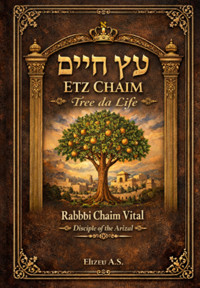
Sefer Etz Chaim – Tree Of Life – Rabbi Chaim Vital ebook
Elizeu Antonio Souza ; Rabbi Isaac Luria ; Rabbi Chaim De Vital
Uzyskaj dostęp do tej i ponad 250000 książek od 14,99 zł miesięcznie
- Wydawca: Clube de Autores
- Kategoria: Literatura obyczajowa i piękna•Literatura piękna
- Język: angielski
Sefer Etz Chaim — The Tree of Life — is the foundational work of Lurianic Kabbalah and the text that decisively redefined Jewish mystical metaphysics from the 16th century onwards. Conceived from the oral teachings of Rabbi Isaac Luria (1534–1572), the Arizal, and compiled by his principal disciple, Rabbi Chaim Vital (1543–1620), the book was composed in Tzefat (Safed), in Galilee, within the context of the intense spiritual flourishing of Judaism after the expulsion from Spain. Unlike previous Kabbalistic works, the Etz Chaim does not seek to reconcile divergent traditions, but inaugurates a new, rigorous, and coherent system that comes to structure subsequent Kabbalistic thought. Far from being a devotional or merely symbolic text, the Etz Chaim constitutes a systematic ontological architecture. Organized into Palaces, Gates, and Chapters, it expounds the foundations of Lurianic cosmogony: the Ein Sof and the retraction of Light (Tzimtzum), the formation of primordial space, the emanation of Qav, the worlds of ʿIgulim and Yosher, the configuration of Adam Qadmon, and the emergence of the sefirot as structures of Light and Vessel (Or ve-Kelim). The work precisely analyzes the Partzufim—Abba, Imma, Zeʿir Anpin, and Nuqva—the relationships between inner and surrounding Light (Or Pnimi and Or Maqif), the spiritual worlds, the forces of concealment (Qelipot), and the nexus between cosmic history and human history.
Ebooka przeczytasz w aplikacjach Legimi na:
Liczba stron: 3496
Rok wydania: 2025
Odsłuch ebooka (TTS) dostepny w abonamencie „ebooki+audiobooki bez limitu” w aplikacjach Legimi na: