
The Absurdity of Money - Work Hard, Stay Broke, Stress Forever - A Brutally Honest Book About Income, Debt, and Modern Survival ebook
Max Paradox
Uzyskaj dostęp do tej i ponad 240000 książek od 14,99 zł miesięcznie
- Wydawca: ALL-IN Rafał Płonkowski
- Kategoria: Poradniki•Styl życia
- Język: angielski
You earn well.
And you’re still stressed.
This book explains why.
This is not a guide.
It won’t teach you how to budget, invest, manifest abundance, or wake up at 5 a.m.
This book does something far more uncomfortable.
It names what everyone feels - and nobody wants to say out loud.
You earn decent money.
On paper, everything looks fine.
In reality:
your paycheck disappears faster than it arrives,
every “stable” decision quietly increases pressure,
financial peace always feels one step away - and never closer.
This book is about:
the middle class financial trap,
salaries that grow alongside fear,
credit, leasing, subscriptions, and “responsible adulthood,”
relationships where money is never neutral,
hustle culture, passive income myths, and Instagram wealth,
working harder while feeling less secure,
and the quiet realization that the system isn’t broken - it’s working exactly as designed.
There are no motivational quotes here.
No success stories.
No 7-step plans.
Only recognition.
You won’t finish this book richer.
You won’t finish it calmer.
You’ll finish it aware - and that’s the most expensive knowledge there is.
Because once you see it, you can’t unsee it.
And tomorrow?
You’ll still go to work.
This publication was prepared using tools that support the creative process, including solutions based on artificial intelligence. The final concept, structure, and editing are the work of the author.
Ebooka przeczytasz w aplikacjach Legimi na:
Liczba stron: 99
Rok wydania: 2026
Odsłuch ebooka (TTS) dostepny w abonamencie „ebooki+audiobooki bez limitu” w aplikacjach Legimi na:
Podobne
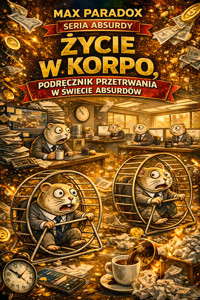



















INTRODUCTION - Money doesn’t buy happiness. But the lack of it sure as hell buys rage.
Let’s start with a lie we all repeat like a prayer, because otherwise we’d lose our minds.
Money doesn’t buy happiness.
It’s usually said by people who:
already have it,
or are desperately trying to convince themselves that having none is just a “state of mind.”
The truth is much simpler.And much more infuriating.
Lack of money creates fear.Lack of money creates tension.Lack of money creates shame.
You can’t build happiness out of those three things.No matter how hard you try.
We don’t live in a world where money is a bonus.We live in a world where money is the operating system of life.
Without it:
you don’t have choices,
you only have compromises.
Your alarm doesn’t ring because you’re ambitious and excited to wake up early.It rings because:
the payment won’t make itself,
the bills won’t magically disappear,
the fridge won’t fill itself.
You can have passion.You can have dreams.But first, you need the transfer to clear.
And here’s the best part.
This is not a book about poverty.This is a book about people who:
work,
earn,
are “doing fine.”
And yet:
check their bank account before buying something,
save for a “rainy day” that never comes, because it’s always just cloudy,
feel like one financial mistake away from screwing everything up.
This is a book about that space in between:
“don’t complain, others have it worse,” and
“how the hell is there no money again?”
We talk loudly and confidently about:
the weather,
politics,
children,
vacations.
But we don’t talk about:
how much we earn,
how much debt we carry,
how much life actually costs,
how afraid we are that it might all collapse.
Money is the biggest taboo, even though it decides:
your time,
your stress,
your health,
your relationships.
At home, you don’t talk about money.At work, talking about it is forbidden.Among friends, you joke about it.But in your head, you’re always counting.What you can afford.What you have to give up.
This book will not teach you how to earn more.It won’t tell you where to invest.It won’t sell you the dream of “financial freedom.”
Because “financial freedom” today is:
a slide in a presentation,
an Instagram post,
bait for your frustration.
This book does something else.
It calls things by their real names.No comfort. No bullshit.
This book is about:
work that was supposed to bring stability but only brought more responsibility,
money that was supposed to bring peace but only brought fear of losing it,
wealth that looks amazing-until you try to chase it.
It talks about a system where:
you should always want more,
you should always try harder,
you should always feel like you’re not doing enough.
There are no heroes here.No success stories.No moral lessons.
There is only:
exhaustion,
tension,
irony,
and shared anger.
If you’re looking for advice-find a guidebook.If you’re looking for motivation-Instagram is waiting.
But if you want to see the financial absurdity we’re all drowning in-you’re in the right place.
Welcome.Let me show you the bitter truth about money and the world built around it.
CHAPTER 1 - I earn good money” - the financial lie we use to calm ourselves down
- So… how much do you make?- Uh… well… I mean, pretty good. It’s fine.
This sentence has absolutely nothing to do with numbers, spreadsheets, or reality.It’s a protective spell with one purpose only:to end the conversation and prevent any follow-up questions.
You say it to everyone, regardless of the situation:
you say it to family so you don’t have to explain why you’re always exhausted,
you say it to friends so it doesn’t turn out that things aren’t as great as they look on Instagram,
you even say it to yourself, because the truth is often too uncomfortable to name out loud.
“I earn good money” isn’t information.It’s a bandage slapped onto your ego to cover anxiety and lack of control.It’s the financial version of “it’ll work out somehow,”said with the hope that maybe it actually will.
Because “I earn good money” almost never means that:
you have real savings, not just a paycheck that disappears in two weeks,
you have peace of mind instead of counting days until the next transfer,
you have enough slack to say “no” instead of taking whatever comes your way.
“I earn good money” means something else entirely.
It means I shouldn’t complain, because “others have it worse.”It means I’m pissed off that I don’t earn as much as I want to-and even more pissed off that I can’t say that out loud.
SCENE ONE - THE CONVERSATION NO ONE LIKES
- But seriously, how much?- Uh… you know… it varies.- Like monthly?- Depends on the month.
This is the moment the conversation should end.Because when someone circles around their own money like a dog around a hot bowl,it means the topic is slippery, dangerous, and better left untouched.
If things were really good, a number would come out.A real one.No hesitation.No “uh.”No “it depends.”
When there’s no number, there’s stress.
And no-this isn’t about fear that someone will rob you if you say it out loud.It’s about fear that once you say it,you’ll realize the money isn’t giving you what it was supposed to give.
We earn more than our parents did. That’s a fact.We have things that used to be symbols of luxury and are now just standard:
better phones, replaced every two years,
better cars that still don’t make us feel secure,
faster internet so we can compare ourselves to others more efficiently,
subscriptions we pay for regularly, often without remembering what they’re even for.
And yet we have exactly zero sense of financial safety.Because money in the 21st century doesn’t disappear dramatically.
It just evaporates.
You don’t know when.You don’t know where.But at the end of the month, the same sentence always appears, spoken in disbelief:“How the hell did this happen?”
SCENE TWO - THE STORE THAT EXPOSES THE TRUTH
You’re standing in a store, looking at something that costs $49.It’s not luxury.It’s not extravagant.
It’s just a normal adult thing you should reasonably be able to buy.
And then the process starts.
Suddenly:
you start calculating instead of looking at the price,
you remember payments that “won’t pay themselves,”
you remember taxes, fees, and other invisible monsters,
you remind yourself that, after all, “I earn good money.”
And then you think:“Next month.”
You think that every month.
“Next month” isn’t a plan.It’s the financial equivalent of “I’ll call you back.”
The biggest joke is this:the more you earn, the more afraid you are to spend-because now you have a level to maintain.
Now you can’t be poor anymore.Even if you wanted to.
You have obligations pretending to be choices:
a car that has to run,
a home that has to be paid off,
a lifestyle that “fits who you are now,”
vacations “at least once a year” so there’s something to post.
These aren’t pleasures.They’re responsibilities dressed up as success.
“I earn good money” is the moment when:
you can no longer afford mistakes,
but still can’t afford real freedom.
It’s the moment when:
you’re afraid of losing your job, because everything would collapse,
you’re afraid of getting sick, because the system doesn’t forgive breaks,
you’re afraid something will go wrong, because you know how thin the line really is.
The system is brutally simple:
when it works, you’re barely breathing,
when it breaks, you’re screwed.
All of that-while “earning good money.”
SCENE THREE - A CONVERSATION WITH YOURSELF
- Relax, it’s not that bad.- Others have it worse.- No need to panic.
This is your internal PR department.It works 24/7, no vacation, no overtime pay,just to keep you from admitting that something doesn’t add up.
Because if you really let that thought in,you’d have to admit you’re playing a gamewhose rules were never explained-and the stakes are rising faster than your income.
“I earn good money” isn’t success.It’s suspension.
Too rich to complain.Too poor to not give a damn.
That’s exactly where we all are.With a calculator in our heads.Tension in our shoulders.
And a question no one asks out loud:
“Is this really it?”
CHAPTER 2 - Work hard - die tired (and without a bonus)
From childhood, we’re taught one beautiful fairytale.Study. Work hard. Try harder. Be diligent. Don’t show weakness.
It’s a simple user manual for being human.No footnotes. No fine print. No information about side effects.And when things get really hard, you’re given one universal sentence:
“You’ll see. Everything will work out.”
That “everything” never arrives.But exhaustion always does.
On time.Without delays.Without excuses.
At the beginning, we’re all ambitious.We want to prove ourselves. First at school, then at work.We stay late. We help others. We take on more than we should.
We want to show that we’re reliable.
The system sees this.
The system likes people like this.
The system is very pleased.
SCENE ONE - THE FIRST JOB
- We don’t have the budget for raises right now, but we’ll see next quarter.- Sure, I understand.
You understand everything.Too much, actually.
You stay after hours because “that’s how it’s done.”You answer calls in the evening because “it’s just a minute.”You reply on weekends so that “Monday will be easier.”
And then you realize that:
your constant availability has become the new standard,
your sacrifice has become expected,
and your exhaustion has become completely invisible.
The raise, meanwhile-just like every quarter-is still coming next quarter.
Working hard doesn’t bring money anymore.Working hard brings other things:
more work, because “you can handle it,”
higher expectations, because “you always deliver,”
zero gratitude, because what used to be extra is now normal.
Because hard work isn’t rewarded.Hard work is exploited.
The biggest joke is that the people who work the hardest:
have the least energy for anything outside of work,
have the least time to change their situation,
have the least space to escape the arrangement.
Because they are too:
tired to change jobs,
responsible to take risks,
reasonable to just walk away.
And the system feeds on that like a vulture.Quietly.Efficiently.Without guilt.
SCENE TWO - THE MOTIVATIONAL TALK
- You’re doing great, but you need to give one hundred and ten percent.- But I’m already giving one hundred.- Exactly. That’s how we know you can give more.
And that’s when you realize this isn’t a conversation.It’s a boundary test.
Because in this system:
percentages are flexible and can always be stretched,
the limit of effort exists only in theory,
and the word “more” has absolutely no end.
One hundred percent isn’t the maximum.One hundred percent is the starting point.
You deliver one hundred and ten? Great.Now make it one hundred and twenty.Then one hundred and fifty, because “we know you’ve got more in you.”