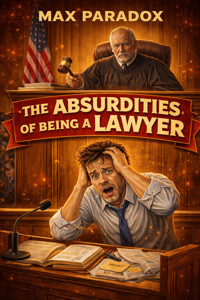
The Absurdities of Being a Lawyer - A Quietly Exhausting Guide to a Profession That Never Asked If You’re Okay ebook
Max Paradox
Uzyskaj dostęp do tej i ponad 240000 książek od 14,99 zł miesięcznie
- Wydawca: ALL-IN Rafał Płonkowski
- Kategoria: Poradniki•Styl życia
- Język: angielski
Being a lawyer is not dramatic.
It’s not heroic.
It’s not even chaotic in an obvious way.
It’s methodical exhaustion.
The Absurdities of Being a Lawyer is a satirical nonfiction book that dissects the everyday reality of the legal profession-not through scandals or courtroom theatrics, but through the quiet, familiar moments every lawyer recognizes instantly.
This is not a guide.
Not a manifesto.
Not a motivational speech.
It is a series of precise observations about:
• working under permanent urgency
• responsibility without authority
• advice that is ignored until it’s too late
• success defined narrowly enough to feel empty
• burnout that arrives without permission
• staying in a profession without ever choosing it consciously
Written in a dry, ironic, and slightly tired voice, this book captures what it actually feels like to be a lawyer once the prestige fades and the routine settles in.
Readers will laugh.
Then pause.
Then recognize themselves uncomfortably.
Because someone finally said it.
And didn’t try to fix it.
This publication was prepared using tools that support the creative process, including solutions based on artificial intelligence. The final concept, structure, and editing are the work of the author.
Ebooka przeczytasz w aplikacjach Legimi na:
Liczba stron: 149
Rok wydania: 2026
Odsłuch ebooka (TTS) dostepny w abonamencie „ebooki+audiobooki bez limitu” w aplikacjach Legimi na:
Podobne



















INTRO
Nobody becomes a lawyer because it looks peaceful.
People say they chose law because they like order, logic, rules.This is a lie they learn early and repeat often.Mostly to relatives.Mostly at holidays.Mostly while holding a drink strong enough to blur memory.
Law is not order.Law is controlled chaos with footnotes.Law is arguments about commas that determine the fate of actual humans.Law is pretending that words written by tired people decades ago are still perfectly clear today.
You don’t enter this profession to help people.You enter it to survive a system that already decided it will not help anyone without resistance.
At the beginning, everything sounds noble.
Justice.Truth.Rights.Responsibility.
These words appear a lot.Mostly in speeches.Mostly in marketing materials.Mostly before you see your first invoice rejected because the font was wrong.
Very quickly, you learn the real vocabulary.
Deadlines.Liability.Risk.Interpretation.And the most important one: “It depends.”
Lawyers do not answer questions.They circle them.They surround them.They weaken them emotionally.Then they say “it depends” and wait for silence to do the rest.
• You will be asked for a simple answer to a complicated question.• You will give a complicated answer to a simple question.• Everyone will be unhappy, including you.
This book is not about the law.
The law doesn’t need another explanation.It already has too many.Some of them contradict each other, which feels on brand.
This book is about the life around the law.The rituals.The habits.The quiet insanity that settles in after years of pretending this is normal.
It is about the emails sent at 22:47 marked as “not urgent.”It is about documents labeled “final_v7_REALLY_FINAL_THIS_TIME.”It is about meetings that exist only to confirm that nobody knows who decides.
It is about the peculiar confidence required to say “this is clear” about something that clearly is not.And the even greater confidence required to say it in front of another lawyer.
• You will argue with someone who agrees with you, but uses different words.• You will disagree with someone who is technically correct but emotionally wrong.• You will bill time for both conversations.
There is a special fatigue that comes with law.
Not physical.Not even mental.
It is linguistic fatigue.The exhaustion of knowing that every sentence can be attacked.That every word can be interpreted.That silence is also a statement, but only when convenient.
You stop speaking normally.You start qualifying everything.
Not “yes.”“Yes, provided that…”
Not “no.”“No, unless…”
Not “maybe.”“Subject to further analysis.”
• You will forget how regular people talk.• You will notice it only when they stop listening.• You will assume it is their fault.
Lawyers love precision.Except when it is dangerous.Then they love ambiguity.Especially when it can be invoiced hourly.
They complain constantly.About clients.About courts.About other lawyers.About the system.
They will also defend the system with surprising passion the moment an outsider criticizes it.
• You are allowed to hate this profession.• Others are not.• This rule is never written anywhere, but strictly enforced.
This book does not offer solutions.There are none that would survive peer review.
It does not give advice.You already ignore enough of that.
It simply observes.Quietly.Relentlessly.
If you are a lawyer, you will recognize yourself.Often sooner than you would like.
If you are not, you may finally understand why the answer was never “yes” or “no.”
And why the bill was still sent.
Chapter 1 - The Noble Idea That Ruined Everything
Nobody tells you the exact moment when the idea forms.
It doesn’t arrive dramatically.There is no lightning.No internal voice saying: this will cost you your soul.
It usually appears quietly, disguised as intelligence.
You are young enough to believe that complexity equals importance.You are tired enough to think difficulty must mean value.You are confident enough to assume you will be the exception.
Law presents itself as a test.
A challenge.A proof of capability.A polite way of asking: Are you smart enough to suffer productively?
You say yes before you understand the question.
At that stage, law looks clean.
Books.Libraries.Well-structured arguments.People speaking in full sentences.
It feels serious.It feels adult.It feels like a profession that will finally stop relatives from asking when you plan to “do something concrete.”
• You believe seriousness automatically means meaning.• You believe difficulty filters out nonsense.• You believe you will mostly deal with logic.
None of this survives contact with reality.
Law school trains you to read.Not to understand.To endure.
You read thousands of pages to extract three sentences.Then you argue about those sentences with people who extracted different ones.Everyone is confident.Nobody is satisfied.
You learn early that clarity is suspicious.
If something seems obvious, it probably hides a trap.If it feels intuitive, it is legally dangerous.If it makes sense, someone already wrote an exception.
• You stop trusting your instincts.• You replace them with footnotes.• You still lose arguments.
The noble idea slowly mutates.
Justice becomes procedure.Truth becomes position.Rights become negotiable.
You don’t notice when it happens because everyone around you speaks the same language of gradual disappointment.
Law does not break people suddenly.It reshapes them carefully.
First, it rewards overthinking.Then it punishes decisiveness.Finally, it convinces you that hesitation is professionalism.
You learn that saying “I don’t know” is risky.Saying “it depends” is safe.Saying “we need to analyze this further” is excellent.
• You will analyze things that do not need analysis.• You will skip analysis where it would actually help.• You will call both decisions strategic.
The noble idea survives mostly in presentations.
In brochures.On websites.In recruitment slogans that still use words like impact and values.
Inside the profession, nobody speaks like that anymore.
They speak in deadlines.In exposure.In worst-case scenarios.
They don’t ask what is right.They ask what can be defended.
This distinction becomes natural disturbingly fast.
At some point, you realize law is less about answers and more about surviving questions.
Clients don’t want truth.They want certainty.
Courts don’t want certainty.They want consistency.
Partners don’t want consistency.They want results.
• You will serve all three and satisfy none.• You will still be told this is normal.• You will believe it for a while.
The noble idea is still there, technically.
It’s just buried under layers of caution.
You can feel it occasionally.Usually late at night.Usually while rewriting something that was already acceptable.
You remember why you started.
Then you delete that sentence because it sounds risky.
Law teaches you that idealism must be carefully controlled.
Unregulated idealism leads to mistakes.Mistakes lead to liability.Liability leads to meetings.
Meetings are the true punishment.
In meetings, nobody is wrong.Nobody is right.Everyone is concerned.
Concerns replace arguments.Concerns replace decisions.Concerns generate follow-ups.
• You will attend meetings that exist only to justify earlier meetings.• You will take notes nobody will read.• You will still feel guilty if you forget them.
The noble idea does not die.
It just becomes embarrassing.
You stop mentioning it out loud.It sounds naïve.It sounds inexperienced.
You learn to smile politely when younger people say it.
You recognize yourself in them.You do not warn them.
Not because you are cruel.Because explanations never work.
Law must be experienced.Slowly.Painfully.
You must personally discover that intelligence does not protect you from absurdity.That knowledge does not guarantee control.That logic is optional when power is involved.
• You will win arguments that make no sense.• You will lose arguments that are correct.• You will call both outcomes “interesting.”
The noble idea survives as a background process.
It runs quietly.Consumes energy.Produces occasional regret.
You keep it alive just enough to tolerate yourself.
Because without it, this would be pure administration with better vocabulary.
And that thought is somehow worse.
So you continue.
You draft.You revise.You qualify.
You pretend the system is imperfect but necessary.You pretend you are still here by choice.
The noble idea nods politely in the corner.
It knows how this ends.
Chapter 2 - Clients Who Want Magic, Not Law
Clients do not come to lawyers for answers.
They come for relief.
They want the anxiety removed.They want uncertainty erased.They want the feeling that someone else is now responsible.
Law is just the costume.
At first, clients speak carefully.
They say things like “we understand this is complex.”They say “we know there are risks.”They say “we just want to be compliant.”
This phase is short.
Very quickly, the real request appears.
They want a guarantee.They want speed.They want a result that does not reflect their past decisions.
Preferably yesterday.
• They will describe a disaster calmly.• They will expect urgency from you.• They will ask why this costs so much.
Clients believe law works like a vending machine.
You insert facts.You select a button.A solution drops out.
They are genuinely confused when this does not happen.
They provided information.They paid money.They deserve certainty.
You explain that certainty is not a legal concept.
They hear this as a personal failure.
Clients want clear answers to unclear situations.
They want yes or no.They want legal certainty in an uncertain world.They want responsibility without consequences.
Most importantly, they want you to agree with them.
• If you agree, you are competent.• If you hesitate, you are overcomplicating.• If you disagree, you are “not business-oriented.”
Lawyers are hired for independence and punished for using it.
The client has already decided what the answer should be.
Your job is to confirm it without creating liability.
This is harder than it sounds.
When you explain risks, clients hear obstacles.When you explain limitations, clients hear excuses.When you explain reality, clients hear negativity.
They nod politely.Then they ask if there is “another way.”
There is always another way.It is just usually worse.
Clients love phrases like “creative solutions.”
They do not love hearing what creativity costs in court.
They want aggressive strategies without aggressive consequences.They want innovation that survives audits.They want shortcuts that look respectable in hindsight.
• They will ask if “everyone does it.”• They will be surprised when the answer matters.• They will do it anyway.
Clients often provide information selectively.
Not because they lie.Because they curate.
They tell you what they believe is relevant.They omit what feels inconvenient.They forget details that might change your opinion.
You find out later.
Usually when it is too late.Usually through opposing counsel.Sometimes through the media.
• You will ask follow-up questions too late.• You will recognize the missing piece immediately.• You will hate yourself professionally.
Clients treat lawyers like insurance.
As long as nothing goes wrong, the cost feels unnecessary.When something goes wrong, the coverage suddenly feels insufficient.
They want protection.They do not want restrictions.
They want you to say “this is fine” and also “this is safe.”
Those are different sentences.
They will insist they are the same.
When things escalate, clients change tone.
The polite distance disappears.The panic becomes audible.
They start sending messages marked “URGENT” that are not urgent.They stop marking urgent messages when things actually are.
They call unexpectedly.They forward emails without context.They ask if this could “somehow be fixed.”
• They will ask for miracles calmly.• They will react emotionally to realism.• They will remember your advice selectively.
Clients also believe lawyers remember everything.
Every detail.Every document.Every conversation from three years ago.
They do not remember what they sent yesterday.
You are expected to be both archive and oracle.
You search emails.You search files.You search your memory.
You find a warning you gave.
They do not recall it.
• You will quote yourself.• You will sound defensive.• You will still be blamed.
Clients want loyalty.
They want you on their side.They want you aligned.They want you committed.
They are uncomfortable when alignment includes telling them no.
They confuse loyalty with agreement.
Professional distance feels like betrayal.
You are expected to protect their interests.Just not from themselves.
This creates a special tension.
You are hired for judgment.You are evaluated on obedience.
You must appear decisive while remaining cautious.Confident while qualifying everything.Supportive while documenting disagreement.
• You will write emails to protect yourself.• You will pretend they are for clarity.• You will know the difference.
There is also the question of time.
Clients want instant responses.
They assume you are always available.They assume their matter is unique.They assume urgency transfers automatically.
They do not see the other clients.They do not see the queue.They see themselves.
You answer quickly.They reply slowly.
You wait days.They complain about minutes.
• You will prioritize incorrectly.• You will feel guilty either way.• You will call it time management.
Eventually, clients decide whether they like you.
Not based on accuracy.Not based on foresight.Based on outcomes.
Good results mean you are brilliant.Bad results mean you should have warned them more.
Both can happen in the same case.
Clients leave when they are satisfied.They also leave when they are disappointed.
They rarely leave when they are wrong.
You become familiar with this rhythm.
Hope.Expectation.Discomfort.Surprise.
You learn to manage reactions rather than realities.
You adjust tone.You soften language.You frame risks gently.
You do not change the law.
You change how it sounds.
Because clients do not want law.
They want reassurance with legal formatting.
And they will keep coming back.
Not because you solved everything.
Because you made uncertainty tolerable for a moment.
Chapter 3 - Billable Hours and the Art of Measured Suffering
Time behaves differently inside law.
Outside, it moves forward.Inside, it fragments.
Minutes become units.Thoughts become entries.Existence becomes something you can accidentally underreport.
Billable hours are not about time.
They are about justification.
You are not paid for thinking.You are paid for proving that thinking happened long enough to deserve a number.
At first, tracking time feels technical.
You write down what you did.You estimate how long it took.You move on.
This innocence does not last.
Very quickly, you realize time is political.
Two lawyers can do the same thing.One bills thirty minutes.The other bills two hours.
Both are correct.Both will be judged.
• You will worry about billing too much.• You will worry about billing too little.• You will worry about worrying instead of billing.
Billable hours teach you a new relationship with yourself.
Every interruption becomes suspicious.Every pause feels expensive.Every moment of doubt feels inefficient.
You stop asking whether something needs to be done.You start asking whether it can be billed.
Not out loud.Never out loud.
But the question appears automatically.
You read an email.
Do you bill for reading it?Do you bill for understanding it?Do you bill for the emotional recovery afterward?
You choose something defensible.
• You will develop a sixth sense for billability.• You will lose a first sense for rest.• You will call this adaptation.
Law firms speak about efficiency.
They mean output per hour.They do not mean sanity.
Efficiency rewards speed without reflection.Reflection without billing is discouraged.
You learn to think while typing.You learn to decide while drafting.You learn to be productive while uncertain.
Mistakes are expensive.Overthinking is invisible.
This creates a delicate balance.
You must suffer just enough.
Too fast looks careless.Too slow looks incompetent.Just slow enough looks professional.
• You will stretch tasks naturally.• You will compress tasks strategically.• You will convince yourself both are ethical.
The billable hour also rewires memory.
Your day is no longer a sequence of events.It becomes a list of activities.
Call.Review.Draft.Revise.
You forget what you actually thought.You remember what you entered.
At the end of the day, you reconstruct your existence.
You scroll through emails.You search documents.You infer what must have happened.
• You will reverse-engineer your own labor.• You will be impressed by how busy you look.• You will feel strangely empty.
Billing language is its own dialect.
Not too vague.Not too specific.
Never emotional.Never human.
You don’t write “client panicked.”You write “client consultation regarding risk exposure.”
You don’t write “rewrote everything.”You write “revision of draft based on internal review.”
You don’t write “nothing made sense.”You write “analysis of applicable framework.”
• You will translate suffering into neutrality.• You will become very good at it.• You will stop noticing the translation.
There is also the daily target.
The number that watches you.
Six hours.Seven hours.Eight hours.
The target pretends to be reasonable.
It does not include meetings that go nowhere.It does not include emails that ruin focus.It does not include the mental load of waiting.
You compensate.
You bill harder.You bill creatively.You bill late.
• You will stay longer to reach a number.• You will reach the number and feel nothing.• You will repeat this tomorrow.
Billable hours reward availability.
Not quality.Not insight.
The lawyer who is always there wins.The lawyer who thinks deeply is admired quietly.
Quiet admiration does not count.
Partners praise efficiency publicly.They praise wisdom privately.