Uzyskaj dostęp do tej i ponad 240000 książek od 14,99 zł miesięcznie
- Wydawca: ALL-IN Rafał Płonkowski
- Kategoria: Romanse i erotyka•Romanse
- Język: angielski
Thirteen years ago, Lena Maj and Michał Borowski wrote a play together. They were young, in love, ambitious, and convinced they still had time to decide how both the story and their relationship should end.
They never did.
Now Lena is an accomplished lighting designer preparing for one last production in Poland before leaving for Copenhagen. Her plan is simple: finish the job, board the plane, and move on to the next stage of the career she built entirely on her own.
Then an actress walks onto an empty stage and speaks a line Lena wrote at twenty-one.
The play is being presented as an unpublished work by celebrated playwright Aleksander Wolski, who has been dead for three years.
And the director of the production is Michał.
As old emails, handwritten notes, forgotten drafts, photographs, and archival documents begin to surface, Lena discovers that the truth is far more complicated than simple plagiarism. Michał once sent their joint manuscript to Wolski without her permission. He credited her as co-author, but he also made choices that were never his to make. Wolski knew the text belonged to two young writers, yet continued working with material that was not fully his.
Every new document changes the shape of the past.
Every answer raises another question.
And while Lena and Michał fight to establish what happened to their play, they are forced to confront what happened to them.
Working together again means returning to the unfinished story they abandoned thirteen years earlier. It also means discovering whether the people they have become can do what their younger selves could not: ask instead of assume, tell the truth before it becomes convenient to stay silent, and build a future without demanding that one person sacrifice everything for the other.
Between rehearsal rooms, theatre lights, late-night writing sessions, professional ambitions, Copenhagen flights, and a mystery hidden in a dead playwright’s archive, Lena must decide what trust looks like when forgiveness is not automatic and love cannot erase the cost of past choices.
Leave the Light On for Me is a contemporary second-chance romance about authorship, ambition, consent, unfinished work, and two people learning that coming back is not the same as returning to who they once were.
Because sometimes the hardest question is not whether someone will stay.
It is whether you are finally willing to let them choose for themselves.
This publication was prepared using tools that support the creative process, including artificial intelligence solutions. The final concept, structure and editing are the responsibility of the author.
Ebooka przeczytasz w aplikacjach Legimi na:
Liczba stron: 271
Rok wydania: 2026
Odsłuch ebooka (TTS) dostepny w abonamencie „ebooki+audiobooki bez limitu” w aplikacjach Legimi na:
Podobne
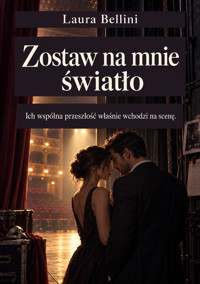











Laura Bellini
Leave the Light On for Me
Their Shared Past Is About to Take the Stage.
ALL-IN Rafał Płonkowski
2026
ISBN 9788384833414
Table of contents
Title page
INTRO
Chapter 1 - What We Didn’t Burn
Chapter 2 - Copy Sent at 2:11 A.M.
Chapter 3 - What the Paper Didn’t Remember
Chapter 4 - The Place You Leave From
Chapter 5 - The Light That Wasn’t in the Script
Chapter 6 - Things Left at the Door
Chapter 7 - Before We Decide Who Stays
Chapter 8 - The Line Between Rehearsal and Decision
Chapter 9 - You Can’t Write This as a Trial Run
Chapter 10 - The Kiss That Wasn’t in Version Seven
Chapter 11 - The Truth That Won’t Fit in a Headline
Chapter 12 - One Night Without a Plan
Chapter 13 - Before I Board the Plane
Chapter 14 - Distance Isn’t Silence
Chapter 15 - Two Nights Are Not a Plan
Chapter 16 - Don’t Give Me Your Half
Chapter 17 - The Price of Truth
Chapter 18 - Everything That Remains in the Light
Chapter 19 - Not Everything Has to Be Saved
Chapter 20 - Leave the Light On for Me
Landmarks
Cover
Title page
Table of contents
Start of content
INTRO
I switched on the first light at 7:43 p.m., even though according to the schedule I should have been in a car on my way to the hotel twelve minutes earlier.
The empty auditorium of the Nadbrzeże Theatre smelled of dust, freshly painted wood, and coffee someone had abandoned in a plastic cup at the edge of the stage. After six weeks of renovations, the building looked the way theatres liked to look just before reopening - beautiful enough for the audience and unfinished enough for every member of the technical crew to still have at least three reasons to swear.
I stood at the lighting console, trying to find a fourth.
"Twenty-seven again," I said into the intercom. "And please, nobody touch the fixture on bridge number two. Seriously. Even if someone decides it looks lonely."
Marek, head of the technical crew, answered through my headset.
"Wasn't us. That lonely fixture moved by itself."
"Great. We have a ghost. Put it on the payroll if it's willing to work overtime."
I heard him laugh, followed by the distinctive clatter of a ladder against the metal structure. The sidelight onstage went out, then returned a second later, this time exactly where I wanted it - along the edge of the wooden platform that was supposed to pass for an old railway platform in the opening-night production.
This was my last job in Poland before leaving for Copenhagen.
At least, that was what I kept telling myself.
Two weeks of work, the season-opening premiere, invoice, plane. No getting attached to places, people, or projects that required me to stay longer than the contract said. Over the past eight years, I had built a fairly comfortable life out of that principle. Theatres in Berlin, Prague, Vienna, sometimes Warsaw or Gdańsk. I arrived, set the lighting, rescued three crises nobody had anticipated, and disappeared before anyone had time to ask where I actually lived.
Technically, I lived in Wrocław.
In practice, I owned an apartment there where my plants spent more time than I did.
"Lena?" Marek's voice came through the headset. "Are we doing thirty-one?"
I checked the time.
I should have said no.
"We are."
I entered the cue number. Warm, dimmed light spilled onto the stage, carving a solitary chair out of the darkness in the middle of the set.
The chair hadn't been there an hour ago.
I frowned.
"Marek?"
"Not mine."
"Does anyone in this theatre ever admit to anything?"
"Rarely. That's how we survived the renovation."
I was about to ask him to have the prop removed when a shadow moved at the back of the stage.
At first I thought it was another technician. Then I saw a woman. Young, maybe twenty-five, wearing black trousers, her hair tied high at the back of her head. She stepped out from the wings with a stack of pages in one hand, sat on the chair, and looked out toward the empty auditorium.
"Sorry," she said. "They told me to check my entrance before rehearsal tomorrow morning. Is that okay?"
I didn't like actors wandering in while I was setting lights, but there was so much caution in her voice that instead of sending her away, I sighed.
"One scene. Don't move the chair."
"Sure."
I lowered my hand to the dimmer fader.
The woman opened the script.
"You leave the light on for those who come back," she began.
My fingers froze.
At first, I didn't understand why.
It was only a sentence. Ordinary words, a handful of syllables spoken by a stranger on an empty stage.
Then she read the next line.
"For those who leave, darkness is enough."
I felt the back of the chair press hard against my spine.
Onstage, the actress continued.
"And what if I don't know which one I am?"
Now I knew.
I stood so quickly that the headset cable caught on the edge of the desk.
"Stop."
The girl looked up.
"Something wrong with the lighting?"
"I said stop."
Marek spoke through the intercom, but I pulled off the headset before I understood what he was saying.
I walked down the steps between the rows of seats. I wasn't hurrying.
At least, I tried not to.
With every step, words from thirteen years ago settled back into their old places inside me.
You leave the light on for those who come back.
I had written that on the back of a receipt from an all-night café near the main railway station.
It was 2:17 in the morning.
I was twenty-one.
Michał had been sitting across from me, insisting the opening line was pretentious.
Five minutes later, he had written the second one.
For those who leave, darkness is enough.
We had never staged it.
We had never even finished the play.
"Where did you get that script?" I asked.
The actress looked down at the pages as if she had only just realized they might contain an answer.
"From the artistic office."
"Who gave it to you?"
"Ms. Dorota. It's the new production."
I held out my hand.
The girl hesitated.
"I'm not really supposed to give anyone my copy."
"I only want to see the first page."
I must have sounded reasonable enough, because she handed me the pages.
The paper was still warm from the printer. The theatre logo was at the top. Underneath were the date of the first rehearsal, the director's name, and the title.
Leave the Light On for Me.
For a moment, all I could hear was the ventilation system running beneath the stage.
My eyes moved lower.
Author: Aleksander Wolski.
I might have laughed if Aleksander Wolski hadn't been dead for three years.
He had been one of the most respected playwrights of his generation. A man whose work had been staged in Warsaw, Kraków, Berlin, and Paris.
A man I had never met.
And a man who had apparently written a sentence I had created at 2:17 in the morning when I was twenty-one and in love with a boy I believed I would one day build a theatre with.
I turned the page.
Scene two.
Ours.
Scene three.
Ours too.
Not identical. The names had been changed. The stage directions had been shortened. Someone had polished the dialogue, moved a few lines around, added scenes I didn't remember.
But I knew this text.
I knew it the way you know a scar beneath your clothes - you don't have to see it to know exactly where it is.
"When was this found?" I asked.
"Apparently in Wolski's archives. The management got the manuscript from his heirs. It's supposed to be a surprise for the opening of the season. His first unpublished work since his death."
I gave the pages back to her.
"Who's directing?"
This time, the answer came from the darkness behind me.
"I am."
I didn't need to turn around.
Thirteen years had been enough for me to forget the exact shade of his eyes, the way he smiled, and whether he really had a small scar beside his left eyebrow or whether my memory had added it over time.
It had not been enough for me to forget his voice.
He stood in the aisle between the first row and the stage.
Michał Borowski.
Older. Leaner. One hand tucked into the pocket of a dark coat, wearing the same calm expression that used to drive me insane because I could never tell whether he genuinely feared nothing or had simply become very good at hiding it.
He looked at the script in the actress's hands, then at me.
"Hi, Lena."
I didn't answer.
Because suddenly I no longer cared who had found our play.
I wanted to know why the man who had written half those words with me had been standing here from the beginning and didn't look surprised.
Chapter 1 - What We Didn’t Burn
For several seconds, neither of us moved. The actress standing between Michał and me looked from him to me and back again, increasingly convinced she had wandered into a scene that wasn't in her copy of the script. Finally, she closed the pages, pressed them against her chest, and took a step toward the wings.
“Should I come back tomorrow at nine?” she asked.
Michał looked at her first.
“Yes. Thanks, Maja. And don’t worry about what’s happening right now.”
“I don’t know what’s happening.”
“Even better.”
When she disappeared behind the black curtain, I was left alone with him onstage and with my own memory from thirteen years ago, printed on paper bearing the theatre’s logo. Voices drifted down from the technical galleries above, but no one came down. Marek had enough experience to recognize the moment when someone else’s crisis stopped being interesting and started requiring discretion.
Michał looked different from the way I remembered him, but not enough for me to pretend I was looking at a stranger. His hair was cut shorter, there were a few pale strands at his temples, and a line between his brows that hadn’t been there before. What had disappeared was the boyish ease that, at twenty-two, had once allowed him to walk uninvited into a third-year graduation rehearsal and convince everyone he belonged in the cast. Now he stood calmly, like someone accustomed to people waiting for him to tell them what to do.
I had no intention of waiting.
“How long have you known?”
He didn’t pretend not to understand.
“About the script?”
“About me. About the script. Pick whichever order makes you sound less terrible.”
He ran his tongue along the inside of his cheek. I remembered that gesture. He always did it when he was trying not to answer too quickly.
“I got the script six days ago.”
“And you recognized it.”
“Yes.”
“Immediately?”
“By page three.”
I gave a short laugh with no amusement in it.
“It took you three whole pages?”
“Wolski rewrote almost all of the first page. The second was heavily changed.”
“Don’t say ‘Wolski rewrote it’ as though we’ve established what Wolski did. Right now, all I know is that someone printed our lines and put his name on the cover.”
Michał accepted that with a nod.
“You’re right.”
It had always irritated me when, in the middle of an argument, he agreed with me without resistance. Back then, I had treated it like a trick. After all these years, I couldn’t tell whether it was maturity or simply a more elegant form of avoidance.
“And me?” I asked.
“I found out the day before yesterday that you were doing the lighting.”
“From the schedule?”
“From the production team list.”
“And for two days it never occurred to you to call me.”
“It occurred to me.”
“But you didn’t.”
“No.”
I planted my hands on my hips. I didn’t want him to see that my fingers were trembling.
“Great. Thirteen years, and you still know how to arrive at the right idea and then do the exact opposite.”
His expression changed almost imperceptibly.
I had hit something.
Good.
I needed at least one place where I had the advantage.
“Lena…”
“No.”
I raised a hand.
“Don’t start with my name in that tone. We are not past the point in the conversation where you can say ‘Lena’ and expect the reasonable part to begin.”
“I’m not expecting a reasonable part.”
“That’s good, at least.”
I turned and walked toward the copy Maja had left on a small table near the wings. I had only just noticed it. I picked up the pages and started flipping through them. I read fragments, not whole scenes. Individual lines were enough for memory to fill in the rest.
The station.
The phone that didn’t ring.
The woman sitting on her suitcase because all the benches were wet.
The man who came back only to say that this time he really was leaving.
All of it was ours.
Not in the romantic sense.
Not only.
We had built that text over almost a year. Back then I worked with lighting at the academy and earned extra money at night in a small theatre in Kazimierz. Michał studied directing and wrote everything he couldn’t say to people’s faces. We met after rehearsals, ate the cheapest toasted sandwiches at an all-night café, and invented a play about two people who spend an entire night waiting for a train neither of them truly wants to take.
Then we broke up before we managed to decide whether our characters stayed.
Apparently, Wolski had decided for us.
“Here,” I said.
I stopped at page thirty-four.
Michał came closer, but not too close. I pointed at the stage direction.
“Remember?”
He read it.
“‘The automatic light goes out at four fourteen. Only the streetlamp outside the window remains.’”
“Why four fourteen?”
“Because that’s when the lights went out.”
“Where?”
He looked at me.
“At Przystanek.”
Przystanek had been a basement theatre club that ceased to exist not long after our graduation. The owner economized on everything, including the electrical installation. One night, while we were rehearsing the first version of the play there with friends, the power failed. The only thing left was an orange streetlamp shining through a small window near the ceiling. Michał looked at the clock on his phone.
Four fourteen.
I put the time into the stage directions.
“We never staged that,” I said.
“No.”
“It wasn’t in any program, review, recording, or description.”
“No.”
“It existed only in our file.”
Michał didn’t answer.
I looked up.
“So someone had our file.”
The silence lasted a fraction too long.
That was enough.
“You know something else.”
“I know a few things. I don’t know what they mean.”
“Then stop deciding for me what I can handle and tell me all of them.”
Quick footsteps sounded from the far end of the stage. Dorota, the theatre’s artistic coordinator, appeared in the passage with a phone to her ear and the expression of someone who had just received information capable of ruining her entire week.
“Michał, can you come here for a…”
She stopped when she saw us and the script in my hand.
“Oh. So you already know.”
I looked at her.
“‘Already’?”
Dorota ended the call.
“I don’t know what Michał has had time to tell you.”
“Almost nothing. I assume that’s part of the directing concept.”
Michał didn’t even try to defend himself.
Dorota pressed her lips together.
“The director wants both of you in his office tomorrow at eight thirty. A representative from the Wolski Foundation is coming.”
“Why is a representative from the Wolski Foundation coming tomorrow at eight thirty?” I asked.
Dorota looked at Michał.
And once again, I got an answer without words.
“What did you do?” I asked.
Michał spoke calmly.
“This afternoon, I formally raised concerns about the provenance of the script.”
“This afternoon.”
“Yes.”
“Knowing I’d be here this evening.”
“Yes.”
“But you decided talking to me could wait.”
“I didn’t know if you were coming to the theatre today. According to the schedule, you were supposed to start tomorrow morning.”
“I came early because I wanted to set a few things up in peace.”
“I know.”
“Now you do.”
Dorota stepped between us in a sense that required no actual physical movement.
“Listen. I have no idea what exactly happened thirteen years ago, and honestly, I would very much like not to know for at least a few more hours. But this is serious. We have a contract with the foundation, an announced premiere, sponsors, and ticket sales. If there is an authorship dispute, the director has to respond.”
“Are rehearsals suspended?” I asked.
“Not yet.”
“Then suspend them.”
“I can’t.”
“Who can?”
“The director.”
“Then I’ll call him now.”
I took out my phone.
Dorota put a hand on my wrist, then withdrew it immediately when I looked at her.
“He knows. I just spoke to him. He won’t make a decision before the morning meeting.”
“You’ll survive a few hours without a rehearsal.”
“Lena,” Michał said. “She isn’t saying we should continue. She’s saying the decision isn’t hers.”
“And yours?”
“Not mine either.”
“But you’re directing.”
“For now.”
Those two words didn’t fit the calm he had displayed before.
Dorota checked the time.
“Tomorrow at eight thirty. Director’s office. Both of you, please. And until then, no calls to the press, no posts, no public accusations. Not because we want to hide anything. We simply need to establish the facts first.”
“I’ve already established one,” I said. “This is my text.”
Michał corrected me quietly.
“Ours.”
I turned my head.
“We haven’t established that yet.”
Dorota closed her eyes for a second as if praying for patience, then went backstage.
We were alone again.
Michał looked at the script.
“May I?”
I pulled it closer to myself.
“No.”
“It’s the theatre’s copy.”
“Then the theatre has more.”
“I wanted to show you something on page fifty-two.”
I hesitated. Then I opened it myself.
Toward the end of scene six, the woman said, “I’m not afraid of the dark. I’m afraid you’ll turn on the light only when I’m already gone.”
I didn’t remember that line.
I did remember the next one.
“The worst thing about waiting is that you start calling it hope.”
Mine.
I had written it after an argument with Michał.
Not in the café, not while we were working together. Alone, in my room. I added it to the document later, on my own laptop.
I looked at him.
“You didn’t even know that line.”
He frowned.
“I did.”
“No.”
“Lena, I read version seven.”
“You got version seven earlier.”
“I got it later.”
“From me?”
He didn’t answer immediately.
The theatre suddenly went quiet. The technicians must have finished for the night or simply switched off the intercom so they wouldn’t have to listen to us.
“Michał.”
“I had version seven.”
“From where?”
He slipped his hands into the pockets of his coat.
“You sent it to me.”
“I did not.”
“You did. Two days before…”
He broke off.
“Before what?”
“Before the last time we saw each other.”
An infuriating blank opened in my memory. Not because I didn’t remember those days, but because I remembered them in too many pieces. My phone on the windowsill. Michał’s suitcase. Rain against the glass. Him telling me he was going to Warsaw and didn’t know when he would be back. Me asking whether he had been planning to tell me at all. The door closing behind him.
The file could have come before that.
It could have come after.
Thirteen years was long enough for certainty to become nothing more than a well-rehearsed version of events.
“Do you still have it?” I asked.
“The file?”
“Yes.”
“Not on the computer. My old laptop died years ago. But it might still be in my email.”
“Might?”
“I have an archive of the account.”
I stepped closer.
“Check.”
“Now?”
“No, Michał. In another thirteen years. Of course now.”
He took out his phone. I watched him log into a mailbox whose name I couldn’t see. His fingers moved quickly over the screen, then more slowly. He entered my name. Then the title. Then something else.
“The phone only shows some of the old messages,” he said. “I need to use the computer.”
“Great. Do you have one?”
“In the director’s office.”
“Lead the way.”
He started walking without a word.
His office was two floors up, in the part of the building the renovation hadn’t reached yet. The corridor smelled of old linoleum and oil paint. Michał opened the door, let me go in first, and switched on the desk lamp.
The room was small. A desk, two chairs, a bookcase full of scripts, a board with the rehearsal schedule. A mug of tea stood on the windowsill, next to three pencils sharpened to exactly the same length.
“You still do that with pencils,” I said before I could stop myself.
He looked at them.
“What?”
“Nothing.”
He opened the laptop.
I remained by the door.
A moment later, the screen lit his face. He logged into his email, opened the archive, and began searching. All I could see were message headers scrolling quickly downward.
“Got it,” he said.
I came closer.
The screen showed a message from me. Date: November 18, thirteen years ago. Subject: “v7 - don’t lose it.”
The message was short.
“I fixed scene 6 and the ending. We’ll talk tomorrow. Don’t show it to anyone because it’s still ours.”
Attachment: Zostaw_na_mnie_swiatlo_v7.doc.
For a moment, I couldn’t take my eyes off the last sentence.
Don’t show it to anyone.
“See?” I said.
“I see.”
“So you got that version from me.”
“Yes.”
“And I was right that the text existed only between us.”
Michał sat down.
He no longer looked like a director in control of a rehearsal. For the first time since he had appeared, I saw a man who wanted there to be another exit from the room besides the one that actually existed.
“Lena.”
This time, I let him say my name.
“What did you do?”
He moved the cursor to the search field.
“There’s another message.”
“What message?”
He didn’t answer.
He typed in a surname.
Wolski.
An old email sent the following day appeared on the screen.
From: Michał Borowski.
To: Aleksander Wolski.
Subject: the text we discussed.
I saw the attachment icon.
I didn’t need to read the file name.
It was identical.
Zostaw_na_mnie_swiatlo_v7.doc.
Michał took his hands away from the keyboard.
“I sent it to him.”
I didn’t feel anger immediately.
What came first was an almost unbelievable clarity, like the instant when full work lights come up onstage and every piece of scenery stops pretending to be anything more than wood, fabric, and paint.
I looked at the date.
November nineteenth.
The day after my message.
Don’t show it to anyone.
“Without my permission,” I said.
It wasn’t a question.
Michał looked up.
“Without your permission.”
Chapter 2 - Copy Sent at 2:11 A.M.
I couldn’t remember how long I stood beside his desk. It might have been ten seconds or five minutes. On the laptop screen, time had stopped thirteen years earlier, at 2:11 in the morning, when Michał clicked send and handed Aleksander Wolski a document he had been told not to show anyone.
It was strange how technical betrayal could be.
Date.
Time.
Sender address.
Recipient address.
Attachment.
No dramatic music. No doors slamming.
One click whose consequences had been patient enough to wait more than a decade.
“Open the message,” I said.
Michał did.
The body was three sentences long.
“Good morning, Mr. Wolski. I’m sending the text I mentioned after the workshops. It’s a joint work by me and Lena Maj. I’d be grateful for your opinion, and for now, please don’t forward it to anyone else.”
I read it twice.
Then a third time.
“You wrote that it was a joint work.”
“Yes.”
“So you weren’t trying to pretend you wrote it alone.”
“Never.”
I looked at him sharply.
“Don’t expect a medal because after stealing the key you didn’t also put the apartment in your name.”
“I’m not expecting one.”
“Then explain why you did exactly what I told you not to do.”
Michał pushed the laptop away and rested his forearms on the desk.
“I met Wolski after those dramaturgy workshops. Do you remember those three days in October?”
“I remember you couldn’t stop talking about him for a week.”
“He asked if I was writing anything. I told him about our play. He told me to send it.”
“Told you.”
“He said he could read it.”
“And you decided my permission was a minor detail.”
“I thought that if he liked it, I’d have a surprise for us.”
I laughed.
“Of course.”
“I know how that sounds.”
“No. You don’t. If you did, you wouldn’t have used the word ‘surprise.’”
He stood.
“I was twenty-two. Wolski was someone I…”
“Don’t explain to me what he meant. I know who he was. We all did. Apparently I was the only one who didn’t know your fascination with his theatre mattered more than my no.”
“It didn’t.”
“The result suggests otherwise.”
He walked to the window. Outside, the waterfront lights reflected in the wet street. I had no idea why the theatre was called Nadbrzeże when the actual waterfront was several blocks away. Maybe every place occasionally needed a name a little more beautiful than its geography.
“He never replied to that email,” Michał said.
“And that matters?”
“It did then. After a week, I assumed he hadn’t even read it.”
“Did you tell me you had sent it?”
Silence.
“No.”
“So when we broke up, I still didn’t know.”
“No.”
“When you left for Warsaw?”
“No.”
“When you started working at his theatre?”
He turned.
That, I genuinely hadn’t known. I knew that a few months after our breakup he had landed an assistant director position in Warsaw. I also knew Wolski often directed there as a guest. I had never checked whether they worked together. For the first two years after Michał left, I made a point of not reading anything that contained his name. Later, it stopped mattering.
At least that was what I had believed.
“Two years later,” he said.
“You worked with Wolski?”
“On one production. I was second assistant director.”
“And you still didn’t tell me.”
“I was convinced the script had disappeared.”
“Convinced? Or hoping?”
That stopped him.
“Both.”
I closed the laptop.
“Tomorrow, we show this to the foundation.”
“Yes.”
“And the director.”
“Yes.”
“You copy both emails for me now, with the full headers and the attachment.”
“Of course.”
“Then I’m leaving.”
“I understand.”
His agreement irritated me again.
“Really? You understand?”
“I don’t know what I’m supposed to say that you won’t hear as me defending myself.”
“Nothing. That’s an excellent option.”
For a moment, it looked as though he might do exactly that. Then he sat down again, reopened the laptop, and began preparing copies of the correspondence.
I watched his hands.
Once, I had known them so well that I could tell when he was actually writing and when he was only pretending to work, waiting for me to notice him. He had a habit of tapping his little finger against the keyboard when he searched for the right word.
He was doing the exact same thing now.
The body kept its own archives.
Far more ruthless than email.
“I’ll also send you the original message as a file,” he said. “Not just a PDF. We may need the metadata.”
“Since when are you an expert on evidence?”
“For six days I’ve been trying to establish what we can prove.”
I went still.
“‘We’?”
“You and me.”
“There is no you and me.”
He looked at me for a long moment.
“There is where the text is concerned.”
“Where the text is concerned, there are two people who wrote it, and one of them passed it without permission to the man under whose name it has now come back.”
“Yes.”
He said it without evasion.
And that was exactly why I couldn’t feel the relief that should have come with the possibility of blaming him cleanly for everything.
Michał had made a mistake.
A serious one.
Maybe that mistake had created the path our text took into Wolski’s hands.
But my name was in the email.
A joint work by me and Lena Maj.
If Michał had been planning to steal something back then, he had gone about it remarkably badly.
My phone vibrated in my pocket. A message from the hotel reminded me about late check-in. Only then did I see the time.
10:18 p.m.
“Send it, and we’re done for tonight.”
Michał typed in my address.
“This one still works?”
“Yes.”
“Sent.”
My phone buzzed almost immediately.
I headed for the door.
“Lena.”
I turned.
“What?”
“I didn’t know Wolski had used the script.”
“You’d better be right.”
“What does that mean?”
“It means that if tomorrow it turns out you knew anything else, this was the last conversation in which you got the chance to answer me on your own.”
He didn’t respond.
I left.
The next morning, the theatre looked completely different. At night, with the stage empty and only a few lights burning, it had possessed something intimate. At eight fifteen in the morning, it smelled of vending-machine coffee, fresh printouts, and people trying to get work done before the real day began.
I had slept maybe four hours.
I spent the rest of the night searching my own archives. I found dozens of messages from Michał, photographs of notes, café receipts, two pictures from Przystanek, and even a scan of the first page of our play. I did not find the file itself. The cloud account I had used back then had been dead for years, and the old laptop was probably in my mother’s basement outside Wrocław.
Michał’s email, at least, was concrete enough to keep the night from being entirely wasted.
At eight twenty-seven I was sitting in the director’s office.
Michał was already there.
Of course.
He wore a dark shirt with the sleeves rolled up and had a mug of black coffee in front of him. Beside it lay a copy of the play, his laptop, and a thin folder.
We didn’t greet each other.
Tomasz Leszczyński, director of the Nadbrzeże Theatre, paced between his desk and the window. I had met him when I signed my contract. He was one of those people who seemed measured in peaceful times and, in a crisis, began moving faster as though a problem could be exhausted into submission.
Dorota sat off to the side with a notebook.
The foundation representative was missing.
She arrived at exactly eight thirty.
Anna Sobańska was around fifty, wearing a navy suit and carrying a leather briefcase that looked more expensive than my first car. She greeted each of us in turn, letting her gaze rest on me a moment longer.
“Ms. Maj. I understand you are making a claim to authorship of the text.”
“I’m not making a claim. I’m telling you that I wrote part of that text.”
“I understand the distinction.”
She sat down.
The director began with a short explanation of the situation that contained not a single sentence that could later sound like an admission that the theatre had done anything wrong. The Wolski Foundation had provided an unpublished play discovered in the author’s archive. The theatre had entered into a licensing agreement. Michał had recognized similarities to a student play he had co-written years ago. Yesterday, he had formally reported those similarities.
Anna listened without interrupting.
Then she looked at me.
“What exactly are you able to document?”
I took out the printed email.
“That a version of the text containing specific scenes existed thirteen years ago and had two authors.”
I passed her the document.
She read slowly.
When she saw Wolski’s address, her expression changed for the first time.
“You sent this to Aleksander?” she asked Michał.
“Yes.”
“The foundation did not have this message.”
“Neither did I,” I said. “Until yesterday.”
Anna ignored my tone.
“Was there a reply?”
“No,” Michał said. “He never replied.”
“Do you have confirmation that he opened the message or downloaded the attachment?”
“No. It was thirteen years ago.”
“Did you send the script by any other means?”
Michał looked at her.
“No.”
“Hard copy?”
“No.”
“USB drive?”
“No.”