Uzyskaj dostęp do tej i ponad 240000 książek od 14,99 zł miesięcznie
- Wydawca: ALL-IN Rafał Płonkowski
- Kategoria: Poradniki•Styl życia
- Język: angielski
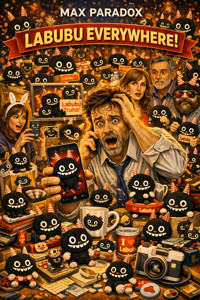
This is not a book about toys.
And it’s definitely not a book about collecting.
Labubu is a satirical nonfiction observation of how modern adults attach meaning, identity, and emotional stability to objects they swear don’t matter.
Written in a dry, ironic, and quietly tired tone, this book follows the psychological arc of encountering something “just for fun” - and watching it slowly become permanent.
Without advice.
Without motivation.
Without conclusions shouted at the reader.
Instead, this book exposes the absurd rituals of modern taste, minimalism, trends, optimization culture, and the silent exhaustion of constantly evaluating whether something is “worth it.”
If you’ve ever said:
• “It’s not that deep,”
• “I just like it,”
• “I could stop anytime,”
- this book already knows you.
Perfect for readers who enjoy intelligent satire, observational humor, and uncomfortable self-recognition.
This publication was prepared using tools that support the creative process, including solutions based on artificial intelligence. The final concept, structure, and editing are the work of the author.
Ebooka przeczytasz w aplikacjach Legimi na:
Liczba stron: 126
Rok wydania: 2026
Odsłuch ebooka (TTS) dostepny w abonamencie „ebooki+audiobooki bez limitu” w aplikacjach Legimi na:
Podobne



















INTRO
There are things nobody plans to understand.
Labubu is one of them.
Not because it is complicated.Not because it is deep.But because the moment you ask why it exists, you are already late.
Labubu does not explain itself.It does not need to.It just appears.
On a shelf.In a feed.In someone’s apartment who used to say they “don’t really collect things.”
Labubu is not a toy.Saying that would be too simple and therefore suspicious.
Labubu is a situation.
It is the physical manifestation of a feeling you can’t quite defend but will absolutely purchase.It is the object you buy while telling yourself you are not the kind of person who buys objects like this.
And yet.
You are.
There is something deeply modern about Labubu.
It looks harmless.It looks playful.It looks like it came from a dream that forgot to finish itself.
And somehow, that is enough.
• You don’t know its story, but you feel like it has one.• You can’t explain its expression, but you trust it completely.• You would feel uncomfortable if someone asked you to justify owning it.
Labubu does not ask to be loved.It assumes it.
This book is not about Labubu as an object.
That would give it too much dignity.
This book is about everything orbiting Labubu.
The adults carefully placing it where guests can see it but not touch it.The conversations that begin with “I bought it ironically” and end with a display case.The sudden interest in “drops,” “editions,” and “resale value,” spoken with the confidence of people who swear this is not a personality now.
Labubu thrives in the space between irony and sincerity.
You buy it as a joke.You keep it because it feels right.You defend it because someone laughed.
That is the trap.
• You didn’t want meaning.• You just wanted the thing.• Meaning arrived anyway.
Labubu does not judge you.
That is the most unsettling part.
It watches.It smiles in a way that suggests it knows how this ends.It has seen this before, with other people, with other shelves, with other “limited” things that were absolutely necessary at the time.
Labubu understands modern life better than most motivational books.
It does not promise growth.It does not offer solutions.It does not pretend to improve you.
It just sits there.
Existing.Accusing gently.Reminding you that you live in a world where adults exchange money for comfort shaped like cuteness and call it taste.
• You didn’t need it.• You wanted it anyway.• You felt calmer once it arrived.
This is not a book that will explain Labubu.
Explanation would ruin it.
This is a book that observes what happens around Labubu.What people say before they buy it.What they say after.What they never say out loud.
Because Labubu is not absurd on its own.
The absurdity begins the moment you recognize yourself in it.
Chapter 1 - The Moment You Pretended It Was a Joke
Nobody buys Labubu seriously.
That is the first rule.
You buy it as a joke.You buy it ironically.You buy it because it’s funny.
You make sure to establish this early, loudly, and preferably to more than one person.
This is important.
Because the moment anyone suspects sincerity, the entire operation collapses.
You are not a collector.You are not emotionally attached.You are not like those people online with shelves and lighting and opinions.
You just thought it was funny.
That is the story.
At least at the beginning.
The first encounter with Labubu rarely feels significant.
It appears casually.In a feed.In a store window.In someone else’s apartment where it shouldn’t work, but somehow does.
You pause.
Not long enough to admit interest.Just long enough to register discomfort.
There is something about it.You can’t explain what.Which already annoys you.
• You don’t like not knowing why you like something.• You prefer interests that come with reasons.• Labubu offers none.
You scroll past it.
Then back.
Then forward again, annoyed at yourself for even noticing.
This is where the joke begins forming.
You start thinking in sentences that sound like defenses.
“I mean, it’s kind of ridiculous.”“It’s so weird it’s almost charming.”“I wouldn’t actually buy it, obviously.”
Obviously.
Irony is the safest emotional packaging modern adults have.
It allows desire without responsibility.Enjoyment without commitment.Ownership without vulnerability.
You are not buying Labubu because you want it.
You are buying it because it’s funny that it exists.
That distinction matters to you.
A lot.
• You laugh before anyone else can.• You frame the purchase as commentary, not participation.• You are above it, even while paying for it.
The moment of purchase is usually quick.
You don’t overthink it.Overthinking would look suspicious.
You click.You tap.You hand over money with the casual confidence of someone buying coffee.
This means nothing.
Except it does.
When Labubu arrives, the tone changes slightly.
You don’t expect that.
You open the package slower than necessary.You touch it more carefully than planned.You place it somewhere “temporary,” which somehow feels intentional.
You stand back.
You look.
It looks back.
That’s when you realize the joke has shifted.
• You expected to laugh and move on.• You did not expect a feeling.• You are uncomfortable with the feeling.
Labubu has presence.
Not importance.Not meaning.
Presence.
It occupies space in a way that suggests it has always been there.Like a strange plant.Like an object left behind by a previous version of you who didn’t explain himself.
You tell yourself it’s just design.
Colors.Shapes.Vibes.
You hate that word.You use it anyway.
The first time someone notices it, you are ready.
You have the script memorized.
“Oh that?”“I bought it as a joke.”“It’s so stupid, I kind of love it.”
You say “stupid” quickly, like it cancels something out.
The other person nods.
They don’t laugh as much as you hoped.
They look at it longer than expected.
This is dangerous.
Because now the joke is shared.
And shared jokes have a way of turning into shared understanding.
You start defending it without realizing you are doing it.
“It’s actually really well made.”“The artist has an interesting style.”“It’s kind of hard to get, apparently.”
Apparently.
• You are gathering facts now.• Facts were not part of the joke.• Facts mean you stayed longer than planned.
At some point, you catch yourself adjusting it.
Just a little.
Straightening it.Turning it slightly so the expression reads better.
You immediately feel embarrassed.
Objects you buy as jokes should not require alignment.
But Labubu does.
You tell yourself you’re just tidying.
That night, you think about where to put it permanently.
Not because you care.Because you don’t want it to look random.
This is how it happens.
Not dramatically.Not all at once.
It happens in small rationalizations that feel harmless individually.
• You didn’t mean to like it.• You just don’t dislike it.• That feels close enough.
You notice you stop calling it “that thing.”
You start calling it “the Labubu.”
You hate that you noticed.
You hate that it feels natural.
Irony was supposed to protect you.
Instead, it quietly opened the door.
Labubu never demanded seriousness.You volunteered it.
And the most unsettling part is this:
If someone took it away now,you would feel something.
Not anger.Not grief.
Something worse.
A quiet irritation you couldn’t explain without sounding ridiculous.
Which is exactly how Labubu wins.
Silently.Patiently.While you’re still pretending it was all a joke.
Chapter 2 - It Started Sitting in Places That Made Sense
At first, Labubu has no home.
That feels important to you.
Objects without meaning should not be anchored.They should drift.They should remain mobile enough to be removed without ceremony.
So Labubu begins its life in neutral territory.
A shelf you don’t care about.A desk corner you barely notice.A place that says temporary without saying embarrassed.
You tell yourself this is intentional.
You are testing it.Observing it.Seeing how you feel.
This is a lie, but a polite one.
Because very quickly, you start noticing something uncomfortable.
Labubu does not look right everywhere.
Some spots feel wrong.Cluttered.Disrespectful, which is a strange word to use for a thing you bought as a joke.
You move it.
Just to see.
That’s when it happens.
It looks… better.
Not dramatically better.Just enough to trigger the part of your brain that likes symmetry and closure.
• You did not expect placement to matter.• You did not expect preferences.• You absolutely did not expect instincts.
You move it again.
Now it looks worse.
You feel irritated.
Not at Labubu.At yourself.
Why does this matter?
This was supposed to be an object with no demands.
And yet here it is, quietly insisting on context.
You start negotiating with the space around it.
Maybe it needs air.Maybe it shouldn’t be near books.Maybe it clashes with that plant you suddenly hate.
This is how Labubu begins reshaping your environment.
Not aggressively.Not visibly.
It just introduces small discomforts that only disappear when you accommodate it.
You find yourself thinking sentences you would mock in other people.
“It needs balance.”“It looks lonely there.”“It doesn’t belong next to that.”
Belong.
You pause when you realize you used that word.
• Objects should not belong.• Belonging implies relationships.• You are uncomfortable with that implication.
So you soften it.
You say “aesthetically.”
You say “visually.”
You say “it just works better.”
Eventually, Labubu ends up somewhere deliberate.
Not central.Not hidden.
Visible enough to be noticed.Safe enough to be defended.
This was not planned.
But now that it’s there, moving it feels wrong.
You test this theory by imagining it gone.
The space looks empty in your mind.
Not blank.Empty.
Which is worse.
Empty spaces ask questions.
And Labubu, apparently, was answering one.
When guests arrive, you watch their eyes.
You don’t mean to.You just do.
They scan the room.They pause.Some slow down when they reach Labubu.
This moment is important.
This is where you measure success.
Not by praise.By hesitation.
If they ask immediately, you feel exposed.If they don’t notice at all, you feel strangely disappointed.
The perfect reaction is confusion mixed with curiosity.
That means Labubu is working.
• You want it seen.• You don’t want it discussed too deeply.• You want control over the narrative.
When someone finally comments, you activate the tone.
Casual.Light.Effortless.
“Oh yeah, that thing.”“It’s kind of weird, right?”“I didn’t think I’d keep it there, but it fits.”
Fits.
There it is again.
The language keeps betraying you.
You are no longer talking about an object.You are talking about a decision.
Some people nod politely.Some laugh.Some look at it longer than necessary.
Those are the dangerous ones.
Because they don’t ask why you have it.
They ask where you got it.
That question shifts everything.
Suddenly, the joke needs logistics.
You answer vaguely at first.
“Online.”“Some artist.”“It was limited, I think.”
Think.
You hate that you know this.
Later, alone, you catch yourself adjusting the lighting.
Not dramatically.Just enough.
You don’t want shadows in the wrong places.You don’t want it to look aggressive.You don’t want it misunderstood.
You are protecting it now.
That realization lands softly, like bad news you already suspected.
• You didn’t plan to curate.• You didn’t plan to care how it’s perceived.• You definitely didn’t plan to feel responsible.
Labubu hasn’t changed.
You have.
You stop putting random items next to it.You remove clutter without consciously deciding to.You keep that space cleaner than the rest of the room.
You tell yourself it’s coincidence.
Coincidences, however, do not repeat this consistently.
At some point, you catch yourself thinking about buying another one.
Not seriously.Just hypothetically.
To balance it out.To create symmetry.To make it less obvious that you care.
This logic is impressive.
Buying more to prove you’re not attached.
You don’t do it yet.
But the thought exists.
Which is enough.
Labubu now sits in a place that makes sense.
That’s the problem.
Because once something makes sense, removing it requires explanation.
And you are running out of ironic ones.
You pass by it daily.
Sometimes you look.Sometimes you don’t.
But it’s there.
Reliable.Silent.Unquestioned.
Like a small witness to your routines.
And that’s when you realize something unsettling:
Labubu no longer feels like something you placed.
It feels like something that settled.
As if it chose the spot.
As if it waited for you to stop pretending this was random.
You don’t talk about that thought.
You push it away quickly.
But it leaves residue.
Because objects that make sense start to feel necessary.
And necessary objects are no longer jokes.
They are fixtures.
They are statements you didn’t remember making.
They are answers to questions nobody asked out loud.
Labubu isn’t dominating your space.
It’s integrating.
Which is far more dangerous.
Chapter 3 - You Learned the Words Without Wanting To
You don’t remember deciding to learn anything.
That’s what makes it unsettling.
One day, Labubu was just a thing.The next, you were using sentences that required context.
You didn’t study.You didn’t research.You definitely didn’t “get into it.”
You just… absorbed.
The vocabulary arrived quietly.
Edition.Drop.Artist.Series.
None of these words alarmed you individually.They sounded harmless.Professional, even.
People like knowing words.Knowing words feels like control.
So when someone mentioned Labubu and you nodded knowingly, it felt normal.
You were not trying to impress.You were just… not lost.
And that matters more than you’d like to admit.
• You hate feeling uninformed.• You hate asking basic questions.• You hate even more when objects make you feel ignorant.
So you learned.
Accidentally, of course.
You read a caption.You skimmed a comment.You stayed three seconds longer than planned.
Three seconds is nothing.
Three seconds is how most modern decisions begin.
At some point, you realized there were different versions.
This information should have been irrelevant.
It wasn’t.
Some were older.Some were harder to find.Some had expressions you suddenly had opinions about.
You caught yourself thinking, that one doesn’t really work for me.
That sentence echoed.
For you.
When did taste enter the conversation?
Taste is dangerous.Taste implies standards.Standards imply hierarchy.
You were not ranking Labubu.
You were just… noticing differences.
That’s how it always starts.
You didn’t look things up.