Uzyskaj dostęp do tej i ponad 240000 książek od 14,99 zł miesięcznie
- Wydawca: ALL-IN Rafał Płonkowski
- Kategoria: Biznes, rozwój, prawo•Biznes, rozwój
- Język: angielski
You had dinner. You are not particularly hungry. And yet somehow you are standing in the kitchen wondering whether cookies can provide emotional support.
Stress? Eat. Boredom? Eat. Bad meeting? Eat. Lonely evening? Eat. Survived Tuesday without throwing your laptop through a window? Surely that deserves dessert.
Emotional eating is rarely about simply "liking food too much." Food can become comfort, reward, distraction, entertainment, relief, celebration, and the fastest available way to change how you feel. The problem begins when it becomes the automatic answer to almost every uncomfortable emotion.
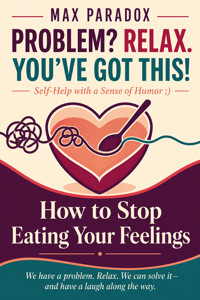
How to Stop Eating Your Feelings is a practical, compassionate, and refreshingly funny guide to breaking that pattern without turning food into the enemy or your kitchen into a courtroom.
Instead of demanding perfect discipline, this book helps you understand what happens before the craving appears. You will learn how to distinguish physical hunger from emotional urges, recognize the situations that trigger automatic eating, identify what job you are asking food to perform, and create realistic alternatives that actually work when you are tired, stressed, irritated, or operating with approximately twelve percent battery.
Inside, you will discover how to:
• recognize emotional-eating triggers before they become automatic;
• separate genuine hunger from the desire for comfort, distraction, reward, or relief;
• stop the binge-restrict-punish-restart cycle;
• handle cravings without needing to make them disappear;
• build an emergency menu of practical non-food coping strategies;
• redesign your environment so better choices require less willpower;
• manage evening eating, stress eating, boredom eating, and reward eating;
• deal with food pushers, family habits, social events, and workplace snacks;
• recover from difficult eating episodes without shame or compensation;
• build more pleasure, rest, connection, and autonomy into everyday life;
• recognize when an emotion needs comfort - and when it is actually asking you to take action;
• create a sustainable system that survives bad days, busy weeks, holidays, setbacks, and ordinary human imperfection.
This is not a diet book. There are no forbidden-food lists, miracle rules, detoxes, or promises that you will eventually gaze upon cake with the emotional neutrality of a filing cabinet.
The goal is choice.
You can be hungry and feed yourself. You can be stressed and respond to the stress. You can enjoy dessert without turning it into evidence that the week has been ruined. And when emotional eating does happen, you can learn from it instead of punishing yourself and starting over Monday.
With practical exercises, realistic Plan B options, humor, and strategies designed for real life rather than perfect life, How to Stop Eating Your Feelings helps food return to a much more reasonable job description: feeding you, pleasing you, and occasionally comforting you - without becoming your therapist, entertainment department, reward system, and emergency-response team.
This publication was prepared with the assistance of tools that support the creative process, including artificial intelligence-based solutions. The final concept, structure, and editing belong to the author.
Ebooka przeczytasz w aplikacjach Legimi na:
Liczba stron: 201
Rok wydania: 2026
Odsłuch ebooka (TTS) dostepny w abonamencie „ebooki+audiobooki bez limitu” w aplikacjach Legimi na:
Podobne



















INTRO
You have had a day.
Not a catastrophic day. Nobody had to evacuate the building. No helicopters were involved. The evening news is not reporting live from your driveway. It was simply one of those ordinary, irritating days made from seventeen small annoyances that somehow joined forces and became one large emotional casserole.
Someone sent an email with the phrase “just circling back.” Traffic developed a personal grudge against you. You forgot something important, remembered it at the worst possible moment, and then spent twenty minutes replaying a conversation in which you definitely should have said something smarter. By the time you get home, your emotional resources have been reduced to approximately one damp paper towel.
And then you see the cookies.
Suddenly, a plan emerges.
You are not hungry exactly. Dinner happened recently enough that your digestive system would be willing to testify under oath. But the cookies are there, and the cookies are not asking difficult questions. They do not need a status update. They have never once said, “Can we revisit this tomorrow morning?”
The cookies understand.
So you eat one. Then another, because the first one was apparently a preliminary meeting. Then you stand in the kitchen holding the package and discover that somewhere between cookie three and cookie seven, you stopped tasting them and started using them as emotional packing material.
Five minutes later, the bad day is still there.
Now it has crumbs.
This is emotional eating in one of its most recognizable forms: using food for a job that food was never officially hired to do. Comfort. Distraction. Reward. Relief. Numbing. Celebration. Something to look forward to. Something to do while avoiding something else. A brief vacation from being irritated, lonely, bored, anxious, overwhelmed, disappointed, exhausted, or simply fed up with everyone and everything, including the printer.
Food is exceptionally good at getting hired for this position because it works quickly. Sweet, salty, crunchy, creamy, warm, familiar foods can produce immediate pleasure and temporarily shift your attention. Eating gives your hands something to do, your brain something pleasant to focus on, and your nervous system a small change of scenery. No reservation required. No therapist needs to be available at 10:47 p.m. The ice cream does not have office hours.
That does not make you weak, ridiculous, or somehow uniquely incapable of behaving around a bag of chips. Humans have been connecting food with comfort, reward, celebration, belonging, and safety for a very long time. Birthday cake is not served because everyone at the party has simultaneously developed a precise nutritional requirement for frosting.
The problem begins when food becomes your automatic answer to too many emotions.
You are stressed: eat.
Bored: eat.
Sad: eat.
You survived Wednesday: frankly, that seems worth something.
Eventually the pattern can become so automatic that the emotion barely gets a chance to introduce itself before you are opening a cupboard. You may not consciously think, “I feel rejected, so I will now consume crackers until my psychological condition improves.” The process is much faster and less dignified than that. Something feels bad. Your brain remembers something that has helped before. A few minutes later, you are staring into the refrigerator as though the meaning of life might be hiding behind the mustard.
And sometimes you are not even looking for food.
You are looking for a different feeling.
That distinction matters, because most attempts to stop emotional eating focus almost entirely on the eating. People declare certain foods forbidden, promise to “be good,” download another tracking app, reorganize the pantry, purchase twelve containers suitable for a lifestyle they have never actually lived, and begin Monday with the confidence of someone launching a new government.
Then Thursday happens.
Thursday has meetings.
Thursday has fatigue.
Thursday does not care about the motivational quote you saved on Instagram.
The problem with relying only on restriction and willpower is that they do not solve the reason you wanted the food in the first place. If you eat because you are overwhelmed and your entire strategy is “do not eat,” you still have the overwhelm. You have simply removed its favorite emergency exit.
That is why this book is not going to spend two hundred pages shouting “discipline” at you from across the room. Discipline can be useful. So can structure, planning, and sensible food choices. But if emotional eating were solved by knowing what healthy eating looks like, almost nobody would struggle with it. Most adults are already aware that broccoli exists.
The useful question is not simply, “How do I stop eating this?”
It is, “What is happening right before I want to eat, and what am I actually asking food to do for me?”
Sometimes the answer will be obvious. You had an argument and suddenly need cheese with the urgency of a medical evacuation. Sometimes it will be less dramatic: boredom after dinner, loneliness on Sunday night, fatigue at 3:30 in the afternoon, the weird emptiness after finishing a stressful project, or the quiet belief that you “deserve something” because the day has been spectacularly annoying.
You probably do deserve something.
We just need to expand the menu beyond cheesecake.
Over the course of this book, you will learn how to notice emotional eating earlier, separate physical hunger from emotional urges more reliably, recognize your personal triggers, and interrupt the automatic sequence between feeling something and eating something. More importantly, you will build realistic alternatives that do not require becoming a person who journals under a eucalyptus tree every time life becomes inconvenient.
We will also deal with the things that make emotional eating harder to change: overly restrictive dieting, skipped meals, exhaustion, environmental cues, “I already ruined today” thinking, stress, habits, social situations, and the powerful human tradition of trying to fix discomfort with whatever happens to be available in the kitchen. You will learn what to do after a difficult evening instead of responding with guilt, punishment, or a dramatic promise that tomorrow you will survive exclusively on lettuce and personal growth.
There is one important point to establish now: the goal is not to eliminate every instance of eating for pleasure or comfort. Food is allowed to be enjoyable. You can eat cake because it is your birthday, popcorn because you are watching a movie, or your grandmother’s ridiculously good pie because refusing it would create an international incident.
The goal is choice.
You want to be able to notice what you are feeling, recognize what you need, and decide whether food is actually the response you want—not discover afterward that your emotions quietly placed an order while you were not paying attention.
And when you do eat emotionally again—and at some point you probably will—the plan will not be to declare yourself a failure. One difficult evening does not erase everything you have learned. A flat tire is inconvenient; it does not mean you set fire to the car.
If your eating involves frequent episodes of feeling unable to stop, eating unusually large amounts with significant distress, compensating through vomiting, fasting, excessive exercise, or other behaviors that worry you, professional support from a qualified healthcare or eating-disorder specialist is important. This book can help you understand habits and build practical skills, but it is not a substitute for appropriate medical or psychological care.
For everyone else standing in front of an open refrigerator after a brutal Tuesday, wondering whether leftover pasta can repair an emotional injury: welcome.
We have some work to do.
Fortunately, you do not have to become perfect.
You just need to stop making the refrigerator your therapist.
Chapter 1 - The Hunger That Isn’t Quite Hunger
At 9:18 p.m., you walk into the kitchen.
You ate dinner at seven. It was a normal dinner involving actual food, not three almonds and positive thinking. You are not weak from starvation. You are not stranded in the wilderness. Yet you open the refrigerator and examine its contents with the concentration of a detective who believes the yogurt knows something.
Nothing has changed since the last time you checked.
The cheese is still cheese.
The leftover chicken has not evolved.
And yet you stand there.
“What do I want?”
Excellent question.
Your stomach does not provide a clear answer, but your brain immediately submits several proposals. Something sweet. Or salty. Maybe crunchy. Possibly sweet first and salty afterward, because apparently tonight we are producing a tasting menu.
This is where emotional eating becomes confusing. Hunger is not always a clean biological notification that says:
FUEL LEVEL LOW. PLEASE INSERT SANDWICH.
Human appetite is influenced by many things besides an empty stomach: habit, availability, smell, sight, stress, pleasure, expectations, routines, social situations, and emotions. Sometimes you are physically hungry. Sometimes you want comfort. Sometimes both are true at once.
The goal is not to become a forensic scientist every time you encounter a cookie.
The goal is to notice what kind of need is speaking loudlyest before you automatically answer it with food.
Physical hunger usually develops gradually. You may notice an empty feeling, reduced energy, difficulty concentrating, stomach sensations, or increasing interest in food. Importantly, several different foods may sound acceptable. If you would happily eat the leftover dinner, a sandwich, eggs, soup, or something else substantial, actual hunger may be doing at least part of the talking.
Emotional appetite often behaves differently. It can arrive suddenly and demand something specific.
Not food.
That food.
You do not want dinner. You want the chocolate-covered thing with caramel inside. A bowl of lentil soup could arrive escorted by a marching band and you would remain unmoved.
That specificity is information.
Not proof. Information.
This distinction matters because people often try to create a dramatic courtroom in their heads:
“Am I REALLY hungry?”
The prosecutor presents Exhibit A: dinner happened two hours ago.
The defense argues that dinner was disappointing.
The jury is tired.
You eat the cookies during deliberations.
A better question is less aggressive:
“What am I noticing right now?”
That wording changes the entire tone. You are investigating, not accusing yourself of food fraud.
Before eating outside your normal meals or snacks, try a quick three-part check:
What does my body feel like?
What emotion or situation happened recently?
What food am I specifically seeking?
This should take perhaps thirty seconds.
Not seventeen minutes of mindful interrogation while a granola bar waits under a bright lamp.
Suppose you finished work late after spending an hour correcting a mistake that was not yours. You come home irritated and immediately want pizza, ice cream, and enough crackers to build a small guesthouse.
Check the body.
Some hunger? Yes. Lunch was six hours ago.
Check the emotion.
Irritated, tired, resentful, and approximately one unnecessary email away from leaving society.
Check the desired food.
Anything intensely comforting.
That is not “fake hunger.” It is mixed hunger. Your body needs food, and your emotional state is influencing what and how much you want.
The solution is not to refuse dinner because emotions were detected on the premises.
Eat.
But knowing that irritation is present can help you avoid expecting dinner to perform emotional surgery. You might eat a satisfying meal and also do something about the actual stress rather than continuing into dessert, snacks, more snacks, and finally standing over the sink eating something you do not even particularly like.
Awareness gives you options.
Without awareness, the sequence runs automatically.
That automatic sequence is the real problem.
You feel something.
You want something.
You eat something.
You feel better for a moment.
Your brain quietly takes notes.
“Excellent. Apparently cookies are now part of the crisis-management department.”
The next time the feeling appears, the urge can arrive faster.
This is how a behavior becomes familiar. Not because you consciously decided to develop a complicated relationship with nachos, but because repetition teaches your brain what commonly follows discomfort.
That is why one of the most useful early skills is inserting a tiny gap between urge and action.
Not a heroic gap.
Not “I shall meditate for forty-five minutes while imagining my cravings floating away on a silver cloud.”
A small gap.
Try ten minutes.
When the urge appears and you suspect emotion may be heavily involved, tell yourself:
“I can eat it in ten minutes if I still want it.”
This is important. You are not declaring food illegal. You are postponing the decision long enough to collect more information.
During those ten minutes, do one thing that matches the likely need.
If you are tense, walk around the block, take a shower, stretch, or change rooms.
If you are angry, write the uncensored version of what you wish you could say—then do not send it, because this is a self-help book, not evidence for future litigation.
If you are lonely, message or call someone.
If you are mentally fried, stop trying to be productive for a few minutes.
If you are bored, do something that changes your level of stimulation.
Then check again.
Sometimes the urge will shrink.
Sometimes it will remain exactly where it was, wearing a small hat and refusing to leave.
Fine.
You can still choose to eat.
The point is not to win every encounter. The point is to stop behaving as though every urge is an instruction issued by federal law.
An urge is a message.
It is not a command.
There is another complication: genuine physical hunger can become much harder to manage when you have spent the day trying to be “good.”
You skip breakfast because yesterday you ate too much. Lunch is a salad that would struggle to support a moderately ambitious rabbit. At four, you are hungry but decide coffee counts as a personality and perhaps also a meal.
Then evening arrives.
You open the pantry.
And nature collects its debt.
At this point, what looks like emotional eating may partly be predictable biological hunger intensified by restriction. Stress may still be involved, but trying to solve the entire situation with stronger willpower is like refusing to put gas in your car all day and then criticizing it for becoming dramatic on the highway.
Regular, adequately satisfying meals can reduce the intensity of later urges for some people. This does not mean everyone needs the same schedule or amount of food. It means that repeatedly becoming extremely hungry makes calm decision-making harder.
Your brain is impressive.
It can learn languages, compose music, design bridges, and remember an embarrassing comment you made in 2009 at 2:14 a.m.
But when it is exhausted and very hungry, it becomes considerably less philosophical.
“Should we consider our emotional needs?”
“No. Cheese.”
So before labeling an episode “emotional eating,” look at the preceding hours.
Did you actually eat enough?
Did you skip meals?
Were you trying to compensate for yesterday?
Did you avoid foods you enjoy until the desire became enormous?
Did you spend six hours running on caffeine, determination, and a meeting that should have been an email?
This matters because the wrong diagnosis produces the wrong solution.
If you are physically hungry, eat.
If you are mainly distressed, deal with the distress.
If both are happening, do both.
Revolutionary, I know.
Another useful clue is what happens after you begin eating. Physical hunger generally becomes quieter as you get enough food. Emotional eating may continue past comfortable fullness because the original problem has not changed.
You may notice the strange moment when pleasure decreases but eating continues.
The first few bites are excellent.
A little later, the food is still good.
Eventually you are eating while barely paying attention, perhaps scrolling on your phone, watching television, or mentally replaying the day.
This is worth noticing because the shift from “I am enjoying this” to “I am continuing this” often marks the point where food has stopped solving even the temporary problem.
You are not receiving much more comfort.
You are simply continuing the procedure.
Like repeatedly pressing an elevator button after it has already lit up.
The elevator knows.
Pressing it twelve more times communicates only your emotional commitment.
When you catch that moment, you do not need to slam the food away dramatically and announce a new era. Just stop for a few seconds and ask:
“Am I still enjoying this, or am I trying to change how I feel?”
If you are still hungry and enjoying the food, continue.
If you are full but still emotionally uncomfortable, you have discovered something useful.
The remaining problem is probably not located on the plate.
This is the beginning of separating two needs that have been traveling together.
Food need.
Emotional need.
Sometimes they overlap.
Sometimes they are standing several miles apart while you keep sending sandwiches to the wrong address.
For the next few days, do not attempt to “fix” every episode. Observation comes first. Choose one eating moment each day that feels emotionally charged and write down four short details:
What happened just before the urge?
What emotion was present?
How physically hungry were you from 0 to 10?
What did you want to eat?
That is enough.
Do not turn this into a lifestyle-management corporation with graphs, stickers, sixteen categories, and a quarterly review.
You are looking for patterns.
Maybe urges appear after work.
Maybe they appear after conflict.
Maybe they arrive when everyone else has gone to bed.
Maybe Sunday afternoons have quietly become a national snack emergency.
Maybe the real trigger is not sadness but exhaustion.
You cannot change a pattern reliably while it remains invisible.
Once you can see it, you have something concrete to work with.
And if you sometimes check your hunger, identify the emotion, wait ten minutes, take a walk, drink some water, achieve complete psychological enlightenment—and still eat the brownie?
You ate a brownie.
That is the event.
Do not convert it into a constitutional crisis.
The useful skill in this chapter is not perfect control. It is recognition.
Before automatically feeding the feeling, find out who actually came to dinner.
Chapter 2 - Food Has Too Many Jobs
It is Friday night.
You have completed the week without resigning dramatically, moving to a cabin, or replying to an email with the sentence you actually wanted to write.
This deserves recognition.
So you order takeout.
Reasonable.
Then you add dessert because Friday.
Also understandable.
Then you add a snack for later because the delivery minimum is somehow involved, although even you are not entirely sure how.
By 10:30, you are sitting on the couch with a collection of food that could comfortably support a small conference.
Why?
Because tonight the food is not merely dinner.
It is your salary bonus.
Your emotional support team.
Your entertainment.
Your celebration.
Your transition from work to weekend.
Your reward for surviving Kevin from accounting.
This is one of the biggest reasons emotional eating can become persistent: food gradually accumulates jobs.
It starts with one legitimate position.
Feed the human.
Excellent.
Clear responsibilities.
Then food gets promoted.
Comfort the human.
Reward the human.
Distract the human.
Celebrate with the human.
Calm the human.
Keep the human company.
Make boring television more interesting.
Make Sunday evening less Sunday-evening-ish.
At some point, the refrigerator has a larger job description than most senior managers.
None of these uses is inherently terrible. Food is part of pleasure, culture, celebration, connection, and comfort. Trying to strip eating of all emotional meaning would make birthdays significantly worse and Thanksgiving extraordinarily efficient.
The problem is monopoly.
When food becomes your main or easiest response to multiple emotional states, you have fewer alternatives available when those states appear.
That is why simply telling yourself “stop emotional eating” is not a complete strategy. You would be firing an employee who currently performs seven jobs without hiring replacements.
Then Tuesday arrives.
You are stressed.
Stress goes to the usual department.
The department is closed.
Now what?
This is why strict rules often collapse. They remove the behavior without replacing its function.
Imagine that your standard evening routine is:
Work ends.
You feel drained.
You pour a drink or make tea.
You open something crunchy.
You watch a show.
Your nervous system gradually shifts from “people need things from me” to “nobody speak unless you are fictional.”
The food has become part of the transition ritual.
If you suddenly decide, “No more evening snacking,” you have technically removed the snack. You have not created another transition.
So you sit there with your stress still fully dressed.
After three evenings, the chips return.
This is usually described as a failure of discipline.
It may actually be a failure of replacement.
The useful question is:
“What job was the food doing?”
Let us look at some common vacancies.
THE REWARD JOB
You finish something difficult and immediately think:
“I deserve a treat.”
There is nothing absurd about wanting reward. Humans respond to incentives. The difficulty appears when almost every achievement, irritation, sacrifice, or inconvenience earns the same edible bonus.
Finished the report?
Dessert.
Survived the meeting?
Dessert.
Went to the gym?
Dessert.
Did not yell at anyone in traffic?
Frankly, heroic. Dessert.
Eventually the reward stops feeling special because it happens constantly. It also creates a strange internal economy in which discomfort generates food credit.
A better approach is not “never reward yourself with food.” It is to build more than one reward currency.
Create a short reward menu containing things you genuinely like and will realistically use. Not imaginary wellness activities chosen by a version of you who owns white linen pants.
Examples:
watch an episode of something guilt-free;
take a long shower or bath;
buy a small non-food item within a preset budget;
play a game;
read something purely entertaining;
take an evening off from an optional chore;
call someone you enjoy;
go somewhere pleasant;
listen to music while doing absolutely nothing productive.
Food can remain on the menu.
It just stops being the only item.
THE RELIEF JOB
This one is powerful.
You feel pressure.
Eating creates a temporary shift in attention and sensation.
For a few minutes, the problem moves into the background.
That relief is real enough to reinforce the behavior, even though it usually does not solve the source of the stress.
The project is still late.
The argument still happened.
The bill remains aggressively committed to being a bill.
You simply received a short commercial break.
The practical replacement depends on what kind of stress you are experiencing.
If the stress is physical agitation, use something physical: walking, stretching, showering, changing rooms, slower breathing, or completing a simple task that gives your body a sense of movement.
If the stress is mental overload, reduce incoming information. Stop scrolling. Close the laptop. Write down tomorrow’s tasks so your brain does not have to keep holding them like a waiter balancing eleven plates.
If the stress is an unresolved problem, define the next action. Not the whole solution. The next action.
“Fix finances” is useless.
“Open the statement and list the three upcoming payments” is an action.
“Repair relationship” is slightly ambitious for 9:40 p.m.
“Tell Sam tomorrow that I want to talk about what happened” is an action.
Sometimes relief comes not from solving everything, but from convincing your brain that the problem has been captured and will not disappear into administrative darkness.
THE DISTRACTION JOB
Boredom is one of the least dramatic emotional-eating triggers and therefore one of the easiest to underestimate.
Nothing terrible has happened.
Nothing especially good has happened either.
You are simply existing in a quiet evening, and apparently existence could use pretzels.
Boredom eating often works because food adds stimulation. Flavor, texture, anticipation, activity. It gives a flat moment some shape.
This is why opening the refrigerator repeatedly can become entertainment.
You know what is inside.
You live there.
Nobody has secretly installed a bakery behind the vegetables.
Still, you check.
When boredom is the trigger, trying to “relax harder” is not always useful. You may need stimulation, not calm.
Create a five-minute activation list: tiny things that are more interesting than staring into the pantry.
Send someone a message.
Put on one song and move around.
Watch one short video intentionally instead of scrolling through eighty-seven accidentally.
Go outside.
Do a puzzle.
Change location.
Start a small task with a visible finish.
The replacement does not need to be morally superior to eating.
It needs to compete.