Uzyskaj dostęp do tej i ponad 240000 książek od 14,99 zł miesięcznie
- Wydawca: ALL-IN Rafał Płonkowski
- Kategoria: Poradniki•Styl życia
- Język: angielski
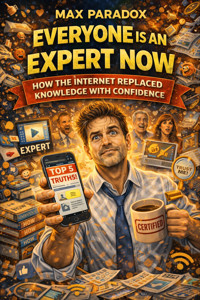
Everyone is an expert now.
Not because we know more -
but because confidence became louder than knowledge.
This book is a sharp, absurd, and painfully familiar look at a world where:
Google replaced doctors,
Reddit replaced therapists,
TikTok replaced common sense,
YouTube replaced lawyers and financial advisors,
and everyone has a take - whether they understand the topic or not.
You’ll recognize the patterns immediately:
opinions formed from headlines,
confidence mistaken for competence,
explainers that explain nothing,
advice from people with zero consequences,
and algorithms that know your fears better than you do.
This is not a self-help book.
There are no solutions.
No motivation.
No “10 steps to fix your life.”
Just humor, sharp observations, and examples pulled straight from everyday internet reality.
If you’ve ever:
trusted someone because they sounded confident,
googled symptoms and panicked,
taken advice from strangers online,
or realized too late that “I did my research” was a mistake,
this book will feel uncomfortably familiar.
Read it. Laugh.
And maybe - just maybe - stop scrolling for a moment.
This publication was prepared using tools that support the creative process, including solutions based on artificial intelligence. The final concept, structure, and editing are the work of the author.
Ebooka przeczytasz w aplikacjach Legimi na:
Liczba stron: 52
Rok wydania: 2026
Odsłuch ebooka (TTS) dostepny w abonamencie „ebooki+audiobooki bez limitu” w aplikacjach Legimi na:
Podobne















INTRO - Welcome to the Age of Confidence
We live in the greatest era of human history.Not because we know more - but because everyone is absolutely sure.
Never before have so many people been so confident about things they learned five minutes ago.Never before has ignorance been delivered with such strong eye contact.
Today, expertise is no longer about education, experience, or credentials.It’s about how confidently you say it and whether someone liked your comment.
A doctor spends twelve years studying medicine.A guy on the internet watches two videos and says, “Actually…”
And somehow, we listen to both.
At some point, the internet stopped being a place to look things upand became a place to decide how reality should work.
You don’t go online to learn anymore.You go online to:
confirm what you already believe,
find someone who agrees with you,
and ignore everyone else.
This is how:
medical advice comes from people who hate doctors,
legal advice comes from people who have never won anything in court,
financial advice comes from people who are “between opportunities”,
and relationship advice comes from someone who just broke up yesterday.
But they all sound very confident.And confidence is convincing.
Everyone now has:
a diagnosis,
a theory,
a system,
a “friend who had the same thing”,
and a strong opinion about your life.
Especially if you didn’t ask.
Someone tells you they’re tired.The internet says it’s burnout.
Someone feels sad.The internet says it’s trauma.
Someone disagrees.The internet says they’re toxic.
Someone fails.The internet says they didn’t manifest it hard enough.
And somehow, all of this makes sense - as long as it fits in a post, a video, or a comment thread.
This book is not written by a doctor.Or a lawyer.Or a therapist.
Which, by today’s standards, makes it perfectly qualified.
It’s written for anyone who has ever:
googled symptoms at 2 a.m. and panicked,
trusted a stranger because their video went viral,
taken advice from someone whose only credential was confidence,
or realized too late that
“I did my research”
was a bad idea.
This is a book about:
Reddit experts,
TikTok doctors,
YouTube lawyers,
comment section philosophers,
and the quiet voice in your head saying,
“This sounds wrong… but they sound so sure.”
No lessons.No solutions.No wisdom.
Just a tour through a world where everyone is an expert now.
And nobody is responsible for the consequences.
CHAPTER 1 - When Google Became a Medical Degree
It always starts the same way.
You feel something small.A headache.A weird pain.A strange sensation you’ve never noticed before - mostly because you’ve never actively searched for it.
So you do what modern humans do best.
You Google it.
The search begins innocently:
“Headache on left side”
Google responds calmly, professionally, responsibly.For about half a second.
Then it escalates.
Suddenly, you’re not tired anymore.You’re alert. Focused. Fully awake.
Because according to the internet, you are:
dehydrated,
stressed,
lacking magnesium,
allergic to something you’ve eaten every day for the last 20 years,
or dying.
Usually dying.
This is how Google became the most efficient anxiety generator in human history.
Not because it lies - but because it never knows when to stop.
Doctors ask follow-up questions.Google asks: “Do you also experience dizziness, nausea, blurred vision, or an unexplained sense of doom?”
And now you do.
At some point, you stop reading medical websitesand start reading forums.
This is where things get serious.
Because forums are not written by professionals.They’re written by survivors.
And everyone there has had the worst possible version of your symptom.
You search for:“Headache forum”
And find a post from 2009 titled:
“PLEASE READ - THIS SAVED MY LIFE”
Written by someone who:
never updated their post,
never replied again,
and may or may not still be alive.
Within minutes, you’re no longer reading.
You’re diagnosing.
You now know:
what it probably is,
what it definitely is,
and what doctors are apparently too stupid to notice.
You haven’t been to a clinic yet, but you already don’t trust doctors.
Because the internet warned you:“They’ll say it’s stress.”
Which, in internet language, means:“They don’t care.”
By the time you actually see a real doctor, you’re not there for answers.
You’re there for confirmation.
You don’t say:“I have a headache.”
You say:“I think it might be neurological.”
The doctor blinks.
This is the moment medicine officially lost.
Because once Google gave everyone access to medical information,it also gave everyone the illusion of understanding.
You don’t know anatomy.You don’t understand probability.You don’t grasp how common things work.
But you know keywords.
And keywords are powerful.
You leave the appointment disappointed.
Not because you’re not sick -but because the doctor didn’t validate your theory.
You wanted:
scans,
concern,
urgency,
drama.
You got:“Drink water. Rest. Come back if it gets worse.”
Which sounds suspiciously like not taking you seriously.
So you go back to Google.
Where someone understands you.
CHAPTER 2 - Confidence Beats Knowledge (Every Time)
The most dangerous thing on the internet is not misinformation.
It’s confidence.
People don’t trust facts.They trust tone.
They trust the person who says:“I’m not sure, but here’s what we know…”
Less than the person who says:“Listen. I’m telling you right now.”
Confidence feels like safety.
Uncertainty feels weak.
And experts are trained to be uncertain.
Which is terrible branding.
A real expert says:“It depends.”“We need more data.”“There are exceptions.”
An internet expert says:“This is EXACTLY what’s happening.”
Guess who wins.
Confidence online is rewarded immediately.