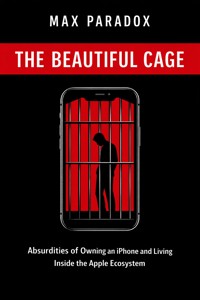
Apple - The Beautiful Cage - Absurdities of Owning an iPhone and Living Inside the Apple Ecosystem - From Fanboy Devotion to Quiet Digital Dependence ebook
Max Paradox
Uzyskaj dostęp do tej i ponad 240000 książek od 14,99 zł miesięcznie
- Wydawca: ALL-IN Rafał Płonkowski
- Kategoria: Poradniki•Styl życia
- Język: angielski
You didn’t choose the ecosystem.
You just wanted something that “just works.”
And somehow…
You ended up living inside it.
The Beautiful Cage is a sharp, intelligent, and painfully accurate satire about modern digital loyalty - about owning an iPhone, defending Apple at dinner tables, waiting for keynotes like holidays, and pretending blue bubbles don’t matter.
This is not a tech manual.
This is not a brand attack.
This is not Android propaganda.
This is a mirror.
Inside this book you’ll discover:
• Why “It’s just better” is not an argument - it’s a coping mechanism
• How the blue bubble quietly reorganized social hierarchy
• Why the Apple Watch feels less like a device and more like a polite leash
• The annual upgrade ritual you swear you’ll skip (and never do)
• The illusion of choice inside a perfectly curated system
• The comfort of living in a beautifully designed digital cage
Written in Max Paradox’s signature ironic, observational tone, this book doesn’t tell you to leave Apple.
It just gently asks:
Did you ever notice the door?
If you love Apple - you’ll laugh uncomfortably.
If you question Apple - you’ll nod slowly.
Either way, you’ll recognize yourself.
And that’s the point.
📖 TEKST NA TYŁ OKŁADKI
You don’t own your iPhone.
Your iPhone owns your rhythm.
From blue bubbles to AirPods telepathy, from upgrade rituals to seamless cloud dependency, The Beautiful Cage dissects the absurd comfort of life inside the Apple ecosystem.
It’s about loyalty.
It’s about identity.
It’s about how convenience slowly becomes commitment.
Smart.
Dry.
Uncomfortably accurate.
If you’ve ever said “it just works” - this book is about you.
📂 KATEGORIE AMAZON KDP
Primary:
• Humor & Entertainment › Humor › Satire
• Computers & Technology › Mobile Devices › iPhone
Secondary:
• Computers & Technology › Consumer Electronics
• Computers & Technology › Internet & Social Media
• Business & Money › Consumer Behavior
• Self-Help › Personal Growth › Happiness (satirical positioning)
🔎 FRAZY KLUCZOWE KDP (SEO)
Apple ecosystem
iPhone satire book
Apple fanboy culture
blue bubble psychology
Apple vs Android mindset
digital addiction satire
tech consumer behavior
Apple Watch obsession
AirPods lifestyle
iOS culture
Apple upgrade ritual
technology minimalism
digital identity book
modern tech loyalty
consumerism satire
📲 INSTAGRAM OPIS (IRONIC TONE + 30 HASHTAGÓW)
You don’t leave the Apple ecosystem.
You upgrade inside it.
📱 Blue bubbles.
⌚ Gentle smartwatch leash.
🎧 AirPods telepathy.
💻 Aluminum productivity illusion.
☁️ Your entire life backed up somewhere you’ve never seen.
This isn’t anti-Apple.
It’s anti-denial.
If you’ve ever said
“it just works”
- this book is about you.
Welcome to the beautiful cage.
#książkowe
#satyryczne
#bookstagram
#readers
#review
#opinie
#iphone
#appleecosystem
#fanboy
#digitallife
#technology
#modernlife
#ebook
#kindlebooks
#newbook
#satire
#humor
#selfawareness
#minimalism
#consumerism
#applewatch
#macbook
#airpods
#icloud
#ios
#techculture
#digitalidentity
#upgrade
#maxparadox
#mustread
This publication was prepared using tools that support the creative process, including solutions based on artificial intelligence. The final concept, structure, and editing are the work of the author.
Ebooka przeczytasz w aplikacjach Legimi na:
Liczba stron: 126
Rok wydania: 2026
Odsłuch ebooka (TTS) dostepny w abonamencie „ebooki+audiobooki bez limitu” w aplikacjach Legimi na:
Podobne



















INTRO
There is a moment—usually quiet, usually expensive—when you realize you don’t own an iPhone.The iPhone owns you.
It doesn’t announce this moment.There is no notification.No pop-up asking for consent.
It happens slowly, through gestures you no longer question.Through cables you rebuy.Through settings you stop checking.Through decisions you don’t remember making.
You wake up one day and discover that all your objects have agreed on something behind your back.
They agree that you are staying.
Being an Apple user is not a preference.It is a climate.You don’t argue with it.You dress accordingly.
From the inside, it feels elegant.Minimal.Inevitable.
From the outside, it looks like a religion that insists it’s just “good design.”
• You didn’t choose the ecosystem.• You “ended up” in it.• You will explain this distinction with surprising passion.
This book is written from two positions at once.The fanboy who knows every keynote cadence by heart.And the observer standing slightly to the side, watching a room full of adults applaud a new shade of gray.
Both voices are tired.Both are complicit.
Apple does not sell products.It sells relief.
Relief from decisions.Relief from compatibility.Relief from explaining yourself.
You pay extra to think less, and somehow convince yourself this is empowerment.
• You will call it “seamless.”• You will mean “I stopped asking questions.”• You will defend this choice aggressively.
The absurdity is not that the ecosystem works.It often works beautifully.
The absurdity is how quickly “works” becomes “must.”How convenience hardens into loyalty.How loyalty quietly turns into identity.
At some point, the phone is no longer a phone.It is a statement you never finished writing.
You don’t say you have an iPhone.You say “I’m on iPhone,” like a medical condition.Like a platform.Like a side.
• You don’t switch anymore.• You “can’t.”• You will list reasons that sound technical but feel emotional.
This is not a book about Apple being evil.That would be too simple.Too comforting.
This is a book about how pleasant systems remove friction so effectively that you forget friction is sometimes the only thing reminding you that you are choosing.
It’s about the blue bubble that ends conversations before they begin.The cable that doesn’t fit, on purpose.The update that improves your life by moving one button three millimeters to the left.
• You will adapt instantly.• You will complain loudly.• You will not leave.
From the outside, Apple users look smug.From the inside, they feel oddly anxious.
Always one update away from harmony.Always one accessory short of completeness.Always waiting for the next device to finally make everything feel finished.
It never does.
This book does not offer solutions.It does not suggest alternatives.It does not ask you to break free.
That would require effort.And effort is exactly what you outsourced.
Instead, this is a slow walk through the familiar absurdities you already tolerate, defend, and secretly notice.
• The ecosystem that hugs you until you can’t move your arms.• The freedom that comes pre-installed with limits.• The luxury of not thinking, sold as clarity.
If you love Apple, you will recognize yourself here.If you hate Apple, you will still recognize yourself here.
Because this is not really about Apple.
It’s about how easily we accept beautiful cages—as long as the door closes quietlyand the walls match our wallpaper.
Chapter 1 - The First Bite
It never starts with the ecosystem.
It starts with one device.
One beautiful, overconfident rectangle.
The first iPhone is rarely a rational purchase.It is a curiosity.A test.
You tell yourself you just want to see what the fuss is about.
You say you’re “giving it a try.”
• You are not giving it a try.• You are entering a long-term relationship.• The terms are not refundable.
The unboxing is ceremonial.Apple understands theater better than most religions.
The box resists slightly.The lid lifts slowly.Gravity participates.
You feel chosen.
Not because the phone is special.Because the experience is choreographed.
The phone lies there like it has been waiting specifically for you.As if it knew you were coming.
• You will call this “premium.”• You will mean “I enjoyed being manipulated.”• You will not see the difference.
The first swipe is smooth.Suspiciously smooth.
The animations feel unnecessary and yet completely necessary.You don’t need the icon to gently float into place.But now that it does, you cannot imagine it not doing that.
You think:
This feels different.
It does.Not because it is magic.Because friction has been removed so precisely that your brain relaxes.
And once your brain relaxes, it bonds.
You tell friends it’s “just better optimized.”You talk about fluidity like you’re reviewing a luxury car.
You start noticing other phones.They suddenly look… loud.
The colors are aggressive.The menus are crowded.The settings look like they were designed by someone who enjoys giving options.
Options now feel rude.
• You don’t want 27 ways to customize.• You want one way that feels finished.• You want someone else to have already decided.
That is the first shift.
The shift from control to curation.
From choice to trust.
From “my phone” to “their philosophy.”
You don’t feel trapped.You feel relieved.
The first time someone asks why you switched, you try to explain it.
You mention polish.Integration.Stability.
You struggle to articulate something emotional using technical words.
• You say “ecosystem” casually.• You pretend you understand what that fully implies.• You absolutely do not.
At this stage, you still believe you are independent.
You still think you could go back.
You still think it’s just a phone.
Then comes the first small hook.
AirDrop.
It works instantly.
No pairing.No drama.No explaining.
A file appears on your friend’s device like it teleported through polite society.
And suddenly you experience a new fear:
What if this doesn’t work somewhere else?
• You don’t want to go back to emailing yourself.• You don’t want cables that ask questions.• You don’t want to think.
That’s when the first bite sinks deeper.
You begin to adjust behavior around compatibility.
You hesitate before sending something to a non-Apple user.You ask what they’re “on.”
You never used that language before.
“Are you on iPhone?”
On.
Like it’s a platform.A team.A side in a polite war.
You notice the blue bubbles.You pretend not to care.
You care.
You care more than you’d like.
The typing indicators feel intimate.The read receipts feel decisive.
Conversations feel structured by software choices made in California.
• You will judge someone’s lifestyle by their bubble color.• You will deny this if asked.• You are already doing it.
And yet, at this stage, you are still innocent.
You don’t own a Mac.
You don’t have AirPods.
You don’t wear the watch.
You believe you are sampling.
You are not sampling.
You are acclimating.
The design trains you gently.
It teaches you that everything should be smooth.Everything should match.Everything should behave.
When something doesn’t, you feel personally offended.
The first time an app crashes, you take it seriously.Like a betrayal.
Other users shrug at crashes.You feel wounded.
Because now the expectation is perfection.
And perfection is addictive.
• You no longer compare features.• You compare feelings.• You always choose the calmer one.
That calmness is the hook.
The first bite doesn’t hurt.It tastes clean.Simple.
Minimal.
And minimalism is seductive because it implies control.
But minimalism in a closed system is not freedom.
It is architecture.
You just moved into a beautifully designed house.
The doors glide.The lights respond.The walls are white and confident.
You don’t notice that every door handle is custom-shaped.
You don’t notice that replacement parts only come from one place.
You don’t notice that the windows don’t actually open.
Not yet.
For now, you are simply impressed.
You tell yourself:
It’s just a phone.
• It is not just a phone.• It is a gateway.• And you have already taken the first bite.
Chapter 2 - The Blue Bubble Psychology
There are wars fought over land.Over oil.Over ideology.
And then there is the blue bubble.
A tiny, glowing symbol of technological alignment.A color that has quietly reorganized social hierarchies.
It is not about messaging.It is about belonging.
The moment your texts turn blue, something shifts.
You don’t say anything out loud.But you feel it.
A subtle elevation.A quiet confirmation.
You are “in.”
• You will pretend this doesn’t matter.• You will check it every time.• You will feel relief when it appears.
Green bubbles are not evil.They are simply… outside.
They function.They deliver messages.They communicate words like any other technology.
And yet they feel disruptive.
Like someone showed up to a black-tie event in running shoes.
The difference is cosmetic.But cosmetics shape perception.
Apple didn’t invent insecurity.It just color-coded it.
The blue bubble does something fascinating.
It removes friction so efficiently that you begin to resent friction anywhere else.
Typing indicators feel intimate.Read receipts feel decisive.Reactions feel immediate.
Communication becomes choreographed.
You don’t just text.You perform.
• You see “Delivered” and feel reassured.• You see “Read” and feel exposed.• You see nothing and assume drama.
Software has entered the emotional economy.
You begin to notice when someone’s bubble is green.
You pause.
You adjust expectations.
You anticipate slight inconvenience.
You don’t mean to.
It happens automatically.
Because the system trained you.
From the outside, this sounds ridiculous.
From the inside, it feels practical.
Blue equals seamless.Green equals workaround.
And humans prefer seamless.
You start to internalize it socially.
Group chats become gated communities.
A single green bubble enters and suddenly the experience changes.
Videos compress.Reactions disappear.The smoothness fractures.
The group subtly blames the outsider.
Not loudly.
Politely.
• “Can you download something?”• “Maybe switch?”• “It would just make things easier.”
Easier for whom?
That question never gets asked.
Because ease is the highest virtue in the ecosystem.
The psychology runs deeper than color.
Blue bubbles create predictability.
Predictability creates trust.
Trust creates loyalty.
Loyalty creates identity.
And identity defends itself.
You catch yourself explaining the benefits of iMessage like a feature presentation.
You mention encryption.Integration.Security.
You don’t mention that you simply like how it feels.
That it looks clean.That it reassures you.
You don’t say:
“I like being in the same club as my friends.”
• You will say it’s about privacy.• You will say it’s about quality.• You will avoid admitting it’s about status.
The absurdity is subtle.
It’s not aggressive.
No one is forcing you to care about bubble color.
And yet here you are.
Caring.
You start to associate green bubbles with complexity.
With extra steps.
With mild irritation.
The ecosystem has trained you to expect uniformity.
Anything outside of it feels like static.
And static is exhausting.
So you optimize socially.
You gravitate toward people whose devices match yours.
Not consciously.
But comfortably.
The blue bubble becomes shorthand for compatibility.
And compatibility is addictive.
There’s a quiet power in knowing your message will arrive exactly as intended.
No formatting shifts.No compressed photos.No awkwardness.
You begin to see how communication can be curated.
And once curated, controlled.
You don’t realize how much of your social comfort is being mediated by design choices.
Until you step outside.
When you message someone on another platform.
When you download a third-party app to “make it work.”
When you feel that faint annoyance.
That slight friction.
• You will blame the other system.• You will never question your expectations.• You will defend the blue bubble like it’s a principle.
It isn’t a principle.
It’s convenience, dressed as loyalty.
The blue bubble psychology works because it’s invisible.
It doesn’t shout.
It doesn’t coerce.
It simply rewards you for staying.
Rewards you with smoothness.
With predictability.
With belonging.
And humans are simple creatures.
We gravitate toward what feels easy.
Even if that ease narrows our world.
The most brilliant part?
You don’t feel manipulated.
You feel aligned.
Aligned with design.With aesthetics.With a clean interface and quiet confidence.
You feel modern.
You feel current.
You feel, somehow, correct.
And that is the magic trick.
Not that the bubble is blue.
But that you built meaning around it.
Meaning strong enough to influence friendships.Group chats.First impressions.
Meaning strong enough that you’d hesitate to leave it behind.
All for a color.
• You say it’s not that serious.• You know it kind of is.• You will keep pretending otherwise.
Chapter 3 - The Ecosystem Hug
The first device is a curiosity.
The second device is logic.
The third device is inevitability.
You didn’t plan to own multiple Apple products.You simply wanted things to work together.
That’s reasonable.
That’s innocent.
That’s how it starts.
The moment you buy a Mac, something irreversible happens.
Your phone stops being independent.It becomes an extension.
Messages appear on your laptop.Photos migrate silently.Tabs open themselves across screens like polite ghosts.
You feel productive.
You feel synchronized.
You feel… supported.
• You didn’t configure anything.• It “just worked.”• You felt grateful for not having to think.
The ecosystem does not grab you.
It embraces you.
Gently.
With invisible arms made of convenience.
You open your Mac and your AirPods connect automatically.
No pairing ritual.No searching in settings.
They recognize you.
Or at least it feels that way.
Recognition is powerful.
It makes you feel central.
The devices talk to each other like old friends.You stand in the middle of their conversation, smiling.
You begin to expect this harmony everywhere.
If something doesn’t connect instantly, you feel offended.
As if the world is failing to cooperate with your standard.
• You no longer troubleshoot.• You replace.• You upgrade to restore peace.
The ecosystem redefines inconvenience as malfunction.
A cable that doesn’t fit isn’t just different.
It’s wrong.
A device that requires manual setup isn’t flexible.
It’s primitive.
Your tolerance narrows.
Your expectations sharpen.
The Apple Watch enters your life casually.
You tell yourself it’s about health.
About notifications.
About discipline.
Within days, it becomes a leash.
Your wrist vibrates with importance.
Stand up.Breathe.Move.
You obey.
• You will call this motivation.• You will not call it conditioning.• You will feel incomplete without it.
The ecosystem hug tightens.
AirDrop replaces USB drives.iCloud replaces folders.Handoff replaces patience.
Everything is fluid.
Everything is aligned.
You move from device to device like water finding the easiest path.
It feels efficient.
It feels elegant.
It feels like the future.
From the outside, it looks like dependence.
But from the inside, it feels like freedom.
Because nothing interrupts you anymore.