Uzyskaj dostęp do tej i ponad 240000 książek od 14,99 zł miesięcznie
- Wydawca: Michael McClung
- Kategoria: Fantastyka•Fantasy
- Język: angielski
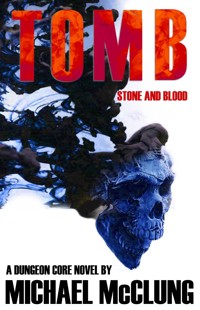
Anomus ip Garma, greatest living architect of the Subori Empire, is tasked by his emperor to construct a tomb for the emperor's concubine upon her death. Anomus and ten thousand workers labor in the desert for years while the emperor's dead love waits, ensorceled and undecaying, for her final resting place to be completed.
But betrayal awaits Anomus and all who slaved to build the Tomb, and a dark god has taken an interest in the evils man does to man...
Ebooka przeczytasz w aplikacjach Legimi na:
Liczba stron: 461
Rok wydania: 2026
Odsłuch ebooka (TTS) dostepny w abonamencie „ebooki+audiobooki bez limitu” w aplikacjach Legimi na:
Podobne






A Dungeon Core Novel
MICHAEL McCLUNG
Copyright © 2019 Michael McClung, all rights reserved.
DEDICATION
For Ryan, Aubrey, and Morgan; collectively known as a crazy of chickens.
CONTENTS
Chapter One
Chapter Two
Chapter Three
Chapter Four
Chapter Five
Chapter Six
Chapter Seven
Chapter Eight
Chapter Nine
Chapter Ten
Chapter Eleven
Chapter Twelve
Chapter Thirteen
Chapter Fourteen
Chapter Fifteen
Chapter Sixteen
Chapter Seventeen
Chapter Eighteen
Chapter Nineteen
Chapter Twenty
Chapter Twenty-One
Chapter Twenty-Two
Chapter Twenty-Three
Chapter Twenty-Four
Chapter Twenty-Five
Chapter Twenty-Six
Chapter Twenty-Seven
Chapter Twenty-Eight
Chapter Twenty-Nine
Chapter Thirty
Chapter Thirty-One
Chapter Thirty-Two
Chapter Thirty-Three
About the Author
ONE
The day that Anomus ip Garma died began, for him, hours before the sun rose. A sickle moon rode low in the cloudless sky above the Desert of Kings; its light was reflected faintly from the gray stone face of the Targus Cliffs, and in the placid black surface of the Great River as it slithered and twisted its long way through the desert to the capital, to the delta, to the sea.
In the Subori Empire, it was known as a reaping moon, or a blood moon – not for its color, which was no redder than might be expected, but for its mostly forgotten connotations. To a few of the knowledgeable it was known as the faceless moon, after the Old God whose symbol it was, though it was not referred to as such. Not in the Subori Empire, on pain of death. The empire had its own gods, newer and more vital, and they did not countenance worship of their elders. Or at least their priests did not.
In the black night before dawn, Anomus, the greatest living architect in the empire, woke at the touch of his servant and rose from his cot. He made his ablutions, prayed briefly to his faraway household god for the safety of his family and then, letting a silent breath escape from his long nose, he cut his arm with a paring knife and let the blood flow into the clay ewer his servant held for him. His arms were scarred from a half-dozen years of such incisions; despite the desert heat, he kept his arms covered to hide the marks.
When he had bled enough, he bound the wound and wiped away the crimson rivulet from his brown-skinned arm with a rag while his servant Orthus mixed honey and fresh goat’s milk into the ewer to complete the offering.
“One way or the other, we’ll not be doing this again, Orthus,” Anomus said.
“I am glad of it, Master,” Orthus replied. “A man’s blood should stay inside him, where it belongs.”
Anomus snorted softly. “The gods prefer it otherwise. Some of them, at least.”
“Subori gods do not demand human blood, Master.”
“Do they not? Bris for one delights in battlefields, and He cares not whose blood wets the sand. Sometimes it seems to me the entire empire rests upon a bloody flood.”
“I beg you, Master, do not speak so. Soon we will return to the capital, where such words will find ears connected to lips eager to report them.”
Anomus gave his servant a small smile and clasped him gently on the shoulder. “You have the right of it. I have been in the wilderness too long, away from scheming priests and their informants. My tongue has become too free. It is a habit I must break, lest it turns and breaks me.”
Orthus nodded and held out the ewer. “It is time, Master.”
Anomus took up the ewer and Orthus checked to be sure the short walk to the tomb’s entrance was free from spying eyes. When he signaled, Anomus carried the ewer into the tomb. No hands but his could carry the ewer, the offering. No light could guide him down the immeasurably ancient steps that awaited him. No one save Orthus, with him since childhood, could be trusted to know what he was about, or why.
The consequence would be prolonged torture followed by a grisly death.
His was the only tent on the tomb-side of the river, a half-dozen steps from its entrance. If he had had to walk through the workers’ camp, he would have been discovered long ago. He did not look up at the massive façade carved into the cliff. He knew it intimately. He had designed it, after all. Within a few steps the ever-present sounds of the Great River – the gurgle and splash of the water, the sigh of the reeds in current and gentle breeze, the frog’s croak and night bird’s cry – all had faded to silence, and the only sound was the soft whisper of his own sandals on the marble floor. He made his way like a spirit through the main corridor to the Well – the massive, cylindrical chamber open to the sky above the cliff – and slipped through the concealed door to the lightless stairs that led down to the undertomb.
~ ~ ~
Anomus had never been a particularly pious man. The gods of the Subori demanded only acknowledgment of their preeminence, not slavish devotion. Anomus had made the required sacrifices at the required times to the gods of war, the river, the harvest and all the others, but no shrine other than the household altar was to be found in his villa in the faraway capital. Left to his own devices, Anomus would happily have left all gods, be they domestic, foreign, or elder, to theirs.
Such was not his fate.
The emperor’s beloved concubine had died ten years before. The emperor, in his grief, had ordered the construction of a tomb for her in the very face of the Targus Cliffs, one of the oldest sacred places in the empire, and one that was remote – far upriver from the capital, surrounded only by the vast Great Desert and scattered ancient monuments built by forgotten cultures.
The emperor had ordered Anomus ip Garma, greatest architect of the empire, to build a tomb for his lost love. What the emperor ordered, lesser mortals toiled upon pain of death to do. For ten years Anomus had labored to bring the emperor’s wish to fruition, while the dead consort – the beauty of her age – lay ensorcelled and undecaying in the capital, waiting for her final resting place to be constructed. Nearly ten thousand workers slaved to hack Anomus’s vision out of the rugged, unyielding stone of the cliffs. They were watched, guarded, driven on and imprisoned by a thousand unspeaking, unsmiling, tongueless soldiers of the emperor’s Eternal Guard.
For ten years, Anomus had been away from his home, his wife, his children. He had been absent at the birth of his daughter, and the death and burial of his son and father, for no one who toiled on the tomb’s construction was allowed to leave before its completion ¬– and the emperor’s approval.
None could leave before the task was finished, save by death’s gate – which many had walked through over the course of the decade. Some had fallen to misfortune; such an undertaking carried risks, even when managed by one as careful and conscientious as Anomus. Some had perished by serpent’s bite or scorpion’s sting, while others had been carried away by simoom or plague or crocodile or river horse. Some had died in pointless camp squabbles. And some had exited the mortal realm by their own hand.
Of all who labored to bring forth from bitter stone the emperor’s desire, only Anomus had been allowed word of his family, or of the world outside the microcosm of the work site. When notified of his daughter’s birth, he had celebrated. When news came to him of the death of his father, he had wept. When he had been informed of the death of his son, he had raged. But even as he’d beaten at the uncaring stone of the cliffs until his fists were bloody, he knew the only way out was through. And so the next day he returned, dead-eyed, to his work, hands bound in linen by the ever quiet, sad-eyed Orthus.
But such hardships were past. The Concubine’s Tomb was complete; come the dawn, the emperor would arrive to inspect what he had demanded be constructed And if he was pleased by what he saw, Anomus and all those who had worked so hard for so long to bring the emperor’s desire and Anomus’s vision to reality would finally be rewarded and released.
Release would be reward enough, for Anomus at least. Gods willing, he had a wife and daughter waiting for him, and ten years of absence to try and fill. So he descended the stairs with extreme care, determined not to spill a single drop of the Old God’s final offering.
The emperor had stipulated very few things regarding the tomb’s construction. One of the stipulations had been that there would be a large – no, massive – chamber beneath the tomb proper, a sort of basement hewn into the living rock. When Anomus had learned of this requirement, his heart had quailed even as his mind calculated how long it would take to mine such a vast space out of the bedrock, and what sort of supports would be necessary to keep the tomb above from collapsing into it. He had not really wondered why the emperor would wish such a thing; in the Subori empire, it was not a healthy thing to question the emperor, even in the privacy of one’s own thoughts.
It was when they had begun the underchamber’s excavation that they had discovered the ancient cave system. And it was when they discovered those caves that a rash of misfortunes began to descend upon them. Massive swarms of black, biting flies and desert wasps, then locusts, then scorpions. Wild animal attacks increased tenfold, then twentyfold. Simooms, the deadly sandstorms of the upper desert, descended upon the worksite, halting nearly all progress for days at a time.
Anomus began to believe the gods themselves had cursed their endeavor. In that, he had been partially correct. Not all the gods had cast a disfavoring eye on the tomb’s construction – only one. The one he had spent the years since placating.
In the fourth year of the tomb’s construction, after nearly two months of cruel, deadly misfortune, a four-man work crew had discovered a secret down in the dark. They were led by a grizzled old miner wise enough to keep it quiet. He brought the news straight to Anomus. The man knew exactly what sort of panic their discovery would cause in a workforce already as unsettled as theirs was.
“We found something,” the man had told Anomus, eyes cast to the ground.
“Yes? What did you find?”
“Best I don’t say. Best you come and see, Architect.”
And so Anomus had gone down in the dark to investigate.
The entrance was concealed by folds in the cavern wall that hid it unless you were almost upon it. But once you stood before the narrow black maw, it was impossible to miss the sickle moon carved above it.
Anomus was a learned man. One of the subjects his tutors had drilled into his young mind was an overview of what the Subori empire chose to call the occult – the worship of the Old Gods. His father being a justiciar, Anomus had been groomed from a young age for the imperial courts. Knowledge of such things was necessary for one who might one day sit in judgment of a person accused of worshiping occult gods. That he had not in fact followed in his father’s footsteps had not erased his knowledge of what he beheld – the sickle moon of the Faceless One, the Old God of death, of retribution, of darkness.
“Can you trust your men?” he’d asked the old crew boss in a quiet voice. “Answer truthfully and be sure, because all our lives depend upon it.”
“I trust ‘em,” the older man had replied.
“Are any of them prone to talking when they are deep in their cups?”
“Only one. I’ll sort ‘im.” The crew boss did not elaborate, and Anomus did not ask him to. He hadn’t liked the hard, pitiless look in the man’s eyes.
“If word of this spreads, this site will have to be abandoned. That means—”
“We’ll have to start over somewhere else, aye, and four years wasted.”
Anomus put his hand on the man’s shoulder. “That would be the best outcome we could hope for. It is not the likeliest. Do you understand?”
He had. Anomus had altered the plans for the sub-tomb, shifting its footprint ten feet westward and having the crew build a concealed door to the cavern that held the Faceless One’s entrance.
“Do I want to know why?” the crew boss had asked.
“You definitely do not want to know why,” Anomus replied.
“Aye, Architect. It will be as you say.”
They never spoke of it again. Terrified, Anomus had used his occult knowledge to placate the Old God during the next sickle moon. Goat’s milk was plentiful. Honey less so, but as the most favored of the emperor’s tomb-slaves, he asked for and received a small monthly allotment.
The blood came from his own body, as it must. But it was a small price to pay to save himself and all the thousands who toiled on the tomb from the wrath of the Old God – or, eventually, the emperor.
After the first offering, all the cruel plagues and attacks ceased. And so Anomus had continued to pay the Faceless One’s tithe month after month for six years, in secret, down in the darkness. The work proceeded; the tomb took shape. And now, in the deep dark between midnight and dawn, Anomus the Architect made one final offering down in the bowels of the earth. The emperor would arrive in a few hours to judge his work. One way or another, Anomus would be shut of this damned place forever.
He navigated the undertomb blindly but confidently. Every step and flagstone had been conceived by his own mind, and a half-dozen years had only deepened his instinctual knowledge of the space. But once he passed under the Faceless One’s sickle sigil, such knowledge, such confidence, died.
Anomus descended these deeper, unimaginably older stairs slowly, carefully, blindly; after six years of monthly offerings, he still could claim no real familiarity with the lightless realm beneath the concubine’s tomb. No familiarity, and certainly no indifference. His heart beat too fast, and sweat covered him despite the unnatural chill that only increased with every downward step he took. He was able to overrule his body’s inclination to tremble, if only just; he desperately did not want to spill a single drop of the offering. Too much depended upon the continuing goodwill of its recipient. Here, at the end, with so much at stake, he could not – would not – stumble and put everything in jeopardy.
Eventually, Anomus’s questing foot found the end of the steps. Try as he might, he had never been able to count the number of them that led down to the Old God’s chamber. In the end he had quit trying.
Only when he stood with both feet on the floor of the Old God’s sanctuary did a glimmer of light relieve the total darkness. It flickered, pale blue and small, ahead of him. Anomus could not say with certainty but he believed that, over the course of years and dozens of offerings, that light had grown stronger. It might have been his imagination.
Anomus carried the ewer towards the light.
The room was featureless, as far as he knew – the cold, blue-white flame illuminated almost nothing, and served only as a beacon. It danced in a bowl-shaped depression at the top of a rough-hewn block of black stone that was not native to the cliffs.
Anomus reached the stone and its flame and, as he had done dozens of times before, carefully lowered himself to his knees while lifting the ewer above his head.
“Faceless One,” he whispered, “on this sickle moon, this blood moon, this reaper’s moon, I offer You a worthless token of my fear and desperation, in the hope that You will withhold Your wrath for the passage of another month.” Anomus set the ewer on the floor, then bent forward and pressed his forehead to the cold, dusty stone for thirteen heartbeats. Then he rose and picked up the ewer once more, and poured the contents into the bowl that contained the flame.
The bloody concoction sizzled and evaporated before touching stone or flame, as it had every time before. The blue-white fire burned brighter, as it had for every other offering. But when the ewer was empty and Anomus bent forehead to stone once again, something happened that had never happened previously. Anomus suddenly felt a presence in the chamber, invisible, irrefutable.
Terrifying.
The Faceless One spoke in a whisper made of shadows and dust.
You fear the Faceless, as you should. But today your fear has a face.
“What face, O Dark One?” Anomus whispered, eyes shut tight, heart hammering in his chest.
A face of gold, one diamond tear sparkling. You should flee this place, mortal. I can offer you no protection from what comes. Such is not my nature.
Then, as suddenly as it appeared, the presence was gone.
TWO
One hundred golden oars rose and fell in perfect unison, driving the blindingly gilt imperial galley up the Great River. The freshly risen sun was almost directly behind the galley, its brightness watering the eyes of any who were so impertinent as to try and sneak a glance at their ruler amid the glory of flashing gold and the water’s sparkle. Irobus, Emperor of Subori, sat in a golden chair at the square-ended prow of the galley, so that his eyes might be the first to behold the tomb.
The eyes of the slaves who had toiled to build it did not count, of course.
The galley approached the tomb in silence, save for the muted plash of oars biting into the river’s back. The Chorus of Adoration stood behind the emperor, silent, gagged with black silk ribbons as they had been since his concubine’s death. For a decade the greatest voices in the empire had been silenced, and would remain so until the concubine was laid to her final rest.
Irobus sat utterly still on his golden throne, despite his excitement. The golden mask that hid his face from the world was featureless save for the single diamond tear at the corner of the left eye. He had worn the mask for as long as the Chorus had worn their gags. Just as no mortal ear should hear the Chorus’s nearly inhuman strains while the Concubine Hesia lay in state, so no mortal eye could be allowed to behold the emperor’s face in its grief.
It was a heavy mask, to suit the dead weight of his heavy soul, and even after a decade he had not grown accustomed to its weight.
As he approached the tomb, his eyes roamed hungrily over the slowly revealed façade. Irobus was an intelligent man, a crafty man, a learned man, but he had no taste or talent for poetics. He had never regretted the lack – had never considered it a lack at all, not even when he found himself unable to articulate what the death of Hesia had done to him. What need to articulate, to speak of what was already so bitterly felt? But when he saw what his will had wrought there in the Targus Cliffs, he wished he had some way to express the feeling it engendered in him. It spoke immediately and directly to his soul – how the blank stone had been transformed into an ethereal representation of his love’s beauty, and at the same time a stark, grim testament to the horrific loss of her.
As the galley neared the tomb’s quay, Irobus reached up and removed his mask of mourning, and let it slip heedlessly into the river’s green waters. The Chorus at once removed their gags, wetted their throats with honeyed water from stoppered crystal vials, and began to sing.
~ ~ ~
When the emperor arrived on his golden, square-ended galley, the ten thousand workers were already face-down in the dust in long rows across the river from the tomb. A thousand silent killers knelt beside their charges, eyes on the dust at their knees, hands on the grips of their swords. The retractable bridge Anomus had designed to connect the worksite to the worker’s camp was drawn back so as not to impede the emperor’s debarkation.
Anomus lay prostrate on the stone quay that thrust out into the river, the sole entrance to the concubine’s tomb standing open behind him, waiting to welcome the emperor and his entourage. Anomus knew the tomb was a thing of beauty unlike anything that had ever existed in the empire or beyond. He only hoped that its stark difference from all that had gone before did not make the emperor recoil. Carved from the living stone of the cliff, Anomus had made the façade into a tapestry of soaring arches and delicate lacework – beautiful, graceful, sorrowful.
A beautiful dream that dies does not lose its beauty, after all. In fact, it becomes incorruptible, beyond the reach of time itself to tarnish. The soaring passion that dies in the fire of a fever soars on in memory, inviolate if unattainable. It soars on in memory. Such had been the emperor’s love for his concubine, and so Anomus had let it soar in stone.
And, because it would be a lie to ignore what had happened to that passion, Anomus had not neglected to show its brutal termination in calculated features of the façade. If one looked carefully and long, the lace and filigree both hid and spelled out the first line of the Subori hymn for the dead:
SILENT EVERMORE
Anomus had done all that was humanly possible to translate the emperor’s love and loss into stone. No living man or woman could have done a better job of it, of that he was convinced. But men were fickle, and none more so than the first among them, the emperor. Irobus might well disagree. And emperors are never wrong, even when they are not right.
When Anomus heard the approaching Chorus give voice, he knew that he had succeeded. That he would not be executed this day for failure. That his labors were truly at an end. Relief flooded through him, making his limbs tremble as he lay on the stone.
Eventually he heard footsteps approach, and stop before him.
“Rise, Architect,” said the emperor, and Anomus rose to his knees.
“Stand,” said the emperor, and fearfully, Anomus complied, though he kept his eyes cast towards Irobus’s golden sandals. Perhaps half a dozen men were allowed to stand erect so near the emperor’s self.
“Look us in the eye,” the emperor commanded, and, inwardly quailing, Anomus did so. He saw the emperor’s haggard face, his deep-furrowed cheeks, the black kohl that circled his piercing yellow eyes.
Emperor Irobus took him in a delicate embrace, quick and shockingly unexpected. Then he made a motion and the Chorus silenced itself.
“You have done well,” the emperor said quietly. “Now, show us the interior.”
Anomus bowed low, and then led his emperor inside. The emperor’s vizier, his general of the left, and a dozen Eternal Guard trailed behind.
~ ~ ~
They explored the grand entrance with its solemn tomb guardians carved into massive yet graceful supporting columns. From there, Anomus led them to the Well, the soaring cylindrical space that was the heart of the concubine’s tomb. Twenty yards in diameter and sixty high, at first glance it seemed to be open to the sky. Such was another of the emperor’s stipulations. He wanted the gods themselves to look down on his love, to see what they had taken from the world, and weep for the loss. Anomus had complied to the best of his ability. Sheets of ironglass capped the Well – a sorcerous invention, and extremely rare and costly, ironglass was perfectly transparent and virtually indestructible. Anomus had created a lattice, a bed of steel, itself costly, and had set the ironglass within it. Only a small round space in the center of the Well’s opening was truly open to the sky, for Anomus knew that desert storms would, over time, bury the Well in blown sand. Anomus had asked for, and received, the aid of an imperial sorcerer to cast spells of strength and purity on the Well’s ironglass lid – spells that would keep it clear of drifting sand and mundane dust, and rebuff any of either that would otherwise enter through the small opening, along with any living creature larger than a bird. Those spells would only fade upon the death of the sorcerer himself.
Anomus then led them to the upper chambers, where he had carved out what amounted to a palace for the love of the emperor’s life. Each chamber was near enough to the top of the cliffs that Anomus had been able to provide natural light to them, through the creation of light wells bored down from the surface. The wells were far too small for a man to gain entrance to the tomb; grave robbers would inevitably try their luck, of course, and Anomus wasn’t such a fool as to make their depredations any easier. But by cunning use of polished silver and bronze mirrors, he had been able to ensure each chamber of the upper tomb would have at least some natural light for most of the day. To prevent the terrible dust and sandstorms from clogging the light wells, and eventually the tomb itself, he had covered each well with clear, thick sheets of quartz, stronger and much costlier than any mundane glasswork that was available.
They explored the upper tomb, and while the emperor was silent the whole while, Anomus believed he was pleased by what he found. From bedchamber to kitchen, dining hall to bath, Anomus had labored to build what amounted to a lovers’ nest for the emperor and his concubine in the afterlife. The emperor exclaimed aloud when Anomus led them to the clockwork aviary, where a dozen birds in bronze and copper, gold and silver perched on trees fashioned from agate and jade, ivory and pearl. Each bird could be wound, and their internal machinery would run for hours.
Anomus was most nervous when he introduced the emperor to the garden. Within, he had cultivated a small, self-sustaining ecosystem, choosing plants and insects with care. While it was the brightest of all the chambers of the tomb, the light was still much less than most plants could accept, and so he had chosen with care mosses and ferns and other hardy dark-dwellers to populate the garden with. Then he had selected a few insects of the most beautiful and least harmful type, and over the course of years had built up a stable ecosystem. The greatest predator in the garden was a jeweled gecko that grew to the length of a little finger.
The garden even had an ornamental pool, fed by a concealed waterwheel and screw pump that transported the barest trickle up from the Great River below. It had taken Anomus months to complete, and was a feat of engineering that could be seen nowhere else in the empire – and it was all for a trifle in a tomb, that no one save the dead would ever see after that day.
The emperor sat on the ironwood bench that Anomus had installed beside the pool and stared into the shallow water, where tiny fish of red and gold swam endless circles.
“Anomus ip Garma, you are a worker of wonders,” said the emperor eventually, and Anomus bowed to the ground.
After the wonders of the upper tomb, the funerary chambers were somewhat anticlimactic. Their functions and religious natures dictated much, and Anomus had little say in how they were constructed or what they housed. The funerary chambers radiated outward into the bedrock from the Well in a half-moon, and were lightless. Two of the Eternal Guard walked before them, carrying lanterns.
As the emperor had stipulated, Anomus had eschewed the customary painted funerary murals for frieze work and delicate mosaics of all those things the concubine had treasured most, or was known for. Depictions of the delicate morning blossom known as dawn’s breath replaced the traditional river lotus; where Hirag’s desert falcons would normally be found on a tomb’s walls, instead flew the nearly ephemeral, speedy-winged honey sippers. Cats replaced jackals as silent guardians. If anyone other than the emperor had ordered such substitutions, they would have faced the wrath of the imperial priesthoods. Anomus himself could have been put to death for creating them.
But this was the tomb of the emperor’s concubine, and in time he would join her in it. None dared gainsay him.
Eventually, every corner of the tomb had been inspected, save the undertomb. Anomus hoped pointlessly that the emperor would forget about it, but such was not to be. Once everything had been seen at the river level and above, Irobus said a single word – ‘Continue’ – and so Anomus led the party to the concealed door in the well. He opened it and the Eternal Guard went before them with lanterns down the steps.
Soon enough they stood in the echoing depths of the dark vastness below the tomb, a space three yards tall, a hundred yards wide and three hundred deep , punctuated by regularly spaced pillars to keep what was above from collapsing below. The two lanterns had no chance of illuminating the vast, silent space.
Emperor Irobus stood tall and silent, surveying the space for interminable minutes, his face as much a mask as the one he had let the river take. Anomus stood nervously. A chill took him. Something was amiss. Perhaps he had somehow done something to displease Irobus? He had been given no instructions regarding the undertomb except that it should exist.
Was it possible they knew of the secret chamber? Or worse, his offerings to the Old God within it?
Finally the emperor raised one thin finger, and suddenly Anomus was seized by two of the Eternal Guards, faster than thought. Even then, Anomus did not struggle. What would be the use?
“Your Majesty, what have I done to offend?” he cried out.
“Nothing, Anomus ip Garma. Nothing. You have done all that I have asked of you, and so much more.” A third Eternal Guard unsheathed his sword, but the emperor raised a finger once again, and the stone-faced man froze.
Irobus knelt before Anomus, and eyes searched eyes. Anomus did not know what his emperor looked for, or what he found. But when Anomus looked into the emperor’s eyes, he saw a deep, cold, sparkling madness. In that moment, Anomus knew he was a dead man. That he had been a dead man from the moment the emperor had tasked him to build his consort’s tomb.
“You have been a good and faithful servant,” said the emperor. “You have built a final resting place for my beloved that is without precedent, and when the priests inter her here in three months’ time, my heart will finally know a peace that has been impossible for me to attain for the last decade.” The emperor placed a cool hand on Anomus’s cheek. “You are without peer, a genius of the age. Which is why I cannot allow you to live. You must never be allowed to build anything that might rival what you have done here. I will not – I cannot – have Hesia’s final resting place eclipsed by some future creation of yours.”
“My emperor, I beg you, do not do this! Let your humble servant live. I will do anything. I will retire to the country, become a farmer, anything. I will never set one stone atop another again, I swear it!”
“You are correct. You will never again set one stone atop another. But this tomb will be nearly as much yours as it is hers, and eventually, mine. And all those who labored for you in its creation during their lives will continue to serve you after your death. No one as low-born as you has ever, or will ever, have such a tomb as this. That much your emperor gives you, in gratitude.”
“Merciful Irobus, pl—”
The small blade was as golden as everything else about the emperor’s person. Irobus’s hand was so much quicker than Anomus ever would have guessed. The cut across his neck was a small thing, no longer than his thumb. And yet it was enough to let his life’s blood come pouring out from the severed jugular.
The emperor stood, and placed his hand briefly atop Anomus’s head. Then he and his entourage walked away without a backward glance. When they were on the stairs, the two Eternal Guard who held Anomus’s arms released him and followed. He fell to the floor. Futilely, he put his hand to the slit jugular, but still the blood oozed out. Within moments the lanterns were gone, and he was alone and dying in the dark. A terrible coldness began to creep into his limbs, though his heart was filled with a burning, swift-winged rage.
I warned you, came the voice of the Faceless One, and Anomus’s spirit howled.
I am the god of vengeance. You have much to avenge, Architect. Even now, all those thousands who slaved to build this tomb are being rewarded with the blade. So I offer you a choice between the peace of death, or vengeance. Be warned: if you choose my way, you must hew to my path, else I will withdraw my favor.
Anomus chose. As his lifeblood slowly leaked from him, and the world grew ever darker and colder, he chose.
“I do not choose peace,” he mouthed, for he had not the breath to speak. The Old God seemed to hear him nonetheless.
If you can reach my sanctum, then you shall have what you desire.
Anomus found that he could not stand, and so he crawled. He crawled to the secret door that concealed the stairs down to the Old God’s sanctuary. It was a pitiful, one-handed scrabble; he dared not use the hand that held back the tide of his heart’s blood. Behind him and above in the dark, he faintly heard the echoes of screams. The slaughter of the workers had begun.
In the darkness, he could not tell when his vision began to turn black, but he could and did feel the horrid dizziness that stole over him. Tears of rage and terror started from his eyes. It was with an inexpressible relief that he reached the undertomb’s wall. With a nearly superhuman effort he stilled the violent trembling in his fingers so that he could search the wall for the hidden catch that would open the door. A horrible rushing tide was building in his ears, and he knew it was his heart about to stop for lack of anything to pump.
He cried out in desperate relief when he found the catch. He forced the door open, but spent the last of his strength in doing so. He collapsed at the head of the stairs, his body numb and his thoughts slowing, slowing, along with his heart.
You must make it to the foot of the stairs, mortal, or all is for naught.
Anomus knew without a shadow of a doubt that he could never crawl so far. Somehow he dragged himself forward and let himself tumble headlong down the stairs.
His final, fading thought was the hope that it would be enough.
THREE
Anomus died. All his mortal functions ceased; he felt himself to be no more than cooling meat, and with a faint puzzlement, he wondered why he remained in such a broken, dead vessel when he could simply. . . leave it. Somehow he knew he could do so, and so he did. He rose up out of his mortal shell, and such a feeling of lightness and relief washed over him – whatever constituted ‘him’ – that he felt almost giddy.
That same well of deeper knowledge that had urged him to free himself of his mortal flesh was now tugging at him, gently but insistently, urging him to move on. But to where? He reached for an answer, but all that he understood of it was a sense of some further, greater thing. It was like a silver cord that he could sense but not see, leading upwards. He began to follow it, but once he reached the chamber’s ceiling, the rough stone rebuffed his immaterial form just as firmly as if he had still been wearing flesh.
So soon you mortals forget, after death, said a voice from below. A voice he knew that he knew, but could not remember. He turned his attention downwards, and saw a light floating above a stone. At the same time, that stone was like a wide black well, and a creature of even greater blackness was crawling out of it. The sight of it struck his very essence with terror.
It was man-shaped, but so much more vast. It had a head, limbs, a torso, but all of it was made of the stuff of utter dark, and that stuff sloughed off of it like rotting, putrid flesh from an ever-decaying corpse. It had no face, but Anomus knew, somehow, that where a face should go, that darkened physicality was wet with ichor and the rot of the space between the stars.
You fear me. You find me revolting. But no creature of the light came to your aid, did they, mortal? No beauty of the aether offered to ease your suffering, to salve your grievous wounds of spirit and flesh. And none of the Shining Court, old or young, stepped in to stop the slaughter of ten thousand men.
As the monster spoke, all that Anomus had just suffered came rushing back to him. The silver cord that tethered him blackened, withered, turned to dust that drifted away and disappeared.
Do you know how the High Gods remain so shining, so pure? I will tell you. They never stoop to soil themselves in the muck you mortals struggle through. They do not care. For all my faults, Architect, I do.
The awful thing raised its arm and beckoned to him. Come to me.
Anomus fluttered down to the Faceless One like a moth to a flame. The Old God snatched him from the air, and then held the spirit of Anomus ip Garma in cupped, shadow-bleeding hands for a long moment.
This will hurt, He said. And then He squeezed.
The Faceless One took Anomus’s immortal, immaterial soul and crushed it down, down into a thing as hard as it was small.
What the dark god did was not quick, and it was far from painless. Anomus discovered that even a soul could experience such agony as to drive it away from consciousness. He had no mouth with which to scream, but he shrieked throughout the torment of his remaking nonetheless, until his spirit was overwhelmed, and he knew nothing at all, for an unknowable time.
~ ~ ~
It was the smallest of sounds that brought him back to awareness: the sound of water – or perhaps some liquid thicker than water – steadily dripping down from one worn, misshapen step to the next.
He tried to turn his head, and discovered that he had no head, nor any other part that made up the human frame. It seemed at first that he was pure thought, until he turned that thought toward himself and discovered a small gem, smaller than the nail of a child’s smallest finger. He understood in an instinctive way that this clear, blue-white, faintly glowing gem was all there was of what he could call himself.
He remembered he had once had a body other than this, and that it had been lying on a floor. He looked for it, but there was no sign of such a thing. Still, he was sure he’d once had a body of flesh and bone.
At first, there was no emotion attached to his thoughts. He was only knowledge, and little enough of that. But slowly, understanding came to him, along with memory – memory of the emperor’s betrayal, of the Faceless One’s offer, and his own subsequent transformation. He remembered that he had bargained away his afterlife for a chance at vengeance. Or so he’d thought.
The Faceless One had obviously played him false. How would he ever get his revenge trapped inside a crystal, powerless?
After memory and understanding came emotion – rage. Blind, incoherent, impotent rage. Time had no meaning in the hell of emotion Anomus fell into then. He might have spent eternity raging at his fate had the rivulet of blood not finally followed gravity down to the chamber’s floor.
The shock of it jolted him from his psychic tempest. On one level, he knew somehow exactly what it was – human blood, neither hot nor fresh, but not yet rank with decay. He also instinctively knew that the blood did not come from a single source.
On another, completely different level, he experienced the blood as power. It was a key that unlocked something within him, and he began to understand, if only vaguely, that he did indeed have some form of control, of agency. He had no limbs or digits, no eyes or ears – but he had senses nonetheless, and that first drop of blood, small though it might be, he instantly recognized as some sort of strength. And what was strength but potential action?
He turned his attention once more to the place where the blood was now slowly, steadily dripping onto the chamber floor, and instantly his whole mind was there, at that spot. He saw it in a way that was infinitely more complete and comprehending than mortal sight. Curious now, he turned his attention to the chamber itself, and instantly he knew its every surface, every crack and fissure, bulge and jag, every mote of dust. He beheld himself again, a tiny, blue-white, faintly glowing chip resting in the bowl-shaped depression atop the black stone that had once housed the Old God’s flame.
There was no sign of the Faceless One’s presence. The god had transformed him, and then left him to this ancient place of His power. Left him to his own devices, to succeed or fail, to learn to conquer this, his bizarre new existence – or to be trapped by it.
Remembering once more how the emperor had stolen ten years of his life, and then life itself from him, Anomus swore he would not fail in his quest for retribution. He would learn to adapt. He would gather his strength. And then, somehow, he would have his revenge. He had to believe the Faceless One would not have made it impossible – not the Reaper God, the Blood God, the god of darkness and vengeance. Why would He play such a cruel trick? No. The Faceless One was no trickster, not like Halik, the Desert Hare. Whatever obstacles may face Anomus, his revenge would not be impossible. He would see Irobus destroyed.
Somehow.
But first he had to understand the rules and restraints of his new existence, and he had to puzzle out whatever uncanny strengths and abilities he might now be in possession of. And he had to do it as quickly as he could, for he had not forgotten that Irobus would bring his courtesan to the tomb for her final interment in three short months. Unless Anomus could somehow spirit himself to the capital without the benefit of a body, that might well be his only chance to meet the emperor again this side of death’s door.
If, indeed, death was still something that could affect him.
The terrible shock of his transformation was fading, and he began to think more clearly than ever before. More clearly, and more quickly. Perhaps it was part and parcel of being… whatever he was now. He was certainly no creature of flesh. It seemed to him that he was now almost wholly a being of thought, and will. And emotion. He pondered this briefly, but set it aside. There was much to do, and he sensed that if he allowed himself, he could easily fall into a black rage from which he might never emerge. Better, he decided, to focus on what was before him than what was behind.
What lay before and all around him was the chamber, and the blood-soaked stairs. The blood came from the undertomb above, of course. He sent his attention exploring, and in an instant, he was at the concealed door that he’d had constructed to hide the Old God’s sacred space. Blood seeped in, viscous and slow, from the narrow crack between the bottom of the door and the floor. Anomus tried to push his attention through the door, and discovered that he could not.
He felt the rage he had so recently escaped begin to build once more, and with an effort forestalled it.
Think, he admonished himself. The Reaper would not have trapped you in this one chamber, with no means to affect the wider world. Think.
He could move his attention at will through any open space, just as he might fly if he were a bird. But like a bird, a door balked him. He had no hand with which to open it. He had only his will, and the slow trickle of power that the blood afforded him.
He had designed the door with a hidden catch, and a spring that would see that it closed automatically – for what good was a secret door that might be left open on accident? When he had flung himself down the stairs with his last dying breath, the door had closed behind him just as he had designed it to.
He had designed the door. He knew its workings, intimately. He would not be opposed by one of his own creations.
Anomus focused his entire will and attention on the door and, after a slight resistance, something surprising happened. In some uncanny fashion, as he focused on the lifeless thing of wood and iron, he learned it, down to the smallest bits of matter that made up its existence. More, by learning it so thoroughly, he had an almost indescribable sensation of claiming it. It was as if the door became a part of him, in an unequivocal, physical sense. He was no longer a being composed solely of thought and will. Now he was a thing of thought, and will, and a door.
And, he realized, a chamber – for he knew the god’s sacred space just as intimately, just as instinctively.
Now, let us see if I can cause this door to move, as I would make a finger of my once-body move.
He concentrated on the door and, with a focused thought, caused the door’s catch to disengage.
He did not get the chance then to see if he could force the door to swing open – the tide of corpses did that.
~ ~ ~
Vast as Anomus had made the undertomb, it could not contain the mortal remains of ten thousand men. Coldly, analytically, he estimated less than half that number could reasonably fit in the space. The gruesome logistics of stacking so many heavy, ungainly corpses would have defeated any effort to fill the volume of the undertomb with anything approaching efficiency.
Still, the reality was sufficiently horrific. The undertomb was now something out of nightmare. Corpses lay in heaps. In no space would the accumulation of cooling meat be less than waist-high on a man of average height. The Eternal Guard must have labored for hours to dispose of so many.
So much death, so much horror, all to fulfill the emperor’s mad whim.
Anomus had never thought overmuch on the nature of good and evil while he was a mortal man; once he had learned the thoughts of the empire’s philosophers enough to please his tutors, he had let that wisdom, those concerns, drift down in the slow current of memory to settle beneath common, everyday concerns. He had been much more focused on learning and mastering the arts of construction and engineering so that he might one day shape into reality the visions that only existed in his head, that had visited his waking and sleeping dreams since childhood.
Now, faced with the fruits of mass murder on a scale nearly unimaginable, Anomus did not need the reasoned words of long-dead wise men to understand evil. If he’d still had eyes, he might have wept. If he’d still possessed the means, he might have vomited. Instead, as the trickle of blood that leaked down to the deepest chamber became a turgid flood, he drew on the power it gave him and silently swore to use it to bring down the one who was the architect of all this horror.
Among the dead, almost certainly, was Anomus’s servant and oldest companion.
There was no way to search through all the bodies, not even for Anomus in his new condition. They were cast together like broken dolls, closer and more intimately entangled than lovers, four and five and six corpses deep. After a decade working with them, he recognized every face that was visible. He knew almost every name. But he could not shift the bodies, nor sort through them as someone with a physical body would have been able to. He could only turn his attention to what was visible, or dive down into the spaces between the jumbled corpses – untouching, untouchable. At first it did not even occur to him to merge with the corpses as he had done with the door, and then when it did, he recoiled from the idea in revulsion.
Nowhere did he see Orthus. Most likely his oldest friend was down at the bottom of the press of death, or perhaps he lay broken above. Anomus hoped he had somehow escaped, perhaps by throwing himself in the river. He hoped, but did not believe.
Anomus dwelled with the dead for a time, his whole being consumed with darkness, but eventually he roused himself. He could do nothing for the emperor’s victims by mourning them. With their blood they were giving him the gift of power, just as they had gifted him the strength of their bodies while constructing the tomb. He took that power and continued to explore his limits.
The undertomb was vast. He knew the space – he had designed it, after all. But in his altered existence, he did not know it; not as he knew the Old God’s chamber below, nor as he had learned to know the concealed door. He had not yet claimed this space, he realized. It seemed his new reality was about claiming physical space, incorporating it into himself. In one sense it seemed a bizarre proposition to a man used to the paradigm of the flesh. But in another sense, Anomus wasn’t unduly confused by it. So much of his life had been focused on the construction of physical spaces, either by the artful piling of stone and wood into coherent, purposeful shapes, or by the creation of intentional spaces within living rock.
He knew, understood, and felt the world of chamber and passage, room and stair and window, nearly as well as the reality of stretching arm, grasping hand, muscle and sinew and bone. He always had, and years of study and experience had only deepened his understanding. Purpose and interconnection were to be found in both flesh and architecture. Strengths and weaknesses as well.
So be it, he thought. If this tomb is to be my body, then let me learn to inhabit it.
Just as he had the concealed door, Anomus turned his attention and his will to the physical space of the undertomb. Walls, ceiling, blood-drenched floor, he claimed it all and made it his – made it him.
Anomus learned two things in the process. First, the claiming came at a price. The strength that flowed into him from the blood of the slaughtered workers flowed back out as he inhabited the undertomb. This concerned him greatly, for he instinctively knew that the power the blood offered him grew less potent as it aged, and it was a finite resource in any event. If his power relied solely upon the blood of men, he would soon find himself starving in the desert.
The other thing Anomus learned was that the emperor had ordered the concealed door to the undertomb to be blocked up, to be sealed. He sensed the mortar and masonry that had been used; the mortar was not yet dry, not yet fully hardened.
No, he thought. This will not do.
He had been able to physically release the door’s catch once he had claimed it. He could affect the physical world, with effort and an expenditure of his strange, blood-soaked power. So he decided that if he were a prisoner, then he would try to tunnel his way out of his cell.
He forced his will and attention into the obstruction, just as he had the door below. Stone and mortar were less yielding than wood, and it took more time, more energy. But he refused to be trapped down below the concubine’s tomb. A prison cell, however vast, was still a prison cell.
Anomus once again turned his will to claiming a physical space, this time the stone and mortar that now blocked the concealed door that granted access to the tomb’s Well. Only this time, as he claimed the physical structure of the blockage, atom by atom, he willed it to dissolve, to release the bonds that made up its matter.
Slowly, painfully slowly, by the thickness of a fingernail at a time, mortar and stone turned to dust at his will. But as he advanced through the obstruction, what was already a difficult, straining task became exponentially more difficult. He did not understand what was balking his effort, and he feared that, if he continued, he would exhaust the limited supply of strength the blood of the workers had given him. He paused in his efforts, to try and understand the nature of the problem.