Uzyskaj dostęp do tej i ponad 240000 książek od 14,99 zł miesięcznie
- Wydawca: epubli
- Kategoria: Biznes, rozwój, prawo•Biznes, rozwój
- Język: angielski
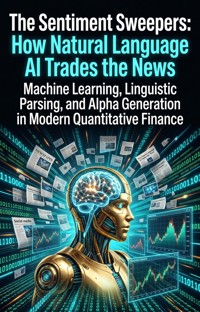
Human cognition is a biological bottleneck in modern trading. While manual traders take hundreds of milliseconds to process financial news, institutional quantitative algorithms capture alpha in microseconds. Welcome to the era of the asynchronous market, where autonomous systems read, parse, and execute trades before human neurons can even fire. "The Sentiment Sweepers" reveals the inner workings of natural language AI in high-frequency finance. Discover how sub-word tokenization protocols, custom financial lexicons, and high-dimensional vector mathematics convert raw text into execution signals. Step behind the scenes of collocated FPGA gateways, kernel-bypass networks, and real-time news feeds. Explore how transformer networks decode executive speech in earnings transcripts, unmasking strategic evasion and subtle corporate sentiment. Learn how cross-lingual zero-shot models navigate geopolitical shocks, while unsupervised anomaly detection shields portfolios during unprecedented market crises. Master the critical intersection of market microstructure, signal decay, and multi-modal integration. From overcoming look-ahead bias in backtesting to dynamic hedging against toxic flow, this guide delivers the blueprints powering modern quantitative trading desks. Dominate the microsecond domain. Equipping programmers, quantitative analysts, and tech-driven traders with cutting-edge strategies, this essential book turns linguistic chaos into pure financial alpha.
Ebooka przeczytasz w aplikacjach Legimi na:
Liczba stron: 201
Rok wydania: 2026
Odsłuch ebooka (TTS) dostepny w abonamencie „ebooki+audiobooki bez limitu” w aplikacjach Legimi na: