Contents
Acknowledgement
Introduction
Preface
Chapter One Gerald Gardner and His Detractors
Chapter Two Old George Pickingill - the Grandfather of Gardnerian Wicca
Chapter Three Ritual Nudity
Chapter Four Medieval French Witchcraft
Chapter Five Craft Grades
Chapter Six Hereditary Witch Lore
Chapter Seven Druidism, Freemasonry & the French Craft Connection
Chapter Eight Leys, Stone Circles & Serpent Power
Chapter Nine Masonic Symbolism & the Hereditary Craft
Chapter Ten The Saracen Mystery Schools & the Medieval Witch Cult
Chapter Eleven Gerald Gardner & the Hereditary Craft
Chapter Thirteen Aleister Crowley & Wicca
Chapter Fourteen The Cambridge Coven
Chapter Fifteen The Gardnerian Charge
Chapter Sixteen The Cambridge Rituals
Chapter Seventeen The Nine Covens
Chapter Eighteen Witchcraft & the Aquarian Age
Chapter Nineteen Hereditary Family Traditions
Chapter Twenty The Goddess in Ancient Britain
Chapter Twenty One The Saracen Craft
Chapter Twenty Two Gerald Gardner & the Malay Witches
Chapter Twenty-three Athames & the Book of Shadows
Chapter Twenty-four The New Forest Coven
Chapter Twenty-five Aidan Kelly & the Lugh ‘Conspiracy’
Bibliography
Acknowledgement
The authors would like to thank Leonora James, editor of The Wiccan from 1979 to 1990, Wiccan Publications and the Pagan Federation for their co-operation in the publishing of this book. Also Mick Neale for his assistance in compiling the bibliography.
Introduction
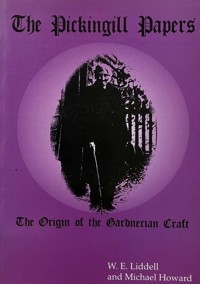
In 1974 John Score, the late editor of The Wiccan newsletter of the Pagan Front (now the Pagan Federation), was in correspondence with a member of the Hereditary Craft called E.W. ‘Bill’ Liddell, who was then living in Auckland, New Zealand. Liddell had relatives in England who organised covens in Sussex, East Anglia and the West Country and he later revealed that he had been initiated in the 1950s into the Craft tradition founded by ‘Old George’ Pickingill (1816–1909), an Hereditary magister or ‘witch master’ from the village of Canewdon in Essex.
From 1974 to 1977 The Wiccan published a series of articles from Liddell, described in the newsletter as ‘a well wisher’, which made some controversial and sensational claims about Pickingill and his alleged influence on 19th and 20th century occultism and witchcraft. The articles claimed that the famous (or infamous) ritual magician Aleister Crowley had been inducted into Pickingill’s version of the Craft in 1899 and that Pickingill and the Rosicrucian writer and researcher Hargrave Jennings had compiled ritual material that had later formed the basis for the foundation of the famous Victorian magical group known as the Hermetic Order of the Golden Dawn.
The articles further claimed that the coven in the New Forest into which Gerald Gardner (1884–1964), the father of modern witchcraft, was initiated into in 1939 was connected with the network of Nine Covens founded by Pickingill in the 19th century. Allegedly when Crowley and Gardner met in 1946 the two men exchanged notes on their common background in the Craft. Crowley supported Gardner’s idea to promote a popular nature religion. How and why these articles were written and submitted is explained in the Preface that follows.
In 1977 Liddell began a correspondence with me and said his ‚Elders’ had instructed him to offer any future articles for publication in my magazine The Cauldron, which had begun publication only the year before. From 1977 to 1988 Liddell submitted articles to The Cauldron, using his nom-de-plume of ‚Lugh’, and these were published up until 1994. These articles covered considerably more ground then the original TW ones. They described the differences between the ‚old style’ Hereditary and Traditional Craft and modern witchcraft or Wicca, the supposed connection between Celtic druidism, French witchcraft and Freemasonry and the alleged influence of Saracen beliefs and practices from the Middle East on the medieval witch cult. They offered an alternative view of witchcraft that was very different from modern sources and caused considerable controversy.
The earliest references to George Pickingill that I am aware of are in an article by the folklore writer Eric Maple published in the Folklore journal in December 1960, entitled ‚The Witches of Canewdon’, his book The Dark World of Witches (1962) and a far more sensational account in Charles Lefebure’s Witness to Witchcraft (1971, but probably written about 1967). In the 1960 article Maple calls him George Pickingale1 and describes him as ‚the last and perhaps greatest of the (Essex) wizards’. He says he was born in Hockley in Essex in 1816 and worked as a farm labourer in the Canewdon area.2 He was a widower with two sons and lived in a cottage near the Anchor Inn in the lane leading up to St. Nicholas’ church.
Maple describes Pickingill as a tall and unkempt man with very long fingernails and intense eyes. He was solitary and uncommunicative and practised openly as a cunning man, restoring lost property and curing warts and other minor ailments by ‚muttered charms and mysterious passes’.
Maple also says there was a darker side to the old wizard. Villagers were allegedly in fear and awe of his reputed magical powers and if he wanted water drawn from the village pump the local boys would run to do it, because they believed he could make people ill just by looking at them and they would not be well again until he said so. At harvest time, Maple claims, Pickingill wandered around the fields threatening to bewitch the farm machinery. The farmers bribed him with beer to stay away. However, when he chose to work, Pickingill could cut a whole field of corn in half an hour using his familiar spirits, elemental servitors or imps to do the job while he sat in the hedge smoking his pipe.
In his old age Maple says visitors came from vast distances to see him and they gave him gifts of money. Brave souls who dared to peep through the cobwebbed windows of his old cottage say they saw the wizard dancing with his familiars while, like a scene from The Sorcerer’s Apprentice sequence in Walt Disney’s film Fantasia, the clock, ornaments and furniture in the room joined in the merry dance. Before his death at the age of ninety three, Pickingill became too ill to live alone and, against his will, was sent to the infirmary. A woman who visited Pickingill shortly before his death, says Maple, saw him laying on the bed like a skeleton and sucking at his dry nipples were his imps in the form of white mice. The old cunning man was buried in the old part of the churchyard, but as a last act of defiance it is said he told the village that he would perform his magical powers at his own funeral. Allegedly as the hearse drew up the church gate the horses stepped out of the shafts and trotted away.3
One of Pickingill’s alleged magical powers was the ability to call up and control the seven - or nine or six - witches who lived in Canewdon by blowing a wooden whistle. As a ‚Master of Witches’ he could will them to dance in the churchyard, which suggests he was regarded as the leader of the local coven.
The witches of Canewdon were remembered in the village at the turn of the century as stereotype old ladies with ugly features and nasty personalities. In 1896 one of these ladies lived in the smithy and one day she showed her granddaughter a bag which heaved and squirmed. The terrified girl was told it was full of the witch’s imps. That night the old lady materialised in the child’s bedroom and became such a nuisance that a witch bottle full of the victim’s urine and some new pins had to be boiled on the fire. When it burst in the heat the witch’s spell was broken. This witch may have been linked to the story of the village blacksmith who, in traditional folk legend style, had allegedly sold his soul to the Devil. On his death bed he begged his daughter to take care of his imps who had marched up the bedspread in the shape of white mice. When she took them away he died and the woman knew she had inherited his witch powers.
Eric Maple’s chief informant in the village was an old lady called ‚Granny’ Garner, who he represented as the last of Canewdon’s ‚white witches’. I met Lillian Garner in 1977, when she was eighty-seven, and she told me she remembered Pickingill from her childhood as the village character and eccentric. She recollected him having his photograph taken beside the first car to arrive in the village.
Granny Garner gave me a signed copy of Philip Benton’s The History of the Rochford Hundred and the original of the famous photograph of George Pickingill that has been published in several books since. She also told me that her mother had informed her that Pickingill was the leader of the Canewdon witches and that he had ‚many visitors’ who came seeking his knowledge of occult arts. A photograph of Granny Garner outside her home at Vicarage Cottage in Canewdon is reproduced with Maple’s article on the village in Man, Myth & Magic.
Charles Lefebure’s account concentrates on the more sensational ‚Satanic’ image of Pickingill in the local folklore. It does however contain information which is interesting in the light of the later revelations in the Lugh material. Lefebure states that Pickingill has the same reputation in modern witchcraft circles as Crowley and Gardner. He describes him as ‚the Devil incarnate’ who knew the secret of the Elixir of Life and eternal youth. He further claims the Pickingill family were renowned and feared all over East Anglia for generations as ‚a race apart’ of witches, wizards and warlocks with a pedigree dating back to the time of Merlin. In this sense warlock is an Old English term referring to a cunning man (or ‚wise man’) who could deflect spells, banish curses and exorcise ghosts - a sort of medieval ghostbuster.
Pickingill, according to Lefebure, was believed to have sold his soul to the Devil and he was alleged to hold nocturnal orgies in the graveyard of St. Nicholas’ church attended by his Romany kin. These midnight rites were allegedly ignored by the aged incumbent vicar who was terrified of the old man’s powers. However, when a young cleric replaced him for a short time he challenged the wizard and his gypsy coven. Hearing the sounds of revelry and seeing flickering flames in the churchyard the clergyman ran into the place brandishing a riding crop. Silence greeted him and all he could see were thirteen white rabbits peeping from behind the gravestones.
Lefebure also says Pickingill terrified the villagers with his supernatural powers. Allegedly, if he wanted food he entered the village shop and took what he wanted. Requests for clothing or a jug of ale were never refused and he lived for many years rent-free in his cottage. Anyone who dared cross him immediately fell ill and could only be restored to health by the touch of his famous blackthorn walking stick. Lefebure claims that Pickingill eventually became so infamous that he was visited by black magicians (sic) from all over Europe for advice and instruction.
The account of Pickingill’s death is suitably sensational and seems to be based on wishful thinking about divine retribution. It is alleged that on the evening before his demise Pickingill was sitting in The Anchor supping his usual mug of ale supplied by the landlord. Suddenly, out of a calm summery evening sky, there was a clap of thunder and a flash of lightning which set the old wizard’s cottage ablaze. The next morning he was seen walking through the village street when a sudden gust of wind blew his hat over the churchyard wall. Muttering curses under his breath, Pickingill went to retrieve it and as he did a shaft of sunlight broke through the storm clouds and a shadow from a stone cross in the graveyard fell across his face. Moments later he fell dying to the ground cursing God and the Church with his last gasp of breath. Both Maple and Lefebure agree that after his death Pickingill’s cottage was haunted by his familiar spirits. People who hurried past the ruined cottage at night crossing themselves saw the red eyes of his imps glowing in the dark inside.
Canewdon’s reputation for traditional witchcraft goes back at least to the 16th century. The name ‚Canewdon’ has been variously written in 1181 as Canewedon, in 1228 as Kenawedone, in 1254 as Canedun, Canigadun and finally Canewdon. It has been translated as ‚the hill of Canu’s people’ and the village is believed to have been the site of a camp founded by the Danish king Canute or Cnut (1016-1035). The earliest holders of Canewdon after the Conquest were a family of French birth called de Cancellis, aka Chonceaux, in the reign of Edward I (1272-1307). During the time of Richard II (1377-1399) the land passed from one Margery de Chanceax to her children Elisabeth de Pritelwell and Alice de Sutton. It is presumed it stayed in their ownership until the reign of Henry VIII (1485-1509) when records show the manor of Canewdon belonged to a Thomas Darcy.
It is difficult to know when the village first became associated with supernatural happenings. In 1847 the Essex historian Philip Benton says the remains of a huge statue of ‚a heathen deity’ were discovered in the locality. Buried with it were a number of bones which crumbled to dust on exposure to the air. This mysterious stone idol was broken up and used to mend local roads.
During the period known as the witch-craze belief in witchcraft was widespread in Essex. In fact indictments in the county outnumbered those for Hertfordshire, Kent, Surrey and Sussex combined.4 Between 1560 and 1680 there were 1220 court cases in Essex involving witchcraft, sorcery and magic.
The first recorded case in Canewdon was in 1580 when the Grand Jury from the Lent Assizes in Colchester charged Rose Pye, a spinster from Canewdon, who was ‚notoriously living as a witch’, of bewitching to death the twelve month old child of a tailor called Johanne Snow. She was formally acquitted of all charges. There are two other references to Canewdon women accused of witchcraft in 1580 and 1590.5
When Maple investigated the folk traditions of witchery in the village during the winter of 1959-60 he found that stories about witches had survived to the present day among the farming folk in the district.6 In the second half of the last century witchcraft and witches were widely regarded as a real threat and a menace to the village. The alleged witches were believed to have the power to shapeshift or shimmer into the forms of mice and white rabbits and for that reason people kept well clear of these animals. It was said that a man who
touched a white rabbit while trying to capture it was ill for many weeks afterwards because it was a witch in disguise.
The witches were reputed to be solitary practitioners of the art, but they were subject to the power of whoever was the local Master of Witches. They had the power themselves to inflict lice on their enemies, bewitch the wheels of wagons (and later motor vehicles), cause minor illness and paralyse people with the Evil Eye or so it was alleged. To combat the spells of the witches counter-magic was used including the so-called witch bottles previously mentioned. Iron knives and scissors were hidden under doormats to prevent the sisterhood from crossing the doorstep. One well known family in the village, who laid out the dead and were therefore believed to possess occult powers, seem to have been widely consulted as cunning folk, or ‚white witches’ who could practise counter-magic.
St Nicholas’ church at the end of the lane to the west of the village strangely features in many of the witch stories. As we saw earlier, Pickingill and his Romany clan are said to have danced in the graveyard. It was also said that there would always be witches in Canewdon while the church tower stands. Every time a stone falls from the tower a witch is said to die and another takes her place. Anyone who walks three times around the tower at midnight will summon up the Devil. The tower is 15th century and was erected to commemorate the English victory at Agincourt.
On the outside of the tower are carved the heraldic arms of England and France. The Lugh articles claim that the original Coven of Canewdon was founded in the 15th century by a local landowner who had fought in France and been initiated into witchcraft there. This is apparently the real occult (hidden) significance of the church and its environs to local witches and in the folk traditions of the village.
The actual church, whose first incumbent was Peter de Westham, royal chaplain to Henry II (1216-1272), is said to be haunted. Maple refers to a sighting of the ghost by a local woman who was in the church lighting candles for the evening service. She saw a misty figure enter and kneel in prayer before the altar. The figure was a faceless woman wrapped in a grey shroud. Bravely this woman, who had a reputation as a white witch, knelt and prayed by the wraith and it vanished.7
On the afternoon of July 19th 1987 a villager called Sybil Webster was sitting in the choir stalls when she saw out of the corner of her eye a garment of bright shiny blue material, either a large dress or pantaloons. She jumped up in shock and the apparition vanished. It had appeared near the bricked up door leading to a chapel used by the de Chauceax family who owned the manor at Canewdon Hall. This chapel was demolished in the 18th century.8
Outside in the churchyard local children used to dance around its precincts as a charm against bewitchment and it was said that the Devil lived under one of the gravestones. The churchyard has its own ghost who has been seen in recent years. It is the headless or faceless wraith of a witch who was allegedly executed in the 17th century and had some connection with the village. It glides across the churchyard to the west gate, walks across the road, above its present level, and down the lane to a stream where it vanishes. The area near the river is known as ‚the witches’ field’ because another witch is buried there and no grass will grow on the site of her grave, which is haunted by toads. This witch had the ability to shapeshift into the form of a toad and her grave was visited by local witches ‚to renew their power.’ At a nearby crossroads yet another witch is buried with a stake through her heart to stop her walking at night.
Canewdon has changed considerably in the last few years with new housing estates springing up around the old cottages. However when I visited it on a grey winter’s day in 1977 it still had a certain atmosphere. A local pointed out to me the cottage where an old man lived who was said to possess the power of the Evil Eye and even today the vicar locks the churchyard gate on Hallowe’en to stop sightseers.
After Hallowe’en in 1975 a pin-studded doll was found in a wood near the village in a ring of white powder and next to a black candle. This find naturally prompted sensational speculation about ‚witchcraft’ and the legends of Canewdon.9 The heart of a sheep pierced with pins was also found on a grave at nearby Leigh-on-Sea and a mock ‚grave’ was dug on a golf course at Rochford decorated with weeping willow leaves.
In 1978 an Essex councillor claimed that Canewdon was one of the last places in England where traditional witchcraft was still practised. He said a coven allegedly meeting there were planning to cast a spell to stop the then proposed third London Airport being built at nearby Maplin Sands.10
More recently Andrew Chumbley has claimed that a tradition of cunning folk still survives in Essex. The majority of these are solitary practitioners of the art, although some come together to practise and others remain separate, only joining other initiates in the regional coven when really necessary. The nature of the coven’s rites are often a mixture of traditional formulae with a working procedure and symbology dictated by the predilections of the male or female leader of the group.
Each of the initiates specialises in his or her own area such as wortcunning (herbalism), mediumship or enchantment. Each of these specialisations vary from village to village and the teachings are passed on orally with each successive generation adding to the myths. It is not known at the time of writing if this tradition has any connection or past links with Pickingill or the Canewdon witches.11
The version of Pickingill’s career and the activities of the Canewdon witches in the Lugh articles contrasts with the local folk traditions and recent media speculation about alleged black magic. Pickingill is represented in a way that is at variance with the local legend of a drunken cunning man and farm labourer who sold his soul to the Devil and threatened the local peasantry with curses. The Lugh articles denounce these popular stories as a crude caricature and in fact Pickingill came from an established Hereditary witch family whose male siblings had been practising wizards and priests of the Horned God of the pagan Old Religion since at least Saxon times.
Implicit in the material gathered here and the description of Pickingill is that the Hereditary Craft, or at least one branch of it in East Anglia for we cannot be dogmatic about branches elsewhere, was male dominated, dedicated exclusively to the worship of the Horned God and consisted of a line of hereditary druidic and Saxon wizards or cunning men who had been working in the area since pre-Christian times. This idea of historical continuity and the nature of historical witchcraft allegedly practised in East Anglia, and indeed elsewhere, contradicts with the views of sceptics who believe modern witchcraft originated with Gardner and also, paradoxically with contemporary neo-pagan and feminist ideas and ideals. The Lugh material suggests that modern perceptions of the historical Craft have been adversely coloured by neo-pagan and Wiccan concepts which are recent innovations.
Taken at face value many of the more sensational claims made in The Pickingill Papers seem too fantastic to be true. During our lengthy correspondence spanning nearly twenty years Bill Liddell has always claimed that the information
was provided by his Elders and that he also had doubts about some of it. Although the material is critical about Gardner it also establishes a historical legitimacy for Wicca as a descendent of the Pickingill Craft and therefore by association of the ‚true persuasion’ i.e. the old Hereditary and Traditional Craft.
Bill has also been very open about his later contacts with and his membership of the Gardnerian and Alexandrian branches of the Revivalist Craft, even though this has caused even more controversy in some circles. He certainly has no illusions about either of these branches and an associate of his was present when Alex Sanders received the first degree initiation of the Gardnerian Craft in the early 1960s.
When in 1977 the Lugh articles transferred to The Cauldron, Bill justified this action by saying that his Elders had done this because (allegedly) I was more sympathetic to the Traditional Craft and less pro-Gardnerian then the late editor of The Wiccan. To clarify my own position, I was initiated into the three degrees of Gardnerian Wicca in the late Sixties, but since then I have followed a more ‚traditional’ path. My own interest in these matters is as an amateur Craft historian who is keen to bring together the Traditional and Revivalist Craft traditions and, as far as anyone can claim to be, has no particular personal axe to grind.
The possibility has always existed in some peoples minds that Lugh was and is the front person for some kind of disinformation campaign either by the Old Craft, to discredit Gardnerianism by creating a pseudo-history for it which turns out to be romantic fantasy, or by certain Gardnerian factions to provide their tradition with a historical legitimacy that is otherwise sadly lacking. The last suggestion has recently surfaced in the book written by Aidan Kelly.12 In this book Bill Liddell faces down the allegations made by Kelly that he is part of some widespread conspiracy spanning the last fifty years and involving nearly everyone who ever met Gardner. He reveals Gardner’s contacts with the Hereditary Craft in the 1940s and the origin and practices of the New Forest coven. These revelations will come as a surprise to most modern Wiccans.
Since the initial publication of this material many Gardnerians have fallen over themselves to accept uncritically the claims made in the Lugh articles. Others like Doreen Valiente, who was one of Gardner’s High Priestesses in the 1950s, initially accepted the claims, but then with hindsight rejected them.13 Others have jumped on the bandwagon and it has become a bit of a cottage industry with Pickingill initiates’ popping up all over the place, especially in Australia! To his credit Bill has been quick to condemn such developments and has privately expressed his regret to me that the Lugh material should have spawned this pseudo-cultus.
This is the first time that all the Lugh articles from The Wiccan and The Cauldron have been published in one format. I will not deny that they represent a challenge to modern Wiccans and neo-pagans and that they represent a controversial and alternative version of the historical Craft and the development of the old Religion in these islands. For this reason much of what follows may be difficult for some to accept. Ultimately you, the reader, must decide for yourself how factual this material is despite the lack of documentary and collaborative evidence to support it at the time of writing. For my own part I have always tried to keep an open mind about its origins and authenticity and, as with its previous publication, I personally welcome serious and informed comment on its contents from genuine sources.
Preface