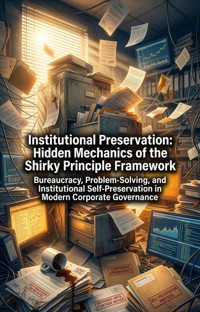
Institutional Preservation: Hidden Mechanics of the Shirky Principle Framework ebook
Richard J. Pierce
84,99 zł
Dowiedz się więcej.
- Wydawca: epubli
- Kategoria: Biznes, rozwój, prawo•Biznes, rozwój
- Język: angielski
Have you ever wondered why sprawling administrative departments rarely eliminate the issues they were established to fix? The answer lies in a subconscious, structural imperative to survive, turning temporary task forces into permanent fixtures of the modern workplace. Beneath the polished exterior of corporate governance, a silent mechanism known as the Shirky Principle dictates that institutions will inevitably try to preserve the exact problem to which they are the solution. This creates a paradoxical loop where solving the core issue would mean institutional suicide, prompting managers to artificially sustain crises to justify their budgets and headcounts. This comprehensive analysis deconstructs the architecture of organizational self-preservation. It exposes how metrics are manipulated to show perpetual progress without final resolution, why complex bureaucracies instinctively reject streamlined innovations, and how the fear of obsolescence drives executives to expand their departments rather than fulfill their original mandates. Discover the hidden psychological and economic drivers of corporate stagnation. Break the cycle of perpetual problem-management, learn to identify the warning signs of institutional rot within your own organization, and restructure your teams to prioritize actual resolution over administrative survival.
Ebooka przeczytasz w aplikacjach Legimi lub dowolnej aplikacji obsługującej format:
Liczba stron: 210
Rok wydania: 2026