


96,00 zł
Dowiedz się więcej.
- Wydawca: Sorus
- Kategoria: Poradniki•Styl życia
- Język: angielski
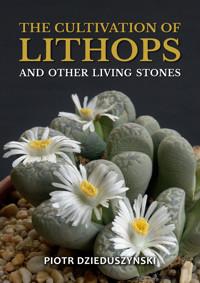
„The Cultivation of Lithops and Other Living Stones” by Piotr Dzieduszyński is an exciting new book on plants that are able to accumulate water during the dry season. These African succulents bear a striking likeness to the stones among which they grow, which is why they are called flowering stones or living stones. The resemblance of living organisms to their environment for protection purposes is a phenomenon known as mimicry. According to the current taxonomic classification, these plants belong to the family Aizoaceae, but they have become commonly known as mesembs.
This publication is intended for both, beginner plant lovers and intermediate-level readers who already have some experience, e.g. in cactus care. Once they have read this book, they will definitely succeed in cultivating these plants, whether on a windowsill or in a greenhouse.
In addition to discussing the most popular representatives of this family – lithops and conophyta – this publication also focuses on other mesembs. These include Aloinopsis, Argyroderma, Dinteranthus, Faucaria, Fenestraria, Gibbaeum, Glottiphyllum, Lapidaria, Pleiospilos, Rhombophyllum, Tanquana, Titanopsis.
The book consists of three parts:
Part I. The characteristics of living stones contains a botanical description of the family, as well as information on the distribution and conditions of natural occurrence of these plants.
Part II. The principles of mesemb cultivation is composed of guidelines on choosing a location for the collection, maintaining an optimal temperature, appropriate watering, and proper replanting, among others. A separate section is devoted to identifying and fighting pests and diseases. Much space is devoted to plant propagation using one of two methods, sowing seeds or growing seedlings. The cultivation tips can also be applied to plants that still live in the rhythm of the southern hemisphere, despite being grown in Europe or the United States. A cultivation calendar for lithops and other mesembs, which contains detailed care tips for each month of the year, concludes the second part.
Part III. An overview of selected mesembs genera is made up of short descriptions of the Aizoaceae family representatives and the principles of their cultivation. It also illustrates lithops cultivars and aberrations. The final section talks about the most common mesemb cultivation facts and myths.
The book is filled with high-quality photographs of these plants found in both, a collection, taken by Mirosław Dzieduszyński, and nature, taken by Jaromír Chvastek.
Piotr Dzieduszyński (born in 1972) – Doctor of Psychology, cacti and succulent lover. He has over 35 years of experience in living stone cultivation. His collection of mesembs is one of the largest in Poland. A long time member of the Polish Cactus Lovers Society (PTMK) and the Mesemb Study Group. He has organized a number of African succulent exhibits, as well as written numerous articles and given many lectures in order to spread the knowledge of these plants. For his efforts, he was awarded the PTMK Gold Badge in 2023.
Ebooka przeczytasz w aplikacjach Legimi lub dowolnej aplikacji obsługującej format:
Liczba stron: 99
Podobne


















Table of Contents
Cover
Title page
From the author
Part I. The characteristics of living stones
What are living stones
Where and in what conditions do living stones grow
Distribution
Climate
Soils
How are mesembs built
How have mesembs adapted to harsh living conditions
A specific way of growth
Part II. The principles of mesemb cultivation
Lithops – the most popular representative of the mesemb family
How to succeed in the cultivation of lithops and other mesembs living in the rhythm of the northern hemisphere
Collection location
Windowsill cultivation
Maintaining an optimal temperature
Outdoor cultivation
Mini-greenhouse cultivation
Greenhouse mesemb cultivation
Coverless mesemb cultivation
Detailed care rules
Flowerpots
Substrates
Replanting
Watering
Fertilization
Mesemb propagation
Sowing substrate preparation
Sowings containers
Propagator
Sowing method
Seedling care
Vegetative propagation
How to fight pests and prevent diseases
Pests
Mesemb diseases
Conophytum – a genus living in the rhythm of the southern hemisphere
Where and in what conditions do conophyta grow?
Climatic conditions
Anatomy
Care
Propagation
Cultivation calendar for lithops and other mesembs
January – February
March
April
May, June, July
August – September
October
November – December
Part III. An overview of selected mesemb genera
Genus Aloinopsis
Genus Argyroderma
Genus Dinteranthus
Genus Faucaria
Genus Fenestraria
Genus Gibbaeum
Genus Glottiphyllum
Genus Lapidaria
Genus Pleiospilos
Genus Rhombophyllum
Genus Tanquana
Genus Titanopsis
Lithops cultivars and aberrations
Instead of an afterword. Mesemb cultivation facts and myths
References
Copyright
Landmarks
Title page
Cover
Copyright
The Cultivation of Lithops and Other Living Stones by Piotr Dzieduszyński is an exciting new book on plants that are able to accumulate water during the dry season. These African succulents bear a striking likeness to the stones among which they grow, which is why they are called flowering stones or living stones. The resemblance of living organisms to their environment for protection purposes is a phenomenon known as mimicry. According to the current taxonomic classification, these plants belong to the family Aizoaceae, but they have become commonly known as mesembs.
This publication is intended for both, beginner plant lovers and intermediate-level readers who already have some experience, e.g. in cactus care. Once they have read this book, they will definitely succeed in cultivating these plants, whether on a windowsill or in a greenhouse.
In addition to discussing the most popular representatives of this family – lithops and conophyta – this publication also focuses on other mesembs. These include Aloinopsis, Argyroderma, Dinteranthus, Faucaria, Fenestraria, Gibbaeum, Glottiphyllum, Lapidaria, Pleiospilos, Rhombophyllum, Tanquana, Titanopsis.
The book consists of three parts:
Part I. The characteristics of living stones contains a botanical description of the family, as well as information on the distribution and conditions of natural occurrence of these plants.
Part II. The principles of mesemb cultivation is composed of guidelines on choosing a location for the collection, maintaining an optimal temperature, appropriate watering, and proper replanting, among others. A separate section is devoted to identifying and fighting pests and diseases. Much space is devoted to plant propagation using one of two methods, sowing seeds or growing seedlings. The cultivation tips can also be applied to plants that still live in the rhythm of the southern hemisphere, despite being grown in Europe or the United States. A cultivation calendar for lithops and other mesembs, which contains detailed care tips for each month of the year, concludes the second part.
Part III. An overview of selected mesembsgenera is made up of short descriptions of the Aizoaceae family representatives and the principles of their cultivation. It also illustrates lithops cultivars and aberrations. The final section talks about the most common mesemb cultivation facts and myths.
The book is filled with high-quality photographs of these plants found in both, a collection, taken by Mirosław Dzieduszyński, and nature, taken by Jaromír Chvastek.
Piotr Dzieduszyński (born in 1972) – Doctor of Psychology, cacti and succulent lover. He has over 35 years of experience in living stone cultivation. His collection of mesembs is one of the largest in Poland. A long time member of the Polish Cactus Lovers Society (PTMK) and the Mesemb Study Group. He has organized a number of African succulent exhibits, as well as written numerous articles and given many lectures in order to spread the knowledge of these plants. For his efforts, he was awarded the PTMK Gold Badge in 2023.
From the author
There are many misunderstandings, myths and misconceptions surrounding the cultivation of living stones. A common belief states that these plants are difficult to grow, require special conditions and for the grower to have considerable skills. The aim of this publication is to clarify these inconsistencies and to provide simple tips even a beginner enthusiast, of this group of plants, can follow to succeed in their cultivation. Its content is based on both, the literature on living stones and the author’s 30 years of growing experience. The notes on cultivation contained in this book refer to the temperate climate of Poland, but for the most part, they are so versatile that after certain modifications, they can be applied to other climatic conditions.
The first part of this book explains the taxonomy of plants referred to as living stones. It also discusses the areas of their natural occurrence, including the prevailing climatic conditions of those areas, as well as describes their anatomy and how they have adapted to harsh living conditions.
The second part consists of detailed advice on how to cultivate living stones at home, in greenhouses and cold frames. The reader will find information on the optimal location for their collection, pot selection, substrate preparation, watering, replanting, propagation, and pest control, among others. The two most popular genera of living stones, lithops and conophyta, have been used as examples. A cultivation calendar for lithops and other mesembs, which includes care tips for each month of the year, concludes the second part.
The third part covers the characteristics of certain genera of living stones, with a particular emphasis on the specifics of their cultivation. This book features photographs of plants from my collection and those taken in their natural habitats.
This book would not have appeared in its current form without the substantive consultations with Bożena Dubielecka, the photographs of plants in their natural habitats made available by Jaromír Chvastek, as well as those from my own collection, which were taken by Mirosław Dzieduszyński. I owe the graphics and final layout of this book to Tatiana Górska. I would like to thank all of you very much for your help and support.
Piotr Dzieduszyński
Part I.The characteristics of living stones
What are living stones
According to the current taxonomic classification, living stones belong to the family Aizoaceae (fig-marigold). This family is very large and divided into 5 subfamilies: Aizooideae, Sesuvioideae and Tetragonioideae, which will not be discussed at all in this book, and the subfamilies Mesembranthemoideae and Ruschioideae, whose selected representatives will be discussed in detail. Some botanists used to combine these two subfamilies into one, the Mesembryanthemaceae (mesembs) family, which no longer exists and has been fully incorporated into the Aizoaceae family. From this perspective, living stones belonged to the family Mesembryanthemaceae. In English literature, the subfamilies Ruschioideae and Mesembranthemoideae are commonly referred to as mesembs, which is a reference to the name of the no longer existing family. This book uses the name mesembs, which, although not strictly a botanical name, is commonly used by the enthusiasts of these plants.
The Mesembryanthemaceae family name comes from two Greek words, mesembria – “noon” and anthemon – “flower”, which was to suggest that these plants bloom at noon. And while the first plants of this family, which were brought over to Europe as early as 1670, bloomed at noon, today we know that this name is misleading – there are many species that bloom even at night. One of the first known genera was Mesembryanthemum described by Linnaeus. Mesembs include about 120 genera with over 2000 species.
Many species within the mesemb family are excellent examples of the mimicry phenomenon – the resemblance of living organisms to their environment. These plants owe their popular name, living stones, to their likeness to the rocks among which they grow. Because of this resemblance to their surroundings, they are barely visible to foraging animals.
Living stones belong to many different genera. The best known examples are lithops (Lithops) and, similar to them, conophyta (Conophytum). This book will also discuss the following genera: Aloinopsis, Argyroderma, Dinteranthus, Faucaria, Fenestraria, Gibbaeum, Glottiphyllum, Lapidaria, Pleiospilos, Rhombophyllum, Tanquana, and Titanopsis.
This book uses the Latin names of these plants, with the exception of the two most popular genera: lithops and conophyta.
Conophytum calculus, N of Vanrhynsdorp, Western Cape, RSA
Where and in what conditions do living stones grow
Distribution
Mesembs grow within a relatively small area, mainly in South Africa. Some genera and species have spread north, to the Mediterranean Basin, the Arabian Peninsula, Palestine, and the Syrian Desert, among others. Other species, thanks to humankind who took them out of their natural habitat, claimed the coast of Australia, New Zealand, Chile, Peru, and California. Most mesembs, however, inhabit small areas within the Cape country areas (Capensis), Little and Great Karoo, Namaqualand, Bushmanland, and the southern part of Namibia.
Diekopdam, Northern Cape, RSA
The distribution of mesembs around the world
Climate
The tropical continental climate prevails in the otherwise climatically diverse parts of southern Africa. Mesembs inhabit most regions of the northwestern parts of South Africa and Namibia, which are dominated by the extremely dry tropical continental climate. What these areas have in common is low annual precipitation, typically less than 200 mm and sometimes below 50 mm per square meter. In areas where there is less than 100 mm of rainfall per year, thick fog and dew substitute for rainwater. Even in the desert regions, the climate is somewhat diverse: there are areas where it rains mostly in the summer, areas with winter rainfall, as well as those where it rains twice per year. Many regions experience irregular rainfall. The subtropical high pressure systems and the cold ocean currents are responsible for the low annual precipitation.
Waterklipkop, Western Cape, RSA
Average annual precipitation
Rainy seasons
Average annual temperatures in January and July
In the western parts of southern Africa, weather is determined by the cold Benguela ocean current, which brings dry air and causes large differences in daily temperatures. In the desert regions, temperatures during the day can exceed 40 degrees Celsius, then fall to below zero at night. The large differences in temperatures create favorable conditions for the abovementioned fog and dew to form, which help mesembs compensate for the lack of rain.
The hottest month is January, with average temperatures exceeding 30 degrees Celsius, and the coldest month is July with temperatures ranging from 10 to 20 degrees.





