Uzyskaj dostęp do tej i ponad 240000 książek od 14,99 zł miesięcznie
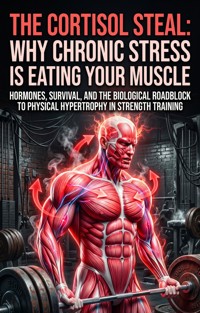
Why can you spend countless hours lifting heavy weights in the gym, meticulously track your protein intake, and still completely fail to build muscle mass or burn fat? If you are simultaneously navigating a high-stress corporate job, a toxic relationship, or severe sleep deprivation, you are likely the victim of a devastating biological mechanism known as the "Cortisol Steal." When the human nervous system is in a state of chronic psychological stress, the brain believes it is under constant physical attack. To survive, the adrenal glands aggressively demand raw materials (pregnenolone) to manufacture the stress hormone cortisol. Because the body prioritizes immediate survival over long-term physical development, it literally "steals" these raw materials away from the production of anabolic hormones like testosterone and DHEA. Consequently, your body remains trapped in a catabolic (muscle-destroying) state, rendering your intense workouts biologically useless and actually accelerating physical exhaustion. This essential physiological guide bridges the gap between endocrinology and fitness. It explores the evolutionary mechanics of the sympathetic nervous system, the futility of training through burnout, and targeted somatic strategies to down-regulate your stress response before touching a barbell. Stop fighting your biology. The Cortisol Steal demonstrates that true physical transformation does not happen on the gym floor; it happens in a calm, fully recovered nervous system.
Ebooka przeczytasz w aplikacjach Legimi na:
Liczba stron: 219
Rok wydania: 2026
Odsłuch ebooka (TTS) dostepny w abonamencie „ebooki+audiobooki bez limitu” w aplikacjach Legimi na: