Uzyskaj dostęp do tej i ponad 240000 książek od 14,99 zł miesięcznie
- Wydawca: Temple Lodge Publishing
- Kategoria: Poradniki•Zdrowie
- Język: angielski
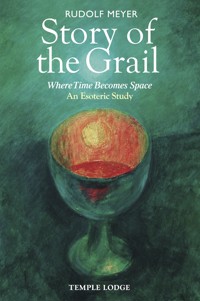
Emerging on the fringes of institutional religion, rooted in the Celtic world of Ireland and Wales and later intersecting with Gnostic currents such as those of the Cathars, Grail Christianity offers a radically distinct vision of Christian spiritual life. At its heart lies not a relic, but a question: What is the Grail? From Chrétien de Troyes' first vision of the Grail Castle to Wolfram von Eschenbach's Parzival, Meyer shows how the Grail legends preserve an esoteric Christian path of inner transformation. Figures such as Perceval, Gawain and Galahad appear as archetypes of the human soul at different stages of initiation, whilst motifs – including the missed question, the wounded Grail King Anfortas, the Good Friday Mystery, and the healing power of compassion – point to a spiritual schooling largely forgotten in modern Christianity. Tracing the Grail's journey from East to West, Meyer explores Robert de Boron's Josef of Arimathea, Wolfram's enigmatic Master Kyot, and the striking image of the Grail as a living 'stone'. He follows the Grail impulse through Celtic and Arthurian traditions and reveals the role of poets, minnesingers and troubadours in preserving its wisdom during times of persecution. First published in 1958, this seminal work follows the Grail's continuing mission through Rosicrucianism, Goethe, Wagner's Parsifal and Rudolf Steiner's renewal of the Mysteries. The Grail emerges not as a medieval curiosity, but as a living reality – inviting readers to step onto its path themselves and encounter its transformative presence.
Ebooka przeczytasz w aplikacjach Legimi na:
Liczba stron: 588
Rok wydania: 2026
Odsłuch ebooka (TTS) dostepny w abonamencie „ebooki+audiobooki bez limitu” w aplikacjach Legimi na: