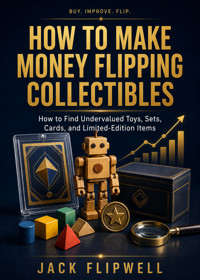
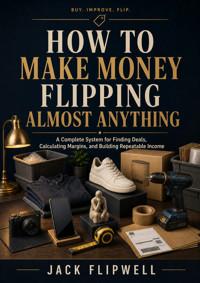
How to Make Money Flipping Collectibles - How to Find Undervalued Toys, Sets, Cards, and Limited-Edition Items ebook
JACK FLIPWELL
Uzyskaj dostęp do tej i ponad 240000 książek od 14,99 zł miesięcznie
- Wydawca: ALL-IN Rafał Płonkowski
- Kategoria: Biznes, rozwój, prawo•Biznes, rozwój
- Język: angielski
A forgotten figure, old construction set, trading card, comic, game, or limited-edition item can sometimes be worth far more than the seller realizes. The difficult part is knowing when you have found a real opportunity and when you are simply looking at an overpriced, incomplete, counterfeit, or slow-moving collectible. How to Make Money Flipping Collectibles is a practical guide to buying undervalued collectible items and reselling them with a margin based on research, discipline, and process rather than hype.
Jack Flipwell explains how to choose a niche without trying to become an expert in every collectible category at once. The book covers toys, construction sets, trading cards, sports cards, figures, games, comics, promotional products, and limited releases while showing how each market creates different risks and pricing factors. You will learn why specialization makes identification faster, how to recognize the details buyers actually pay for, and why rarity alone is never enough to create value.
A major part of the book focuses on valuation. Asking prices can create a false impression of opportunity, especially when sellers copy unrealistic numbers from one another. You will learn to use actual completed transactions, compare truly similar examples, separate quick-sale value from patient retail value, and account for condition, packaging, variants, completeness, and sale frequency. The goal is to stop buying simply because something looks cheap and start buying because the numbers support a realistic exit.
Authenticity receives the attention it deserves because valuable collectible markets attract counterfeits, replacement components, copied labels, resealed packaging, fake certificates, and altered products. The book explains how to use reliable reference material, evaluate provenance, identify warning signs, and understand when professional authentication may make economic sense. It does not teach methods for defeating anti-counterfeit systems, recreating factory seals, falsifying provenance, or disguising altered products.
You will also learn how condition changes value. A small accessory can represent a meaningful percentage of a figure's price, one rare minifigure can transform the economics of a construction set, and minor card or comic defects can create large price differences. The book shows how to separate product condition from packaging condition, verify completeness, identify variants, and avoid paying premium prices for the wrong edition.
Sourcing goes far beyond obvious marketplace searches. You will learn how online platforms, local classifieds, specialist groups, conventions, auctions, garage sales, flea markets, estate clearances, and direct collection purchases create different opportunities. The book explains why weakly described listings can contain value, how to search broadly without guessing, and how relationships with repeat sellers can eventually become more valuable than one-off bargains.
Large collection purchases receive a dedicated treatment because their economics differ from individual flips. You will learn how to separate high-value items, mid-tier inventory, bulk, and weak stock instead of adding optimistic retail prices together. The book explains how to estimate labor, storage, liquidity, and capital recovery before committing to a large purchase and how to decide when parting out, bundling, or wholesale liquidation produces the stronger result.
Adding value in collectibles often means doing less, not more. Aggressive restoration, polishing, sticker removal, chemical cleaning, or attempts to reverse natural aging can reduce collector value permanently. The book covers conservative cleaning, preservation, and storage, including protection from light, humidity, pressure, odors, pests, and unnecessary handling. Proper preservation protects the condition you paid for while inventory waits to sell.
The selling process is equally practical. You will learn how to photograph collectibles as evidence as well as advertising, document flaws, show packaging and accessories, write accurate titles, and create descriptions that reduce uncertainty. Instead of relying on words such as "rare" or "perfect," the book shows how to communicate the facts that experienced buyers actually use when deciding whether a product deserves its price.
This publication was prepared with the assistance of tools that support the creative process, including artificial intelligence-based solutions. The final concept, structure, and editing belong to the author.
Ebooka przeczytasz w aplikacjach Legimi na:
Liczba stron: 250
Rok wydania: 2026
Odsłuch ebooka (TTS) dostepny w abonamencie „ebooki+audiobooki bez limitu” w aplikacjach Legimi na:
Podobne















INTRO
Collectibles behave differently from most ordinary secondhand products because their value is rarely based on usefulness alone. An old laptop usually loses value as technology improves, while a discontinued figure, trading card, construction set, comic, game, or limited-edition item can become more desirable precisely because it is older, scarcer, complete, well preserved, or connected to a particular moment in popular culture. Age by itself does not create value, however, and neither does rarity. A collectible becomes commercially interesting when scarcity, demand, condition, authenticity, completeness, edition, packaging, and buyer interest come together in a way that supports real transactions.
That distinction matters because the collectibles market is full of products that look valuable without actually being easy to sell. Some are rare but unwanted, some are nostalgic but extremely common, and some are called limited simply because the manufacturer used the word as part of the marketing. Others appear expensive only because sellers have copied unrealistic asking prices from one another. A successful reseller must learn to separate genuine market value from optimism, hype, and wishful thinking.
Flipping collectibles is not about predicting which ordinary toy will become a fortune twenty years from now. That is speculation, and it becomes especially dangerous when probability is presented as certainty. A more practical model is to search for value that already exists but has been poorly recognized, incorrectly categorized, weakly presented, or hidden inside a larger group of items. A seller may list a construction set under a generic title, overlook a valuable card variant, fail to identify a figure correctly, or price an entire collection for speed and convenience rather than maximum retail return.
Your advantage therefore does not need to come from secret information. In most cases, it comes from better identification, stronger comparison, more disciplined buying, and more accurate calculations. One seller may see a box of old toys, while you may recognize a particular production run, two valuable accessories, several common pieces, one incomplete set, and a group of items that should not be purchased at the asking price. The difference is not magic. It is organized knowledge applied before money changes hands.
The first major trap is confusing asking prices with actual market value. Search for almost any supposedly rare collectible and you can usually find somebody offering one at an extraordinary price. An item listed for $1,000 is not automatically worth $1,000, because it may have been sitting unsold for a year while comparable examples regularly sell for a fraction of that amount. The number that matters most is what buyers have recently agreed to pay for genuinely comparable items.
Even completed sales require interpretation. A higher-priced example may have included original packaging, a rare accessory, professional grading, better condition, a desirable regional variant, or stronger provenance. A low sale may have come from a poorly timed auction, weak photographs, incomplete identification, or a seller who wanted immediate cash. Good valuation therefore depends on understanding why comparable transactions differ rather than simply averaging every number that appears in a search result.
Collectibles cover an enormous range of markets, including toys, construction sets, trading cards, sports cards, action figures, statues, board games, video games, comics, promotional products, convention exclusives, entertainment merchandise, and limited releases. Each category has its own vocabulary, pricing logic, authenticity risks, condition standards, and buyer expectations. Trying to understand all of them at once usually creates shallow knowledge and expensive mistakes. A narrow niche gives you a better chance of learning the details that actually move prices.
That is why specialization should come before aggressive buying. "Trading cards" is too broad to be a useful first niche, while a few sets from one established game are much easier to monitor. "Action figures" contains thousands of unrelated markets, while one manufacturer, franchise, era, or product line creates a more manageable field of study. The narrower your starting point, the faster you can recognize common prices, known variants, missing accessories, typical counterfeits, and listings that deserve closer attention.
Condition is one of the largest sources of price differences in collectible markets. Two examples of the same card can have very different values because of surface damage, edge wear, corners, centering, or other characteristics. A figure may lose a meaningful percentage of its value because one small accessory is missing, while a comic can sell very differently because of spine stress, staining, fading, tears, or paper quality. Details that seem cosmetic to an ordinary buyer may be central to the collector.
Packaging can matter almost as much as the object itself. To a casual owner, the box may simply be something the product came in, but to a collector it can be an integral part of the item. Corners, inserts, windows, seals, labels, graphics, and original internal packaging can all affect value. A product in excellent condition inside a heavily damaged box may belong to a different price category than an otherwise identical example with clean original packaging.
Completeness creates another major difference. A construction set may appear complete until one rare minifigure or distinctive component is found to be missing. An action figure may include the main body and primary accessory while lacking a small alternate hand, stand, weapon, or insert that collectors expect. A game may work perfectly but still be less desirable because the manual, map, original case, registration card, or other component is absent. Small pieces can carry a surprisingly large portion of the premium attached to a complete set.
Variants make identification even more important. The same basic product may exist in different colors, packaging designs, regional releases, retailer exclusives, promotional editions, production runs, or limited versions. A minor visual difference can sometimes produce a substantial price difference, while another difference may have almost no effect at all. Accurate identification must therefore come before valuation, because comparing the wrong version is one of the easiest ways to create a false margin.
Authenticity introduces a more serious form of risk. As prices rise, the incentive to counterfeit, alter, reconstruct, or misrepresent products rises with them. Fake trading cards, reproduction figures, copied accessories, replacement labels, altered game components, counterfeit certificates, resealed packaging, and other deceptive products can appear across many collectible categories. Some are crude, while others require reliable reference material, experience, specialist knowledge, or professional authentication to identify.
There is no single universal test that proves every collectible is genuine. Authenticity is usually established through multiple signals such as materials, printing, markings, dimensions, production characteristics, packaging, provenance, known manufacturing details, comparison with confirmed examples, and the credibility of the seller. The higher the value, the more evidence you should require before paying a premium. A cheap learning mistake may be manageable, but a high-value mistake can erase the profit from many successful transactions.
This book will not teach methods for defeating anti-counterfeit systems, recreating factory seals, falsifying provenance, or making altered products appear original. The purpose is defensive and practical: recognizing warning signs, verifying what can reasonably be verified, understanding when professional authentication may be justified, and knowing when uncertainty itself is a reason to walk away. A reseller should never solve an authenticity problem by passing the uncertainty to the next buyer.
Factory-sealed products require particular care because the premium for untouched condition creates an obvious incentive for resealing. A package can look professionally wrapped and still have been opened before. If you are paying substantially more because an item is supposedly factory sealed, you need to understand what authentic packaging should look like for that specific product, period, and region. Sealed status should be treated as a feature that requires evidence, not as a label that can be accepted automatically.
Provenance can strengthen confidence, especially for unusual promotional items, autographs, prototypes, historically important pieces, or expensive products with limited distribution. Receipts, certificates, auction records, photographs, documented ownership history, and other evidence may add credibility when they can be connected to the specific item. Their importance varies greatly by category, and documentation itself can also be falsified. A good story may add context, but it should never replace verification.
Value can often be added after purchase, but collectibles require a different definition of improvement. In some categories, restoration increases desirability, while in others it can permanently reduce value. Cleaning, polishing, removing stickers, touching up paint, straightening packaging, replacing parts, or trying to reverse aging may alter the original condition in ways collectors dislike. Sometimes the safest and most profitable improvement is simply correct identification, careful organization, better protection, and a clearer presentation.
Safe cleaning should always begin with the least invasive method. Loose dust can often be removed without changing the surface, but old plastics, paper, printed details, adhesives, paint, metal finishes, and packaging can react badly to aggressive products or moisture. A reseller should know when not to intervene. Improving appearance is not worthwhile if the process destroys originality, weakens the material, or creates uncertainty about what has been altered.
Storage is equally important because condition can deteriorate while inventory is waiting for a buyer. Light can fade packaging and printed material, humidity can damage paper and cardboard, heat can affect plastics and adhesives, and pressure can crush boxes or warp products. Odors, dust, pests, and repeated handling can create additional problems. A collectible that was purchased in excellent condition can lose part of its margin simply because it was stored badly.
This means collectible flipping is also an inventory-management business. Cards may need sleeves and rigid protection, comics may need appropriate backing and stable storage, figures may need protection from pressure and sunlight, and boxed products may require shelving that does not crush corners or windows. The level of protection should be proportional to value and sensitivity. Preservation is not an optional extra when the resale price depends on condition.
Some of the strongest opportunities involve entire collections rather than individual items. A seller may be moving, leaving a hobby, reducing possessions, or simply unwilling to photograph, describe, negotiate, and ship hundreds of separate products. A buyer who can purchase the collection efficiently may receive a lower average acquisition cost in exchange for taking on the work, storage, risk, and time required to resell it. That difference between convenience and retail maximization can create legitimate margin.
Large collections can also become expensive traps. The classic mistake is adding together optimistic retail prices for every item and treating the total as the collection's true value. A group supposedly worth $10,000 at individual asking prices may require hundreds of listings, months of storage, repeated packing, platform fees, returns, and a large amount of labor to approach that figure. Some pieces may be worth very little individually and may be better sold in bundles or wholesale.
A practical collection valuation therefore separates high-value items, mid-tier inventory, low-value bulk, expected selling costs, and products with weak demand. The strongest items deserve individual analysis because they may account for most of the value. Lower-value pieces should be assessed more conservatively because the time needed to sell them can exceed the margin they produce. Wholesale value and theoretical retail value are not the same thing.
Sourcing will extend far beyond obvious marketplace listings. Online platforms, local classifieds, auctions, garage sales, flea markets, conventions, hobby shows, specialist communities, charity shops, estate clearances, and direct collection purchases can all produce inventory. No source contains guaranteed bargains. Each creates a different balance between competition, information, convenience, time, and risk.
Online marketplaces offer enormous volume, but obvious bargains attract experienced buyers quickly. Garage sales and flea markets may contain more pricing mistakes, but they require sorting through large quantities of ordinary merchandise. Specialist communities often contain knowledgeable sellers, making major pricing errors less common, yet they can create opportunities through bulk purchases, relationships, and speed. Auctions may offer unusual inventory, but bidding psychology can destroy a carefully calculated margin within minutes.
Negotiation is therefore part of the process, but good negotiation is not about humiliating sellers or pretending their possessions are worthless. It is about understanding the economics of the transaction and the priorities of both sides. A seller may rationally accept less than full retail value in exchange for one immediate payment, one collection appointment, and no need to create dozens of separate listings. Your margin can come from taking over effort, uncertainty, storage, and resale risk rather than from misleading the other person.
The full cost of any purchase extends far beyond the amount paid to the seller. Incoming shipping, outgoing shipping, marketplace commissions, payment fees, packing materials, missing components, travel, storage, paid promotion, insurance, returns, disputes, and taxes can all affect profitability. Some costs apply only to particular transactions, but repeated small expenses can materially reduce the result over time. A spread between purchase and sale prices is not the same thing as profit.
Any platform fee, legal requirement, tax rule, carrier policy, or other changeable fact should therefore be verified before acting. Marketplace terms change, postage prices change, protection programs change, and tax obligations vary by country and individual circumstances. Official current sources should take priority over an old article, remembered percentage, forum comment, or video. The objective is to understand where each cost belongs in the model so the calculation remains useful even when the numbers change.
Photography and descriptions are another major source of value. Serious collectors often need far more information than casual secondhand buyers. A good listing should document markings, packaging, accessories, flaws, corners, seals, labels, and any characteristics needed to confirm the exact version. The goal is not to make a mediocre item appear perfect, but to reduce uncertainty enough that the right buyer can make an informed decision.
Transparency can improve conversion rather than harm it. A clearly photographed dent in a box is often less damaging than an undisclosed dent discovered after delivery. An honest description may occasionally reduce the maximum price one buyer is willing to pay, but it also lowers the risk of disputes and builds a reputation for accuracy. In a market where condition matters heavily, credibility has commercial value.
Packing deserves the same discipline because a collectible can survive for decades and lose value during a two-day shipment. Cards need protection from bending and moisture, comics need rigidity, figures need protection from impact and movement, and collectible retail boxes usually need an outer shipping box because the packaging itself is part of the purchase. Materials should protect without putting damaging pressure on the product. Standardized packing methods can improve both safety and efficiency.
High-value shipments introduce questions about tracking, insurance, declared value, carrier exclusions, documentation, and proof of condition. These policies differ between services and can change, so they need to be checked before shipping expensive inventory. Paying for an insurance option does not automatically guarantee full reimbursement under every circumstance. Documentation, packaging requirements, and proof of value may all matter if a claim is necessary.
Returns and disputes are part of commerce rather than proof that the business has failed. A buyer may disagree with a description, discover a missing accessory, receive a damaged package, or question authenticity. Some problems result from honest misunderstandings, some from seller mistakes, and some may involve attempted abuse. A professional process should gather facts, preserve documentation, and respond according to current marketplace rules and applicable law rather than assuming good or bad faith automatically.
Clear records are especially useful when condition, completeness, or identity becomes disputed. Photos taken before shipment, notes about included accessories, identifiers, packaging condition, and transaction records can help establish what was sold. They do not guarantee the outcome of every disagreement because legal rights and platform procedures still apply. They simply put you in a far stronger position than relying on memory after the item has left your possession.
Seasonality and popular culture can change demand quickly. Holidays may increase interest in giftable toys and sets, sports events can affect attention around cards, and films, series, games, anniversaries, or viral trends can bring older merchandise back into focus. Nostalgia can introduce a new generation of buyers with enough disposable income to revisit products from childhood. These changes can create opportunities, but they can also encourage overpaying after the market has already moved.
Temporary attention should never be mistaken for permanent value. A rapidly rising item can fall just as quickly when hype disappears, more sellers release inventory, or a new edition enters the market. A franchise receiving heavy publicity may create more demand, but it may also create more supply. Good decisions require watching both sides of the market rather than assuming attention automatically produces lasting scarcity.
Reprints, rereleases, and new production runs can be especially important. Some products become expensive mainly because they are temporarily difficult to obtain, and additional supply can remove much of that premium. In other cases, the original version remains desirable because collectors value the first edition, old packaging, historical significance, or a distinctive production characteristic. The key question is whether buyers want that specific version or merely access to the underlying product.
This distinction explains why a rerelease may destroy value in one category, reduce it modestly in another, and occasionally increase interest in the original. There is no universal rule that discontinued products always rise or reprints always collapse the market. You need to understand what the buyer is actually paying for. Scarcity without meaningful differentiation is much more vulnerable than scarcity attached to a historically distinct version.
Inventory that does not sell deserves equal attention because unsold merchandise is still capital. Collectors may describe every item they keep as a long-term investment, but a reseller has to be more critical. Each product sitting on a shelf occupies space, requires tracking, risks deterioration, and ties up money that cannot be used elsewhere. A high theoretical valuation does not help if the item has no realistic path back to cash.
Sometimes the right decision is to lower the price, improve the listing, create a bundle, change the sales channel, sell wholesale, or accept a controlled loss. That does not automatically make the original purchase a disaster. Capital recovered from a weak position can be moved into a stronger opportunity. Refusing to sell below the purchase price simply because taking a loss feels unpleasant can turn a small mistake into a long-term liquidity problem.
This is why metrics matter. You should know what you paid, what you sold for, what fees were deducted, how long the item took to sell, how many returns occurred, how much capital remains in old inventory, and which categories actually generate the best combination of profit and turnover. You do not need sophisticated financial software to begin. A consistent spreadsheet can already reveal far more than intuition alone.
As the number of transactions grows, those records become increasingly valuable. You may discover that cards generate many sales but little profit per hour, figures produce stronger margins but require more space, construction sets perform well but demand time-consuming completeness checks, and entire collections create large absolute profits while tying up capital for longer periods. These findings should shape where your next dollar and next hour are allocated. Scaling should follow evidence rather than excitement.
Scaling too early creates a larger version of every weakness already present in the business. If you cannot find products in your own inventory, do not know what they cost, regularly miss accessories, or leave listings untouched for months, more purchases will make those problems worse. Growth should come after the process is repeatable on a small scale. A larger pile of merchandise is not automatically a larger business.
Strong collectible-flipping operations are built mostly on ordinary routines. Inventory is sourced according to rules, checked when it arrives, stored properly, photographed systematically, listed accurately, monitored after publication, packed according to category, and recorded after sale. None of these steps is dramatic, but together they create reliability. Reliable routines are what allow higher volume without a proportional increase in chaos.
Risk management runs through the entire model. You should consider how much capital is concentrated in one item, one franchise, one product type, one supplier, or one platform. A rare item can still be a dangerous purchase if it consumes almost all available cash. A profitable category can still become fragile if the entire inventory depends on one temporary trend or one marketplace.
The goal is not zero risk, because no resale business can eliminate uncertainty. The goal is risk you understand, can price, and can survive. Losing a small amount while learning a new category is very different from losing a large amount because you scaled before you could identify the product properly. The size of your purchase should reflect the size of your uncertainty.
The final chapter of this book will turn the entire method into a practical first 30-day plan. The objective will not be to build a huge collectible business in one month, but to choose a niche, observe real transactions, create a reference base, make several controlled purchases, prepare proper listings, learn the logistics, and record what actually happens. Those first transactions should buy knowledge as well as inventory. A modest profit accompanied by a better process can be more valuable than a lucky windfall you cannot repeat.
The philosophy of this series is simple: Find the Deal. Add the Value. Keep the Margin. In collectibles, finding the deal means understanding what the item really is and what comparable buyers actually pay. Adding value means improving identification, completeness, protection, presentation, documentation, and access to the right market, while keeping the margin means accounting for fees, shipping, packing, returns, taxes, time, and mistakes before declaring the transaction profitable.
The goal is not to own the largest pile of interesting objects or to predict which collectible will make someone rich. It is to become better at converting information into disciplined buying decisions and turning inventory back into cash at a worthwhile margin. You do not need to know everything about the collectibles market. You need to know enough about the specific collectibles you decide to buy, and enough about your own numbers to know when to walk away.
Chapter 1 - Choose a Niche Before You Start Buying
The biggest mistake a new collectibles reseller can make is trying to understand everything at once. Opportunities appear in toys, construction sets, trading cards, sports cards, figures, comics, games, promotional merchandise, and limited releases, so it is tempting to browse across all of them. The problem is that each category requires a different type of knowledge. If you cannot quickly distinguish an ordinary item from a valuable variant, more experienced buyers will usually recognize the opportunity before you do.
A good niche does not have to be the most fashionable one. It should be learnable, active enough to generate regular sales, accessible within your budget, and supported by enough transaction data to make rational decisions. If you are starting with limited capital, a market where most desirable pieces cost several thousand dollars may be fascinating but impractical. A category that allows you to complete several smaller transactions can teach you far more while limiting the financial cost of mistakes.
Four factors deserve particular attention when comparing possible niches: sales frequency, knowledge requirements, counterfeit risk, and typical acquisition cost. Categories with frequent transactions give you faster feedback because you can see whether your pricing assumptions were correct. Highly specialized categories may create stronger information advantages, but they usually require more study before you can buy confidently. High counterfeit risk and high average prices both increase the consequences of being wrong.
You should usually narrow the market further than the main category. "Trading cards" covers too much territory to monitor efficiently. A few sets from one established game are much easier to study, and "figures from one manufacturer within one franchise" is far more practical than "collectible figures" as a whole. A narrower starting point makes repeated patterns easier to see.
Every serious collectible niche develops its own language. Collectors use abbreviations, catalog numbers, production codes, edition names, grading terms, printing descriptions, and condition shorthand that can be confusing to an outsider. Learning that language allows you to scan listings faster and identify missing information immediately. You do not need to sound like an expert, but you do need to understand what information actually affects value.
Toys are a good example of a category that appears simple until you look closely. The same character may exist in different years, sizes, packaging styles, paint applications, accessory combinations, regional releases, and production runs. A loose figure can belong to a completely different price segment from the same figure still sealed in its original packaging. In some cases, the smallest accessory in the set may be more difficult to replace than the main figure itself.
Construction sets operate according to another logic. Completeness, instructions, boxes, stickers, minifigures, and unusual components can all affect value. A large container of mixed pieces may look like a cheap source of inventory, but the real question is whether it contains identifiable sets or desirable components worth the time required to sort them. Without that knowledge, you are often buying hours of labor disguised as inexpensive stock.
Trading cards and sports cards place even more emphasis on condition. Tiny differences in corners, edges, centering, surface quality, printing, serial numbering, or parallel variation can produce large price gaps. Professional grading can also influence the market, but a card inside a slab is not automatically valuable simply because a grading company handled it. You still need to understand the underlying card, population, demand, grade, and recent sales.
Games and comics have their own identification problems. A game may be valuable only with its original case, manual, inserts, map, or particular regional version, while a comic may depend on printing, issue, cover variant, condition, and historical significance. A famous title does not automatically make every issue desirable. Some niche issues sell well because they are genuinely scarce and important, while others remain inexpensive because buyer demand is limited.
Limited-edition products deserve particular skepticism because the word "limited" is powerful marketing. An item can be limited to a few hundred units, limited to a particular retailer, limited to one region, or simply marketed for a limited period without a meaningful cap on production. The label itself tells you very little about future scarcity. What matters is how many examples exist relative to how many buyers actually want one.
One of the best ways to evaluate a potential niche is to compare the volume of active listings with the volume of completed sales. A market can contain hundreds of sellers and very few buyers. If the same items remain listed for months, high asking prices may create a false impression of value. A smaller market with fewer active listings but consistent completed sales can be far healthier.
Turnover is therefore a critical consideration. If comparable products sell within days or a few weeks, capital can return quickly. If similar items typically wait several months for a buyer, the niche may still be profitable, but it requires more patience and usually a larger margin to justify the slower cycle. The important point is to know what kind of market you are entering before committing money.
A useful niche also tends to contain several price levels. Markets in which everything desirable costs a large amount make learning expensive. Categories containing low, medium, and high-value products allow you to begin with small positions and increase transaction size as your knowledge improves. This gives you a safer path from education to meaningful scale.
Availability matters as well. There is little benefit in specializing in a category that almost never appears through the sourcing channels you can realistically access, unless you intend to expand geographically or internationally. Check local listings, specialist marketplaces, auctions, conventions, dealer groups, and other relevant channels. The best niche for you is partly determined by where you can actually obtain stock.
Your existing interests can provide an advantage, but they can also create bias. If you have followed a franchise for years, you may already recognize characters, releases, and desirable products faster than a general reseller. That knowledge is useful. The danger begins when you justify an overpriced purchase by telling yourself that you would be happy to keep the item anyway.
A collector can enjoy owning something that never sells. A reseller needs a reason to believe the item can return capital at a worthwhile margin. You are allowed to collect and resell at the same time, but the two activities should be mentally separated. Otherwise, poor inventory decisions can be disguised as business expenses.
You should also consider how dependent a niche is on temporary popularity. Products linked to a new film, television series, athlete, game release, or viral trend can experience dramatic demand spikes. Those spikes can produce opportunities, but they can disappear just as quickly. More stable markets often involve brands with long histories, active communities, and several generations of buyers, although even those provide no guarantee of rising prices.
Pop-culture licenses deserve close analysis because buyers may care more about the character or universe than about the manufacturer. A recognizable franchise can create a broad audience, but popular licenses also generate enormous quantities of merchandise. The fact that a product carries a famous logo does not make it collectible in the economic sense. You still need to identify what differentiates that particular release from hundreds of alternatives.
A practical way to test a niche is to build a reference sample before buying. Track a group of products over several weeks and record their versions, condition, asking prices, completed sale prices, and approximate time to sell. You will begin to see which items move regularly, which prices are unrealistic, and which variations consistently command premiums. This exercise costs time but no inventory capital.
Do not rely on memory alone. Create your own reference notes containing identifying details, known variations, typical missing parts, packaging differences, and recent price ranges. The objective is not to produce a perfect catalog. It is to reduce the amount of research required every time a familiar product appears.
Before making your first purchase in a niche, you should be able to answer several basic questions in your own mind. You should know the main factors that move prices, the common variants, the most expensive missing components, the usual counterfeit risks, and roughly how often comparable examples sell. If you still cannot explain why one version sells for twice as much as another, observation should continue before acquisition.