Uzyskaj dostęp do tej i ponad 240000 książek od 14,99 zł miesięcznie
- Wydawca: epubli
- Kategoria: Literatura popularnonaukowa•Nauki humanistyczne
- Język: angielski
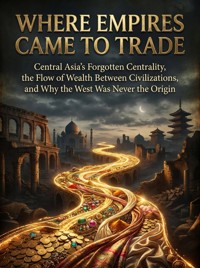
History taught in Western classrooms begins at the wrong address. The cities that generated the world's greatest accumulations of gold, silver, and intellectual capital for a thousand years were not in Rome, Paris, or London — they were in Samarkand, Merv, Baghdad, and Kashgar. The Silk Roads were not a romantic footnote to European history; they were the main event. The network of overland and maritime routes crossing Central Asia functioned as the world's primary economic engine from antiquity through the early modern period. Silk moved westward; silver and gold moved eastward. The balance of trade did not favor Europe — it flowed toward Asia, and the wealth that eventually financed Western expansion was itself a downstream consequence of centuries of Eastern commercial vitality. Understanding how these circuits operated means rethinking not only medieval economics, but the origins of capitalism itself. The same corridors that carried commodities also carried convictions. Buddhism reached Central Asia and China through merchant networks. Nestorian Christianity established deep roots across Persia and into Tang Dynasty China long before European missionaries reached Asia's shores. Islam spread not only through conquest but through the mercantile trust of bazaar communities from Morocco to Malacca.
Ebooka przeczytasz w aplikacjach Legimi na:
Liczba stron: 644
Rok wydania: 2026
Odsłuch ebooka (TTS) dostepny w abonamencie „ebooki+audiobooki bez limitu” w aplikacjach Legimi na: