Uzyskaj dostęp do tej i ponad 240000 książek od 14,99 zł miesięcznie
- Wydawca: epubli
- Kategoria: Literatura popularnonaukowa•Nauki humanistyczne
- Język: angielski
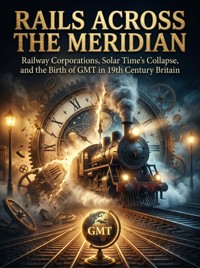
Before the locomotive, every town kept its own clock — Bristol ran ten minutes behind London, and no authority on earth demanded otherwise. When the Great Western Railway began publishing unified timetables in the 1840s, it did not merely coordinate trains; it initiated the slow, coercive erasure of a thousand years of local solar reckoning. The pressure came not from governments but from corporations. Railway companies could not print reliable schedules across regions where every station kept its own noon. Collisions occurred. Passengers missed connections. The administrative machinery of industrial capitalism demanded a single measurable unit of time, and it fell to engineers and lobbyists — not astronomers — to force the question into law. By 1847, the Railway Clearing House had recommended Greenwich Mean Time for all British lines. Parliament resisted for decades, and localities refused to surrender their sundials. The legal imposition of standard time in Britain came only in 1880. Four years later, delegates at the International Meridian Conference in Washington accepted Greenwich as the world's prime meridian, dividing the globe into twenty-four zones of enforced uniformity. What had begun as a scheduling inconvenience became the founding act of modern synchronized civilization. This history examines time standardization as a function of industrial power — not as scientific progress, but as corporate necessity institutionalized into international treaty.
Ebooka przeczytasz w aplikacjach Legimi na:
Liczba stron: 198
Rok wydania: 2026
Odsłuch ebooka (TTS) dostepny w abonamencie „ebooki+audiobooki bez limitu” w aplikacjach Legimi na: