Uzyskaj dostęp do tej i ponad 240000 książek od 14,99 zł miesięcznie
- Wydawca: epubli
- Kategoria: Literatura popularnonaukowa•Nauki humanistyczne
- Język: angielski
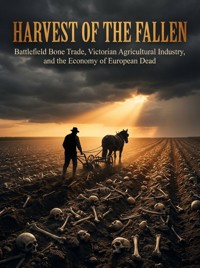
When British merchants crossed the fields of Waterloo to collect the dead, they were not mourning — they were calculating. By the 1820s, the bones of soldiers, prisoners, and the long-buried poor had become one of England's most sought-after agricultural imports, ground into phosphate meal and scattered across fields feeding an industrial nation. The dead, it turned out, were worth more dissolved in acid than commemorated in stone. The 19th-century bone trade exposed a raw logic at the heart of Victorian capitalism: that the body, once separated from its social identity, was raw material. Britain imported hundreds of thousands of tons of human and animal bone from the Baltic, the Rhine, and the old Napoleonic battlefields of Central Europe. Farmers' journals celebrated the yields. Parliamentary committees debated the supply chain. No legislation governed what could be exhumed. The market did not ask for names. This history traces the bone trade as a window into the political economy of Victorian Britain — the relationship between industrial agriculture, imperial resource extraction, and the erasure of the European poor from the moral ledger of progress. It asks what it meant for a civilization to build its food supply on the unacknowledged labor of the dead, and what that silence still costs.
Ebooka przeczytasz w aplikacjach Legimi na:
Liczba stron: 179
Rok wydania: 2026
Odsłuch ebooka (TTS) dostepny w abonamencie „ebooki+audiobooki bez limitu” w aplikacjach Legimi na: