Uzyskaj dostęp do tej i ponad 240000 książek od 14,99 zł miesięcznie
- Wydawca: epubli
- Kategoria: Literatura popularnonaukowa•Nauki humanistyczne
- Język: angielski
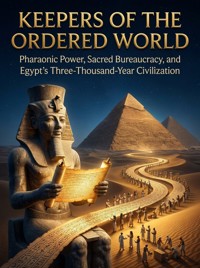
Egypt did not endure for three thousand years because its rulers were divine. It endured because divinity was made functional — woven into administrative systems, flood calendars, and stone that outlasted every dynasty that commissioned it. To understand ancient Egypt is to understand how a civilization converted cosmic theology into a workable machinery of state, and how long that machinery could run before it finally broke. The pharaoh stood at the intersection of two worlds. As the earthly guarantor of Ma'at — the principle of cosmic order, justice, and proportion — he was not merely a king claiming religious authority. He was the mechanism through which the universe was kept from collapse. Every ritual performed, every temple funded, every grain census ordered was simultaneously a political act and a theological obligation. The genius of the system was that these two categories were indistinguishable. Rebellion against the crown was not civil disobedience — it was cosmological disruption. Beneath this theological architecture lay a bureaucratic state of remarkable sophistication. The Nile's annual flood cycle demanded an administrative infrastructure capable of measuring, predicting, and distributing water and agricultural yield across a narrow ribbon of arable land flanked by desert.
Ebooka przeczytasz w aplikacjach Legimi na:
Liczba stron: 744
Rok wydania: 2026
Odsłuch ebooka (TTS) dostepny w abonamencie „ebooki+audiobooki bez limitu” w aplikacjach Legimi na: