Uzyskaj dostęp do tej i ponad 240000 książek od 14,99 zł miesięcznie
- Wydawca: epubli
- Kategoria: Literatura popularnonaukowa•Nauki humanistyczne
- Język: angielski
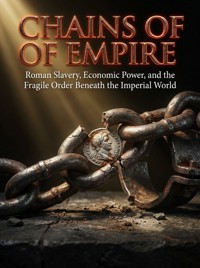
Rome was not built on marble and rhetoric alone. Beneath its aqueducts, granaries, and military roads ran a current of forced labor so vast and so systematically organized that the empire's economic architecture would have collapsed without it. Slavery was not a peripheral feature of Roman civilization — it was its structural foundation. The Roman economy's dependency on enslaved labor operated across three interlocking sectors. The latifundia — vast agricultural estates across Sicily, North Africa, and Hispania — rested entirely on mass enslaved labor. In the mines of Hispania and Dacia, enslaved workers extracted the silver and copper that funded military campaigns and monetary circulation. On Rome's civic construction sites, enslaved laborers formed the invisible workforce behind the empire's most celebrated achievements. These were not isolated dependencies — they constituted a single, interlocked system of coerced production. Roman law codified this dependency with precision. The Lex Aelia Sentia regulated manumission — governing age eligibility, legal procedures, and the conditional civic status that followed. A freed slave did not simply become a citizen: the transition was graduated and carefully calibrated to preserve hierarchy while incentivizing compliance. The legal personality of the enslaved remained suspended between property and subject. Rome's social control was equally sophisticated.
Ebooka przeczytasz w aplikacjach Legimi na:
Liczba stron: 701
Rok wydania: 2026
Odsłuch ebooka (TTS) dostepny w abonamencie „ebooki+audiobooki bez limitu” w aplikacjach Legimi na: