Uzyskaj dostęp do tej i ponad 240000 książek od 14,99 zł miesięcznie
- Wydawca: Icon Books
- Kategoria: Literatura popularnonaukowa•Nauki humanistyczne
- Język: angielski
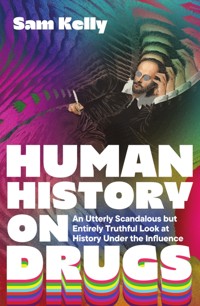
A lively, hilarious, and entirely truthful look at the druggie side of history's most famous figures, including Shakespeare, Queen Victoria, and the Beatles, from debut author (and viral historical TikToker with over 100K followers) Sam Kelly. Did you know that Alexander the Great was a sloppy drunk, William Shakespeare was a stoner, and George Washington drank a spoonful of opium every night to staunch the pain from his fake teeth? Or how about the fact that China's first emperor, Qin Shi Huangdi, ingested liquid mercury in an (ironic) attempt to live forever, or that Alexander Shulgin, inventor of no less than 230 new psychedelic drugs, was an employee of the DEA? In Human History on Drugs, historian Sam Kelly introduces us to the history we weren't taught in school, offering up irreverent and hysterical commentary as he sheds light on some truly shocking aspects of the historical characters we only thought we knew. With chapters spanning from Ancient Greece ("The Oracle of Delphi Was Huffing Fumes") and the Victorian Era ("Vincent van Gogh Ate Yellow Paint") to Hollywood's Golden Age ("Judy Garland Was Drugged by Grown-Ups") and modern times ("Carl Sagan Got Astronomically High"), Kelly's research spans all manner of eras, places, and, of course, drugs. History is rife with drug use and drug users, and Human History on Drugs takes us through those highs (pun intended) and lows on a wittily entertaining ride that uncovers their seriously unexpected impact on our past.
Ebooka przeczytasz w aplikacjach Legimi na:
Liczba stron: 417
Rok wydania: 2025
Odsłuch ebooka (TTS) dostepny w abonamencie „ebooki+audiobooki bez limitu” w aplikacjach Legimi na: