Uzyskaj dostęp do tej i ponad 240000 książek od 14,99 zł miesięcznie
- Wydawca: edu-Libri
- Kategoria: Biznes, rozwój, prawo•Biznes, rozwój
- Język: polski
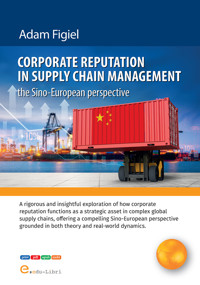
Praca o tym, jak reputacja przestaje być jedynie elementem wizerunku czy komunikacji, a staje się strategicznym mechanizmem zarządzania zaufaniem, ryzykiem i współpracą w złożonych, transnarodowych sieciach dostaw. Autor traktuje reputację jako zasób strategiczny i jednocześnie mechanizm ładu w sieciach międzyorganizacyjnych, w których zaufanie, przejrzystość i zgodność regulacyjna warunkują dostęp do rynków, partnerstw i finansowania. W centrum rozważań znajdują się: instytucjonalne i kulturowe kontrasty UE – Chiny, rosnąca rola reżimów ESG oraz unijnych dyrektyw CSRD/CSDDD, a także oddziaływanie cyfryzacji, blockchainu, AI i cyberbezpieczeństwa na budowanie oraz ochronę reputacji w łańcuchach dostaw. Autor proponuje ujęcie hybrydowe: łączy europejską logikę compliance i transparentności z chińską logiką relacyjną (guanxi, mianzi), pokazując, że skuteczne zarządzanie reputacją w relacjach UE–Chiny wymaga mediacji między odmiennymi systemami normatywnymi.
A work on how reputation ceases to be merely an element of image or communication and becomes a strategic mechanism for managing trust, risk, and cooperation in complex, transnational supply networks. The greatest advantage of this book is that it redefines reputation as a key element of global supply chain management, doing so in a theoretically mature, empirically grounded, and practically useful way, especially in one of today's most important economic systems: China-Europe relations.
The book will remain relevant even after regulatory changes because it deals with addresses underlying mechanisms. No Polish publication offers such a transcultural model of reputation in supply chains. It offers a better fit for the realities of platforms, ecosystems, and global networks. It explains why technology changes the logic of reputation, not just how to implement it.
Ebooka przeczytasz w aplikacjach Legimi na:
Liczba stron: 194
Rok wydania: 2026
Odsłuch ebooka (TTS) dostepny w abonamencie „ebooki+audiobooki bez limitu” w aplikacjach Legimi na:
Podobne



















© edu-Libri s.c. 2026
Edition and correction: Dominika Drygas
Cover and title page design: GRAFOS
Cover illustration: Meomeov/Shutterstock
Publisher’s reviewer: dr hab. Marta Mańkowska, prof. US, Instytut Zarządzania Uniwersytet Szczeciński
The publication presents the results of the Project financed from the subsidy granted to the Krakow University of Economics (47/ZZH/2024/DOS)
(Publikacja prezentuje wyniki badań naukowych przeprowadzonych w ramach projektu nr 47/ZZH/2024/DOS finansowanego ze środków subwencji przyznanej Uniwersytetowi Ekonomicznemu w Krakowie)
Publishing house: edu-Libri s.c. ul. Zalesie 15, 30-384 Kraków, Poland e-mail: [email protected]
DTP: Droppo Michał Wcisło
Printing and binding: ATENEUM M.Kogut, A.Zegiel sp.k. ul. Półłanki 12C, 30-740 Kraków, Poland
ISBN (print) 978-83-68441-33-8
ISBN (PDF) 978-83-68441-34-5
ISBN (epub) 978-83-68441-35-2
ISBN (mobi) 978-83-68441-36-9
Table of Contents
Table of Contents
Introduction
Chapter 1. Foundations of Corporate Reputation in Global Supply Chains
1.1. Defining Corporate Reputation in the Context of Supply Chains
1.2. Reputation as a Strategic Asset in Multinational Networks
1.3. Drivers of Reputation Risk and Trust in Supply Chain Relationships
Chapter 2. The Sino-European Supply Chain Ecosystem
2.1. Trade Structures, Policies, and Institutional Frameworks
2.2. Cultural and Ethical Norms in Business Practice
2.3. Strategic Interdependence between China and the EU in Key Industries
Chapter 3. Reputation Building and Maintenance in Supply Chains
3.1. Transparency, Traceability, and Third-Party Certifications
3.2. Sustainability and ESG Compliance as Reputation Catalysts
3.3. Communication Strategies across the Supply Chain
Chapter 4. Reputation Crises and Recovery in Sino-European Supply Chains
4.1. Typologies and Sources of Reputational Crises
4.2. Case Studies: Failures in Quality, Labour Standards, and Environmental Impact
4.3 Reputational Risk Mitigation and Crisis Response Mechanisms
Chapter 5. Technology, Data, and Reputation Management
5.1. Digital Platforms, Blockchain, and Trust Engineering
5.2. AI and Predictive Analytics in Monitoring Reputation Risk
5.3. Cybersecurity, Data Governance, and Reputational Exposure
Chapter 6. Comparative Corporate Reputation Practices – China vs. Europe
6.1. Reputation Management Philosophies in Chinese vs. European Firms
6.2. Branding, Guanxi, and Stakeholder Relations in China
6.3. Reputation-Driven Corporate Governance in European Supply Chains
Chapter 7. Future Directions in Reputation and Supply Chain Strategy
7.1. Geo-Economic Tensions, Deglobalization, and Reputation Strategy
7.2. Toward Ethical and Resilient Supply Chains: Policy and Industry Perspectives
7.3. Reputation Leadership in the New Supply Chain Paradigm
Concluding Remarks
Introduction
Over the past two decades, global supply chains have undergone a profound structural and moral transformation. Once conceived primarily as instruments of cost efficiency and logistical optimisation, they have evolved into complex socio-economic systems through which firms, institutions, and societies negotiate questions of legitimacy, responsibility, and trust. In this emergent environment, corporate reputation – traditionally associated with brand perception or stakeholder approval – has become a strategic and systemic asset. It serves as a coordinating mechanism across transnational production networks, a source of intangible value, and increasingly, a determinant of resilience and market access (Fombrun, 2021; Barnett and Pollock, 2012).
The growing significance of corporate reputation reflects a broader reconfiguration of capitalism in the age of global interdependence, geopolitical tension, and digital transparency. Corporate actions are now continuously evaluated not only by customers and investors but also by regulators, non-governmental organisations, and civil society actors operating across borders (Scherer and Palazzo, 2011). The reputational standing of a firm affects its ability to form alliances, secure licenses to operate, and attract investment – particularly as environmental, social, and governance (ESG) standards become institutionalised within international trade (Figiel, 2013). Within this transformation, Sino-European supply chains represent one of the most critical and dynamic interfaces. The economic relationship between China and Europe, encompassing trade flows exceeding €850 billion annually (European Commission, 2023), is simultaneously a driver of global growth and a terrain of normative negotiation. Divergent business philosophies, governance traditions, and cultural expectations shape how reputation is constructed, challenged, and defended across this transcontinental network. Understanding the mechanisms of reputation formation and management in Sino-European contexts is therefore indispensable for academics, policymakers, and corporate strategists seeking to navigate a fragmented yet interdependent world economy.
Early conceptualisations of corporate reputation emphasised image and communication – the external projection of organisational identity (Dowling, 2004). However, contemporary research redefines reputation as a relational construct embedded in networks of trust and expectation (Deephouse and Carter, 2005). Reputation is not a static attribute but an evolving consensus about a firm’s behaviour and credibility, continuously negotiated among interdependent actors. In the context of supply chain management, this relational dimension is magnified. Supply chains involve multiple stakeholders – suppliers, intermediaries, logistics providers, regulators, and consumers – whose interactions are often opaque and asymmetrical (Gereffi, 2021). A reputational breach at one node can cascade across the network, undermining confidence in the entire system. As such, reputation functions as a governance mechanism, substituting for formal control in contexts where contractual enforcement or regulatory oversight is limited (Brammer and Pavelin, 2006). This book conceptualises corporate reputation in supply chains not merely as a reflection of performance but as an infrastructural condition for cooperation. Reputation generates predictability, lowers transaction costs, and creates social capital that binds global networks together. It is a moral and institutional technology – one that aligns expectations and stabilises relationships across cultural and political divides.
The Sino-European supply chain ecosystem exemplifies the paradoxes of twenty-first-century globalisation. On the one hand, China and the European Union (EU) remain each other’s most significant trading partners, interlinked through manufacturing, technology, and services value chains (Zenglein and Holzmann, 2023). On the other hand, geopolitical frictions, regulatory divergence, and normative asymmetries increasingly challenge this interdependence. European firms operate within an institutional environment where corporate responsibility and transparency are deeply embedded in law and public expectation. The EU’s Corporate Sustainability Due Diligence Directive (CSDDD), Green Deal Industrial Plan, and evolving ESG taxonomy demand that firms disclose and mitigate reputational risks arising from environmental or human rights violations (European Commission, 2023). In contrast, Chinese firms navigate a system that integrates state-guided capitalism, Confucian relational ethics, and a growing emphasis on national brand reputation as an extension of soft power (He and Fan, 2021). Guanxi networks—trust-based relationships rooted in reciprocity—continue to play a vital role in business legitimacy, while state-endorsed initiatives such as “Made in China 2025” and the Belt and Road Initiative (BRI) link economic success with collective reputation. This duality creates a hybrid reputational order. In Sino-European supply chains, reputation is co-constructed through both formal and informal logics: compliance and relational harmony, disclosure and moral credibility, ESG alignment and guanxi-based trust. The interaction of these logics shapes not only firm-level strategies but also the broader institutional architectures governing global trade.
In the volatile environment of global supply chains, reputation has become a strategic currency – an asset that yields competitive advantage but also a liability vulnerable to mismanagement. Reputation risk arises from any event that undermines stakeholder trust, whether through quality failures, labour abuses, environmental negligence, or governance scandals (Kano et al., 2020). Firms increasingly treat reputation risk as a strategic category of enterprise risk management. Advanced analytics, ESG audits, and third-party certifications are deployed to map potential vulnerabilities across tiers of suppliers (Kell, 2022). Moreover, reputational recovery – the process of restoring legitimacy after a crisis – has emerged as a critical organisational competence. The Sino-European context amplifies these dynamics. Cultural misalignments, differing interpretations of responsibility, and divergent institutional responses can exacerbate reputational crises. For example, Western stakeholders may expect public apologies and transparent remediation following ethical lapses, while Chinese firms may prioritise quiet internal resolution and relational repair (Zhang and Liu, 2022). Effective cross-border reputation management thus requires sensitivity to plural value systems and the ability to mediate between them.
Technological innovation is redefining the operational grammar of reputation. Digital platforms, blockchain, and artificial intelligence enable real-time monitoring of supply chains, transforming reputation from an ex post assessment into a continuously traceable performance indicator (Scott and Walsham, 2021). These technologies contribute to what scholars describe as “trust engineering”– the use of data-driven tools to verify ethical integrity and social compliance (Kano et al., 2020). Blockchain-based traceability, digital product passports, and AI-driven ESG analytics allow firms to document their commitment to sustainability and responsible sourcing. Yet technology introduces new vulnerabilities. Cybersecurity breaches, data mismanagement, and algorithmic opacity can themselves trigger reputational crises (Henisz and Zelner, 2021). The digitalisation of supply chains therefore calls for integrated data governance frameworks that balance transparency with privacy and accountability. Reputation management in the digital age depends not only on information disclosure but also on the ethical architecture of information systems.
Corporate reputation management reflects broader patterns of governance philosophy. European firms tend to anchor legitimacy in institutional compliance, stakeholder dialogue, and procedural fairness (Moon, 2014). Chinese firms, by contrast, emphasise relational trust, collective harmony, and contribution to societal welfare (He, 2023). This divergence does not necessarily imply incompatibility. Many leading corporations are cultivating hybrid models that integrate Western transparency with Eastern relational ethics. Joint ventures between European and Chinese firms increasingly operate under dual reputational accountability systems – combining global ESG standards with local relational legitimacy (Garcia-Herrero and Xu, 2022). Such hybridisation represents a key trajectory for the future of global supply chains: a pluralistic approach to corporate responsibility that respects cultural specificity while pursuing shared sustainability and ethical objectives.
This book aims to conceptualise, contextualise, and critically evaluate the role of corporate reputation within global supply chain management, focusing on the Sino-European nexus as a pivotal site of transformation. It integrates perspectives from business ethics, international management, and institutional economics to develop a comprehensive analytical framework for understanding how reputation operates as both a governance mechanism and a strategic capability.
The seven chapters follow a logical progression:
Chapter 1,
Foundations of Corporate Reputation in Global Supply Chains
, establishes the conceptual underpinnings of reputation, exploring its definitional boundaries, strategic value, and the drivers of trust and risk.
Chapter 2,
The Sino-European Supply Chain Ecosystem
, examines the structural, cultural, and institutional environments in which reputational mechanisms function.
Chapter 3,
Reputation Building and Maintenance in Supply Chains
, analyses operational instruments – transparency, traceability, sustainability, and communication – that enable reputation construction.
Chapter 4,
Reputation Crises and Recovery
, investigates the typologies of crises, empirical case studies, and the mechanisms of reputational repair and resilience.
Chapter 5,
Technology, Data, and Reputation Management
, addresses the transformative role of digitalisation, AI, and cybersecurity in shaping new paradigms of trust.
Chapter 6,
Comparative Corporate Reputation Practices – China vs. Europe
, contrasts philosophical and managerial approaches to reputation, highlighting the interplay of guanxi and governance.
Chapter 7,
Future Directions in Reputation and Supply Chain Strategy
, projects emerging challenges and models of reputation leadership in a post-globalisation world.
Together, these chapters provide a multi-dimensional exploration of how reputation functions as both a mirror and a motor of global supply chain transformation. The Sino-European perspective offers a particularly rich terrain for studying these dynamics, as it combines institutional contrast with structural interdependence.
The transformation of global commerce requires a rethinking of reputation governance. Corporate reputation is no longer confined to the domain of public relations or marketing; it has become a systemic property of inter-organisational networks. In this new paradigm, firms are judged not only by what they produce but also by how they govern value creation, information flows, and human impact. Reputation leadership – examined in the book’s concluding chapter – represents the culmination of this evolution. It is the capacity to shape ethical standards, coordinate multi-actor collaboration, and project moral credibility in an era of geopolitical volatility and technological scrutiny. Sino-European cooperation in setting shared norms of sustainability, digital trust, and social responsibility will be essential for the legitimacy of global capitalism in the decades ahead. Ultimately, this book argues that corporate reputation in supply chain management is both a reflection and a driver of global systemic change. Understanding its dynamics is crucial for building not only competitive advantage but also collective resilience and ethical coherence in an increasingly interdependent world.