54,90 zł
Dowiedz się więcej.
- Wydawca: MT Biznes
- Kategoria: Języki obce
- Język: polski
Czytaj – Słuchaj – Ćwicz
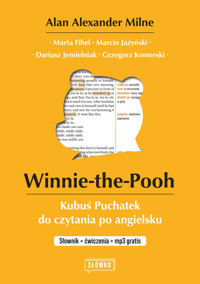
Winnie the Pooh to wyjątkowe wydanie klasycznej powieści Alana Alexandra Milne’a, które łączy przyjemność czytania z efektywną nauką języka angielskiego od poziomu A2 do C1.
Przenieś się do Stumilowego Lasu, poznaj Puchatka i jego przyjaciół, a przy okazji rozwijaj słownictwo, gramatykę i wymowę w naturalny i przyjemny sposób.
Każdy rozdział został starannie opracowany i zawiera:
- objaśnienia trudniejszych słów na marginesach,
- dział O słowach rozwijający słownictwo, idiomy i praktyczne zwroty,
- sekcję Gramatyka z praktycznymi przykładami z tekstu,
- krótkie ćwiczenia utrwalające nowo poznane słowa i konstrukcje.
Do książki dołączono dodatkowe nagranie audio, które pozwala czytać i jednocześnie słuchać, ćwicząc wymowę i rozumienie ze słuchu. Dzięki temu nauka staje się przygodą – tak jak sama lektura Puchatka.
Odkryj świat Stumilowego Lasu na nowo – baw się, ucz się i ciesz każdą stroną, która łączy klasykę literatury z nowoczesnym podejściem do nauki języka angielskiego.
O autorach
Marta Fihel – anglistka, nauczycielka, współautorka słowników i podręczników do nauki języka angielskiego.
prof. Dariusz Jemielniak – wykładowca Akademii Leona Koźmińskiego i Harvard University, współtwórca innowacyjnego systemu Insta.Ling wspierającego naukę języków.
Grzegorz Komerski – absolwent filozofii, tłumacz i współautor książek do nauki angielskiego.
Marcin Jażyński – d
Ebooka przeczytasz w aplikacjach Legimi lub dowolnej aplikacji obsługującej format:
Liczba stron: 232
Rok wydania: 2026
Popularność
Podobne








Koncepcja serii: Dariusz Jemielniak, Marta Fihel
Redakcja: Jadwiga Witecka
Skład i łamanie: Marian Bąk
Projekt okładki: Michał Duława
Opracowanie ebooka:
Nagranie, dźwięk i opracowanie muzyczne: Grzegorz Dondziłło, maxx-audio.com
Copyright © 2026 by Marta Fihel, Marcin Jażyński, Dariusz Jemielniak, Grzegorz Komerski
Copyright © 2026 by Poltext Sp. z o.o.
All rights reserved
Warszawa 2026
Wydanie pierwsze
Książka, którą nabyłeś, jest dziełem twórcy i wydawcy. Prosimy, abyś przestrzegał praw, jakie im przysługują. Jej zawartość możesz udostępnić nieodpłatnie osobom bliskim lub osobiście znanym. Ale nie publikuj jej w internecie. Jeśli cytujesz jej fragmenty, nie zmieniaj ich treści i koniecznie zaznacz, czyje to dzieło. A kopiując ją, rób to jedynie na użytek osobisty.
Szanujmy cudzą własność i prawo!
Polska Izba Książki
więcej o prawie autorskim na www.legalnakultura.pl
Zezwalamy na wykorzystanie okładki w internecie.
Poltext Sp. z o.o.
www.wydawnictwoslowko.pl
ISBN 978-83-8175-813-0
Indeks P20262002
WERSJA AUDIO GRATIS
Wpisz poniższy kod i pobierz bezpłatną wersję audio (plik mp3)
1. Wejdź na stronę
www.mtbiznes.pl/pobierz
2. Wpisz kod:
Winnie1slowko26
w okienko i pobierz plik
3. Wersji AUDIO możesz słuchać na komputerze lub dowolnym odtwarzaczu mp3
Spis treści
Okładka
Strona tytułowa
Strona redakcyjna
WERSJA AUDIO GRATIS
Wstęp
Introduction
Słownictwo
O słowach
Gramatyka
Kultura
Ćwiczenia
Chapter I
O słowach
Gramatyka
Kultura
Ćwiczenia
Chapter II
O słowach
Gramatyka
Kultura
Ćwiczenia
Chapter III
O słowach
Gramatyka
Kultura
Ćwiczenia
Chapter IV
O słowach
Gramatyka
Kultura
Ćwiczenia
Chapter V
O słowach
Gramatyka
Kultura
Ćwiczenia
Chapter VI
O słowach
Gramatyka
Kultura
Ćwiczenia
Chapter VII
O słowach
Gramatyka
Kultura
Ćwiczenia
Chapter VIII
O słowach
Gramatyka
Kultura
Ćwiczenia
Chapter IX
O słowach
Gramatyka
Kultura
Ćwiczenia
Chapter X
O słowach
Gramatyka
Kultura
Ćwiczenia
Słowniczek
Klucz
Punkty orientacyjne
Okładka
Strona tytułowa
Strona redakcyjna
Spis treści
Wstęp
Wprowadzenie
Rozdział 1
Rozdział 2
Rozdział 3
Rozdział 4
Rozdział 5
Rozdział 6
Rozdział 7
Rozdział 8
Rozdział 9
Rozdział 10
Przypisy
Wstęp Kubuś Puchatek – okno na świat języka angielskiego i ponadczasowej mądrości
Witamy w świecie Kubusia Puchatka Alana Alexandra Milne’a – książki, która od niemal stu lat zachwyca kolejne pokolenia czytelników na całym świecie. To nie tylko opowieść o przygodach sympatycznego misia o bardzo małym rozumku, ale przede wszystkim dzieło, które na stałe wpisało się w kanon literatury światowej, stając się jednym z najważniejszych tekstów kultury XX wieku.
Opublikowany po raz pierwszy w 1926 roku Winnie-the-Pooh szybko przekroczył granice Wielkiej Brytanii, podbijając serca dzieci i dorosłych na wszystkich kontynentach. Historie z Stumilowego Lasu zostały przetłumaczone na ponad 50 języków, w tym na łacinę i esperanto, a sam Kubuś Puchatek stał się rozpoznawalną na całym świecie ikoną popkultury. Jego filozoficzne podejście do życia, pełne prostej mądrości sentencje i ciepły humor sprawiły, że książka ta czytana jest zarówno jako lektura dziecięca, jak i źródło refleksji dla dorosłych.
Wpływ Kubusia Puchatka na kulturę jest nie do przecenienia. Postaci stworzone przez Milne’a – oprócz tytułowego bohatera także melancholijny Kłapouchy, energiczny Tygrysek, mądra Sowa czy bojaźliwy Prosiaczek – stały się archetypami wykorzystywanymi w psychologii i filozofii. Powstało nawet pojęcie „filozofii Puchatka”, swoistej zachodniej wariacji na temat Zen, a z kolei książki takie jak Tao Kubusia Puchatka Benjamina Hoffa, także osadzone w filozofii Wschodu, pokazują, jak głęboko zakorzenione są w tej pozornie prostej opowieści uniwersalne prawdy o naturze ludzkiej.
Niniejsze wydanie zostało specjalnie przygotowane z myślą o osobach uczących się języka angielskiego. Oryginalny tekst Milne’a, napisany piękną, klasyczną angielszczyzną, stanowi doskonały materiał do nauki. Język książki jest jednocześnie prosty i bogaty, pełen gry słów, rymowanek i subtelnego humoru, który pozwala poznać niuanse języka angielskiego w jego najlepszym wydaniu.
Dodane przez nas objaśnienia trudniejszych słów i zwrotów, ćwiczenia leksykalne oraz komentarze kulturowe pomogą nie tylko w nauce języka, ale także w głębszym zrozumieniu kontekstu, w jakim powstało to dzieło. Czytając o przygodach mieszkańców Stumilowego Lasu, będziecie mieli okazję oswoić się z idiomami, poznać typowo brytyjski humor i zanurzyć się w świecie angielskiej literatury dziecięcej w jej najczystszej formie.
Wierzymy, że połączenie przyjemności czytania z nauką języka przyniesie wiele satysfakcji. Bo jak mawiał Kubuś Puchatek: „Rzeki wiedzą, że nie trzeba się spieszyć – i tak kiedyś tam dotrzemy” – podobnie nauka języka przez lekturę ukochanych historii jest naturalną i przyjemną drogą do osiągnięcia biegłości językowej.
Zapraszamy do Stumilowego Lasu – miejsca, gdzie nauka spotyka się z magią opowieści!
Opracowany przez nas podręcznik oparty na oryginalnym tekście książki został skonstruowany według przejrzystego schematu.
Na marginesach tekstu podaliśmy
objaśnienia
trudniejszych wyrazów.
Zawarty po każdej części dział
O słowach
pomaga poszerzyć słownictwo z danej dziedziny, poznać nowe idiomy i zrozumieć, jak nie pomylić niektórych podstępnych wyrazów.
W dziale
Gramatyka
omówiliśmy wybrane zagadnienia gramatyczne, ilustrowane fragmentami poszczególnych części powieści. Są tu tematy proste i zaawansowane – nie musisz zgłębiać każdego, aby korzystać z naszego opracowania. Jednak na pewno znajdziesz dla siebie coś nowego. Poziom trudności omawianych zagadnień oznaczyliśmy symbolami:
– poziom A2;
– poziom B1 lub B2;
– poziom C1.
Każdy rozdział kończy się kilkoma
ćwiczeniami
.Są krótkie i urozmaicone. Różnią się też poziomem trudności – każdy Czytelnik na poziomach A2-C1 znajdzie coś dla siebie. Ćwiczenia opracowaliśmy tak, aby wspomóc systematyczne, trwałe zapamiętywanie nowych słów i konstrukcji.
Dział
Kultura
to fakty i ciekawostki, historia, a nawet filozofia – a wszystkie poruszane tematy zainspirował
Kubuś Puchatek
.
Każdy rozdział kończy się kilkoma
ćwiczeniami
.Są krótkie i urozmaicone. Różnią się też poziomem trudności – każdy Czytelnik na poziomach A2-C1 znajdzie coś dla siebie.
W
słowniczku
znajdują się wszystkie wyrazy objaśnione na marginesach. Zaglądaj do niego, kiedy masz wątpliwości.
Na samym końcu znajdziesz
klucz odpowiedzi
do wszystkich ćwiczeń.
Koniecznie wysłuchaj nagrania
Winnie-the-Pooh
– w trakcie lektury lub obok niej. Kod do pobrania nagrania ze strony wydawnictwa znajdziesz na skrzydełku okładki.
WINNIE-THE-POOH
BY A. A. MILNE
To Her
HAND IN HAND WE COME
CHRISTOPHER ROBIN AND I
TO LAY THIS BOOK IN YOUR LAP.
SAY YOU’RE SURPRISED?
SAY YOU LIKE IT?
SAY IT’S JUST WHAT YOU WANTED?
BECAUSE IT’S YOURS –
BECAUSE WE LOVE YOU.
Introduction
Słownictwo
If you happen to have read another book about Christopher Robin, you may remember that he once had a swan (or the swan had Christopher Robin, I don’t know which) and that he used to call this swan Pooh. That was a long time ago, and when we said good-bye, we took the name with us, as we didn’t think the swan would want it any more. Well, when Edward Bear said that he would like an exciting name all to himself, Christopher Robin said at once, without stopping to think, that he was Winnie-the-Pooh. And he was. So, as I have explained the Pooh part, I will now explain the rest of it.
You can’t be in London for long without going to the Zoo. There are some people who begin the Zoo at the beginning, called WAYIN, and walk as quickly as they can past every cage until they get to the one called WAYOUT, but the nicest people go straight to the animal they love the most, and stay there. So when Christopher Robin goes to the Zoo, he goes to where the Polar Bears are, and he whispers something to the third keeper from the left, and doors are unlocked, and we wander through dark passages and up steep stairs, until at last we come to the special cage, and the cage is opened, and out trots something brown and furry, and with a happy cry of “Oh, Bear!” Christopher Robin rushes into its arms. Now this bear’s name is Winnie, which shows what a good name for bears it is, but the funny thing is that we can’t remember whether Winnie is called after Pooh, or Pooh after Winnie. We did know once, but we have forgotten…
I had written as far as this when Piglet looked up and said in his squeaky voice, “What about Me?” “My dear Piglet,” I said, “the whole book is about you.” “So it is about Pooh,” he squeaked. You see what it is. He is jealous because he thinks Pooh is having a Grand Introduction all to himself. Pooh is the favourite, of course, there’s no denying it, but Piglet comes in for a good many things which Pooh misses; because you can’t take Pooh to school without everybody knowing it, but Piglet is so small that he slips into a pocket, where it is very comforting to feel him when you are not quite sure whether twice seven is twelve or twenty-two. Sometimes he slips out and has a good look in the ink-pot, and in this way he has got more education than Pooh, but Pooh doesn’t mind. Some have brains, and some haven’t, he says, and there it is.
And now all the others are saying, “What about Us?” So perhaps the best thing to do is to stop writing Introductions and get on with the book.
A. A. M.
O słowach
Brain
Some have brains, and some haven’t.
W opowieści o Misu o Bardzo Małym Rozumku słowo brain, czyli mózg, rozum, pojawia się nierzadko. Brains to przede wszystkim rozum, inteligencja. Oto kilka często używanych wyrażeń i idiomów z wyrazem brain(s):
brain box
– bardzo inteligentna osoba
brain teaser
– łamigłówka logiczna
beat out one’s brain
– wytężać mózgownicę
have something on the brain
– nie móc przestać o czymś myśleć; mieć coś na głowie
pick somebody’s brains
– wypytywać kogoś, uzyskiwać od kogoś informacje
rack one’s brains (about sth)
– łamać sobie głowę (nad czymś)
the brains behind sth
– mózg operacji
use your brains!
– rusz głową!
Gramatyka
Zaimki zwrotne
“What sort of stories does he like?”
“About himself. Because he’s that sort of Bear.”
Himself to jeden z angielskich zaimków zwrotnych, czyli wyrazów, które zwracają się w stronę wykonawcy czynności. Dla każdej osoby gramatycznej używamy innego zaimka zwrotnego – przypomnijmy ich formy:
Zaimek w mianowniku
Określnik dzierżawczy i zaimek w dopełnieniu
Zaimek zwrotny
+ self
I
my, me
myself
you
your, you
yourself
he
his, him
himself
she
her, her
herself
it
its, it
itself
+ selves
we
our, us
ourselves
you
your, you
yourselves
they
their, them
themselves
Zaimków zwrotnych używamy jako odpowiedników polskiego
się
:
He’s cut himself with this knife.Zaciął się tym nożem.
Sally burnt herself when she was cooking.Sally oparzyła się podczas gotowania.
Don’t blame yourself – it wasn’t your fault.Nie obwiniaj się – to nie była twoja wina.
Zaimki zwrotne rzadko jednak łączą się z czasownikami takimi jak
dress
ubierać (się)
,
shave
golić (się)
czy
wash
myć (się):
John’s shaving. John się goli.
I washed and got dressed. Umyłem się i ubrałem.
Zaimki zwrotne stosuje się głównie tylko wtedy, kiedy chce się podkreślić, kto wykonuje daną czynność:
Joe is big enough to wash himself. Joe jest dostatecznie duży, żeby myć się samemu.
Did he shave himself or did the nurse do it? Sam się ogolił, czy zrobiła to pielęgniarka?
Zaimków zwrotnych nie używamy zazwyczaj po czasownikach takich jak:
feel
czuć się
,
meet
spotykać (się)
,
concentrate
koncentrować się
,
relax
odprężać się
,
open
otwierać (się),
sell
sprzedawać (się),
focus
skupiać się
,
hurry
spieszyć się
:
Kids, hurry up!Dzieci, pospieszcie się!
Their app sells really well.Ich apka sprzedaje się bardzo dobrze.
Zaimki zwrotne stosuje się wtedy, kiedy czynność jest skierowana na osobę lubprzedmiot, do którego się odnoszą:
Meg only talks on about herself. Meg mówi tylko o sobie.
Za pomocą zaimków zwrotnych możemy też podkreślić rolę samodzielnego wykonawcy danej czynności:
I’ve solved the riddle myself. Sama rozwiązałam tę zagadkę.
The director herself suggested changes.Sama reżyserka zaproponowała zmiany.
The building itself is nice and modern, but the neighbourhood looks awful. Sam budynek jest ładny i nowoczesny, ale okolica wygląda okropnie.
Rolę samodzielnego wykonawcy można w niektórych sytuacjach podkreślić za pomocą przyimka
by
:
Little Tom has painted it by himself. Mały Tom sam to namalował.
Have you done the translation all by yourself? Czy całkiem samodzielnie zrobiłeś to tłumaczenie?
By + zaimek zwrotny
może też sygnalizować znaczenie
sam, w samotności
:
It’s good to spend some time by yourself from time to time. Dobrze jest czasami spędzić trochę czasu samemu.
Kultura
Kubuś czy Kubusia z Kanady?
Z perspektywy polskich czytelników znany na całym świecie Miś o Bardzo Małym Rozumku jest chłopcem i nie ma co do tego wątpliwości. Ostatecznie Kubuś jest imieniem męskim. Czytając jednak książkę Milne’a w oryginale, można zadać sobie pytanie, czy aby na pewno? Winnie to przecież imię dziewczynki, anglojęzyczne zdrobnienie od takich imion jak Edwina, Winona, Winifred, Winter, Gwendolyn czy Guinevere. W języku polskim dorosła Winnie miałaby na imię Winifreda.
Czyżby więc autor stworzył nie misia, a misię? Otóż nie, zarówno w książkach, jak adaptacjach filmowych Kubuś określany jest męskim zaimkiem i żadną miarą nie należy doszukiwać się innych intencji autora. Skąd jednak żeńskie imię?
Postać Kubusia – jak również innych bohaterów, Prosiaczka, Kangurzycy, Maleństwa, Kłapouchego i Tygrysa – została oparta na pluszowej zabawce, należącej do syna pisarza, Christophera Robina Milne’a. Pluszowego misia Milne kupił dziecku z okazji pierwszych urodzin w 1921 roku w londyńskim domu towarowym Harrods. Chłopiec początkowo nazywał misia imieniem Edward, lecz wkrótce przechrzcił go na Winnie, na cześć niedźwiedzia, którego wraz ojcem często podziwiał w ZOO.
Mieszkający w ogrodzie zoologicznym niedźwiedź Winnie był ulubieńcem nie tylko rodziny Milne’ów, lecz także całego Londynu, a to za sprawą jego pochodzenia. Małego misia nabył za 20 dolarów od pewnego myśliwego szykujący się do wyjazdu na wojnę kanadyjski porucznik Harry Colebourne, wojskowy weterynarz i nazwał go na cześć swojego rodzinnego miasta Winnipeg. Colebourne przemycił zwierzaka do Anglii, gdzie Winnie stał się nieoficjalną maskotką jego regimentu, a przed wyruszeniem na front właściciel oddał go pod opiekę ZOO.
Nieco inaczej ma się sprawa z przydomkiem „the Pooh”. Wprawdzie w książce otrzymujemy wyjaśnienie, mówiące, że chodzi o odgłos zdmuchiwania przysiadających na misiowym nosie much, coś w rodzaju polskiego „fu!”, lecz w rzeczywistości imię Pooh nosił oswojony łabędź, należący do znajomego autora, u którego państwo Milne spędzali pewnego lata wakacje. Warto wspomnieć, że łabędź Pooh pojawia się jako samodzielna postać w wierszach ze zbioru „Kiedy byliśmy bardzo młodzi”.
Ćwiczenia
1. Find 14 animal names.
Znajdź 14 nazw zwierząt.
2. Match the words with their definitions.
Połącz wyrazy 1–9 z ich definicjami.
introduction
brains
ink-pot
piglet
rush
steep
swan
wander
whisper
a small pig
a text at the beginning of a book, speech, article, etc.
a bird with a long neck
to walk a long distance
where you keep ink
to move quickly
difficult to walk on
to say something quietly
intelligence
3. Complete the gaps with the words from the box.
Uzupełnij luki wyrazami z ramki.
brain, behind, brains x 2, have, my, on, pick, racked, teaser
I really have something on my
brain
that I need to discuss today.
When I get stuck, I like to pick somebody’s for new ideas. I often learn new things that I did not know before.
I my brains all night for a solution to the problem.
That brain puzzled everyone in the group, yet we kept trying anyway. We wanted to solve it and prove our cleverness to each other.
Sometimes I feel like I have too much my brain to focus.
The inventor was the behind the innovative gadget that changed our daily lives, making it easier for everyone to stay organized.
It seems like I always something on my brain during exam week.
I decided to somebody’s brains about the best ways to study, hoping to find useful suggestions that might improve my grades and understanding of the material.
I racked brains trying to remember where I put my keys.
Everyone wants to know the brains that successful company.
4. Match parts of the sentences.
Połącz części zdań.
If you happen to see a swan,
She decided to slip
The way out
Tove often wandered
The hills there were steep,
As she looked around, a gentle voice
Lila felt comforting
He was jealous
There’s no
but the view was worth the climb.
by the water’s edge.
denying it, you’re a brave boy.
into the cozy blanket on the cold afternoon.
of no one, for he’d found his special spot.
of the maze was complicated.
take a moment to admire it.
warmth in this cozy place.
whispered, “Welcome, my dear”.
5. Fill in the gaps with proper reflexive pronouns.
Uzupełnij luki właściwymi zaimkami zwrotnymi.
They believe in working hard and pushing
themselves
to achieve great success.
You should believe in and pursue your dreams with confidence and courage.
I often reflect on my day to understand better and improve.
He feels proud of for achieving the goals he had set earlier.
We sometimes challenge to try new activities and learn new skills.
They sometimes find struggling with difficult decisions in their daily lives.
Dad, look, I did it !
I always remind to be patient and stay positive during tough days.
He enjoys cooking for and experimenting with new recipes.
Klucz >>>
Chapter I IN WHICH WE ARE INTRODUCED TO WINNIE-THE-POOH AND SOME BEES, AND THE STORIES BEGIN
Here is Edward Bear, coming downstairs now, bump, bump, bump, on the back of his head, behind Christopher Robin. It is, as far as he knows, the only way of coming downstairs, but sometimes he feels that there really is another way, if only he could stop bumping for a moment and think of it. And then he feels that perhaps there isn’t. Anyhow, here he is at the bottom, and ready to be introduced to you. Winnie-the-Pooh.
When I first heard his name, I said, just as you are going to say, “But I thought he was a boy?”
“So did I,” said Christopher Robin.
“Then you can’t call him Winnie?”
“I don’t.”
“But you said – ”
“He’s Winnie-ther-Pooh. Don’t you know what ‘ther’ means?”
“Ah, yes, now I do,” I said quickly; and I hope you do too, because it is all the explanation you are going to get.
Sometimes Winnie-the-Pooh likes a game of some sort when he comes downstairs, and sometimes he likes to sit quietly in front of the fire and listen to a story. This evening –
“What about a story?” said Christopher Robin.
“What about a story?” I said.
“Could you very sweetly tell Winnie-the-Pooh one?”
“I suppose I could,” I said. “What sort of stories does he like?”
“About himself. Because he’s that sort of Bear.”
“Oh, I see.”
“So could you very sweetly?”
“I’ll try,” I said.
So I tried.
Once upon a time, a very long time ago now, about last Friday, Winnie-the-Pooh lived in a forest all by himself under the name of Sanders.
(“What does ‘under the name’ mean?” asked Christopher Robin.
“It means he had the name over the door in gold letters, and lived under it.”
“Winnie-the-Pooh wasn’t quite sure,” said Christopher Robin.
“Now I am,” said a growly voice.
“Then I will go on,” said I.)
One day when he was out walking, he came to an open place in the middle of the forest, and in the middle of this place was a large oak-tree, and, from the top of the tree, there came a loud buzzing-noise.
Winnie-the-Pooh sat down at the foot of the tree, put his head between his paws and began to think.
First of all he said to himself: “That buzzing-noise means something. You don’t get a buzzing-noise like that, just buzzing and buzzing, without its meaning something. If there’s a buzzing-noise, somebody’s making a buzzing-noise, and the only reason for making a buzzing-noise that I know of is because you’re a bee.”
Then he thought another long time, and said: “And the only reason for being a bee that I know of is making honey.”
And then he got up, and said: “And the only reason for making honey is so as I can eat it.” So he began to climb the tree.
He climbed and he climbed and he climbed, and as he climbed he sang a little song to himself. It went like this:
Isn’t it funny
How a bear likes honey?
Buzz! Buzz! Buzz!
I wonder why he does?
Then he climbed a little further … and a little further … and then just a little further. By that time he had thought of another song.
It’s a very funny thought that, if Bears were Bees,
They’d build their nests at the bottom of trees.
And that being so (if the Bees were Bears),
We shouldn’t have to climb up all these stairs.
He was getting rather tired by this time, so that is why he sang a Complaining Song. He was nearly there now, and if he just stood on that branch …
Crack!
“Oh, help!” said Pooh, as he dropped ten feet on the branch below him.
“If only I hadn’t – ” he said, as he bounced twenty feet on to the next branch.
“You see, what I meant to do,” he explained, as he turned head-over-heels, and crashed on to another branch thirty feet below, “what I meant to do – ”
“Of course, it was rather – ” he admitted, as he slithered very quickly through the next six branches.
“It all comes, I suppose,” he decided, as he said good-bye to the last branch, spun round three times, and flew gracefully into a gorse-bush, “it all comes of liking honey so much. Oh, help!”
He crawled out of the gorse-bush, brushed the prickles from his nose, and began to think again. And the first person he thought of was Christopher Robin.
(“Was that me?” said Christopher Robin in an awed voice, hardlydaring to believe it.
“That was you.”
Christopher Robin said nothing, but his eyes got larger and larger, and his face got pinker and pinker.)
So Winnie-the-Pooh went round to his friend Christopher Robin, who lived behind a green door in another part of the forest.
“Good morning, Christopher Robin,” he said.
“Good morning, Winnie-ther-Pooh,” said you.
“I wonder if you’ve got such a thing as a balloon about you?”
“A balloon?”
“Yes, I just said to myself coming along: ‘I wonder if Christopher Robin has such a thing as a balloon about him?’ I just said it to myself, thinking of balloons, and wondering.”
“What do you want a balloon for?” you said.
Winnie-the-Pooh looked round to see that nobody was listening, put his paw to his mouth, and said in a deep whisper: “Honey!”
“But you don’t get honey with balloons!”
“I do,” said Pooh.
Well, it just happened that you had been to a party the day before at the house of your friend Piglet, and you had balloons at the party. You had had a big green balloon; and one of Rabbit’s relations had had a big blue one, and had left it behind, being really too young to go to a party at all; and so you had brought the green one and the blue one home with you.
“Which one would you like?” you asked Pooh.
He put his head between his paws and thought very carefully.
“It’s like this,” he said. “When you go after honey with a balloon, the great thing is not to let the bees know you’re coming. Now, if you have a green balloon, they might think you were only part of the tree, and not notice you, and, if you have a blue balloon, they might think you were only part of the sky, and not notice you, and the question is: Which is most likely?”
“Wouldn’t they notice you underneath the balloon?” you asked.
“They might or they might not,” said Winnie-the-Pooh. “You never can tell with bees.” He thought for a moment and said: “I shall try to look like a small black cloud. That will deceive them.”
“Then you had better have the blue balloon,” you said; and so it was decided.
Well, you both went out with the blue balloon, and you took your gun with you, just in case, as you always did, and Winnie-the-Pooh went to a very muddy place that he knew of, and rolled and rolled until he was black all over; and then, when the balloon was blown up as big as big, and you and Pooh were both holding on to the string, you let go suddenly, and Pooh Bear floated gracefully up into the sky, and stayed there–level with the top of the tree and about twenty feet away from it.
“Hooray!” you shouted.
“Isn’t that fine?” shouted Winnie-the-Pooh down to you. “What do I look like?”
“You look like a Bear holding on to a balloon,” you said.
“Not,” said Pooh anxiously, “– not like a small black cloud in a blue sky?”
“Not very much.”
“Ah, well, perhaps from up here it looks different. And, as I say, you never can tell with bees.”
There was no wind to blow him nearer to the tree, so there he stayed. He could see the honey, he could smell the honey, but he couldn’t quite reach the honey.
After a little while he called down to you.
“Christopher Robin!” he said in a loud whisper.
“Hallo!”
“I think the bees suspect something!”
“What sort of thing?”
“I don’t know. But something tells me that they’re suspicious!”
“Perhaps they think that you’re after their honey.”
“It may be that. You never can tell with bees.”
There was another little silence, and then he called down to you again.
“Christopher Robin!”
“Yes?”
“Have you an umbrella in your house?”
“I think so.”
“I wish you would bring it out here, and walk up and down with it, and look up at me every now and then, and say ‘Tut-tut, it looks like rain.’ I think, if you did that, it would help the deception which we are practising on these bees.”
Well, you laughed to yourself, “Silly old Bear!” but you didn’t say it aloud because you were so fond of him, and you went home for your umbrella.
“Oh, there you are!” called down Winnie-the-Pooh, as soon as you got back to the tree. “I was beginning to get anxious. I have discovered that the bees are now definitely Suspicious.”
“Shall I put my umbrella up?” you said.
“Yes, but wait a moment. We must be practical. The important bee to deceive is the Queen Bee. Can you see which is the Queen Bee from down there?”
“No.”
“A pity. Well, now, if you walk up and down with your umbrella, saying, ‘Tut-tut, it looks like rain,’ I shall do what I can by singing a little Cloud Song, such as a cloud might sing…. Go!”
So, while you walked up and down and wondered if it would rain, Winnie-the-Pooh sang this song:
How sweet to be a Cloud
Floating in the Blue!
Every little cloud
Always sings aloud.
“How sweet to be a Cloud
Floating in the Blue!”
It makes him very proud
To be a little cloud.
The bees were still buzzing as suspiciously as ever. Some of them, indeed, left their nests and flew all round the cloud as it began the second verse of this song, and one bee sat down on the nose of the cloud for a moment, and then got up again.
“Christopher–ow!–Robin,” called out the cloud.
“Yes?”
“I have just been thinking, and I have come to a very important decision. These are the wrong sort of bees.”
“Are they?”
“Quite the wrong sort. So I should think they would make the wrong sort of honey, shouldn’t you?”
“Would they?”
“Yes. So I think I shall come down.”
“How?” asked you.
Winnie-the-Pooh hadn’t thought about this. If he let go of the string, he would fall–bump–and he didn’t like the idea of that. So he thought for a long time, and then he said:
“Christopher Robin, you must shoot the balloon with your gun. Have you got your gun?”
“Of course I have,” you said. “But if I do that, it will spoil the balloon,” you said.
“But if you don’t,” said Pooh, “I shall have to let go, and that would spoil me.”
When he put it like this, you saw how it was, and you aimed very carefully at the balloon, and fired.
“Ow!” said Pooh.
“Did I miss?” you asked.
“You didn’t exactly miss,” said Pooh, “but you missed the balloon.”
“I’m so sorry,” you said, and you fired again, and this time you hit the balloon, and the air came slowly out, and Winnie-the-Pooh floated down to the ground.
But his arms were so stiff from holding on to the string of the balloon all that time that they stayed up straight in the air for more than a week, and whenever a fly came and settled on his nose he had to blow it off. And I think–but I am not sure–that that is why he was always called Pooh.
“Is that the end of the story?” asked Christopher Robin.
“That’s the end of that one. There are others.”
“About Pooh and Me?”
“And Piglet and Rabbit and all of you. Don’t you remember?”
“I do remember, and then when I try to remember, I forget.”
“That day when Pooh and Piglet tried to catch the Heffalump – ”
“They didn’t catch it, did they?”
“No.”
“Pooh couldn’t, because he hasn’t any brain. Did I catch it?”
“Well, that comes into the story.”
Christopher Robin nodded.
“I do remember,” he said, “only Pooh doesn’t very well, so that’s why he likes having it told to him again. Because then it’s a real story and not just a remembering.”
“That’s just how I feel,” I said.
Christopher Robin gave a deep sigh, picked his Bear up by the leg, and walked off to the door, trailing Pooh behind him. At the door he turned and said, “Coming to see me have my bath?”
“I might,” I said.
“I didn’t hurt him when I shot him, did I?”
“Not a bit.”
He nodded and went out, and in a moment I heard Winnie-the-Pooh–bump, bump, bump–going up the stairs behind him.
O słowach
Pooh! Tut, tut!
Well, when Edward Bear said that he would like an exciting name all to himself, Christopher Robin said at once, without stopping to think, that he was Winnie-the-Pooh.
Pooh to nie tylko nazwisko naszego bohatera. Jako wykrzyknik oznacza phi, fuj, ech i używa się go jako wyraz obrzydzenia, wymówki czy niedowierzania:
Pooh! What an ugly frog. Fuj! Jaka brzydka żaba.
Pooh, I am so tired of these traffic jams.Ech, jestem taka zmęczona tymi korkami.
‘Tut-tut, it looks like rain.’
Tut to onomatopeja odpowiadająca polskiemu cmoknięciu – cmokamy na ogół zniecierpliwieni lub zawiedzeni:
Tut tut! Let’s get moving. Tss, tss, ruszmy się.
Tut-tut! She’s late again. Tss tss, znowu się spóźniła.
W rozdziale ósmym, podczas pewnej wyprawy, kolejni jej uczestnicy uciszają się nawzajem:
“Hush!” said Christopher Robin turning round to Pooh.
Ciszę nakazać można też za pomocą krótkiego shh:
Shh! Someone is here.Cii! Ktoś tu jest.
Shh! I’m trying to hear what she’s saying.Cii!Próbuję słuchać tego, co mówi.
Kilka innych wykrzykników zawiera tabela:
Wykrzyknik
Wymowa
Użycie
Przybliżony polski odpowiednik
ah
[ɑː]
Kiedy chcemy wyrazić zdziwienie, współczucie, zgodę, zrozumienie; kiedy dajemy do zrozumienia, że coś sprawia nam przyjemność
ach
aha
[ɑːˈhɑː]
Kiedy nagle coś zrozumiemy lub znajdziemy
aha
eh
[eɪ]
Kiedy oczekujemy, że rozmówca podzieli nasze zdanie; kiedy czegoś nie dosłyszeliśmy
co?
er
[ɜː] lub [ə]
Kiedy nie wiemy, co powiedzieć
hm
gee
[dʒiː]
Kiedy coś nas zaskakuje, sprawia przyjemność lub irytuje (głównie w amerykańskiej odmianie angielskiego)
ojej
gosh
[ɡɒʃ]
Kiedy coś nas dziwi, czasem również wprawiając w zachwyt i wywołując zazdrość (wywodzi się od wykrzyknienia Godo Boże!)
ja cię
ha
[hɑː]
Kiedy chcemy wyrazić zdziwienie, radość, tryumf, podejrzenie; kiedy się śmiejemy
cha
hurrah
[hʊˈrɑː]
Kiedy się bardzo cieszymy, okazujemy radość
hura!
hurray / hooray
[hʊˈreɪ]
Patrz hurrah
hura!
oh
[əʊ]
Kiedy chcemy zwrócić czyjąś uwagę lub zastanawiamy się nad czymś; kiedy wyrażamy zdziwienie, strach lub zachwyt
och
ooh / oo
[u:]
Kiedy dajemy do zrozumienia, że coś jest bardzo przyjemne lub niezwykle nieprzyjemne, obrzydliwe
och
oops
[ʊps]
Kiedy wyrządzimy jakąś szkodę (np. coś zepsujemy, złamiemy, upuścimy) i za to przepraszamy; kiedy powiemy coś, czego nie powinniśmy byli powiedzieć (bo było to niegrzeczne lub zdradzona została w ten sposób tajemnica)
ojej, ups
ouch
[aʊt]
Kiedy odczuwamy nagły ból, np. ukłucie, sparzenie; kiedy komentujemy nieprzyjemne wiadomości (często z humorystycznym zabarwieniem)
oj, au, aua
ugh
[ʊx]
Kiedy widzimy coś nieprzyjemnego
fuj
whoope
[wʊˈpiː]
Kiedy okazujemy radość (wykrzyknik ten może się wydawać nieco przestarzały, więc spotyka się go raczej w tekstach żartobliwych)
hura!
whoops
[wʊps]
Patrz oops
ojej, ups
wow
[waʊ]
Kiedy wyrażamy zdziwienie lub zachwyt
ojej
yippee
[jɪˈpi]
Kiedy okazujemy radość (wykrzyknik ten używany jest głównie przez dzieci lub przez dorosłych rozmawiających z dziećmi)
hura!
Oto kilka przykładów użycia wykrzykników:
Ah, poor little girl!Ach, biedactwo!
Nice weather, eh? Fajna pogoda, nie?
Oh, Adam, I would love to see that movie! Och, Adamie, tak bardzo chciałabym zobaczyć ten film!
Wow! This car is fast! Ojej! Ten samochód jest szybki!
Oo, I delight in dancing! (przest.) Och, uwielbiam tańczyć!
Ooh, what awful weather! Och, co za okropna pogoda!
Whoops, have I blurted the whole thing out? Ojej, czyżbym wszystko wygadał?
Ouch! It hurts when I move my arm.Oj! Boli mnie, kiedy ruszam ramieniem.
A: Do you know that your wife owes me more than three thousand pounds? B: Ouch! I think it’s time we had a serious talk. A: Czy wiesz, że twoja żona jest mi winna ponad trzy tysiące funtów? B: O kurczę! Myślę, że już czas, żebyśmy przeprowadzili poważną rozmowę.
Yippee! Daddy will buy me a teddy bear! Hura! Tatuś kupi mi pluszowego misia!
Gramatyka
If you happen to
If you happen to have read another book about Christopher Robin, you may remember that he once had a swan (…).
Konstrukcje z happen mogą zastąpić if w zdaniach warunkowych możliwych, np.:
If you (happen to) find my pen, call me. Gdybyś znalazł moje pióro, zadzwoń do mnie.
If you (should happen to) see Alice, tell her I’d like to talk to her. Gdybyś spotkał Alice, powiedz jej, że chciałbym z nią porozmawiać.
If they (happen to miss) the coach, they’ll have to get a taxi instead. Jeśli nie zdążą na autokar, będą musieli zamiast tego wziąć taksówkę.
Bezokolicznik perfect
If you happen to have read another book about Christopher Robin, you may remember that he once had a swan (…).
Bezokolicznik to nie tylko podstawowa forma czasownika (z to lub bez), ale również bezokolicznik perfect (perfect infinitive), zbudowany według schematu:
(to) have + past participle, np. (to) have finished; to have opened; have danced.
Używamy go w odniesieniu do czynności przeszłej, przede wszystkim po czasownikach takich jak:
claim
twierdzić, utrzymywać
;
expect
oczekiwać
;
hate
nienawidzić
;
hope
mieć nadzieję
;
like
lubić
;
love
kochać, uwielbiać
;
prefer
woleć, preferować
;
pretend
udawać
;
seem
wydawać się.
Porównaj:
Perfect infinitive
odnosi się czasami do sytuacji, która mogła nastąpić w przeszłości, ale nie nastąpiła:
They would prefer to have changed the date of the conference, but it wasn’t possible. Chcieliby zmienić termin konferencji, ale nie było to możliwe.
Czasami
perfect infinitive
występuje niejako samodzielnie, w oderwaniu od wykonawcy opisywanej czynności:
I consider it utterly stupid to have wasted all the money in such a way.Uważam za bezdennie głupie wydać wszystkie pieniądze w ten sposób.
To have received that award was the musicians’ most notable achievement.Otrzymanie tej nagrody było najwybitniejszym osiągnięciem muzyków.
Perfect infinitive
odnosi się czasami do sytuacji, które będą zakończone w określonym momencie w przyszłości – za jego pomocą tworzymy czas
Future Perfect
:
By the end of June we’ll have finished the course. Do końca listopada zakończymy kurs.
They won’t have fixed the printer by six. Do szóstej nie naprawią drukarki.
Kultura
Sanders
Once upon a time, a very long time ago now, about last Friday, Winnie-the-Pooh lived in a forest all by himself under the name of Sanders.
(“What does ‘under the name’ mean?” asked Christopher Robin.
“It means he had the name over the door in gold letters, and lived under it.”)
Uważni czytelnicy angielskiej wersji przygód Kubusia Puchatka zauważą zapewne, że tytułowy miś mieszka w domku opatrzonym tabliczką z wypisanym złotymi literami nazwiskiem Sanders. Dla polskich wielbicieli, zwłaszcza tych wychowanych na klasycznym przekładzie Ireny Tuwim, szczegół ów może stanowić pewne zaskoczenie, ponieważ tłumaczka z sobie jedynie znanych powodów zastąpiła je bajkowo brzmiącym „pan Woreczko”. Czy można zatem wyciągnąć wniosek, że pełne nazwisko misia brzmi Kubuś Woreczko?
Sam autor zachował się w sprawie tabliczki bardzo enigmatycznie i nigdy nie podał żadnego uzasadnienia. Większość czytelników i badaczy spuścizny Milne’a jest zdania, że nazwisko Sanders należało po prostu do pierwszego właściciela domku, a Kubuś nie widział powodu, aby tabliczkę usunąć.
Istnieją jednak dwie inne, aczkolwiek przyznajmy, mocno niepewne teorie. Pierwsza wskazuje na ilustratora książek o Puchatku, Ernesta HowardaSheparda. Rysownik ów został w czasie I wojny światowej ranny i spędził pewien czas w szpitalu w towarzystwie kanadyjskiego żołnierza właśnie nazwiskiem Sanders. Syn Kanadyjczyka, David Sanders, stwierdził w udzielonym w 2014 roku wywiadzie, że Shepard zasugerował to nazwisko A.A. Milne’owi ze względu na fakt, iż sam Kubuś otrzymał imię na cześć pochodzącego z Kanady niedźwiedzia Winnie. Niestety koncepcja owa nie została jak dotąd w żaden sposób potwierdzona.
Drugie wyjaśnienie pojawia się w napisanej przez Ann Thwaite, wydanej w 1990 roku biografii powieściopisarza A.A. Milne: The Man Behind Winnie-the-Pooh. Według autorki pierwowzorem Sandersa z tabliczki był niejaki Frank Sanders, znajomy Milne’a, właściciel jednej z londyńskich drukarni. Źródłem owej informacji jest przeprowadzony w 1989 roku wywiad z bratankiem Sandersa, Douglasem. Podobnie jednak jak w przypadku pierwszej koncepcji, innych dowodów na razie brak.
Ćwiczenia
1. Find 12 words connected with thinking.
Znajdź 12 wyrazów związanych z myśleniem.
2. Choose the correct word.
Wybierz właściwy wyraz.
a) Ouch/Sh! That hurts me!
b) Oops/Gee! I nearly dropped the bottle of champagne we bought yesterday!
c) Pooh/Gee! What a dirty dress.
d) Tut tut/Whoopee, Jack, you disappoint me, you really do.
e) Whoops/Whoopee, sorry! I’m so clumsy.
f) Aha/Uh! I don’t know the answer to that.
g) A: Did you meet my wife yesterday? B: Eh/Er?
h) Ouch/Gee! That insect bit me.
i) Shh/Ugh! The movie is about to start.
j) Ha/Eh! I can’t believe this.
k) Yippee/Gosh!We’ve won!
3. Match the words with their definitions.
Połącz wyrazy 1–9 z ich definicjami.
honey
admit
anxious
be fond of somebody
dare
deceive
float
paw
sigh
sweet edible substance made by bees
a cat’s or bear’s foot
to say something is true
to have courage to do something
to cheat
worried
to like somebody
to move in the air
a long breath in and out
4. Complete the gaps with the words from the box.
Uzupełnij luki wyrazami z ramki.
branch, both, buzzed, crash, explanation, gracefully, introduce, nest, oak-tree, prickle, suggested, suppose, suspicious, wandered
A tiny bird’s nest sat high on a
branch
.
Let me you to my mother.
The tiny birds had built their high up on the strongest branch.
I suppose both the squirrels and the jays enjoy the acorns this produces.
The professor offered a detailed of the events.
Both birds flew from the nest.
A small caught on his sleeve.
“Let’s climb up this branch to get a better view,” Timmy.
As they , a sound came from behind the bushes.
“I it could be just the wind,” she said, though felt unsure.
Just then, a bee by, making them wonder if the wind was really to blame.
Suddenly, with a loud , a branch nearby fell to the ground.
5. Choose the correct option (A, B, or C).
Wybierz poprawną odpowiedź (A, B lub C).
It’s easy to get lost to lose track of time.
A. if you happen B. if you C. should you
If you find a lost item, remember to return it to the office.
A. will B. happen to C. would
By the end of the month I will at the hospital for six years.
A. work B. be working C. have worked
Oh, our dear friends, please make at home!
A. yourselves B. yourself C. ourselves
How long will Tim lectured here by 2026?
A. – B. has C. have
We’re currently infested with mice, you happen to spot any, please let me know.
A. should B. unless C. will
I bought a pack of chewing gum.
A. me B. myself C. for me
How long will you here by 2027?
A. lived B. have lived C. be living
Klucz >>>
Chapter II IN WHICH POOH GOES VISITING AND GETS INTO A TIGHT PLACE
Edward Bear, known to his friends as Winnie-the-Pooh, or Pooh for short, was walking through the forest one day, humming proudly to himself. He had made up a little hum that very morning, as he was doing his Stoutness Exercises in front of the glass: Tra-la-la, tra-la-la, as he stretched up as high as he could go, and then Tra-la-la, tra-la–oh, help!–la, as he tried to reach his toes. After breakfast he had said it over and over to himself until he had learnt it off by heart, and now he was humming it right through, properly. It went like this:
Tra-la-la, tra-la-la,
Tra-la-la, tra-la-la,
Rum-tum-tiddle-um-tum.
Tiddle-iddle, tiddle-iddle,
Tiddle-iddle, tiddle-iddle,
Rum-tum-tum-tiddle-um.
Well, he was humming this hum to himself, and walking along gaily, wondering what everybody else was doing, and what it felt like, being somebody else, when suddenly he came to a sandybank, and in the bank was a large hole.
“Aha!” said Pooh. (Rum-tum-tiddle-um-tum.) “If I know anything about anything, that hole means Rabbit,” he said, “and Rabbit means Company,” he said, “and Company means Food and Listening-to-Me-Humming and such like. Rum-tum-tum-tiddle-um.”
So he bent down, put his head into the hole, and called out:
“Is anybody at home?”
There was a sudden scuffling noise from inside the hole, and then silence.
“What I said was, ‘Is anybody at home?’” called out Pooh very loudly.
“No!” said a voice; and then added, “You needn’t shout so loud. I heard you quite well the first time.”
“Bother!” said Pooh. “Isn’t there anybody here at all?”
“Nobody.”
Winnie-the-Pooh took his head out of the hole, and thought for a little, and he thought to himself, “There must be somebody there, because somebody must have said ‘Nobody.’” So he put his head back in the hole, and said:
“Hallo, Rabbit, isn’t that you?”
“No,” said Rabbit, in a different sort of voice this time.
“But isn’t that Rabbit’s voice?”
“I don’t think so,” said Rabbit. “It isn’t meant to be.”
“Oh!” said Pooh.
He took his head out of the hole, and had another think, and then he put it back, and said:
“Well, could you very kindly tell me where Rabbit is?”
“He has gone to see his friend Pooh Bear, who is a great friend of his.”
“But this is Me!” said Bear, very much surprised.
“What sort of Me?”
“Pooh Bear.”
“Are you sure?” said Rabbit, still more surprised.
“Quite, quite sure,” said Pooh.
“Oh, well, then, come in.”
So Pooh pushed and pushed and pushed his way through the hole, and at last he got in.
“You were quite right,” said Rabbit, looking at him all over. “It is you. Glad to see you.”
“Who did you think it was?”
“Well, I wasn’t sure. You know how it is in the Forest. One can’t have anybody coming into one’s house. One has to be careful. What about a mouthful of something?”
Pooh always liked a little something at eleven o’clock in the morning, and he was very glad to see Rabbit getting out the plates and mugs; and when Rabbit said, “Honey or condensed milk with your bread?” he was so excited that he said, “Both,” and then, so as not to seem greedy, he added, “But don’t bother about the bread, please.” And for a long time after that he said nothing … until at last, humming to himself in a rather sticky voice, he got up, shook Rabbit lovingly by the paw, and said that he must be going on.
“Must you?” said Rabbit politely.
“Well,” said Pooh, “I could stay a little longer if it–if you - “ and he tried very hard to look in the direction of the larder.
“As a matter of fact,” said Rabbit, “I was going out myself directly.”
“Oh, well, then, I’ll be going on. Good-bye.”
“Well, good-bye, if you’re sure you won’t have any more.”
“Is there any more?” asked Pooh quickly.
Rabbit took the covers off the dishes, and said, “No, there wasn’t.”
“I thought not,” said Pooh, nodding to himself. “Well, good-bye. I must be going on.”
So he started to climb out of the hole. He pulled with his front paws, and pushed with his back paws, and in a little while his nose was out in the open again … and then his ears … and then his front paws … and then his shoulders … and then -
“Oh, help!” said Pooh. “I’d better go back.”
“Oh,bother!” said Pooh. “I shall have to go on.”
“I can’t do either!” said Pooh. “Oh, help and bother!”
Now by this time Rabbit wanted to go for a walk too, and finding the front door full, he went out by the back door, and came round to Pooh, and looked at him.
“Hallo, are you stuck?” he asked.
“N-no,” said Pooh carelessly. “Just resting and thinking and humming to myself.”
“Here, give us a paw.”
Pooh Bear stretched out a paw, and Rabbit pulled and pulled and pulled….
“Ow!” cried Pooh. “You’re hurting!”
“The fact is,” said Rabbit, “you’re stuck.”
“It all comes,” said Pooh crossly, “of not having front doors big enough.”
“It all comes,” said Rabbit sternly, “of eating too much. I thought at the time,” said Rabbit, “only I didn’t like to say anything,” said Rabbit, “that one of us was eating too much,” said Rabbit, “and I knew it wasn’t me,” he said. “Well, well, I shall go and fetch Christopher Robin.”
Christopher Robin lived at the other end of the Forest, and when he came back with Rabbit, and saw the front half of Pooh, he said, “Silly old Bear,” in such a loving voice that everybody felt quite hopeful again.
“I was just beginning to think,” said Bear, sniffingslightly, “that Rabbit might never be able to use his front door again. And I should hate that,” he said.
“So should I,” said Rabbit.
“Use his front door again?” said Christopher Robin. “Of course he’ll use his front door again.”
“Good,” said Rabbit.
“If we can’t pull you out, Pooh, we might push you back.”
Rabbit scratched his whiskersthoughtfully, and pointed out that, when once Pooh was pushed back, he was back, and of course nobody was more glad to see Pooh than he was, still there it was, some lived in trees and some lived underground, and -
“You mean I’d never get out?” said Pooh.
“I mean,” said Rabbit, “that having got so far, it seems a pity to waste it.”
Christopher Robin nodded.
“Then there’s only one thing to be done,” he said. “We shall have to wait for you to get thin again.”
“How long does getting thin take?” asked Pooh anxiously.
“About a week, I should think.”
“But I can’t stay here for a week!”
“You can stay here all right, silly old Bear. It’s getting you out which is so difficult.”
“We’ll read to you,” said Rabbit cheerfully. “And I hope it won’t snow,” he added. “And I say, old fellow, you’re taking up a good deal of room in my house–do you mind if I use your back legs as a towel-horse? Because, I mean, there they are–doing nothing–and it would be very convenient just to hang the towels on them.”
“A week!” said Pooh gloomily. “What about meals?”
“I’m afraid no meals,” said Christopher Robin, “because of getting thin quicker. But we will read to you.”
Bear began to sigh, and then found he couldn’t because he was so tightly stuck; and a tear rolled down his eye, as he said:
“Then would you read a SustainingBook, such as would help and comfort a Wedged Bear in Great Tightness?”
So for a week Christopher Robin read that sort of book at the North end of Pooh, and Rabbit hung his washing on the South end … and in between Bear felt himself getting slenderer and slenderer. And at the end of the week Christopher Robin said, “Now!”
So he took hold of Pooh’s front paws and Rabbit took hold of Christopher Robin, and all Rabbit’s friends and relations took hold of Rabbit, and they all pulled together…
And for a long time Pooh only said “Ow!” …
And “Oh!” …
And then, all of a sudden, he said “Pop!” just as if a cork were coming out of a bottle.
And Christopher Robin and Rabbit and all Rabbit’s friends and relations went head-over-heels backwards … and on the top of them came Winnie-the-Pooh – free!
So, with a nod of thanks to his friends, he went on with his walk through the forest, humming proudly to himself. But, Christopher Robin looked after him lovingly, and said to himself, “Silly old Bear!”
O słowach
Either
“I can’t do either!” said Pooh. “Oh, help and bother!”
Either to wyraz, który ma kilka następujących znaczeń:
Either
przed rzeczownikiem w liczbie pojedynczej oznacza
jeden lub drugi
,
każdy (z dwóch),
którykolwiek
,
dowolny
,
wszystko jedno który
, np.:
A: Would you like me to come round on Saturday or Friday? B: Either day is fine.
A: Czy chciałbyś, żebym wpadł w sobotę czy w piątek? B: Każdy z tych dni jest dobry.
Jeśli rzeczownik, do którego odnosi się either, został wymieniony już wcześniej, możemy go pominąć:
A: Would you like me to come round on Saturday or Friday? B: I don’t mind. Either.
A: Czy chciałbyś, żebym wpadł w sobotę czy w piątek? B: Wszystko jedno. Kiedykolwiek.
Either
przed rzeczownikiem w liczbie pojedynczej może również oznaczać
i jeden, i drugi
:
From the woods on either bank, horrifying creatures began to creep out.Z lasu na każdym brzegu zaczęły wypełzać przerażające stworzenia.
There are shops and service points on either side of the street.Po obydwu stronach ulicy są sklepy i punkty usługowe.
Przed zaimkiem stosujemy
either of
:
Either of them is fit enough to participate in the tournament.Żaden z nich nie jest wystarczająco sprawny, żeby wziąć udział w turnieju.
Either of
używa się także przed rzeczownikiem w liczbie mnogiej poprzedzonym przedimkiem lub zaimkiem:
We talked to either of her parents.Rozmawialiśmy z obojgiem jej rodziców.
She doesn’t get on well with either of her brothers.Nie dogaduje się z żadnym ze swoich braci.
W języku formalnym czasownik po
either of
ma formę liczby pojedynczej:
I don’t think either of you is right.Myślę, że żadne z was nie ma racji.
Either… or…
Konstrukcja either… or… to odpowiednik polskiego albo…, albo…, a w zdaniach przeczących – ani…, ani….:
You can add either one or two carrots to the soup.Możesz dodać do zupy albo jedną, albo dwie marchewki.
She’s an artist you either love or hate.Jest artystką, którą albo się uwielbia, albo nienawidzi.
Gramatyka
Pytania z shall
“Shall I put my umbrella up?” you said.
Pytania z shall najczęściej wyrażają propozycje i sugestie:
Shall we dance? Zatańczymy?
Shall I wash the dishes? Czy mam umyć naczynia?
Shall I do some shopping when I’m in town? Może zrobię jakieś zakupy, kiedy będę w mieście?
Shall we come over to help you rearrange the furniture? Może przyjdziemy, żeby pomóc ci w przestawianiu mebli?
Shall we play some chess? Zagramy w szachy?
Let’s just watch a serial or something, shall we? I’m too tired to do any more work. Pooglądajmy jakiś serial czy coś, dobrze? Jestem zbyt zmęczony, żeby jeszcze pracować.
Pytania typu What shall I/we…?, How shall I/we…? możemy zadać, prosząc kogoś o radę lub wskazówki, np.:
What shall we do? We can’t count on good luck again. Co zrobimy? Nie możemy znowu liczyć na to, że będziemy mieli szczęście.
So many things to do and so little time to do them in! How shall I manage it? Tyle rzeczy do zrobienia i tak mało czasu! Jak ja sobie z tym poradzę?
Farther czyfurther
Then he climbed a little further … and a little further … and then just a little further.
Wyrazy
farther
[
′
f
α
:
ð
ə
] i
further
[
′
f
ɜ
:ð
ə
] znaczą
dalszy
lub
dalej
(są zatem używane jako stopień wyższy od przymiotnika/przysłówka
far
daleki
,
daleko
).
Obydwu form używa się tylko do określania relacji przestrzennych, fizycznej odległości, np.:
I saw the girl all alone, weeping at the farther/further end of the yard. Widziałem tę dziewczynkę, zupełnie samą, jak płakała w dalszym końcu podwórka.
On the following day they managed to get even farther/further. Następnego dnia udało im się dojść jeszcze dalej.
Stella lives farther/further from our neighbourhood than we expected. Stella mieszka dalej od naszej okolicy, niż się spodziewaliśmy.
Further
(ale nie
farther
) występuje również w znaczeniu metaforycznym
dalszy
,
kolejny
,
dodatkowy
, np.:
If youneed any farther further information, do not hesitate to contact us. Jeśli będą państwo potrzebować dalszych informacji, prosimy o kontakt.
The case is further complicated by the fact that my grandfather applied for American citizenship. Sprawę dodatkowo komplikuje fakt, że mój dziadek wystąpił o amerykańskie obywatelstwo.
Oczywiście analogiczne zasady dotyczą stopnia wyrazu far, czyli farthest i furthest.
Kultura
Teddy bear
Jak już wiemy, postać Kubusia Puchatka oparta została na pluszowym misiu należącym do syna autora. Tego rodzaju zabawki, obecnie niesłychanie popularne pod każdą szerokością geograficzną, są określane w całym anglojęzycznym świecie mianem teddy bears. Przyjrzyjmy się pochodzeniu tej nazwy.
Teddy było zdrobnieniem imienia amerykańskiego prezydenta Theodore’a Roosevelta (swoją drogą, polityk za tą formą nie przepadał). W 1902 roku prezydent wraz z kilkoma innymi ważnymi osobistościami wziął udział w polowaniu, na którym urządzono konkurs łowiecki. Prezydentowi szczęście nie sprzyjało i w momencie, gdy niemal wszyscy rywale mieli już na koncie jakąś zdobycz, on wciąż krążył po lesie z pustymi rękoma. Towarzyszący Rooseveltowi współpracownicy jednak zdołali wytropić niedźwiedzia. Po długim pościgu osaczyli zwierzę, zaszczuli je psami, poważnie ranili i związali, a następnie wezwali prezydenta, aby zastrzelił osobiście niedźwiedzia. Roosevelt odmówił, tłumacząc, że byłby to postępek niegodny prawdziwego myśliwego, niemniej polecił cierpiące zwierzę uśmiercić, by skrócić jego męki.
Wieść o wydarzeniu rozeszła się w amerykańskim społeczeństwie szeroko, a dziennik „Washington Post” zamieścił przedstawiający je satyryczny rysunek autorstwa Clifforda Berrymana. Gazeta trafiła między innymi do rąk biznesmena i wynalazcy rosyjskiego pochodzenia Morrisa Michtoma, który stworzył pierwszego tego typu pluszowego misia i wystawił go w oknie prowadzonej przez siebie w Nowym Jorku cukierni z podpisem teddy bear. Zabawka wzbudziła olbrzymie zainteresowanie, Michtom założył wkrótce firmę produkującą misie na szeroką skalę, a nazwa weszła do języka angielskiego na trwałe. Obecnie sprzedaż pluszowych misiów w samych tylko USA przynosi ponad miliard dolarów zysku rocznie.
Ćwiczenia
1. Find 16 adjectives in comparative form.
Znajdź 16 przymiotników w stopniu wyższym.
2. Match the words with their definitions.
Połącz wyrazy 1–9 z ich definicjami.
company
cheerfully
crossly
hum
larder
mouthful
slightly
stiff
stuck
not flexible, firm
to sing quietly
the people you’re with
where you store food
with anger
a little
gaily, happily
a bit of food
unable to move
3. Complete the gaps with the words from the box.
Uzupełnij luki wyrazami z ramki.
sigh, carelessly, cheerfully, crossly, greedy, holes, inconvenient, larder, mouthful, sandy, slightly, wasted
She let out a deep
sigh
of relief.
The child grabbed all the cookies from the jar without asking anyone.
, she left the door open, unaware of the hungry pets outside.
He adjusted the shelves to make room for more food supplies.
It was to find that they had all their food.
, he tapped his foot as he waited for the late delivery of groceries.
The beach was perfect for making and playing with friends.
, the family gathered around the table.
Everyone enjoyed a of ice cream as they rested in the sun.
4. Make polite questions using shall.
Utwórz pytania – propozycje z shall.
A: I’m thirsty. B:
Shall I get you a cup of tea?
(get you / a cup of tea)?
A: Let’s start cooking! B: …………………………………. (peel the potatoes)?
A: It’s too loud in here. B: …………………………………. (turn the radio down)?
A: I’m pretty tired. B: …………………………………. (do the washing-up)?
A: What I really need is to unwind and relax. B: …………………………………. (prepare you a bath)?
This tune reminds me of our first date. …………………………………. (dance)?
5. Complete each gap with one word.
Uzupełnij każdą lukę jednym wyrazem.
Either
of
Fiona’s parentsinsiston her moving in.
A: Which coffee brand do you prefer? B: . They are both delicious.
There are benches on side the pier.
You can cast a vote for your favourite bookshop in person online.
us has different recollections of those times.
If you flip a coin, you will get a head a tail.
Both brothers are real geeks. them spends countless hours on the net.
Lucy didn’t return from her shopping empty-handed. She was carrying big bags in hand.
I’ll be away next month, so we can meet up now after I get back.
Klucz >>>
Chapter III IN WHICH POOH AND PIGLET GO HUNTING AND NEARLY CATCH A WOOZLE
The Piglet lived in a very grand house in the middle of a beech-tree, and the beech-tree was in the middle of the forest, and the Piglet lived in the middle of the house. Next to his house was a piece of broken board which had: “TRESPASSERS W” on it. When Christopher Robin asked the Piglet what it meant, he said it was his grandfather’s name, and had been in the family for a long time, Christopher Robin said you couldn’t be called Trespassers W, and Piglet said yes, you could, because his grandfather was, and it was short for Trespassers Will, which was short for Trespassers William. And his grandfather had had two names in case he lost one–Trespassers after an uncle, and William after Trespassers.
“I’ve got two names,” said Christopher Robin carelessly.
“Well, there you are, that proves it,” said Piglet.
One fine winter’s day when Piglet was brushing away the snow in front of his house, he happened to look up, and there was Winnie-the-Pooh. Pooh was walking round and round in a circle, thinking of something else, and when Piglet called to him, he just went on walking.
“Hallo!” said Piglet, “what are you doing?”
“Hunting,” said Pooh.
“Hunting what?”
“Tracking something,” said Winnie-the-Pooh very mysteriously.
“Tracking what?” said Piglet, coming closer.
“That’s just what I ask myself. I ask myself, What?”
“What do you think you’ll answer?”
“I shall have to wait until I catch up with it,” said Winnie-the-Pooh. “Now, look there.” He pointed to the ground in front of him. “What do you see there?”
“Tracks,” said Piglet. “Paw-marks.” He gave a little squeak of excitement. “Oh, Pooh! Do you think it’s a–a–a Woozle?”
“It may be,” said Pooh. “Sometimes it is, and sometimes it isn’t. You never can tell with paw-marks.”
With these few words he went on tracking, and Piglet, after watching him for a minute or two, ran after him. Winnie-the-Pooh had come to a sudden stop, and was bending over the tracks in a puzzled sort of way.
“What’s the matter?” asked Piglet.