Uzyskaj dostęp do tej i ponad 240000 książek od 14,99 zł miesięcznie
- Wydawca: CLXBX
- Kategoria: Religia i duchowość•Filozofia
- Język: angielski
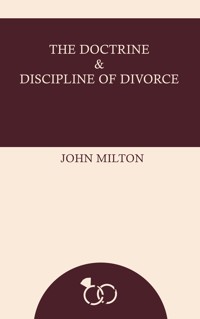
The Doctrine and Discipline of Divorce by John Milton is a provocative and intellectually rigorous work that challenges traditional views on marriage, morality, and personal liberty. Written during a period of religious and political upheaval in seventeenth-century England, this treatise presents Milton's radical argument that marriage should be grounded in genuine companionship and mutual understanding rather than rigid institutional constraint. In this work, Milton reexamines the purpose of marriage, emphasizing the importance of intellectual and emotional compatibility between partners. He argues that when such harmony is absent, the union fails to fulfill its intended moral and spiritual function. This perspective leads him to advocate for the possibility of lawful separation in cases where the foundational purpose of marriage cannot be achieved. Drawing upon theological reasoning, classical learning, and personal reflection, Milton constructs a case that blends ethical inquiry with social critique. He challenges prevailing legal and ecclesiastical doctrines, questioning whether external authority should have absolute control over deeply personal relationships. His arguments extend beyond divorce itself, engaging broader questions about conscience, individual judgment, and the limits of institutional power. The work is notable not only for its controversial subject matter but also for its eloquent and persuasive prose. Milton's writing combines logical structure with rhetorical force, reflecting his mastery of language and his commitment to intellectual freedom. The treatise sparked significant debate in its time and continues to be studied as a key text in discussions of marriage law, religious authority, and personal rights. The Doctrine and Discipline of Divorce remains an important contribution to political, theological, and literary thought, offering a bold vision of human relationships grounded in reason, dignity, and moral responsibility.
Ebooka przeczytasz w aplikacjach Legimi na:
Liczba stron: 183
Rok wydania: 2026
Odsłuch ebooka (TTS) dostepny w abonamencie „ebooki+audiobooki bez limitu” w aplikacjach Legimi na: