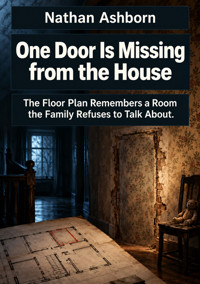
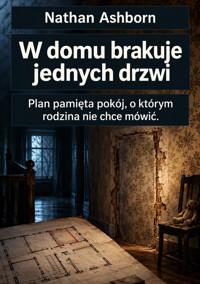
One Door Is Missing from the House - The Floor Plan Remembers a Room the Family Refuses to Talk About. ebook
Nathan Ashborn
Uzyskaj dostęp do tej i ponad 240000 książek od 14,99 zł miesięcznie
- Wydawca: ALL-IN Rafał Płonkowski
- Kategoria: Thriller, sensacja, horror
- Język: angielski
After her father’s funeral, Marta expects paperwork, old photographs, and the slow dismantling of a family home. Instead, she finds a floor plan that should not exist.
According to the drawing, there is a small room on the upper floor. According to the house itself, there is only a wall.
The measurements do not match. Nearly two meters of space are missing. Her brother reacts too quickly. Her mother refuses to explain. Her aunt demands that the plan be put away. Then Marta discovers the outline of a door hidden beneath decades-old wallpaper.
Someone did not remove the room.
Someone erased it from the house.
Behind the sealed entrance lies evidence of a family secret buried in 1996: a child’s room, old marks on the wall, traces of someone who has been there recently, and a photograph of seven-year-old Marta holding hands with a girl named Anna. Marta has no memory of her.
But someone else remembers everything.
Anonymous messages begin to arrive. A key appears where it should not be. A tape recorded thirty years earlier changes the meaning of what Marta thought she knew about her parents. The deeper she digs, the more the story fractures: a dead woman, a missing girl, a man believed to have died years ago, hidden recordings, old corruption, and people who spent decades protecting different versions of the same past.
Every answer makes another relative look guilty.
Every recovered memory raises a harder question.
And someone is still watching the house.
One Door Is Missing from the House is a psychological thriller about family loyalty, unreliable memory, inherited fear, and the dangerous difference between protecting someone and controlling them. It follows a woman forced to reconstruct a childhood she did not know she had lost while the people closest to her fight to decide which truths she is allowed to uncover.
The mystery unfolds through physical clues, conflicting testimony, old recordings, hidden spaces, and memories that return in fragments rather than convenient revelations. The tension comes not only from what may have happened decades ago, but from the fact that someone in the present is moving through the same places, searching for the same evidence, and anticipating Marta’s next step.
At its center is a house whose altered architecture mirrors the family that lived inside it: walls built to hide what happened, doors removed from sight, and rooms that continue to exist whether anyone admits it or not.
For readers who enjoy domestic suspense, buried family secrets, cold-case mysteries, psychological tension, morally compromised characters, and stories in which the past refuses to stay where it was hidden.
This publication was prepared using tools that support the creative process, including artificial intelligence solutions. The final concept, structure and editing are the responsibility of the author.
Ebooka przeczytasz w aplikacjach Legimi na:
Liczba stron: 257
Rok wydania: 2026
Odsłuch ebooka (TTS) dostepny w abonamencie „ebooki+audiobooki bez limitu” w aplikacjach Legimi na:
Podobne








Nathan Ashborn
One Door Is Missing from the House
The Floor Plan Remembers a Room the Family Refuses to Talk About.
ALL-IN Rafał Płonkowski
2026
ISBN 9788384833469
Table of contents
Title page
INTRO
Chapter 1 - The Wall That Shouldn't Be There
Chapter 2 - The Key Marked P
Chapter 3 - Footprints in the Attic
Chapter 4 - The Girl After She Disappeared
Chapter 5 - The Room Didn't Belong to Anna
Chapter 6 - Five Marks
Chapter 7 - Tape Five
Chapter 8 - The Woman Who Drove Anna Away
Chapter 9 - The Same Bend
Chapter 10 - The Doctor Who Remembered Too Much
Chapter 11 - The Man in the Dark Sedan
Chapter 12 - Paweł Didn't Die
Chapter 13 - The Second Floor Plan
Chapter 14 - Wojciech Stopped Running
Chapter 15 - Anna Came Back for the Truth
Chapter 16 - What Jerzy Left in the Doorframe
Chapter 17 - The Copy That Never Existed
Chapter 18 - Four Numbers on the Photograph
Chapter 19 - The Man Who Was Never on the List
Chapter 20 - The Door
Landmarks
Cover
Title page
Table of contents
Start of content
INTRO
The first thing Marta could not find in the house after her father died was not the will.
It was a door.
She stood in the middle of the upstairs hallway with a yellowed floor plan spread across the floor, trying for several minutes to convince herself that she was reading it wrong. The paper was nearly forty years old, worn along the folds and stamped by an office whose name had changed twice since then. But the lines were clear. Stairs. Bathroom. Three bedrooms. A walk-in closet. A small room on the north side of the house.
Marta looked up.
On the north side of the hallway, there was only a wall.
No door.
No recess.
No sign that anything had ever been there.
"Did you lose something?"
Her brother's voice came from downstairs.
Marta did not answer. She crouched, held the plan flat with one hand, and ran a finger along the dimensions. Four meters eighty from the bathroom wall to the exterior wall. Earlier, she had measured the hallway with a folding ruler she had found in her father's workshop.
Not quite three meters.
Almost two were missing.
Not from the plan.
From the house.
She heard footsteps on the stairs.
Tomasz appeared on the landing carrying two mugs of coffee. His shirt was open at the collar, and he looked as though he had spent the entire morning trying to organize a funeral, sell a house, and prevent a family argument all at once.
He had managed only the first.
"I found another stack of documents in the study," he said. "If they're bills, I'm throwing them out without reading them."
He handed her a mug.
Marta pointed at the plan.
"Do you remember this room?"
Tomasz glanced at the paper.
He did not need to bend down. He did not even need a proper look.
The change in his face lasted perhaps a second, but Marta saw it. The exhaustion disappeared. Something alert took its place.
Then he shrugged.
"Old design. The house was remodeled."
"When?"
"I don't know."
"You lived here longer than I did."
"Marta, I was twelve when you moved out. I wasn't keeping a renovation diary."
He tried to smile, but his eyes remained still.
Marta looked down at the plan again.
"There's no note about the layout being changed."
"So?"
"Dad kept a permit for replacing a single window from ninety-eight. Every invoice. Every installation plan. Everything."
"Maybe he didn't keep this."
"He kept the original floor plan."
Tomasz set his coffee on the windowsill.
"Do you really want to spend the first day after the funeral measuring walls?"
"I want to get the paperwork ready for the realtor."
"The realtor doesn't need architectural archaeology."
"They need the correct floor area."
This time her brother looked at the wall.
Briefly.
Too briefly.
Marta stood.
She remembered the house as almost unchanged: the dark wooden stairs, the bright hallway, the bathroom tiles their mother had wanted to replace for the past fifteen years and never had. Marta's old bedroom still had a small crack beneath the windowsill. The lamp in their parents' bedroom was still the one they had bought before her high school graduation.
And yet now that she knew the measurements, the hallway looked different.
Too short.
Like a badly cropped photograph.
She walked over to the wall.
"What are you doing?"
"Looking."
"I can see that."
The wallpaper had been put up years ago. Cream-colored, with a pattern of vertical stripes so faint they were almost invisible. Her father had hung it himself. Marta remembered the smell of paste, the open windows, and a radio playing somewhere downstairs.
She ran her hand over the surface.
Halfway along the wall, she felt an uneven patch.
"Marta."
Tomasz said her name differently this time.
She turned.
"What?"
"Leave it."
He no longer sounded irritated.
He sounded serious.
"Why?"
"Because we're trying to sell the house, and you're about to start tearing off wallpaper to prove that some architect drew a line wrong forty years ago."
"It's not one line."
"There is no room there."
Marta watched him for a moment.
"How do you know?"
Tomasz clenched his jaw.
The front door slammed downstairs.
They both fell silent.
"Probably Mom," Tomasz said.
Their mother was not supposed to be back until evening.
Marta followed her brother downstairs.
Aunt Elżbieta stood in the entryway. She had taken off her black coat, but her handbag was still hanging from her shoulder as though she had no intention of staying long. Her father's sister looked worse than she had at the funeral. Her face was pale, and her hair, usually arranged with meticulous care, had fallen across her forehead.
"Is your mother here?" she asked.
"Not yet," Tomasz replied. "Did something happen?"
Elżbieta noticed the floor plan in Marta's hand.
Her eyes fixed on it.
She did not ask what it was.
"Where did you get that?"
Marta felt her brother go still beside her.
"From Dad's papers."
Her aunt held out a hand.
"Give it to me."
It was not a request.
"Why?"
"Because it's an old piece of paper. You don't need it."
"That's exactly what I'm trying to figure out."
Elżbieta stepped toward her.
"Marta, give me the plan."
"What's behind the wall upstairs?"
Tomasz swore under his breath.
Their aunt froze.
The house became so quiet that Marta could hear the clock ticking in the living room.
Elżbieta slowly lowered her hand.
"Nothing."
"There's a room on the plan."
"Plans sometimes show things that were never built."
"The exterior dimensions of the house match."
Her aunt looked at Tomasz.
Not Marta.
That was enough.
"You know," Marta said.
"No," her brother replied.
Too quickly.
Elżbieta closed her eyes.
"Your father should never have kept that."
Only then did Marta feel uneasy. Not when she saw the blank wall, not when she discovered the missing two meters, not even when she noticed Tomasz's reaction.
Only now, when her aunt spoke in the voice of someone who had spent years fearing one specific thing.
"What shouldn't he have kept?" Marta asked.
Elżbieta did not answer.
Something knocked upstairs.
Once.
Dull.
All three of them looked up.
Tomasz was the first to move toward the stairs.
"Stay here."
Marta followed him.
"There's no one up there."
"I said stay."
"Since when do you give me orders in my own house?"
"This isn't your house."
He turned toward her on the stairs.
He immediately understood what he had said.
So did Marta.
"We haven't even read the will yet," she reminded him.
Tomasz went pale.
A second knock sounded upstairs.
Clearer this time.
It came from the far end of the hallway.
From the wall where, according to the plan, there should have been a door.
Marta pushed past her brother.
When she reached the top floor, she noticed something she had missed before.
At floor level, a strip of wallpaper had come loose from the wall.
Not much. Perhaps the width of two fingers.
There was no plaster underneath.
There was wood.
Marta crouched and slipped a fingernail beneath the edge of the wallpaper.
"Don't touch that," Aunt Elżbieta said behind her.
Marta pulled.
The wallpaper came away with a soft tearing sound.
Underneath ran a perfectly vertical seam.
The edge of a doorframe.
Someone had not removed the door.
Someone had built over it.
Marta looked at the family standing behind her.
Tomasz was no longer looking at the wall.
He was looking at Elżbieta.
And her aunt was looking only at Marta.
"Your father promised," she said quietly, "that he would never open it."
Chapter 1 - The Wall That Shouldn't Be There
For several seconds after Elżbieta spoke, no one moved.
Marta was still crouched beside the wall, holding the torn strip of wallpaper between her fingers. Beneath it ran a narrow, almost perfectly vertical line. Not a crack in the plaster. Not a seam between panels. The edge of something wooden, buried beneath layers of paint, paper, and mortar.
A doorframe.
It wasn't simply that the house had no door.
The house had a door someone had decided to erase so thoroughly that its very existence seemed to have been the problem.
"What was he supposed to promise?" Marta asked.
Elżbieta tightened her fingers around the strap of her handbag.
"Not today."
"That's probably the worst possible answer."
"Marta, please."
"Please what?"
Her aunt shifted her gaze to Tomasz. He stood near the stairs with one hand resting on the banister and looked like a man who wanted to walk downstairs, leave the house, and never come back.
Marta rose.
"Tomek?"
"Don't look at me."
"I am looking at you."
"Well, I don't know anything."
"A minute ago you knew there wasn't a room."
"Because there isn't."
Marta pointed to the exposed edge.
"Then what's that?"
Tomasz opened his mouth, but Elżbieta answered for him.
"A bricked-up doorway."
Her voice was quiet, almost flat.
Marta turned to her.
"So the room exists."
"I didn't say that."
"Then where did the door lead?"
Elżbieta sighed.
"To a room that hasn't existed for a long time."
"Rooms don't disappear."
"This one did."
"How?"
"It was remodeled."
"Into what?"
Her aunt said nothing.
With every passing second, Marta could feel the conversation moving further away from architecture. This was not about an old renovation, a mistake in the paperwork, or one of her father's eccentric decisions. Elżbieta did not look like someone afraid of chipped plaster. Tomasz did not look like someone irritated by the logistics of selling a house.
They were both afraid of the question.
Not the answer.
Tomasz's phone began ringing downstairs.
No one moved at first.
It rang again.
"Answer it," Elżbieta said.
Tomasz went down two steps, but Marta caught him by the sleeve.
"Did you know about this?"
"No."
"I'm not asking if you knew what was inside. I'm asking if you knew about the door."
Tomasz looked at her fingers gripping the fabric of his shirt.
"Let go."
Marta released him.
The phone rang a third time.
"Did you know?" she repeated.
"I remembered this wall differently."
"How?"
Tomasz looked at Elżbieta.
Their aunt shook her head.
The small movement was enough to erase Marta's remaining doubts.
"Unbelievable," she said. "Even now you're deciding between yourselves what I'm allowed to know."
"Don't be dramatic," Tomasz snapped.
"I've just found a bricked-up doorway in the house I grew up in, and discovered that two members of my family apparently know more about it than I do. I think I'm entitled to a little drama."
The phone stopped ringing.
A few seconds later came the sound of a message.
Tomasz took out his phone, glanced at the screen, and frowned.
"Mom."
"What?"
"She's asking if anyone's at the house."
Elżbieta immediately reached for her own phone.
"Why would she ask that?"
"I don't know."
Tomasz called. He pressed the phone to his ear.
Marta stared at the wall.
She was still trying to fit it into her own memories. The hallway from childhood seemed longer. She was not certain, but her mind supplied an image of a narrow dark chest standing there with a ceramic bowl for keys on top. Except the keys had always been kept downstairs. She could be mixing up two places, two years, two versions of the same house.
"She's not answering," Tomasz said.
"She just texted."
"I know."
Elżbieta dialed her sister's number.
Silence.
Marta walked to the window at the end of the hall and looked toward the driveway. Her mother's car was not there. After the funeral, she had gone back to the cemetery with a neighbor to collect some of the wreaths, then she was supposed to visit the notary's office. Marta had last seen her two hours earlier.
"What exactly did she write?"
Tomasz showed her the screen.
Are you at the house?
Nothing else.
"Tell her yes."
"I already did."
Marta noticed there was no read receipt beneath the message.
"Maybe she's driving."
"Then why did she text?"
"I don't know."
Elżbieta put her phone away.
"We should go downstairs."
"You can," Marta said.
"Marta."
"I want to see what's behind this wall."
Tomasz snorted.
"Now?"
"Yes."
"With what? A spoon?"
"Dad had tools."
"You want to tear down a wall a few hours after his funeral?"
"I don't want to tear down the wall. I want to see if there's a way into the room."
"There isn't."
Marta looked at him.
"Again, you know."
Tomasz rubbed both hands over his face.
"Because if there were, Dad wouldn't have built over the door."
"How do you know Dad did it?"
Tomasz fell silent.
Elżbieta answered for him.
"Because he did."
A chill moved beneath Marta's skin despite the heat being turned up too high.
"When?"
"A long time ago."
"How old was I?"
"I don't remember."
"You're lying."
Elżbieta lowered her eyes.
Marta did not need anything more.
"Do I remember those doors?"
"No."
"How can you know what I remember?"
"Because you were little."
"How little?"
"Marta..."
"Five? Ten? Fifteen?"
Tomasz stepped between them.
"Enough."
"No."
"Dad hasn't even been dead a full day and you're conducting an interrogation."
"Dad sealed off a room in our house and made the family pretend it never existed."
"You don't know that."
"I know Aunt Elżbieta just admitted he built over the doorway. You remember the wall differently. And Mom sends a message exactly when we start talking about it."
"Are you suggesting Mom is listening to us?"
"I'm not suggesting anything yet."
The word yet hung between them.
Elżbieta looked away first.
Marta returned her attention to the floor plan.
The room was a little over eight square meters. Rectangular. One window facing the northern garden. But when she had walked around the house with the realtor that morning, she had seen only three upstairs windows on that side: the bathroom, her parents' former bedroom, and Tomasz's room.
There should have been a fourth.
She went to the north-facing window at the end of the hallway and leaned out as far as the restrictor allowed.
"What are you doing?" Tomasz asked.
"Counting."
From there, the relevant section of the facade was difficult to see. Marta went back to her old bedroom, opened the window, and leaned her head outside. The wind carried the smell of wet earth and smoke from a neighbor's chimney. Near the northwest corner of the house, she noticed a vertical streak in the plaster, slightly lighter than the rest.
And beneath it, the outline of a rectangle.
A bricked-up window.
Not obvious at first glance. Someone had matched the plaster and the color of the facade. Only the angled light revealed the difference in texture.
Marta pulled back inside.
"There was a window too."
Tomasz said nothing.
Elżbieta went downstairs without a word.
Marta followed her.
"Where are you going?"
"Home."
"No."
Her aunt turned on the landing.
"Excuse me?"
"You can't drop one piece of information on me and leave."
"I can."
"Why did Dad seal off that room?"
Elżbieta looked at her for a long time.
There was no anger in her expression. That was worse. There was something almost like pity.
"Ask your mother."
"I'm asking you."
"It's not my story."
"If you knew about it, it's partly yours."
Her aunt descended the final steps.
Marta followed her into the entryway. Tomasz remained on the stairs.
Elżbieta put on her coat.
"Your father made many mistakes in his life," she said. "But there is one thing no one can deny. When he believed he was protecting his family, he could be very consistent."
"What was he protecting us from?"
Elżbieta slipped one arm into the other sleeve.
"Sometimes people confuse protecting something with hiding it."
"What was in the room?"
Her aunt fastened the first button.
"A room."
"Whose?"
Elżbieta's fingers stopped at the next button.
Marta saw it.
"Whose?" she repeated.
"Don't open it alone."
"So I should open it?"
"I said the opposite."
"You said not to do it alone."
Elżbieta gave her a sharp look.
For the first time since entering the house, the fear in her face gave way to something else.
"You have exactly the same problem your father did. You only hear the part of a sentence that fits the decision you've already made in your head."
"Is that why you can't answer me?"
Her aunt opened the front door.
Cold air rushed into the hall.
"Not everything parents hide from their children is their own secret."
She left.
Marta stood motionless until the gate slammed shut behind Elżbieta.
Tomasz came downstairs.
"Congratulations."
"For what?"
"You got her out of the house in ten minutes."
"She planned to leave the moment she saw the plan."
"Maybe because she doesn't want to go back to something from thirty years ago."
Marta turned.
"How many years?"
Tomasz closed his eyes.
"I picked a number."
"No. You said thirty."
"Marta, please."
"I was seven then."
"It wasn't an exact time frame."
"And you were eleven."
Tomasz went into the kitchen.
Marta followed him.
"You remember the door."
"I remember different things."
"What things?"
"Normal things. Childhood things."
"Connected to that room?"
Tomasz poured himself a glass of water.
His hand shook slightly.
Marta noticed and stopped pushing for several seconds.
"Were you afraid of it?" she asked more quietly.
Tomasz put the glass down.
"I don't know."
"What does that mean?"
"It means I don't know what's a memory and what's a story I repeated to myself for so long that it started pretending to be a memory."
Marta sat at the table.
It was the first thing he had said that sounded honest.
"What story did you tell yourself?"
Tomasz looked out the window.
"That there was a closet at the end of the hall."
"The closet is next to the bathroom on the plan."
"I know."
"So?"
"I remember a door. I think."
"You think?"
"Light wood. Different from the others. Dad painted it once."
"What color?"
"White."
Marta summoned an image of the house from childhood. Every upstairs door had been dark brown until the renovation after their grandmother died. A white door would have stood out.
She did not remember one.
"Did you ever go inside?"
Tomasz took a long time to answer.
"No."
"Because it was locked?"
"Yes."
"With a key?"
"I think so."
"There it is again. I think."
"I was eleven."
"Old enough to remember a forbidden room."
"That's exactly why I don't trust the memory. A child can turn a locked storage closet into a mad scientist's laboratory."
Marta watched her brother.
"What did they tell you when the door disappeared?"
"I don't remember."
"I don't believe you."
"You don't have to."
"Did Mom say there had been renovations?"
Tomasz took a drink of water.
"Maybe."
"Dad?"
Silence.
"Tomek."
"Dad told me never to ask about it again."
Marta felt something tighten in her stomach.
"And you didn't?"
"Once."
"When?"
"When I was seventeen."
"What did he say?"
Tomasz smiled without humor.
"That there are things in a family that only stop being dangerous once everyone agrees not to touch them."
For a moment, Marta heard nothing but the steady hum of the refrigerator.
It sounded exactly like her father. Not theatrical. Not mysterious. More like something said by a man who had spent his entire life presenting his own decisions as laws of physics.
"You never told me that."
"Because you didn't remember anything."
"So you decided it was better if I kept not remembering?"
Tomasz turned toward her.
"You moved out right after high school. You came back for holidays, sometimes for a weekend. You hated this house."
"I didn't hate the house."
"You hated Dad."
Marta stood.
"Don't change the subject."
"I'm not. For years you said you didn't want to know what went on here."
"That doesn't mean I agreed to have a piece of my own childhood cut out."
Tomasz opened his mouth, but tires crunched over the driveway.
They both looked toward the window.
Their mother's dark-blue car stopped in front of the garage.
Marta felt the entire conversation shift suddenly toward something else. Tomasz straightened, as though preparing himself for something he had no desire to do.
Their mother came inside a minute later.
Helena Krawiec looked exhausted. Her black coat hung open, sunglasses tucked into her hair even though the sun had long since disappeared behind the clouds. She carried a folder in one hand and a small paper bag in the other.
"Why didn't you answer me?" she asked.
"I did," Tomasz said.
Helena took out her phone.
"I don't have anything."
She looked at the screen. The frown lasted a second.
"No signal at the cemetery."
Marta remembered the two knocks from inside the wall.
"Why did you ask if we were home?"
Her mother removed her coat.
"Because Mrs. Lewandowska called."
"The neighbor?"
"She said she saw someone by our fence on the north side."
Tomasz looked at Marta.
"When?"
"Maybe an hour ago."
"Who?"
"A man. She didn't know him."
Marta thought of the bricked-up window.
"What was he doing?"
Helena shrugged, but the movement came too quickly.
"Standing there."
"By the north wall of the house?"
Her mother froze.
A tiny reaction.
Enough.
Helena slowly placed the folder on the sideboard.
"What did you do?"
Tomasz did not answer.
Marta brought the floor plan in from the living room.
She laid it on the kitchen table.
Her mother did not come closer.
She looked at it from several feet away.
"Where did you get that?"
It was exactly the same question Elżbieta had asked.
"From Dad's study."
"Where exactly?"
"In the folder with the house documents."
"I'm not asking about the folder. I'm asking where exactly."
"Bottom drawer of the desk."
Helena pressed her lips together.
"Locked?"
Marta looked at Tomasz.
"It wasn't locked."
Her mother sat down.
She did not even take off her shoes.
"Was Elżbieta here?"
"Yes."
Helena closed her eyes.
"Of course."
"Mom, what's behind that wall?"
"Nothing."
"There's a room."
"There isn't."
"There's space."
"Marta."
"Eight square meters on the plan. A bricked-up doorway. A bricked-up window. Aunt Elżbieta said Dad promised never to open it."
Her mother's face changed only at the last sentence.
The exhaustion vanished.
"Elżbieta said exactly that?"
"Yes."
"Idiot."
Tomasz put both hands on the countertop.
"Mom."
Helena looked up.
"You're not opening it."
Marta sat across from her.
"Why?"
"Because I'm forbidding you."
"I'm thirty-seven years old."
"And I own half the house."
"Half?"
Helena pointed toward the folder.
"I went to the notary."
Silence settled over the kitchen.
"The will?" Tomasz asked.
"No. Information about the inheritance. The formal process comes later."
Marta looked at her mother.
"If you own half, the other half belonged to Dad."
"Yes."
"Then you don't get to make decisions for the entire house by yourself."
"Until the inheritance is settled, no one is tearing down walls."
"I don't want to tear down the wall. I want to know what's behind it."
Helena leaned forward.
"Listen to me carefully. That room was closed for a reason you don't need to know."
Marta felt anger replace fear.
"You just made sure I do need to know."
"No."
"Yes."
"You're exactly like your father."
"Aunt Elżbieta said the same thing."
"And she was right."
Marta gave a short laugh.
"Amazing. The only thing all of you agree on is what I'm not allowed to know."
Helena looked at Tomasz.
"Did you know she'd found it?"
"She found it while I was there."
"You could have stopped her."
Something inside Marta snapped.
"I'm not a dog you can pull away from a wall."
Her mother did not even look at her.
"Tomasz, do you hear me?"
"I hear you."
"Then help me."
"With what?"
"Make sure she doesn't open it."
Tomasz gripped the edge of the counter.
"Mom, maybe just tell us what's in there."
Helena looked at him.
For the first time, surprised.
"You too?"
"Yes."
"But you already know enough."
Marta turned toward her brother.
Tomasz went pale.
"What do I know?"
Helena realized her mistake.
Too late.
"Mom," Marta said very quietly. "What does Tomek know?"
"Nothing."
"You just said otherwise."
"I misspoke."
"No."
Tomasz stepped away from the table.
"I need to get out."
Marta stood.
"You're not going anywhere."
"Don't start."
"What do you know?"
"I told you everything I remember."
"Mom apparently thinks differently."
Tomasz looked at Helena.
"Great. Really great."
He grabbed his jacket from the back of a chair.
"Tomek."
"I'm done for today."
He went through the back door into the garden.
Marta wanted to follow him, but her mother spoke before she reached the door.
"Don't ask him."
Marta turned.
"Why?"
Helena stared at her hands.
"Because he doesn't remember everything."
"And you do?"
"Yes."
"Then tell me."
Her mother lifted her eyes.
"That's exactly why I can't."
Marta went outside.
Tomasz stood near the wooden tool shed smoking a cigarette, even though he had quit six years earlier.
"Nice," Marta said.
"Funerals are good for old habits."
Marta leaned against the garage wall.
For a while, neither of them spoke.
A dog barked on the neighboring property. Wind stirred the bare branches of the apple trees. From this side, the house looked normal. Solid, slightly too large for two older people, with a roof replaced five years earlier and new gutters.
Marta walked around the corner.
The northern facade lay almost entirely in shadow.
Now she could see the bricked-up window clearly.
She moved closer.
The plaster inside the rectangle was fractionally smoother.
Tomasz stopped beside her.
"Do you remember it?" she asked.
"The window?"
"Yes."
"No."
Marta studied the area where the sill should have been. There was no sill beneath the sealed window, but two old mounting holes remained in the masonry. Small. Rust-stained.
"Something used to be attached here."
"Maybe bars."
Marta looked at him.
"Bars on an upstairs window?"
Tomasz put out his cigarette.
"Or a flower box."
"You really are trying to convince yourself this is nothing."
"I'm trying to get through our father's funeral without finding out the family was involved in some kind of ritual."
Marta ran her hand across the plaster.
A few small fragments of mortar lay on the ground beneath the wall.
Fresher than the rest.
She crouched.
"Tomek."
"What?"
She pointed to one piece.
Light gray. It had not yet darkened from moisture.
Tomasz looked up.
One brick beneath the sealed window had a chipped corner.
"Someone's been here," Marta said.
"Maybe a bird."
"Birds don't carry hammers."
Two shallow shoe prints crossed the lawn toward the fence. The ground was still wet from the rain during the night, though the surface had begun drying in places. The prints were clear.
Someone had stood beside the wall.
Exactly where the neighbor had said.
Tomasz looked at Marta.
"Do we call the police?"
"And say what? That someone stood in our garden and touched a brick?"
"They trespassed."
"We don't know that."
Marta followed the prints.
They led to the rear fence, where a line of thuja trees grew. Between two of them stood an old metal gate her father had once used as a shortcut to the shop. It had been padlocked for years.
Now the padlock hung open.
Tomasz swore.
Marta touched it carefully.
It had not been cut.
Someone had opened it with a key.
"Dad had a key?" she asked.
"Of course."
"Where is it?"
"It should be hanging in the garage."
They went together.
Above the workbench was a wooden board with more than a dozen hooks. Her father had labeled the purpose of each key in marker.
Garage.
Basement.
Electrical box.
Shed.
Gate.
The hook beneath GATE was empty.
Marta looked at her brother.
"Maybe Mom has it."
"Maybe."
Tomasz did not sound as though he believed it.
Marta noticed a second empty hook.
It was not labeled with a word.
There was only one letter above it.
P.
"What's that?"
Tomasz looked.
And once again that day, his face betrayed him faster than his words.
"I don't know."
Marta stepped closer.
There was no dust on the hook.
A key had been hanging there until recently.
Chapter 2 - The Key Marked P
Helena did not want to look at the empty hooks.
When Marta and Tomasz returned from the garage, their mother was standing beside the sideboard in the living room, transferring papers from one folder to another. She did it with the mechanical precision that had meant one thing throughout Marta's childhood: the conversation Helena had no intention of having was over.
"The gate key is missing," Marta said.
Her mother did not look up.
"Your father was always putting it somewhere else."
"The padlock is open."
Helena's hands stopped for a moment.
"Then lock it."
"Someone opened it with a key."
"How do you know?"
"Because it isn't damaged."
Helena slipped a document into a plastic sleeve.
"He may have left it open."
"Dad's been dead for three days."
"I know when my husband died."
Marta clenched her jaw.
"Someone was by the north wall of the house today."
"I know. Mrs. Lewandowska told me."
"They left footprints. Some mortar has also come loose where the window used to be."
Helena looked at her daughter.
"What are you suggesting?"
"Nothing. Yet."
"That word again."