Uzyskaj dostęp do tej i ponad 240000 książek od 14,99 zł miesięcznie
- Wydawca: Noogul Online Digital Services
- Kategoria: Literatura popularnonaukowa•Nauki humanistyczne
- Język: angielski
Substance Abuse and Substance Use Disorders: A Global Pandemic Among Teenagers and youths: Implications for Counseling is a book revealed, to meet contemporary substance-related challenges. Substance/drug abuse with its associated physical, social and mental pathologies has become a global challenge. ‘Innovative Substances’ exposed in this book have added new dimensions to the problems of substances, especially socio-demographic boundaries. This author has, in this book, creatively classified the substances in the most understandable typology for ease of reading and comprehension by his diverse target audience. The book dedicates each chapter to a class presenting their brief origins, forms, types, pathogenetic sequences, recognition of symptoms, and management of the abuse/addictions as well as their related disorders. Exciting classes of substances such as Dissociatives and empathogens (aka entactogens) are new additions to the whole discussion of substances in modern day society. The book focuses on the distils to the role of the counselor and counseling in managing substances in our fast moving society. The easy-to-read format of the book should make it appealing to readers. Professionals in the Social Sciences, Education, Health, and other Helping Professions will find the book highly valuable. Every family also needs to read and keep a copy.
Ebooka przeczytasz w aplikacjach Legimi na:
Liczba stron: 350
Rok wydania: 2025
Odsłuch ebooka (TTS) dostepny w abonamencie „ebooki+audiobooki bez limitu” w aplikacjach Legimi na:
Podobne


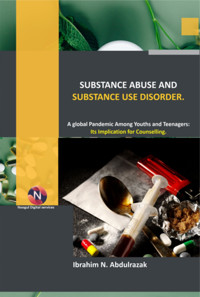










SUBSTANCE ABUSE AND SUBSTANCE USE DISORDERS. A GLOBAL PANDEMIC AMONG TEENAGERS AND YOUTHS:
IMPLICATIONS FOR COUNSELLING.
ALL RIGHTS RESERVED
No part of this publication may be reproduced, stored in a retrieval system, or transmitted in any form or by any means, electronic, mechanical, photocopying, recording, or otherwise, without the prior written permission of the copyright holder.
Copyright © IBRAHIM N.A
First Published, 2022
Noogul Digital Publishing
Foreword
The publication of this book entitled “Substance Abuse and Substance Use Disorders. A Global Pandemic among Teenagers and Youths: Implications for Counseling”, is a most welcome development. Misuse of both legal and illegal substances is a serious national issue that calls for a coordinated effort at all levels of society.
The book is an invaluable item of treasure for the healthcare givers, Counselors, students and the public. The aim of this book is to facilitate an excellent quality healthcare delivery to the patients through effective counselling techniques and therapies.
This book is divided into four sections, in which the First Section discussed on the Epidemiology of Substance Abuse and Substance Use Disorder,
The author wrote this book concisely and in simple language for easy reading and comprehension. Therefore it is recommended not only for healthcare givers and counselors but for students and the general public will.
Prof. Zakari Ladan.
Department of Pure and Applied Chemistry,
Kaduna State University, Kaduna.
Nigeria.
Email: [email protected]
Preface
Substance Abuse and Substance Use Disorders: A Global Pandemic Among Teenagers and youths: Implications for Counselling is a book revealed, to meet contemporary substance-related challenges. Substance/drug abuse with its associated physical, social and mental pathologies has become a global challenge. ‘Innovative Substances’ exposed in this book have added new dimensions to the problems of substances, especially socio-demographic boundaries.
This author has, in this book, creatively classified the substances in the most understandable typology for ease of reading and comprehension by his diverse target audience. The book dedicates each chapter to a class presenting their brief origins, forms, types, pathogenetic sequences, recognition of symptoms, and management of the abuse/addictions as well as their related disorders.
Exciting classes of substances such as Dissociatives and empathogens (aka entactogens) are new additions to the whole discussion of substances in modern day society.
The book focuses on and distils to the role of the counselor and counseling in managing substances in our fast moving society. The easy-to-read format of the book should make it appealing to readers. Professionals in the Social Sciences, Education, Health, and other Helping Professions will find the book highly valuable.
Every family also needs to read and keep a copy.
Emmanuel Ejembi Anyebe PhD, JP.
Associate Professor,
Mental Health Unit, Department of Nursing Sciences,
Faculty of Clinical Sciences,
College of Health Sciences, University of Ilorin
Ilorin 240001,Nigeria.
Mobile: +2348036422771
Email: [email protected]; [email protected]
SUBSTANCE ABUSE AND SUBSTANCE USE DISORDERS. A GLOBAL PANDEMIC AMONG TEENAGERS AND YOUTHS:
IMPLICATIONS FOR COUNSELLING.
Edited by:
Prof. Zakari Ladan
Department of Pure and Applied Chemistry,
Kaduna State University, Kaduna.
Nigeria.
Email: [email protected]
Emmanuel Ejembi Anyebe PhD, JP.
Fellow, West African Postgraduate College of Nurses and Midwives (FWAPCNM)
Fellow, African Institute of Public Health (FAIPH),
Registered Mental Health Psychiatric Nurse (RMHPN)
Associate Professor,
Mental Health Unit, Department of Nursing Sciences,
Faculty of Clinical Sciences,
College of Health Sciences, University of Ilorin
Ilorin 240001,Nigeria.
Mobile: +2348036422771
Email: [email protected]; [email protected]
Ishaku Usman Gadzama PhD
Senior Lecturer,
Department of Sociology, Faculty of Social Sciences,
Ahmadu Bello University, Zaria, Kaduna State
Nigeria
Email: [email protected]
Salamatu Hassan Idris FWACN
Fellow, West African Postgraduate College of Nurses and Midwives (FWAPCNM)
Deputy Director Nursing Education (Paediatrics),
Head, School of Post Basic Nursing Programmes,
Ahmadu Bello University Teaching Hospital, Zaria.
Kaduna State, Nigeria.
Email: [email protected]
Dr. Joshua Jataunamo Oscar
Fellow, West African Postgraduate College of Nurses and Midwives (FWAPCNM)
Asst. Director Nursing Education (Anaesthesia)
Department of Nurse Anaesthesia
Ahmadu Bello University Teaching Hospital, Zaria.
Kaduna State, Nigeria.
Email: [email protected]
Mr. Mohammed Ibrahim Okeme
Asst. Director Nursing Education (Anaesthesia),
Department of Nurse Anaesthesia
Ahmadu Bello University Teaching Hospital, Zaria.
Kaduna State, Nigeria
Email: [email protected]
Dr. Okoosi Sunday Adegoke
Human Physiologist
Ahmadu Bello University Teaching Hospital, Zaria.
Kaduna State, Nigeria
Email: [email protected]
Aisha Mustapha Goni
Senior Education Officer
(Msc. Criminology, MILR, PGDE, B.Sc Sociology, PhD. In View)
School of Post Basic Nursing Programmes,
Ahmadu Bello University Teaching Hospital, Zaria.
Kaduna State, Nigeria
Email: [email protected]
TABLE OF CONTENTS
Forward ------- ii
Preface -------iii
Editors -------iv
SECTION 1: EPIDEMIOLOGY OF SUBSTANCE ABUSE AND SUBSTANCE USE DISORDERS
1.0 The Concept Epidemiology ----8
1.2 Drug Misuse, Drug Abuse and Drug Addiction-11
Summary ------14
SECTION 2: NATURAL HISTORY OF SUBSTANCE ABUSE
2.0 Overview -------17
2.1 Progression in Drug Use ----17
2.2 Patterns of Natural History of Substance Abuse -24
Gender Differences to Substance Abuse --25
Sex and Gender Differences in Substance Use -25
Sex and Gender Differrences in Substance Use
Treatment ------27
Racial/Ethnic Differences ---28
Summary -----29
SECTION 3: SUBSTANCE/DRUG CLASSIFICATIONS AND THEIR ASSOCIATED EFFECTS
3.0 Drug Classification-----32
Poly Drug Use-----32
Types of Poly Substance Use ---32
3.1 STIMULANTS-----33
How are they put to use ----33
Effects of Stimulants ----33
Using Stimulants with other drugs --34
Health and Safety ----35
Dependence and tolerance ---35
3.1.0 Types Of Stimulants -----37
3.1.1 Amphetamines ------38
Chemical Structure ----38
What do they look like ----38
Slang Names -----38
How are Amphetamines Used?---38
Effects of Amphetamines ---39
Overdose -----40
Descending Symptoms of Amphetamines-40
Amphetamines used with other medications (Drugs)41
Long-Term Consequencies ---41
Mental Health and Amphetamine Usage--42
Withdrawal -----42
Treatment Alternatives ----42
3.1.2 Betel Nut ------44
Chemical Structure ----44
Cultural Practice----44
How is it used?-----45
Betel Quids-----45
Effects of Betel Nut ----45
Long-Term Effects ----46
Using Betel Nut with Other Drugs --47
3.1.3 Caffeine ------48
Chemical Structure ----48
How is caffeine used? ----48
Effects of caffeine ----49
Overdose -----50
Long-Term Effects ----51
Using Caffeine with other Drugs --51
Withdrawal -----52
3.1.4 Cocaine ------53
Chemical Structure ----54
Other Names -----54
How is cocaine used?----54
Effects of Cocaine ----54
Overdose -----55
Coming Down Effect----56
Long-Term Consequences ---56
Withdrawal -----57
3.1.5 Ice (Crystal Methamphetamine)---58
Chemical Structure ----56
Other Names -----56
How is it used?-----58
Effects of Ice -----59
Overdose-----60
Coming Down -----61
Long Term Effects of Ice ---61
Ice Psychosis -----62
In healthy people? ----63
Dependence -----64
Mental Health Problems ---65
Mixing ice with other drugs ---65
Withdrawal -----65
Treatment for Ice Misuse ---65
3.1.6 Khat ------67
Chemical Structure ----67
Other Names-----67
What does it look like? ----67
Effects of Khat -----67
Mental Health Risks ----68
Withdrawal -----68
3.1.7 Nicotine ------70
Chemical Structure ----70
Street Names for Cigarettes ---70
How is Nicotine Used? ----70
Effects of Nicotine ----71
Risk Factors -----73
Long-term Effects ----73
Passive Smoking ----74
Using Nicotine with other Drugs --76
Withdrawal -----77
3.1.8 Synthetic Cathinones ----78
Chemical Structure ----78
Types of Cathinones commonly used --78
How are they used? ----79
Effects of Synthetic Cathinones ---79
Using Synthetic Cathinones with other Drugs -81
Health and Safety ----81
Dependence and Tolerance ---82
Coming Down Effect ----82
Summary-----83
3.2 CENTRAL NERVOUS SYSTEM DEPRESSANTS -86
How are they used? ----86
Effects of Depressants ----87
Using Depressants with other drugs --88
Health and safety ----88
Dependence and Tolerance ---89
3.2.0 Types of Central Nervous System Depressants --90
3.2.1 Alcohol ------91
Chemical Structure ----92
Patterns of Alcohol Drinking ---92
Other Names -----93
Effects of Alcohol ----93
Overdose -----94
Coming Down -----95
Long-Term Effects ----95
The Pathophysiology of Alcohol Consummation -96
Alcohol and Mental Health ---97
Alcohol Intoxification ----98
Alcohol Use Disorder ----98
Tolerance and Dependence ---99
Mixing Alcohol with other Drugs --99
Withdrawal -----99
3.2.2 Benzodiazepines -----101
Chemical Structure ----101
Slang Names -----101
Types of Benzodiazepines ---101
Effects of Benzodiazepines ---102
Overdose -----103
Long Term Effects----104
Using Benzodiazepines with other Drugs -104
Withdrawal -----105
3.2.3 GHB (Gamma Hydroxybutyrate) --106
Chemical Structure ----106
Other Names -----106
How is it used?-----106
Effects of GHB -----107
Overdose -----107
Long-Term Effects ----108
Using GHB with other drugs ---108
Withdrawal -----108
3.2.4 KAVA------110
Chemical Structure ----110
Other Names -----110
How is it used? -----111
Effects of Kava -----111
Long-Term Effects ----112
Impact of Mood and Environment --113
Using Kava with other Drugs ---114
Withdrawal -----115
Summary -----116
3.3 HALLUCINOGENS ----119
How are they used ----121
Effects of Psychedelics ----121
Bad Trips -----122
Flashbacks -----123
Using Psychedelics with other drugs --123
Health and Safety ----124
Dependence and Tolerance ---124
3.3.0 Types of Hallucinogens ----126
3.3.1 LSD (Lysergic Acid Diethylamide) --127
Chemical Structure ----127
What it looks like ----127
Other Names -----127
How is LSD used? ----128
Effects of LSD -----128
Overdose -----128
Bad Trips -----129
Coming Down -----129
Long-Term Effects ----129
LSD and Mental Health ---130
Tolerance -----130
Mixing LSD with other Drugs ---130
Withdrawal -----131
3.3.2 Ayahuasca -----132
Chemical Structure ----133
What does it look like? ----133
Other Names -----133
Effects of Ayahuasca ----133
Set and Setting -----134
Bad Trips -----134
Long-Term Effects ----135
Tolerance and Dependence ---135
Mixing Ayahuasca with Other Drugs --135
Health and Safety ----135
3.3.3 DMT (Dimethyltryptamine) ---137
Chemical Structure ----137
What Does DMT Look Like---137
Other Names -----137
How is DMT used? ----138
Effects of DMT ----138
DMT and Mental Health ---140
Bad Trips -----140
Flashbacks -----140
Tolerance and Dependence ---141
3.3.4 NBOMes (N-methoxybenzyl) ---142
Chemical Structure ----142
Other Names for NBOMes---142
What do they look like? ---142
Effects of NBOMes ----142
Overdose -----143
Long-Term Effects ----144
Taking NBOMes with other Drugs --144
3.3.5 Psilocybin (Magic Mushrooms) ---145
Chemical Structure ----145
What do they look like?----145
How are they used? ----145
Other Names -----145
Effects of Magic Mushrooms ---145
Mushroom Poisoning ----146
Effects of Poisonous Mushrooms --146
Agaricus Xanthodermus (Yellow-Coloured Mushroom) 147
Death Cap (Amanita Phalloides)---148
Overdose -----149
Bad Trips -----149
Coming Down-----150
Long-Term Effects ----150
Using Mushrooms with other drugs --150
Tolerance and Dependence ---151
Health and safety ----151
Withdrawal -----151
Summary-----152
3.4 CANNABINOIDS -----155
Classes of cannabinoids ---156
The Endocannabinoid System ---157
What do cannabinoids do?---157
How are they used?----157
Effects of cannabinoids ----157
Cannabinoids and other drugs ---158
Health and Safety ----159
Dependence and Tolerance --- 159
3.4.0 Types of Cannabinoids ----160
3.4.1 Butane Hash Oil (BHO)----161
Chemical Structure ----161
Other Names -----161
How is it used -----161
Effects of BHO-----162
Long-Term effects ----163
Withdrawal -----163
3.4.2 Cannabidol (CBD)----164
Chemical Structure ----164
What does it look like? ----164
Other Names -----165
How is it used-----165
Effects of CBD -----165
Long-Term Effects----166
Mixing CBD with other Drugs ---167
3.4.2 Cannabis -----168
Chemical Structure ----168
Other Names -----168
Historical Antecedents of Canabis --168
How is it used?-----170
Effects of Cannabis----170
Long-Term Effects ----171
Using cannabis with other drugs --172
Withdrawal -----172
3.4.4 Medicinal Cannabis ----173
Chemical Structure ----173
The Endocanabinoid System ---173
Types and forms of Medicinal cannabis--174
Not recommended ---174
The side effects of Medicinal Cannabis Treatment176
General Cautions ----177
3.4.5 Synthetic Cannabinoids----179
Chemical Structure ----179
What do Synthetic Cannabinoids Look like?-179
Other Names -----180
How are Synthetic Cannabinoids used?--180
Effects of Synthetic Cannabinoids --180
Set and Setting -----181
Overdose -----181
Long-Term Effects----182
Tolerance and Dependence ---182
Mixing Synthetic cannabinoids with other drugs -182
Health and Safety ----183
Summary -----185
3.5 OPIOIDS ------187
The opioids receptor system---188
How are they used?----189
Opioid-Based Medications---189
Effect of Opioids ----190
Long-Term Effects Include---191
Using opioids with other Drugs ---191
Health and Safety ----191
Pain Management Strategies ---192
Tolerance and Dependence ---192
3.5.0 Types of Opioids-----193
3.5.1 Buprenorphine -----194
Chemical Structure ----194
Other Names -----194
How is it used?-----195
How effective is it?----195
Buprenorphine Maintenance Therapy--196
Therapy Component ----196
Advantages of Buprenorphine Maintenance over
Heroin Use -----197
Effect of Buprenorphine ---198
Side Effects -----198
Withdrawal -----198
3.5.2 Codeine------200
Chemical Structure ----200
Why is this Medication Prescribed?--200
Mode of Administration of Codeine--201
Other Names -----201
Effects of Codeine ----201
Overdose -----202
Long-Term Effects of Codeine---204
Withdrawal -----204
3.5.3 Buprenorphine – Long Acting Injectable -206
Chemical Structure ----206
What is depot Buprenorphine? ---206
Other Names -----207
How is it used?-----207
Effects of Buprenorphine---209
3.5.4 Fentanyl ------212
Chemical Structure ----212
Illicitly Manufactured Fentanyl ---212
Street Names -----213
What it looks like ----213
Medicinal Use -----213
Illicit Use -----213
Effects of Fentanyl ----214
Fentanyl Overdose ----215
Long-Term Effects ----216
Using Fentanyl with other drugs --216
Withdrawal -----217
3.5.5 Heroin ------218
Chemical Structure ----218
Other Names -----218
How is it used? -----219
Effects of Heroin?----219
Heroin Overdose ----220
Coming Down-----220
Long-Term Effects----221
Using Heroin with Other Drugs ---221
Withdrawal-----221
3.5.6 Methadone -----223
Chemical Structure ----224
Other Names -----224
How is it used?-----224
How effective is it?----225
Advantages of Methadone Maintenance over Heroin
Use------225
Effects of Methadone ----225
Overdose -----227
Long-Term effects ----227
Withdrawal -----227
3.5.7 Naloxone ------228
Chemical Structure ----228
Counselling Intervention ---228
How is it used -----229
Effects of Naloxone ----229
Naloxone and Opioid Overdose ---230
3.5.8 Opium ------231
Chemical Structure ----231
History of Opium ----231
What does it look like? ----232
Slang Names-----232
How is opium used?----232
Effects of Opium ----232
Overdose -----233
Long-Term Effects ----234
Opium and Lead Poisoning ---234
Mixing Opium with other Drugs --234
Withdrawal -----235
3.5.9 Oxycodone -----236
Chemical Structure ----237
Types of Oxycodone ----237
How is Oxycodone used? ---237
Effects of Oxycodone ----237
Overdose -----238
Long-Term Effects ----239
Using Oxycodone with other Drugs --239
Withdrawal -----239
Summary -----241
3.6 DISSOCIATIVES -----244
How are they used? ----245
Effects of Dissociatives ----245
Long-Term Effects ----246
Health and Safety ----247
Dependence and Tolerance ---247
3.6.0 Types of Dissociatives ----249
3.6.1 Ketamine -----250
Chemical Structure ----251
Other Names -----251
How is it used?-----251
Effects of Ketamine ----251
Overdose -----252
Coming Down -----252
Long-Term Effect----252
Ketamine Bladder Syndrome ---253
Using Ketamine with Other Drugs --253
Withdrawal -----253
3.6.2 Methoxetamine -----254
Chemical Structure ----254
How is it used? ----254
Effects of Methoxetamine (MXE)--254
Using Methoxetamine with other Drugs -255
Health and Safety ----256
Dependence and Tolerance ---256
Urinary Tract Effects ----256
Coming Dowm/Withdrawal---257
3.6.3 Nitrous Oxide -----258
Chemical Structure ----258
How is it used?-----258
Other Names -----258
Effects of Nitrous Oxide ---258
Long-Term Effects ----259
Mixing with other drugs ---260
Health and Safety ----260
Withdrawal -----261
Summary -----262
3.7 EMPATHOGENS -----264
Empathogens and the Brain ---266
How are they used?----266
Street Names -----267
Effects of Empathogens ---267
Empathogens and Other Drugs ---268
Health and Safety ----268
Dependence and Tolererance ---268
3.7.0 Types of Empathogens ----269
3.7.1 Ethylone ------270
Chemical Structure ----270
Other Names -----270
How is ethylone used?----270
Effects of Ethylone ----270
Impact of Mood and Environment --271
Using Ethylone with other drugs --272
Health and Safety ----272
Dependence and Tolerance ---272
3.7.2 MDMA (Methylenedioxymethamphetamine)-273
Chemical Structure ----274
Other Names-----274
How is MDMA used?----274
Effects of MDMA ----274
MDMA, Dehydration and Overheating --275
Coming Down-----276
Long-Term Effects ----277
Mixing MDMA with other Drugs --277
Withdrawal -----277
3.7.3 Mephedrone -----279
Chemical Structure ----279
Other Names -----279
How is Mephedrone used? ---279
Effects of Mephedrone ----280
Overdose -----281
Coming Down -----281
Long-Term Consequences ---281
Using Mephedrone with other Drugs --281
Withdrawal -----282
3.7.4 PMA and PMMA ----283
Chemical Structure ----283
How are they Used? ----283
Slang Names -----283
Effects of PMA and PMMA ---283
Physical Health Risks----284
Overdose -----285
Long-Term Consequences ---285
Using PMA or PMMA with other Drugs -285
Addiction and Tolerance PMA or PMMA -285
Summary-----286
SECTION 4: COUNSELLING FOR SUBSTANCE ABUSE AND SUBSTANCE USE DISORDERS .
4.0 Defining Counselling -----289
Substance Abuse and Substance Use Disorder Counselor290
Substance Abuse vs. Addiction ---291
4.1 Causes & Risk Factors for Addiction --292
4.2 Types & Levels of Rehab Treatment --293
Detoxification -----293
Inpatient/residential Rehabilitation--294
Outpatient rehab & Intensive Outpatient Programs-294
4.3 Drug Addiction Therapy Programs ---295
Addiction Treatment ----295
Behavioural Therapy ----296
Reprocessing (EMDR) ---301
Therapies ----304
Therapy ----306
Conclusion -----308
1.0 THE CONCEPT EPIDEMIOLOGY
The study and analysis of the distribution, patterns, and determinants of health and disease conditions in a given population is known as epidemiology. It is a cornerstone of public health, influencing policy and evidence-based practice by identifying disease risk factors and preventative healthcare priorities. Epidemiology is the discipline of medicine that studies all of the factors that influence whether or not diseases and disorders exist. Epidemiological study enables us to learn how many people are affected by a sickness or problem, if those numbers are changing, and how the disorder affects society and the economy (LastJM, 2012).
Many epidemiological studies try to figure out how the number of persons affected by a disease fluctuates over time. However, the definition of a condition changes over time, making calculations more challenging. Even scientists working in the same profession may disagree about the best technique to quantify or define a certain illness.
Epidemiological studies of substance use and substance use disorders (SUDs) have yielded a wealth of information on substance use patterns in globally representative populations (Degenhardt et al. 2008; Johnston et al. 2011; SAMHSA 2011). For decades, the National Institute on Drug Abuse (NIDA), the National Institute on Alcohol Abuse and Alcoholism (NIAAA), and the Services Administration for Mental Health and Substance Abuse (SAHMSA) have spent significant resources tracking drug use, abuse, and effects.
Herbs, leaves, and plants have been used to heal and control disease since the dawn of time. If medications are delivered correctly, they do not pose any hazard. (Sambo, 2008). Teenagers are the most vulnerable to substance misuse because they experiment with drugs in various ways.
Substance use is frequent among adolescents, according to epidemiological research, and the age of first use is falling; meaning that adolescents now start using substances earlier than they used to. A considerable number of them thereafter develop a stereotypic pattern of use. It is generally recognized that some psychoactive substances have particularly negative impacts on mental health and cognitive functions, increasing the demand for mental health services for children and adolescents.
The findings of Nigeria's first large-scale, nationwide survey to investigate the extent and patterns of drug usage, are intended to provide the baseline information needed for the design and implementation of evidence-based and targeted prevention, treatment, and care programs to reduce drug demand and avoid morbidity and mortality associated with drug use.
The findings of this survey revealed a high degree of past-year use of psychoactive substances in Nigeria, particularly cannabis, non-medical use of prescription opioids (mostly tramadol, but also codeine or morphine) and cough syrups (containing codeine or dextromethorphan).
In Nigeria, the prevalence of any drug use in the previous year was estimated to be 14.4%, or 14.3 million people aged 15 to 64 years . When compared to the global yearly prevalence of any drug use among adults of 5.6 percent in 2016, Nigeria has a relatively high rate of drug usage.
Fig.1.0 UNODC, World Drug Report 2018: Drug Use in Nigeria 2018
In Nigeria, the prevalence of psychoactive substances other than alcohol was higher among men in the previous year, while the gender gap in non-medical use of prescription opioids, tranquilizers, and cough syrups was less pronounced. Those between the ages of 25 and 39 years were the most likely to take drugs in the previous year, while those under the age of 24 were the least likely. The most often used drug was cannabis, followed by opioids, primarily non-medical usage of prescription opioids and cough syrup. (UNODC, 2018 World Drug Report.)
Annual Prevalence of Drug Use By Gender in Nigeria 2017
Drug Type
Men
Women
National
Cannabis
9360000
1280000
10640000
Opioids
3010000
1606000
4610000
Heroin
71000
16000
87000
Pharmaceutical Opioids (Tramadol, Codeine, Morphine)
3008000
1600000
4608000
Cocaine
71000
21000
92000
Tranquilizers/Sedatives
270000
212000
481000
Amphetamines
161000
77000
238000
Pharmaceutical Amphetamine and Illicit Amphetamine
96400
58100
155000
Methamphetamine
69500
19000
89000
Ecstasy
211000
129000
340000
Hallucinogens
16500
10000
27000
Solvents/Inhalants
248000
51000
300000
Cough Syrups
1157000
1200000
2360000
** Aggregated categories were adjusted for the proportion of users known to be poly-drug users weighted by poly-drug use in each survey (nationally 75 per cent of users were poly-drug users). Gender-specific poly-drug user adjustments were also applied to drug use categories of opioids and amphetamines. As a result, numbers for each drug type will not sum to national totals. Due to rounding of the estimates (percentage or numbers) the estimates may not add up.
Source:UNODC, World Drug Report 2018: Drug Use in Nigeria 2018
Key Findings:
In Nigeria, one in every seven people aged 15 to 64years had taken a substance in the previous year (other than tobacco and alcohol). The prevalence of any drug use in the previous year is projected to be 14.4% (range 14.0-14.8%), equal to 14.3 million people aged 15 to 64 who used a psychoactive substance for non-medical purposes in the previous year.
In Nigeria, one out of every four drug users is a woman. In Nigeria, men (annual prevalence of 21.8 percent or 10.8 million men) reported using drugs in the previous year more than women (annual prevalence of 7.0 percent or 3.4 million women).
Those aged 25 to 39years had the highest levels of drug usage in the previous year.
Drug user problems affect one out of every five people who used drugs in the previous year.
The most widely used substance is cannabis. In the previous year, an estimated 10.8% of the population, or 10.6 million people, had used cannabis. In the general population, the average age of first cannabis use was 19 years.
Men were 7 times more likely than women to consume cannabis (18.8% vs. 2.6%), while the gender disparity in non-medical use of pharmaceutical opioids (such as tramadol) was less pronounced (6 per cent among men vs. 3.3 per cent among women).
In the previous year, an estimated 4.7 percent of the population, or 4.6 million people, used opioids (such as tramadol, codeine, or morphine) for non-medical reasons.
Cough syrups containing codeine and dextromethorphan are used non-medically by 2.4 percent of the adult population (nearly 2.4 million people). Cough syrup abuse is practically identical among males (2.3%) and women (2.5%).
Though not negligible, non-medical use of tranquilizers (0.5%), ecstasy (0.3%), inhalants (0.3%), amphetamines (0.2%), and cocaine (0.1%) are all lower than the drugs discussed above.2
1.2 DRUG MISUSE, DRUG ABUSE AND ADDICTION
Addiction, drug abuse, and misuse are all major public health issues. Many individuals frequently use these phrases interchangeably since they all relate to the use of illicit drugs as well as the improper use of legal substances (such as cigarettes, alcohol, and prescription medications). But each issue's interventions differ substantially from one another. The importance of accurately diagnosing a person's drug use is due to this. Medication on prescription has a lot of positive impacts. They can make us live longer, healthier lives when used properly under medical care. However, these same drugs have the capacity to have fatal results and serious adverse effects, particularly when overused or abused. Prescription drugs should only be taken by the individual for whom they are designed and exactly as directed due to this risk of damage.
Drug Misuse
Prescription medications are commonly related with drug misuse. Prescription medications are intended to be taken exactly as prescribed by doctors. This is because these medications might have negative side effects if the instructions are not followed.
Drug Misuse occurs when these drugs are used for purposes that are not in accordance with legal or medical norms.
The FDA (2019) defines prescription medication MISUSE as failing to follow medical directions, although the individual using the medicine is not intending to "get high." If a person is unable to fall asleep after taking a single sleeping tablet, they may take another pill an hour later, reasoning, "That will do the job." Alternatively, a person may offer his headache medicine to a buddy in agony. Those are examples of drug abuse because, according to the FDA, the individual is treating oneself but not in accordance with the recommendations of their health care professionals. Prescription medication abuse can include: taking the wrong dose; taking a dose at the wrong time; forgetting to take a dose; and discontinuing medicine too soon, according to the Institute for Safe Medication Practices.
Drug Abuse