87,99 zł
Dowiedz się więcej.
- Wydawca: Science & Technology Publishing
- Kategoria: Literatura popularnonaukowa•Nauki ścisłe
- Język: angielski
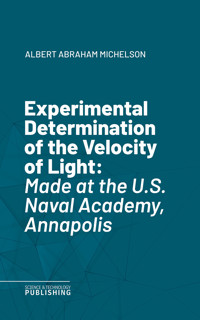
Experimental Determination of the Velocity of Light Made at the U.S. Naval Academy, Annapolis is a detailed scientific report authored by Albert Michelson, documenting a pioneering experiment conducted in the late 19th century to measure the speed of light with unprecedented accuracy. The book provides a comprehensive account of the experimental setup, methodology, and results obtained at the U.S. Naval Academy in Annapolis, Maryland. Michelson, who would later win the Nobel Prize in Physics, meticulously describes the apparatus he designed, including the use of rotating mirrors and precise measurement techniques, which marked a significant advancement over previous attempts to determine the velocity of light. The narrative begins with an overview of the historical context and the importance of accurately measuring the speed of light, referencing earlier work by scientists such as Fizeau and Foucault. Michelson then delves into the technical aspects of his experiment, offering detailed explanations of the optical and mechanical components, calibration procedures, and the challenges encountered during the process. The book includes diagrams, tables, and mathematical analyses that illustrate the precision and rigor of the investigation. Throughout the text, Michelson emphasizes the importance of minimizing sources of error and provides a thorough discussion of the corrections applied to the raw data. The results of the experiment, which yielded a value for the speed of light that was remarkably close to the modern accepted value, are presented alongside a critical evaluation of their accuracy and reliability. In addition to its scientific content, the book offers insights into the collaborative efforts of the Naval Academy staff and students, highlighting the educational value of hands-on research. Experimental Determination of the Velocity of Light Made at the U.S. Naval Academy, Annapolis stands as a landmark work in the history of physics, showcasing the ingenuity and dedication required to push the boundaries of scientific knowledge. It remains a valuable resource for historians of science, physicists, and anyone interested in the evolution of experimental techniques in the measurement of fundamental physical constants.
Ebooka przeczytasz w aplikacjach Legimi lub dowolnej aplikacji obsługującej format:
Liczba stron: 59
Rok wydania: 2025