Uzyskaj dostęp do tej i ponad 240000 książek od 14,99 zł miesięcznie
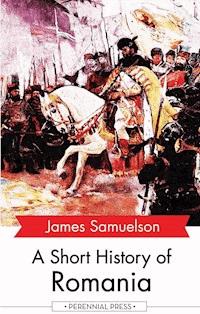
- Wydawca: Perennial Press
- Kategoria: Literatura popularnonaukowa•Nauki humanistyczne
- Język: angielski
Although the earliest authentic records of Romania or, more correctly speaking, of Dacia, the Roman province which embraced Romania, Transylvania, and some adjoining territories of to-day, do not reach further back than about the century immediately preceding the Christian era, a good deal of information is to be gathered from the writings of Herodotus, Dion Cassius, and other early historians regarding the Getæ, the race from whom the Dacians sprang. The Getæ were in all probability a branch of the Thracians, who were amongst the earliest immigrants from the East; and for some time before they appeared in Dacia, which was situated on the northern side of the Danube (or Ister, as it was called by the Romans), they had settled between the south bank of that river and the Balkans (Mount Hæmus of the Romans). About the fourth century b.c., however, the Getæ had crossed the river, either driven north by an inimical neighbouring tribe, the Triballi, or in consequence of the growth of the nation itself. When they were first encountered by the Greeks, they occupied the eastern part of Dacia, reaching probably to one portion of the Black Sea; and some account of them is given by Ovid, who was exiled to their vicinity, but little is known of them until they came in contact with the Roman armies. The Getæ have little direct interest for us, but as we find associated with them the names of Philip of Macedon, Alexander the Great, and Lysimachus, a few words concerning their connection with those heroes may not be out of place, and will at least serve to fix a period in the history of the people...
Ebooka przeczytasz w aplikacjach Legimi na:
Liczba stron: 227
Rok wydania: 2018
Odsłuch ebooka (TTS) dostepny w abonamencie „ebooki+audiobooki bez limitu” w aplikacjach Legimi na: