Uzyskaj dostęp do tej i ponad 240000 książek od 14,99 zł miesięcznie
- Wydawca: ADMX Publishing
- Kategoria: Poradniki
- Język: angielski
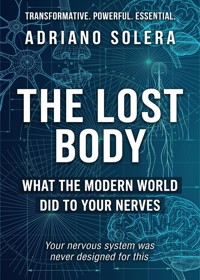
What if the anxiety epidemic among our children isn't a mental health mystery, but the predictable result of a childhood we rebuilt in under five years? Between 2011 and 2015, smartphone ownership among teens exploded from 23 to 73 percent — and adolescent anxiety, depression, loneliness, and self-harm rose sharply alongside it. In The Lost Body, philosopher Adriano Solera weaves together neuroscience, developmental psychology, and hard data to explain what really happened when the feed replaced the playground, and why our children are physically present but psychologically somewhere we cannot follow. This is not a panic and not a lecture. It is a clear-eyed account of how a generation grew up inside an unmonitored experiment — and a hopeful blueprint for how families, schools, and society can restore what was lost. Inside, you'll discover: - Why adolescence is the worst possible time to hand a child a device engineered to defeat self-control - How the collapse of free play and risk left children fragile long before phones arrived - The distinct crises facing girls in the mirror and boys in retreat — and the mechanisms behind each - Why sleep and attention quietly erode young minds, and what actually reverses it - Real case files of families who pulled the plug — the resistance, the boredom, and the recovery - A practical, age-by-age blueprint for parents from toddler to teen, plus what schools and governments must finally do Your child's deepest needs have not changed — and the world is still there, if we're willing to protect their access to it.
Ebooka przeczytasz w aplikacjach Legimi na:
Liczba stron: 342
Rok wydania: 2026
Odsłuch ebooka (TTS) dostepny w abonamencie „ebooki+audiobooki bez limitu” w aplikacjach Legimi na: