Uzyskaj dostęp do tej i ponad 240000 książek od 14,99 zł miesięcznie
- Wydawca: epubli
- Kategoria: Biznes, rozwój, prawo•Biznes, rozwój
- Język: angielski
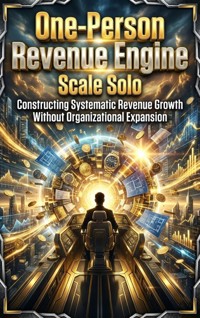
This book examines how solo entrepreneurs can engineer sustainable revenue growth by optimizing business systems rather than expanding team capacity. It explores the mechanics of scaling income through strategic leverage, intelligent automation, and refined value delivery while maintaining independent operation. The content investigates patterns in high-performing solo businesses that compound revenue without proportional increases in time investment or operational complexity. It reframes assumptions about growth trajectories, revealing how independent professionals can construct revenue engines that operate through systematic processes, strategic positioning, and multiplicative rather than additive business models. Through exploration of productized services, recurring revenue structures, automation frameworks, and value-based pricing, the book navigates the tension between market expectations for scale and the distinct advantages of solo operation. It addresses how entrepreneurs can design revenue systems that generate consistent income streams while preserving autonomy over schedule, client selection, and strategic direction. The framework presented examines sustainable approaches to solo revenue optimization—avoiding both artificial income ceilings and burnout-inducing overextension. It explores practical strategies for workflow systematization, client ascension paths, passive income integration, and market positioning that enable financial growth without organizational complexity or team management overhead.
Ebooka przeczytasz w aplikacjach Legimi na:
Liczba stron: 167
Rok wydania: 2026
Odsłuch ebooka (TTS) dostepny w abonamencie „ebooki+audiobooki bez limitu” w aplikacjach Legimi na: