Uzyskaj dostęp do tej i ponad 240000 książek od 14,99 zł miesięcznie
- Wydawca: epubli
- Kategoria: Literatura popularnonaukowa•Nauki humanistyczne
- Język: angielski
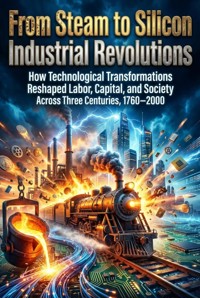
Industrial revolutions are not single events but extended periods of technological, economic, and social transformation that fundamentally reorganize production systems and power relations. This comprehensive analysis examines three major industrial transformations—mechanization and steam power, electrification and mass production, and computerization and automation—tracing how each wave reshaped work, urbanization, global trade, and social structures. Drawing on factory records, labor testimonies, patent archives, and economic data, this book reveals how technological shifts created new industries while destroying old ones, how capital investment patterns changed, and how workers adapted to or resisted new production methods. It explores the relationship between innovation and inequality, the role of state policy in promoting or constraining industrial development, and how different societies experienced industrialization based on their existing institutions and resources. The narrative examines working conditions across industrial eras, the evolution of labor movements, environmental consequences of industrial production, and how technological change affected gender roles, education systems, and family structures. It analyzes boom-and-bust cycles, the displacement of craft labor, and the concentration of economic power. Without romanticizing progress or technology, this work provides rigorous analysis of how industrial transformations created modern economies and the human costs involved.
Ebooka przeczytasz w aplikacjach Legimi na:
Liczba stron: 264
Rok wydania: 2026
Odsłuch ebooka (TTS) dostepny w abonamencie „ebooki+audiobooki bez limitu” w aplikacjach Legimi na: