Uzyskaj dostęp do tej i ponad 240000 książek od 14,99 zł miesięcznie
- Wydawca: epubli
- Kategoria: Literatura popularnonaukowa•Nauki humanistyczne
- Język: angielski
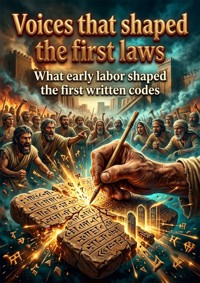
Long before Hammurabi chiseled his code into diorite, the cities of Mesopotamia were already wrestling with a profound question: how does a society govern itself when no single ruler commands absolute authority? This book traces the emergence of legal thought, bureaucratic order, and institutional power across the fertile crescent, from the first temple records of Uruk to the imperial ambitions of Babylon. It argues that the true cradle of civilization was not agriculture or metallurgy alone, but the slow and often brutal invention of systems that could manage people at scale. Through the lens of administrative tablets, temple accounts, and early legal compilations, the narrative reveals how writing itself became a tool of control and a foundation for justice. The reader moves through the rise of the city-state, the codification of social hierarchy, and the priestly negotiation of divine will against human need. Each chapter examines a moment when order was imposed, resisted, or reimagined. The final sections consider how these ancient experiments in governance shaped the political DNA of later empires from Rome to Baghdad. This is not a survey of kings and battles, but a study of the quiet machinery of civilization: the ledger, the decree, the oath, and the court. For readers interested in the origins of law, statecraft, and the deep history of institutional power, this book offers a grounded and sobering look at what it cost to build a world that could be ruled by words.
Ebooka przeczytasz w aplikacjach Legimi na:
Liczba stron: 208
Rok wydania: 2026
Odsłuch ebooka (TTS) dostepny w abonamencie „ebooki+audiobooki bez limitu” w aplikacjach Legimi na: