Uzyskaj dostęp do tej i ponad 240000 książek od 14,99 zł miesięcznie
- Wydawca: epubli
- Kategoria: Biznes, rozwój, prawo•Biznes, rozwój
- Język: angielski
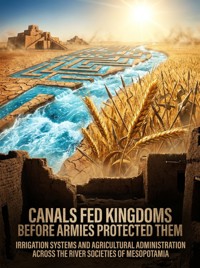
Mesopotamian civilization survived because water could be controlled. Between the unpredictable flows of the Tigris and Euphrates rivers, early states learned that irrigation, labor coordination, and food storage were inseparable from political authority itself. This account explores the agricultural technologies that allowed Babylonian and earlier Mesopotamian societies to expand beyond subsistence farming. Large canal networks redirected river systems across arid landscapes, supporting grain production capable of sustaining dense urban populations. Irrigation management required centralized planning, seasonal labor mobilization, and increasingly sophisticated bureaucracy. The book also examines how environmental dependence shaped political structure. Flood control, crop distribution, and resource allocation strengthened palace institutions and temple economies while making societies vulnerable to ecological disruption and administrative failure. Agricultural abundance therefore became both the foundation of prosperity and a source of political fragility. Mesopotamia emerges here as a hydraulic civilization whose power depended on transforming water management into enduring state infrastructure.
Ebooka przeczytasz w aplikacjach Legimi na:
Liczba stron: 191
Rok wydania: 2026
Odsłuch ebooka (TTS) dostepny w abonamencie „ebooki+audiobooki bez limitu” w aplikacjach Legimi na: