Uzyskaj dostęp do tej i ponad 240000 książek od 14,99 zł miesięcznie
- Wydawca: epubli
- Kategoria: Literatura popularnonaukowa•Nauki humanistyczne
- Język: angielski
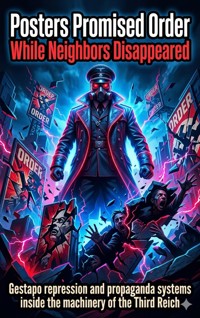
This book examines how hidden instruments of state power carry out sanctioned killings, tracing the lingering erosion of trust that follows when violence is justified in the name of national security. It explores how covert operations leave behind not only victims, but also fractured public memory, competing narratives, and enduring suspicion toward institutions meant to protect society. The work focuses on three interconnected mechanisms that transform covert killing into lasting historical memory. First, deniable weapons such as the KGB's cyanide spray gun or concealed poison devices enabled assassinations to resemble accidents or suicides, creating ambiguity that shielded perpetrators while fostering public doubt. Cases involving Lev Rebet and Stepan Bandera illustrate how unresolved uncertainty can outlive the events themselves, producing competing interpretations between official accounts and public suspicion. Second, bureaucratic layering within intelligence systems masks extraordinary violence behind procedural routines and national security language. Discussions surrounding the death of Patrice Lumumba demonstrate how responsibility can become diffused across institutions, making morally consequential acts appear administratively distant. Third, technological distancing through drone warfare transforms killing into a remote bureaucratic process while simultaneously generating digital evidence, leaked documents, and whistleblower testimony that rehumanize victims and challenge sanitized narratives. These dynamics reveal how state violence can become normalized through routine systems while leaving documentary traces that continue to shape public debate, historical accountability, and collective memory long after the operations themselves have ended.
Ebooka przeczytasz w aplikacjach Legimi na:
Liczba stron: 237
Rok wydania: 2026
Odsłuch ebooka (TTS) dostepny w abonamencie „ebooki+audiobooki bez limitu” w aplikacjach Legimi na: