117,99 zł
Dowiedz się więcej.
- Wydawca: epubli
- Kategoria: Literatura popularnonaukowa•Nauki humanistyczne
- Język: angielski
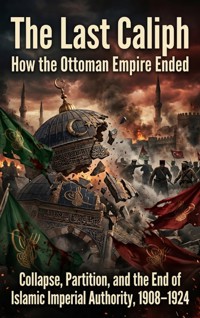
On March 3, 1924, Abdülmecid II boarded a train from Istanbul into exile, carrying the title of Caliph — spiritual leader of the world's Sunni Muslims — for the last time in history. Mustafa Kemal's new Turkish republic had abolished the caliphate, severing a chain of Islamic imperial authority that traced itself back to the companions of the Prophet. It was the final act in a dissolution that had been unfolding for over a century, accelerated by two Balkan wars, a catastrophic World War, and the ambitions of European powers who had long treated the Ottoman Empire as a inheritance to be divided. This book reconstructs the Ottoman endgame as both an imperial collapse and a civilizational transformation. It traces the Young Turk revolution of 1908, the catastrophic decision to enter World War I alongside Germany, the genocidal campaigns against Armenian and other Christian minorities, and the post-war partition negotiations that reduced a six-century empire to a rump Anatolian state. It follows the War of Independence that Kemal launched against occupation forces — and the radical secularist project he imposed once victory was secured. Drawing on Ottoman imperial archives, British Foreign Office records, diplomatic correspondence, and survivor testimony, this is a rigorous account of how one of history's most enduring empires dissolved — and what its ending revealed about the forces reshaping the modern Middle East.
Ebooka przeczytasz w aplikacjach Legimi lub dowolnej aplikacji obsługującej format:
Liczba stron: 270
Rok wydania: 2026