107,99 zł
Dowiedz się więcej.
- Wydawca: epubli
- Kategoria: Literatura popularnonaukowa•Nauki humanistyczne
- Język: angielski
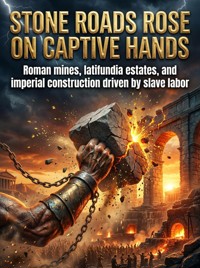
Rome celebrated its roads, aqueducts, and expanding cities as symbols of civilization. Yet beneath every monument stood an economic system dependent on coerced labor drawn from conquest, trade, and inherited bondage. The empire's prosperity rested not only on military power, but on the constant movement of enslaved bodies across its territories. This book examines slavery as the central engine of the Roman imperial economy. From silver mines in Hispania to agricultural latifundia in Italy and massive urban construction projects, enslaved labor sustained production at every level of Roman society. Grain exports, metal extraction, and infrastructure expansion all depended on a supply system maintained through warfare and commercial networks spanning the Mediterranean. The narrative also explores Roman legal doctrine surrounding human ownership. Jurists developed detailed classifications regulating sale, punishment, inheritance, and manumission, creating a structure where certain enslaved individuals could gain limited economic rights while remaining legally subordinate. Freedom itself became a controlled mechanism serving imperial stability rather than humanitarian reform. By tracing labor, law, and coercion together, the book reveals how Roman grandeur emerged through institutions designed to transform conquest into permanent economic dependence.
Ebooka przeczytasz w aplikacjach Legimi lub dowolnej aplikacji obsługującej format:
Liczba stron: 179
Rok wydania: 2026