Uzyskaj dostęp do tej i ponad 240000 książek od 14,99 zł miesięcznie
- Wydawca: epubli
- Kategoria: Literatura popularnonaukowa•Nauki humanistyczne
- Język: angielski
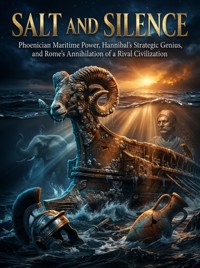
Before Rome became eternal, another civilization built its world at sea. Carthage was not merely a city — it was a system: a commercial intelligence mapped across the entire Mediterranean basin, threading Phoenician colonies from Tyre to Cadiz into a living network of metal, grain, and purple dye. Its harbors did not exist for the glory of conquest but for the discipline of exchange. Understanding Carthage means understanding a form of power that Rome could never fully comprehend — and therefore could never fully tolerate. When Hannibal Barca crossed the Alps in 218 BC, he did not simply surprise Rome with elephants on a mountain passage. He executed a logistical doctrine centuries in the making, born of Phoenician commercial precision translated into military science. At Cannae in 216 BC, his double-envelopment annihilated an army of nearly 70,000 men — not through brute force, but through geometry, patience, and the studied manipulation of Roman tactical assumptions. Cannae was not a battle. It was a lesson Rome survived but never forgave. What followed was not war. It was erasure. The Third Punic War saw Rome impose a blockade of deliberate totality — strangling supply, burning fleets, dismantling walls stone by stone — until a city of half a million was reduced to ash and its survivors sold into slavery. Cato's repetitive demand, Carthago delenda est, was not military advice. It was cultural anxiety crystallized into policy. Rome did not simply defeat Carthage.
Ebooka przeczytasz w aplikacjach Legimi na:
Liczba stron: 630
Rok wydania: 2026
Odsłuch ebooka (TTS) dostepny w abonamencie „ebooki+audiobooki bez limitu” w aplikacjach Legimi na: