Uzyskaj dostęp do tej i ponad 240000 książek od 14,99 zł miesięcznie
- Wydawca: epubli
- Kategoria: Literatura popularnonaukowa•Nauki humanistyczne
- Język: angielski
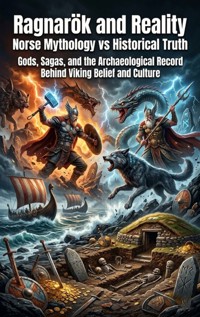
The Norse myths are among the most vivid survival narratives in human history — a cosmos perpetually threatened by chaos, sustained by gods who were themselves mortal, and destined to end in Ragnarök, a final catastrophic battle from which a new world would emerge. But how much of what modern audiences know about Viking belief actually reflects the world the Norse inhabited, and how much is medieval Christian transcription, romantic nationalism, or twentieth-century popular culture? This book examines the distance and overlap between Norse mythology as recorded in the Poetic Edda and Prose Edda and the archaeological, runological, and historical evidence of actual Viking religious practice. Drawing on burial site analysis, runic inscriptions, skaldic poetry, and comparative religious scholarship, it reconstructs what Norse communities appear to have genuinely believed — the role of ritual sacrifice, the plurality of local cults, the fluid boundary between gods and ancestors, and the ways belief adapted across the Norse diaspora from Scandinavia to Iceland, Greenland, and the British Isles. The narrative traces how Snorri Sturluson's thirteenth-century systematization of Norse myth shaped — and distorted — the record, and how nineteenth-century nationalism further transformed Viking religion into something its original practitioners would not have recognized. It also examines the modern revival of Norse paganism, asking what happens when mythology is reconstructed from incomplete and ideologically filtered sources. A rigorous, accessible account of one of history's most compelling mythological traditions — and the archaeological reality it both reflects and obscures.
Ebooka przeczytasz w aplikacjach Legimi na:
Liczba stron: 166
Rok wydania: 2026
Odsłuch ebooka (TTS) dostepny w abonamencie „ebooki+audiobooki bez limitu” w aplikacjach Legimi na: