Uzyskaj dostęp do tej i ponad 240000 książek od 14,99 zł miesięcznie
- Wydawca: epubli
- Kategoria: Literatura popularnonaukowa•Nauki humanistyczne
- Język: angielski
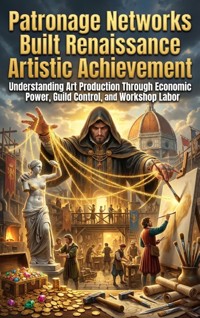
The Renaissance celebrates individual genius—Michelangelo, Leonardo, Raphael. Yet this narrative of solitary brilliance overlooks the economic and social structures that made masterpieces possible: wealthy families competing for political legitimacy through commissioned art, guild regulations determining who could legally practice, and workshop systems where dozens of assistants executed the master's designs. This book reexamines Renaissance art through contracts, payment records, guild documents, and workshop inventories. It traces how art functioned as political currency for the Medici and other banking families, how artists navigated between creative vision and patron demands, and how marble quarrying, pigment trade, and apprenticeship networks shaped what could actually be produced. The focus extends beyond famous names to include the skilled laborers—plasterers, gilders, stone carvers—whose work remained anonymous. By analyzing the material conditions of artistic production, this work reveals how Renaissance achievement emerged from collaborative labor embedded in specific economic relationships. It asks: when we admire a painting, whose genius are we really witnessing—the individual artist or the entire system that sustained their work?
Ebooka przeczytasz w aplikacjach Legimi na:
Liczba stron: 213
Rok wydania: 2026
Odsłuch ebooka (TTS) dostepny w abonamencie „ebooki+audiobooki bez limitu” w aplikacjach Legimi na: