Uzyskaj dostęp do tej i ponad 240000 książek od 14,99 zł miesięcznie
- Wydawca: epubli
- Kategoria: Literatura popularnonaukowa•Nauki humanistyczne
- Język: angielski
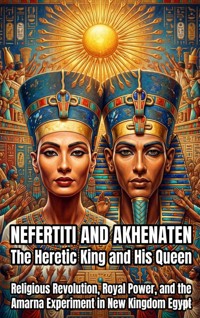
In the fourteenth century BCE, the Egyptian pharaoh Amenhotep IV did something no ruler of the ancient world's most theologically conservative civilization had attempted: he dismantled the established religious order, suppressed the powerful priesthood of Amun, relocated the capital to a city built from nothing in the desert, and declared a single solar deity — the Aten — the sole focus of state worship. He renamed himself Akhenaten. Beside him, depicted with unprecedented prominence in royal art, stood Nefertiti — a queen whose representations suggest a political and religious authority that remains without parallel in pharaonic history. This book reconstructs the Amarna period through archaeological excavation records from Tell el-Amarna, the Amarna Letters diplomatic archive, royal inscriptions, and decades of Egyptological scholarship. It examines what Akhenaten's religious revolution actually involved — the theological content of Aten worship, the coercive suppression of competing cults, and the administrative reorganization of a state apparatus built around a new ideological framework — and what role Nefertiti played in designing and sustaining it. The narrative also confronts the aftermath: the systematic erasure of Akhenaten's legacy by successors, the still-unresolved questions surrounding Nefertiti's fate and possible co-regency, and the discovery of Tutankhamun's tomb as an indirect consequence of the Amarna revolution's violent undoing. A rigorous, archaeologically grounded account of ancient Egypt's most audacious experiment in religious and political transformation — and the two figures at its center.
Ebooka przeczytasz w aplikacjach Legimi na:
Liczba stron: 226
Rok wydania: 2026
Odsłuch ebooka (TTS) dostepny w abonamencie „ebooki+audiobooki bez limitu” w aplikacjach Legimi na: