Uzyskaj dostęp do tej i ponad 240000 książek od 14,99 zł miesięcznie
- Wydawca: epubli
- Kategoria: Literatura popularnonaukowa•Nauki humanistyczne
- Język: angielski
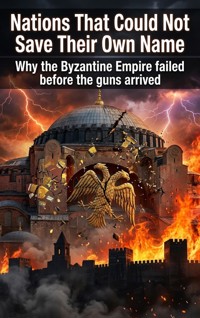
Long before the Ottoman cannons were positioned before the Theodosian Walls, the Byzantine Empire had already begun to die from the inside. This book argues that the fall of Constantinople in 1453 was less a military defeat than the final symptom of a political organism that had lost the capacity to sustain itself. The empire that once stretched from Spain to Syria had been reduced to a city-state, its treasury empty, its army composed of foreign mercenaries, its church divided by the failed union with Rome. The narrative traces the fourteenth-century civil wars that exhausted Byzantine resources, the catastrophic reliance on Venetian and Genoese shipping, and the diplomatic isolation that left Constantinople without allies when Mehmed II finally moved. It examines how the Palaiologos dynasty, despite producing capable individuals, could never transcend the structural decay of a bureaucracy that collected taxes from fields it no longer controlled and minted coins of increasingly worthless metal. The siege itself becomes a mirror of this collapse: the defenders fought bravely but could not compensate for a state that had stopped believing in its own future. This is not a story of heroic last stands but of institutional sclerosis, of a government that had perfected the art of postponing collapse until collapse became the only remaining option.
Ebooka przeczytasz w aplikacjach Legimi na:
Liczba stron: 195
Rok wydania: 2026
Odsłuch ebooka (TTS) dostepny w abonamencie „ebooki+audiobooki bez limitu” w aplikacjach Legimi na: