Uzyskaj dostęp do tej i ponad 240000 książek od 14,99 zł miesięcznie
- Wydawca: epubli
- Kategoria: Literatura faktu•Autobiografie i biografie
- Język: angielski
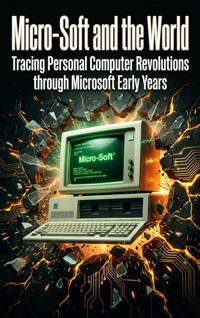
In January 1975, Paul Allen was walking through Harvard Square when he spotted the cover of Popular Electronics magazine — a photograph of the MITS Altair 8800, billed as the "World's First Microcomputer Kit." He bought the magazine and ran to Currier House at Harvard, where he found his nineteen-year-old childhood friend Bill Gates. Both men understood immediately, with a clarity that almost no one else on earth shared at that moment, that what they were looking at was not a hobbyist curiosity — it was the beginning of a civilizational transformation. Their first program, a BASIC interpreter for the Altair 8800, was written in marathon sessions on a DEC PDP-10 simulator without ever having been tested on the actual machine — and when Paul Allen flew to Albuquerque to demonstrate it to MITS president Ed Roberts, it ran perfectly on the very first attempt. Year-end sales for 1975 totalled $16,005. The pivot that made Microsoft a global institution was not technological genius — it was a single contractual negotiation of extraordinary strategic consequence. When IBM approached Microsoft in 1980 to develop an operating system for its forthcoming personal computer, Gates made a promise he had no immediate capacity to fulfil — and then purchased a CP/M clone called 86-DOS from Seattle Computer Products for $75,000, adapted it into MS-DOS, and licensed it to IBM on terms that allowed Microsoft to retain ownership of the operating system and license it independently to other manufacturers. IBM, whose institutional culture led it to undervalue software relative to hardware, effectively handed Microsoft the right to define the software standard of every IBM-compatible personal computer that would follow — which is to say, of the industry itself. When Columbia Data Products, Compaq, and Eagle Computer successfully cloned the IBM PC hardware in the early 1980s, a flood of IBM-compatible machines entered the market — and every one of them required MS-DOS.
Ebooka przeczytasz w aplikacjach Legimi na:
Liczba stron: 208
Rok wydania: 2026
Odsłuch ebooka (TTS) dostepny w abonamencie „ebooki+audiobooki bez limitu” w aplikacjach Legimi na: