Uzyskaj dostęp do tej i ponad 240000 książek od 14,99 zł miesięcznie
- Wydawca: epubli
- Kategoria: Literatura popularnonaukowa•Nauki humanistyczne
- Język: angielski
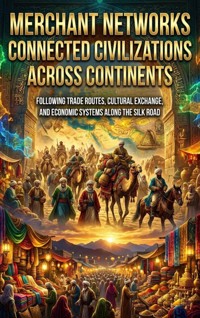
The Silk Road is romanticized as a continuous route carrying exotic goods between East and West. Yet this linear narrative overlooks the complex reality: dozens of interconnected trade networks operated by merchants who rarely traveled the entire distance, goods changing hands through multiple intermediaries, and thriving cities sustained by the infrastructure of caravanserais, currency exchange, and legal frameworks protecting foreign traders. This book traces the Silk Road through merchant letters, customs records, archaeological evidence from trading posts, and travelers' accounts. It examines how Buddhist monks, Nestorian Christians, and Muslim scholars moved alongside commodity traders—spreading religious ideas, artistic techniques, and scientific knowledge. The focus extends beyond silk and spices to include the translators who made commerce possible, the banking systems financing long-distance trade, and the steppe nomads whose political stability determined whether caravans could safely pass. By analyzing the practical mechanics of cross-continental exchange, this work reveals how the Silk Road functioned as an economic and cultural system rather than a single path. It explores how goods, ideas, technologies, and diseases traveled through human networks—showing that connection, not isolation, defined pre-modern civilizations.
Ebooka przeczytasz w aplikacjach Legimi na:
Liczba stron: 233
Rok wydania: 2026
Odsłuch ebooka (TTS) dostepny w abonamencie „ebooki+audiobooki bez limitu” w aplikacjach Legimi na: